
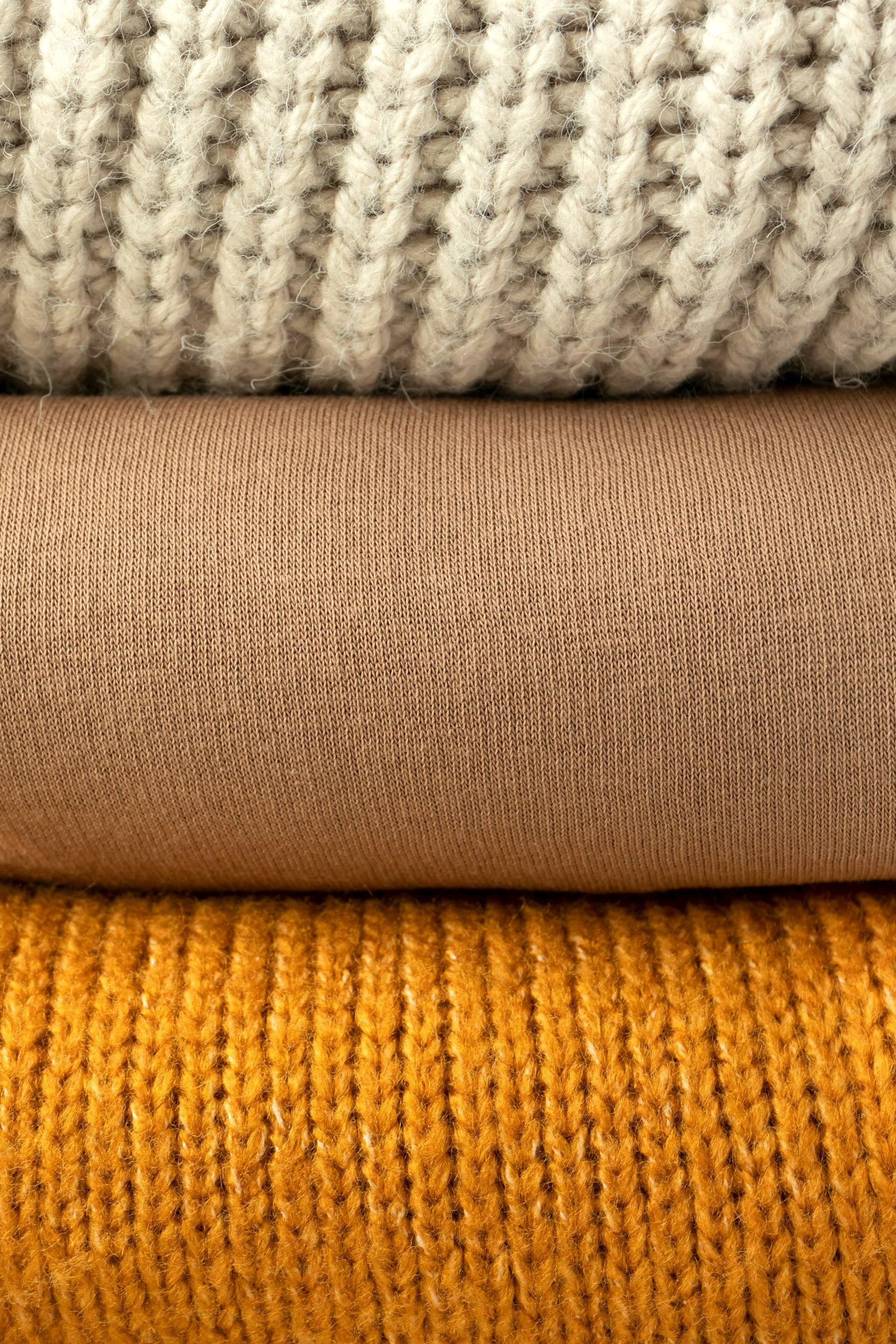
The subject of this brief is a cloth before it is a silhouette, so the hero is cloth at macro range, captioned as what it is. Our bank holds no sweatshirt frame, no loopback crew on a body in street light, and this page prints that gap in its care section rather than dress a knitted sweater as the subject.
Checked and updated October 2026
The ruling, up front: the sweatshirt is gym cloth that colonized the wardrobe, and its styling problem is the opposite of the henley's. The henley arrives dressed enough and gets argued down; the sweatshirt arrives too casual and must be argued up, never down. Every legal move in this brief raises it one rung: the cloth chosen at the weight that reads deliberate, the collar stacked with intent, the layer above it tailored or workwear with a line to lend. Every banned move lets it sag back toward the sofa. The ranked field is Verdict Card No. 35's and it is not re-scored here: the Reigning Champ loopback at 81, American Giant at 79, Uniqlo at 76 the attainable pick, Asket at 75, Sunspel at 73, the J.Crew heavyweight fleece at 70, Amiri at 45 sent home. First, the boundary this brief shares with its sibling: the sweatshirt is cut and sewn from jersey, terry or fleece; the crew neck sweater is knitted from yarn. The knit has its own ranking, Verdict Card No. 10, and its own brief, How to Wear No. 09. Nothing here borrows the knit's rules, and nothing there borrows the fleece crew's numbers. This is the wearing system for the cut-and-sewn garment, published in October, the month it starts earning.
This brief: the cloth dial · the collar stack · the layering chain · the fit rulings · the colour order · what it never survives · the looks · the mistakes · care and the repairs
The decisive rule: cloth weight is the formality dial
A tailored garment carries its register in its cut. A sweatshirt has almost no cut to carry anything: a body, two sleeves, a ribbed band at the neck, cuff and hem. So its register lives in the one variable left, the cloth, and the cloth has two dials that turn together: weight and face. Learn to read those two and the garment's whole styling problem is solved before the rest of the outfit is chosen, because the same silhouette in two cloths is not one garment worn two ways. It is two garments.
Loopback terry reads deliberate. A loopback or terry cloth leaves its loops uncut on the inside face. It lies flatter against the body, slides under a jacket without grabbing, presents a smooth, matte outside face to the room, and has no raised pile to pill, which is why the Card's law, set on the hoodie ranking and applied unchanged to the crew, grades it the longer-lived face. In a midweight loopback, a sweatshirt reads as a garment that was chosen: clean surface, held shape, a collar that sits flat and round. That is the cloth of the ranked field's top five, and it is the only cloth this brief argues up, because it is the only cloth with anywhere to be argued to.
Brushed fleece reads sofa. A brushed fleece raises its inside into pile. It is warmer and softer at the first touch, and both virtues are the trap: the pile is the first surface in the garment to pill and mat, the outside face carries a soft blur that no styling sharpens, and the silhouette relaxes toward the furniture it was designed to meet. The Card grades the bargain honestly: the field's one brushed entry, the J.Crew Heritage at 70, is a 14 ounce fleece with its weight in its name, and its warmth is real, but its longevity row is where the pile is charged. Wear brushed fleece as the outer layer on a cold day, as the Card's own weight map assigns it. Do not ask it to sit at a table, under a coat, or over a collared shirt. The cloth has already answered.
The published weights draw the styling map. The Card prints the field's numbers, and this brief turns them into rooms:
| The cloth | The published evidence | What it can be argued up to |
|---|---|---|
| Midweight loopback, the outer-layer class | The winner's 100% cotton loopback terry at a maker-published 390 GSM: the Reigning Champ at 81 | The top of this garment's range: the collar stack, the chore coat, the overcoat in the conditions the layering section prints |
| Midweight terry, the layering class | American Giant's 100% cotton French terry at a maker-published 9.4 ounces, about 319 GSM in the Card's desk conversion: 79 | The layer under things: built for the in-between moment, the drape that slides under the denim jacket and the chore coat without a fight |
| Heavyweight brushed fleece | J.Crew's 14 ounce fleece, about 475 GSM in the Card's desk conversion, brushed interior: 70 | Itself, outdoors: the outer layer on cold days. The pile and the bulk together close every door above it |
| Below roughly 300 GSM | The Card's printed line: below this weight a crew is a layer to be worn under things, not the purchase | Nothing: a thin crew is an underlayer with a collar problem, argued up by no jacket in the wardrobe |
| Unpublished | Asket and Sunspel publish no weight and are graded on the silence; Amiri publishes no weight and no fibre story at $890 and is sent home at 45 | What its surface proves in the hand: silence about weight is a fact about the cloth, and the styling budget follows the evidence |
The dial, stated as law: before any sweatshirt is styled, its cloth is read. Loopback at a real weight earns the full system in this brief. Brushed fleece earns the weekend and the weather. A crew too light to hold its collar earns the drawer under the tees, which is where it was always headed.
The collar stack: a sweatshirt over a collared shirt, ruled
The collar stack is the sweatshirt's one dressed move, the assembly that argues it furthest up: a collared shirt beneath the crew, the two necklines meeting at the throat. It is also the move most often worn wrong, because the collar has three positions and only one of them is a default. This brief rules them precisely.
The default: collar in. The shirt's collar leaves tuck beneath the sweatshirt's ribbed band. What shows at the neck is a clean line of the shirt's collar band and the top of its placket, framed by the crew's rib, and nothing rests on the shoulders. This is the state that works in every legal cloth, at every weight, in every colour order row: it reads as a layer deliberately stacked, the shirt lending the sweatshirt its formality at exactly one visible inch. The shirt for it is specific on this site: the Oxford Verdict Card's winner, the Kamakura button-down at 93, whose unlined button-down collar sits at a crew neck without bulk or fight. The shirt's tail stays tucked, always, for the same reason the quarter-zip brief prints: an untucked shirt under a hip-length hem stacks two hems at the waist and spends the fit ruling before the collar gets a vote.
The exception: collar out, on conditions. The button-down Oxford's points may sit out over the sweatshirt, collar lying flat against the shoulders, points buttoned down. Run exactly that way, over a midweight loopback in grey marl or navy, it is the preppy state, a deliberate quotation with a long history, and it reads as chosen. The conditions are the whole ruling: button-down collar only, points fastened, collar pressed flat, cloth loopback, colour grey marl or navy. Remove any one of them and the state collapses into the third position.
The failure: collar out by accident. A spread or cutaway dress-shirt collar flapping over a sweatshirt's shoulders, an unbuttoned point standing off the cloth, one point in and one point out, any collar at all over brushed fleece: this reads lost, a shirt escaping a garment it was not paired with. It fails on geometry, not taste. A sweatshirt's neckline is a closed ribbed ring; a collar worn over it has to lie like a decision, flat and symmetrical, or it reads as laundry. When in doubt, the default is the answer: collar in, and let the band at the neck do the talking.
Which sweatshirt takes the stack: the neat end of the ranked field. The Sunspel Loopback at 73 is the stack's reference garment, a neat regular fit whose ribs are 95% cotton and 5% elastane, the elastane printed on its card because it is the garment's answer to the category's first death, a collar band that recovers and holds the shirt's collar in its frame all day. The winner's athletic Standard cut at 81 takes the stack in its Relaxed sibling at the same $98. The Asket at 75 takes it best of all on fit, its sizing graded in fine increments across three lengths, long, regular and short, so the band lands where the pattern says on bodies the standard ladder misses. What does not take the stack is a boxy cut worn oversized, where the band sags away from the shirt's collar and the inch of formality dissolves, or any brushed fleece, whose pile at the neck reads as a blanket over a shirt.

The layering chain, both ways
The sweatshirt sits in the middle of the wardrobe's layering chain, and it is worked from both directions: what goes under it, ruled in the collar section, and what goes over it, ruled here. Three outer layers are in its chain. Each has a cloth condition, and the conditions are the brief.
Under the chore coat: the natural stack. The chore coat, briefed in How to Wear No. 13, is workwear with a line to lend, and the sweatshirt is the layer it was built over. The pairing works on cloth logic: canvas or twill outside, loopback inside, the terry's smooth face sliding against the coat's unlined body without grabbing, which is why the layering-class terry, the American Giant at 79 and its published 319 GSM class, is the chore coat's ideal tenant, and the winner's heavier 390 GSM loopback is its cold-weather one. Brushed fleece under a chore coat is legal once, on the coldest days, and pays for it in friction every time the coat comes off. Collar in beneath it, or no shirt at all: the chore coat's own collar owns the neck, and three collars at one throat is a crowd.
Under the denim jacket: the double-denim discipline. The denim jacket, briefed in How to Wear No. 16, takes the sweatshirt as its soft layer, and the stack is the weekend's best argument for the garment: grey marl loopback under indigo denim is a pairing with seventy years of evidence. The discipline is below the waist. With a denim jacket over a sweatshirt, the trousers are not denim in the jacket's wash; dark denim in a clearly different wash is the ceiling, and chinos or cords are the safer floor. The sweatshirt's colour does the separating work here, which is one more reason grey marl is bought first: it is the colour that lets the jacket be the outfit's one blue statement. A navy sweatshirt under a navy denim jacket flattens both into a single dark mass, and the chain's second link is where the colour order earns its keep.

Under the overcoat: the question, answered plainly. Plainly, then: yes, a sweatshirt survives a tailored overcoat, in one weight and two colours, and the survivors are named. The weight is midweight loopback: the winner's published 390 GSM class at the heavy end, the layering terry class beneath it, cloth smooth enough to slide under the coat's lining and structured enough to hold its collar inside the coat's open front. The colours are grey marl and navy, the first two rows of this brief's colour order, because the coat reads the sweatshirt's colour at the chest and those are the two that hold a tailored register. And the stack under it is bare: no collar stack, no shirt, the sweatshirt worn over a tee or on its own, because the overcoat, briefed in How to Wear No. 20, owns the neckline of any stack it closes over. The logic is the brief's thesis in one assembly: the coat argues the sweatshirt up two full rungs, the largest promotion available to it, and loopback is the cloth that can accept the argument without embarrassing either garment.
The refusals are as plain. Brushed fleece under an overcoat is refused on cloth: the pile grabs the lining, the surface reads as sofa cloth in a tailored frame, and the coat's argument is spent on a garment that cannot hold it. The 14 ounce heavyweight is refused on geometry: its bulk at the shoulder and sleeve breaks the coat's line, and a coat whose shoulder has been pushed out of shape has been argued down, which is the one direction this brief never travels. And the suit is refused outright, here rather than in the next section, because the overcoat answer invites the confusion: an overcoat over a sweatshirt is a casual stack wearing a weather layer, while a suit is a matched set under a formality contract, jacket and trousers cut as one garment with one register. The sweatshirt has no weight, colour or cloth that renegotiates that contract, and the next section names it among the things the garment never survives.
The fit rulings: hem, shoulder, length, sleeve
Four rulings, all measurable in a mirror in ten seconds. The Card prints the standard they enforce, room carried with structure, and its paired warning: boxy is a cut, sloppy is a failure, the same room with the structure gone. These rulings are where the structure lives.
The ribbed hem is the garment's waistline. A sweatshirt has no waist of its own, no darts, no belt, no break. What it has is a ribbed hem, and that rib is where the garment's lower line is set. The ruling: the hem lands at the hip, the rib grips the body, and the cloth above it falls from the chest to that grip in one clean run. A rib that has stopped gripping bells the hem outward, and the belled hem is the sloppy failure's signature, the silhouette of a garment one size too large or one year too old. Test it standing side-on: the line from chest to hem runs in to the rib, never out past it. This is also why the hem is a care item and not only a fit item, graded inside the Card's construction and longevity rows: the waistline of this garment is a piece of elastic engineering, and it is spent like one.
The shoulder seam sits on the shoulder bone, unless the drop is the design. In the dressed register, the collar stack and the coat stacks, the seam sits where a shirt's seam sits, on the bone, because every layer above the sweatshirt assumes that line. The dropped shoulder is legal as a deliberate cut, the boxy pattern the Card grades as a cut rather than a failure: the American Giant's relaxed crew at 79 carries its room in every direction on purpose and still ends where its pattern says. What is banned is the accidental drop, the standard cut bought a size up for comfort, where the seam slides down the arm, the body bells, and the garment reads as borrowed. A dropped shoulder is a sentence the pattern writes. A slid seam is a size reporting itself, the way a quarter-zip's pushed-up sleeve reports itself in No. 21.
Length has two legal states, and one is the default. Classic length, the hem covering the waistband and landing at the hip, is the default and the only length that works the full chain: it takes the collar stack, it slides under the chore coat and the denim jacket, it survives the overcoat. Cropped length, the hem ending above the waistband and showing the trouser's rise, is a fashion state with one legal home, worn over high-rise trousers as the whole point of the outfit, and it forfeits the chain: a cropped sweatshirt under a jacket shows a band of shirt or skin at the waist and reads unfinished in every layer above it. Buy classic first. Buy cropped, if it is bought at all, as the second sweatshirt in a colour already owned, for the one outfit that asks for it.
The sleeves are never pushed past the forearm as a default. A cuff pushed to the forearm for a task, washing hands, reaching a shelf, is a moment, and moments are free. The ruling is about the default: sleeves worn pushed up all day, bunched toward the elbow as the garment's resting state. It fails twice. Visually, it reads as a garment being fought, the wearer in a running negotiation with his own clothes. Mechanically, it spends the garment's second death in public: the Card prints the failure order, the collar first and the cuffs second, a cuff that stops recovering after a push up the forearm is a cuff at the end of its life, and wearing the cuffs pre-stretched is advancing that date on purpose. The sleeve ends at the wrist bone and stays there. If the day needs bare forearms, the garment for the day is a tee, and the sweatshirt goes over the shoulders or stays home.
The colour order: grey marl first, navy second, black last
First buy: grey marl. The original gym colour is first on evidence, not nostalgia. Marl is a mixed yarn, light and dark fibres knitted into one cloth, and the mixture is a working property: it hides fade, because there is no single pigment to lose; it hides wear, because the surface is already a pattern; and it separates cleanly from everything the chain puts around it, indigo denim above it, navy tailoring above it, charcoal and olive below it. The winner at 81 and the American Giant at 79 both make their names in this colour family, and the desk's cost arithmetic flatters it further: a colour that does not show its age is a colour whose garment gets its full stated life, the winner's four years at $24.50 a year, $0.41 a wear, spent looking two years old at the end of them.
Second buy: navy. Navy is the dressed colour, the one bought for the top of the garment's range: it takes the collar stack at full register, it is one of the two colours that survive the overcoat, and it carries the Sunspel's neat fit and the Asket's sizing system into rooms grey marl enters as a guest. Its discipline is the denim jacket rule from the layering section: navy under navy denim flattens, so the navy sweatshirt's outer layers are the chore coat and the overcoat, and its trousers run charcoal, grey and stone rather than indigo. Bought second, in loopback, navy is the sweatshirt that does the arguing-up this brief exists to describe.
Black, and its scheduled failure. Black is bought last if it is bought at all, and the reason is printed as a care fact rather than a taste: a black sweatshirt fades to charcoal by year two. The pigment sits on cotton fleece less permanently than on any other cloth in the drawer, it leaves unevenly, fastest at the collar, the cuffs and the fold lines, exactly the places this garment is judged, and what remains is not black worn in but black given up: a charcoal garment with dark patches, owned by a man who bought black. The marl cannot fail this way and the navy fades slower and evenly, toward a blue-grey that still reads as a decision. If black is wanted, the honest routes are the ones the care section prints: wash it inside out, cold, rarely, and accept the two-year clock, or buy the charcoal that the black was always going to become and start there. Third buys after the first two are earning: white and ecru for the warm months, olive and burgundy for the autumn rows, each in loopback, each bought for specific trousers rather than for the drawer in general.
What it never survives
Three assemblies are refused outright, not graded down. A styling brief earns its rulings by the doors it closes, and these are this garment's closed doors.
The suit. A sweatshirt under a suit jacket fails both garments at once. The suit is a matched set cut as one piece of clothing with one register, and its jacket is tailored to close over a shirt's thin cloth, not over fleece: the loopback's body fills the jacket's chest, the ribbed hem fights the jacket's quarters, and the collar ring at the neck reads as a mistake that has been buttoned in. That the overcoat survives this garment and the suit does not is the distinction the layering section prints: the overcoat is a weather layer worn over a casual stack, the suit is a contract. No weight, no colour and no price crosses this line; the $890 skip would fail it as completely as the $39.90 attainable pick, and more embarrassingly.
The tie. A tie needs a collar built to carry it, a band that stands, leaves that close over the knot. Pinned beneath a crew's ribbed ring, a tie is a costume: the knot crushed under the band or perched above it, the blade vanishing into fleece at the chest. The collar stack in this brief is the tie's exact replacement, the one inch of Oxford at the neck doing the tie's job of lending formality, without the prop. A man who wants the tie's signal in a sweatshirt's outfit wants the knitted crew of No. 09 and No. 10, where a tie under a crew neck is a ruled and legal assembly with its own brief. The fleece crew refuses it.
The logo chest bigger than a hand. The rule is measured on the body: any chest mark wider than the wearer's open hand is advertising, not clothing, and it spends the garment's one dressed asset, its blankness. The ranked field prints the conviction in full. The Amiri MA Quad Jacquard Crewneck at 45 weaves its monogram into the cloth itself, the logo as the fabric, at $890, with no published weight and no published fibre story, costed by the Card at $296.67 a year and $4.94 a wear: the Logo Tax with the logo built into the garment so it cannot even be removed. Against it, the field's honest makers print nothing at the chest or next to nothing. A small mark, a hand's width and under, is a maker's signature and a matter of taste. Past a hand, the wearer is the media buy, and this brief does not style media buys.
The looks: the field, worn
Four assemblies, each built from the ranked field and the rulings above. Every look swaps down to the Uniqlo at 76 without changing a rule, because the rules are cloth, collar and chain, and the Uniqlo's silhouette is the standard the Card draws its fit line from. The frames are the bank's honest cloth and layer frames, captioned for what they show; the bank holds no sweatshirt on a body, and the care section prints that gap rather than let a knit stand in for the subject.
Look one: the collar stack at full register. The Sunspel Loopback at 73, navy, collar in over the Kamakura Oxford at 93, grey trousers, a leather shoe with structure. The neat fit and the elastane rib hold the shirt's collar in its frame all day, the hem grips at the hip, and the assembly sits one rung below the knitted crew's office dress and entirely sufficient for the rooms that rung covers. This is the look the garment's reputation should have been built on.
Look two: the winner under the chore coat. The Reigning Champ at 81, grey marl, over a plain tee or on its own, under a canvas chore coat run by No. 13's rules, cords or stone chinos below, suede boots. The 390 GSM loopback is the coat's cold-weather tenant, the smooth face sliding against the unlined canvas, the coat's collar owning the neck with no shirt beneath the crew to crowd it. The chain at its most natural: two work garments, each lending the other its line.
Look three: the layering terry under denim. The American Giant at 79, grey marl, under an indigo denim jacket run by No. 16's rules, chinos below in stone or olive, clean leather sneakers. The 319 GSM class terry was built for this slot, drape over weight, and the grey marl keeps the jacket the outfit's one blue statement under the double-denim discipline. The weekend stack at its best evidence.
Look four: the overcoat answer. The Asket at 75, grey marl, its three-length sizing landing the hem exactly at the hip, under a tailored charcoal or camel overcoat run by No. 20's rules, charcoal trousers, no collar stack, the coat owning the neckline. Five stated years at $36.00 a year is the cost line, and the assembly is the brief's thesis worn: gym cloth argued up two rungs by cloth choice, colour and a tailored weather layer, arriving at the register the suit section refuses it by the one door that is actually open.
The ruling
Buy loopback, in grey marl, at a weight the maker will publish, and wear it as the argument it is. The cloth is the dial: terry at a real weight reads deliberate, brushed pile reads sofa, and no styling downstream rescues a cloth chosen wrong. The collar stacks in by default, out only as a buttoned-down quotation over loopback in the first two colours. The chain runs up through the chore coat and the denim jacket to the one tailored door that opens, the overcoat, in midweight loopback in grey marl or navy, and it stops dead at the suit, the tie and the logo chest. The hem grips at the hip because the rib is the waistline; the seam sits on the bone unless the pattern dropped it on purpose; classic length works the whole chain and cropped works one outfit; the cuffs stay at the wrist because they are the garment's second death and a man does not spend his clothes' lives as a habit. The field is ranked and this brief has not touched a number: the Reigning Champ at 81 is the reference, the Uniqlo at 76 is where most drawers should start, and the Amiri at 45 is the standing proof that price argues nothing up. The sweatshirt is the most-owned garment in the modern wardrobe and the least argued for, and the distance between the gym cloth and the garment is not money or brand. It is cloth, collar and chain, chosen on purpose, sixty wears a year, for the four or five years the collar and the cuffs give it.
The mistakes
Arguing it down. The founding error, from which the others descend: styling the sweatshirt as if its casualness were the point to be expressed, oversized over gym shorts, logo out, sleeves pushed, in rooms where an outfit was required. The garment arrives too casual by birth. Every styling decision either argues it up a rung or lets it slide back to the sofa, and the slide is the default that needs no effort. The man who buys a good loopback crew and wears it as loungewear has not made a neutral choice; he has spent a $98 cloth budget on a garment a $20 fleece performs identically, because at the sofa the dial reads the same.
Brushed fleece in a dressed stack. The pile under the chore coat that grabs, the pile over the Oxford that reads as a blanket over a shirt, the pile under the overcoat that spends the coat's whole argument. Brushed fleece has one legal dressed use, none, and one legal use altogether above the waist of a cold day: itself, as the outer layer, the J.Crew heavyweight's honest slot at 70. The archetype of the error is the disposable brushed crew sold by the fast-fashion rail, H&M's among them, a garment whose pile is matted by Christmas and whose collar is wavy by the new year; it is named here unranked and unscored, as the foil the cloth law exists to refuse, and the refusal is the whole sentence.
The collar out by accident. One point in, one point out; a spread collar flapping over fleece; a button-down's points unbuttoned and standing off the cloth. The collar stack has two legal states, in as the default and out as a fastened, flat, deliberate quotation over loopback, and everything between them reads as laundry escaping. The fix costs three seconds in a mirror. The state that cannot be fixed in a mirror is the pairing itself: a dress shirt with a cutaway collar has no business under a crew of any cloth, and the Oxford is the stack's shirt because its collar was built to be framed.
The pushed sleeve as a resting state. Cuffs shoved toward the elbows from morning to night, the rib stretched over the forearm's widest point for the garment's whole working day. It reads as a fight with one's own clothes, and it is mechanically worse than it reads: the cuff is the garment's second death, after the collar, and a cuff worn pre-stretched is a cuff whose recovery is being spent on a pose. Push the sleeves for the task. Put them back down for the day.
Buying the cropped length as the first sweatshirt. The cropped crew is a single-outfit garment that forfeits the collar stack's clean waist, forfeits every jacket in the chain, and dates faster than any other cut in the drawer, and it is bought first because it photographs as a decision. It is a decision, about one outfit, made with the whole budget. Classic length first, in grey marl, in loopback: the garment that works the chain is the garment still being worn when the cropped one's outfit has been retired.
Care, and the repairs
The Card prints the failure order for this garment and care follows it: the collar dies first, the cuffs second, the body cloth last. So care is rib care. Wash cold and inside out, which protects the outer face and the pigment in one move; skip the tumble dryer, whose heat and tumbling are a rib's two enemies, the heritage makers in the field printing no-tumble lines on their own care labels; and dry the garment flat or on a wide hanger, never by the hem, because a wet fleece crew hung by its waistline is the fit ruling being repealed by gravity. Between wears, a day of rest lets the collar and cuffs give up the day's shape, the same rest rule the knit briefs print, inherited here because the rib's recovery is the same physics in a different cloth.
The black fact, and what can be done about it. This page prints black's failure as scheduled: pigment leaves a black fleece crew unevenly, fastest at the collar, cuffs and folds, and reads as charcoal by year two. The mitigations are real and limited. Inside out and cold slows the loss; washing less often slows it more, and a sweatshirt worn as a mid-layer over a tee needs the machine a third as often as one worn on skin; a dye bath at the two-year mark is a legitimate repair, restoring a single pigment to a garment whose cloth has years left, and it is the one garment in the colour order where the desk recommends it. What no care routine does is repeal the schedule, which is why the colour order, not the care section, carries the ruling: grey marl first because marl cannot show this failure, navy second because its fade is slow and even.
The repairs worth making. A cuff or hem rib that has lost its recovery can be re-ribbed by a tailor who handles knit and fleece repair, and on a $98 to $180 loopback garment with four or five stated years in the cloth, the repair is arithmetic the Card's per-year table supports: the winner at $24.50 a year justifies a rib; the $39.90 attainable pick at two stated years does not, and its honest end is the rag rotation. A collar that has gone wavy is not repaired, it is retired, because the collar is the garment's face and the Card grades its surrender as the end. Budget the garment's life the way the Card costs it, on the rib: cared for this way, the loopback field gives its stated years, and the same garments tumble-dried weekly give half of them at the same price per garment and double per year.
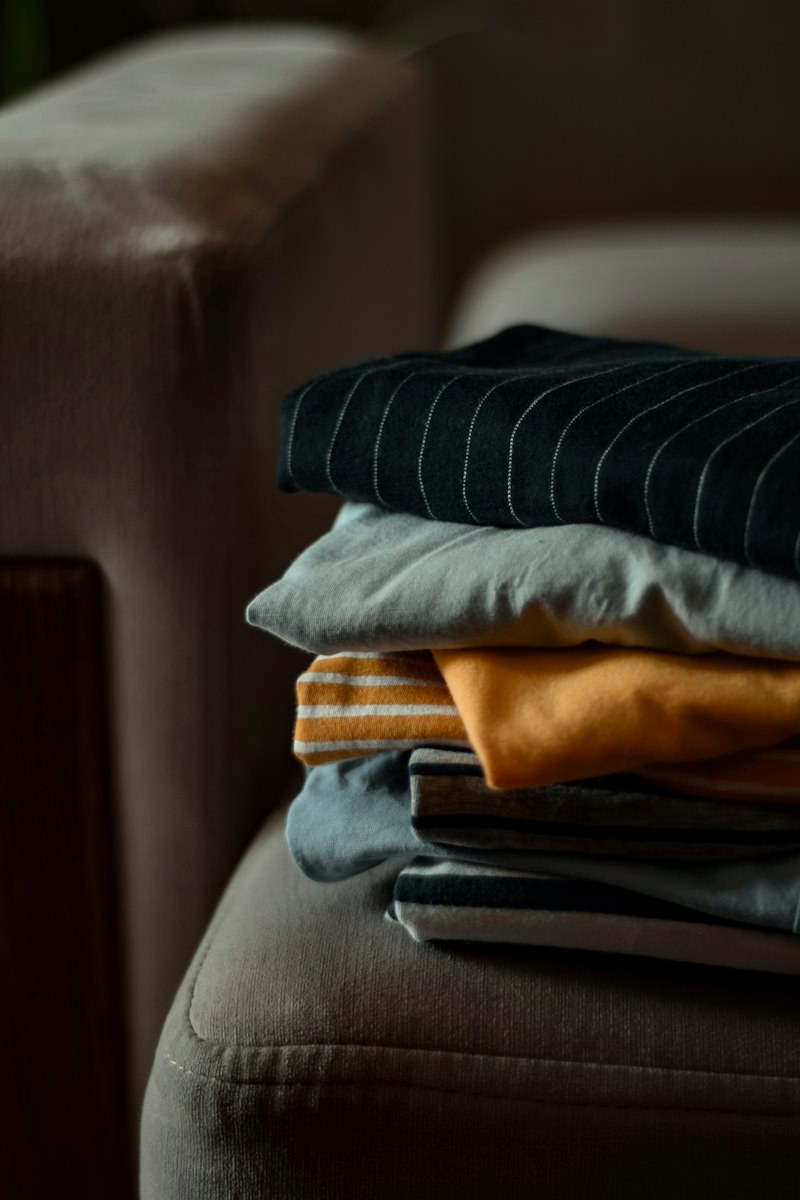
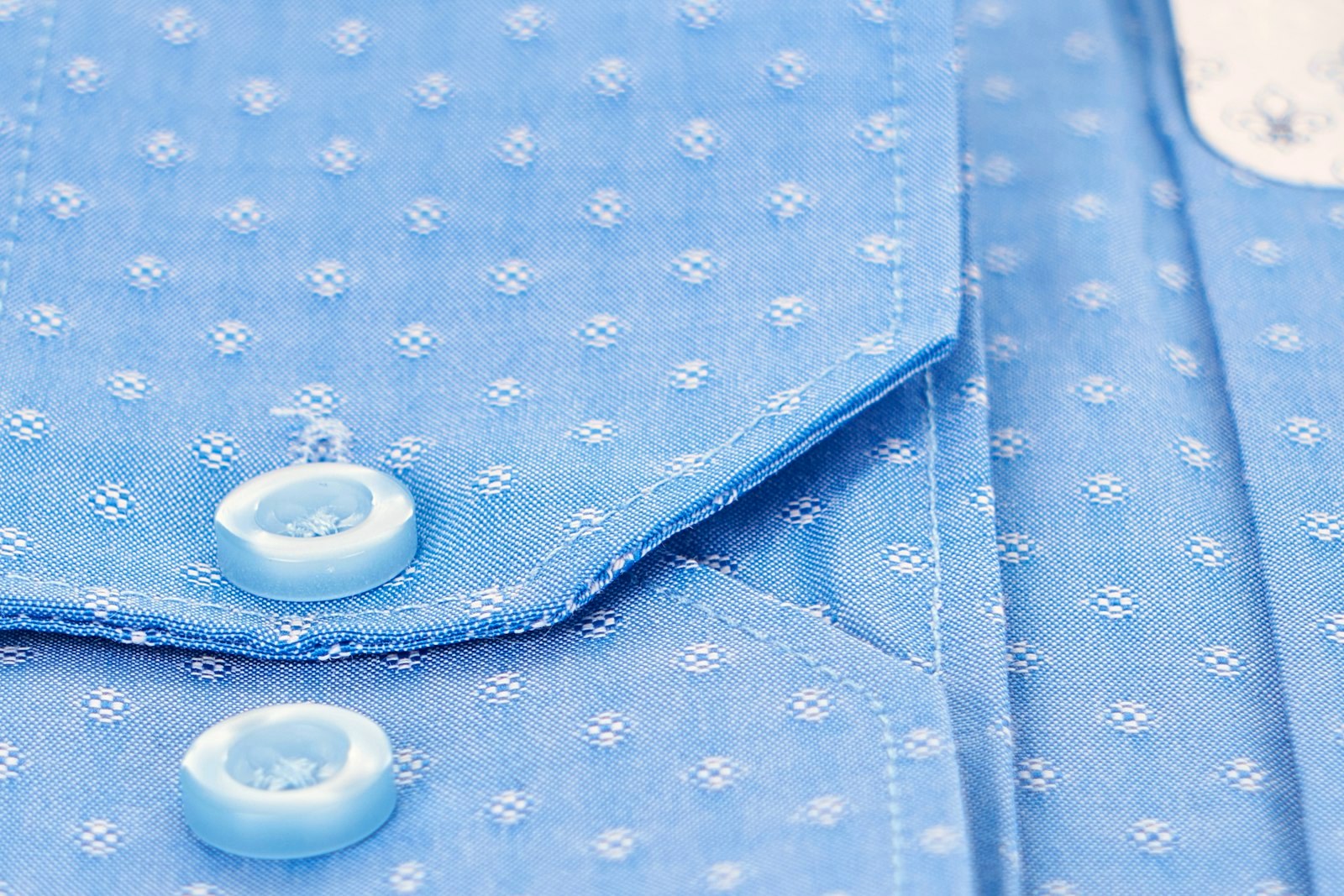
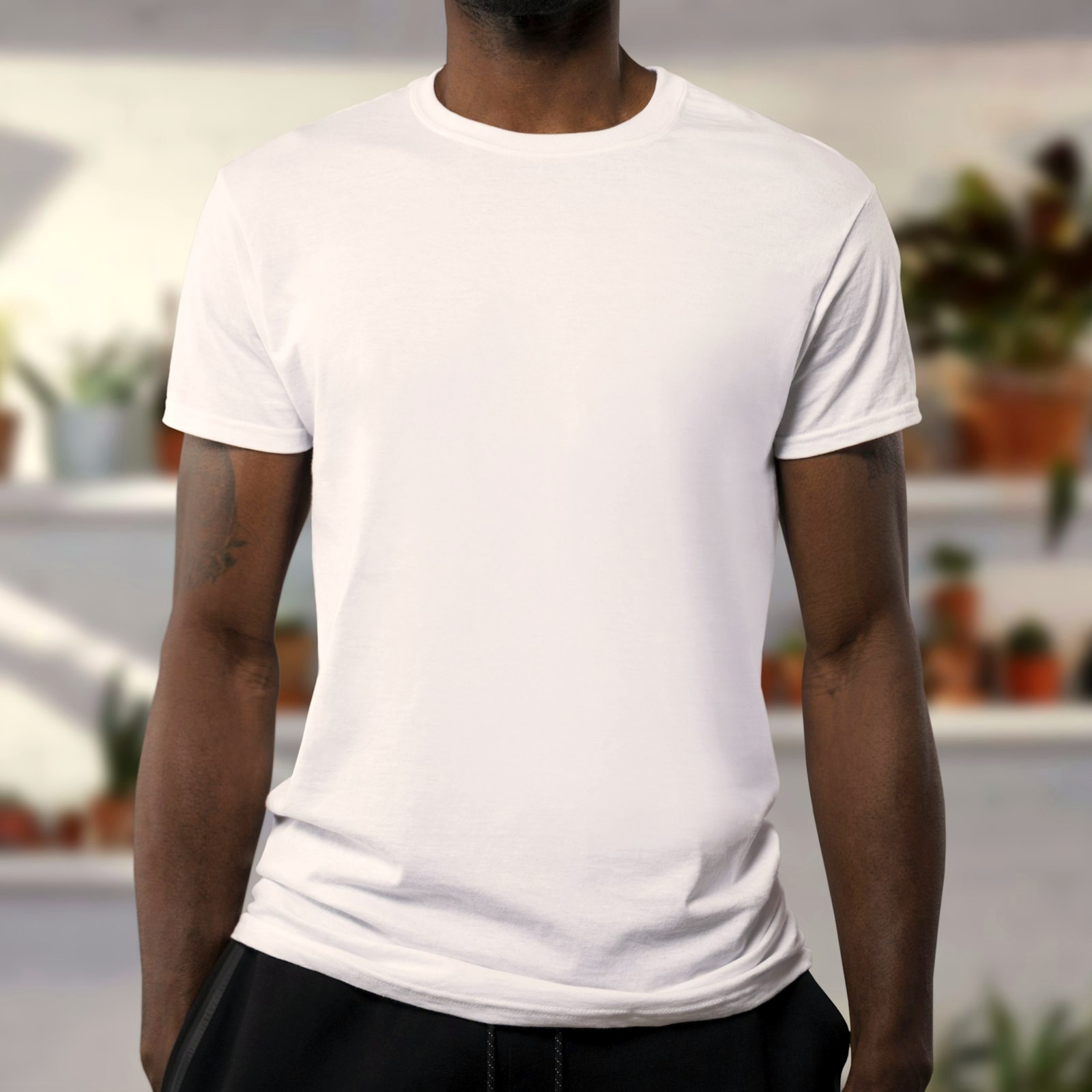
A note on our own photography: our photo bank holds no sweatshirt frame. No loopback crew on a body in street light, no collar stack over an Oxford in fleece, no loopback-against-brushed macro and no fifty-wash collar detail exists in the bank, a gap Verdict Card No. 35 prints about its own page as well. The hero is cloth at macro range; the frames inside are the sofa the pile belongs to, the collar stack shown on its knitted sibling, the Oxford's collar, the denim jacket of the chain and the tee beneath the stacks, each captioned for exactly what it shows and none dressed as the subject. The harvest list names what is missing, a grey marl loopback crew worn on a city street, the same garment over a button-down Oxford with the collar in, a collar-and-cuff macro that shows the rib this page grades, and the crew under a tailored overcoat, and this page will take those frames the week they exist.
Questions, answered
What is the difference between a sweatshirt and a crew neck sweater?
The cloth, not the neckline, the boundary Verdict Card No. 35 prints and this brief keeps. A sweatshirt is cut and sewn from jersey, terry or fleece, a woven-loop cloth made for sport and ease; a crew neck sweater is knitted from yarn, stitch by stitch, and drapes and reads like a garment because it is one. The knitted crew is ranked on Verdict Card No. 10, where the John Smedley Lundy stands at 87, and styled in How to Wear No. 09. The two share a collar shape and nothing else: the knit goes to the rooms, the fleece crew goes everywhere the knit is too dressed to go, and styling one by the other's rules is how each gets worn wrong.
Can you wear a sweatshirt over a collared shirt?
Yes, and the collar has one legal position by default: in. The shirt's collar leaves tuck beneath the sweatshirt's ribbed band, so a clean line of the shirt's collar band shows at the neck and nothing flaps over the shoulders. The one exception is deliberate and narrow: a button-down Oxford, points buttoned, its collar lying flat and out over a midweight loopback in grey marl or navy, which is the preppy state and reads as chosen. Collar out over brushed fleece, collar out with an unbuttoned spread collar, or one point in and one point out reads lost in every cloth. The shirt to pair is the Oxford our Verdict Card ranked first, the Kamakura button-down at 93, and its tail stays tucked, because two hems at the waist spend the fit ruling before the collar gets a vote.
Can you wear a sweatshirt under an overcoat?
Yes, in one weight and two colours, and this brief answers plainly because the question is usually answered with a shrug. A midweight loopback, the cloth class of the ranked winner's published 390 grams per square metre or the lighter layering terry beneath it, in grey marl or navy, survives under a tailored overcoat: the coat argues the sweatshirt up, and loopback is the cloth that can accept the argument. Brushed fleece never survives it, because the pile grabs the coat's lining and reads as sofa cloth under tailoring. A heavyweight crew never survives it either, because its bulk at the shoulder breaks the coat's line. What a sweatshirt never survives at all is the suit: a matched suit is a formality contract, and no cloth weight renegotiates it.
Loopback or brushed fleece: which dresses up?
Loopback, and it is not close. Cloth weight and face are the sweatshirt's formality dial, the ruling Verdict Card No. 35 sets and this brief styles by. A loopback or terry cloth leaves its loops uncut on the inside: it lies flatter, layers without grabbing, holds a cleaner surface and has no raised pile to pill, so the same silhouette in loopback reads deliberate. A brushed fleece raises its inside into pile: warmer and softer at first touch, and the first surface to pill and mat, so it reads as sofa cloth however it is styled. The ranked field prints the spread: the loopback winner at a published 390 grams per square metre, the layering terry at a published 9.4 ounces, and the field's one brushed entry, a 14 ounce fleece with its weight in its name, graded with the bargain priced into its longevity row.
How should a sweatshirt fit?
By the rib, the shoulder and the length. The ribbed hem is the garment's waistline: it lands at the hip, grips, and holds the body of the sweatshirt above it, and a hem whose rib has stopped gripping bells into the sloppy failure Verdict Card No. 35 names, the same room with the structure gone. The shoulder seam sits on the shoulder bone in the dressed register; a dropped shoulder is legal only as a deliberate boxy cut that still ends where its pattern says. Classic length, the hem covering the waistband, is the default and the only length that layers under jackets; cropped is a fashion state that belongs over high-rise trousers and nowhere else. And the sleeves are pushed to the forearm at most, and not as a default: the cuff is the garment's second death, and a habitually pushed sleeve is a cuff being spent in public.
What colour sweatshirt should you buy first?
Grey marl first, navy second. Grey marl is the original gym colour and the hardest-working cloth in the drawer: it takes the collar stack, slides under the chore coat and the overcoat, and hides its own ageing, because fade disappears into a marl. Navy is the dressed second buy, the colour that survives the tailored coat and the Oxford pairing at full register. Black is the trap and is bought last if at all: its pigment fades unevenly and reads as charcoal by year two, a care fact printed on this page, so the black sweatshirt is the one garment in the colour order whose failure is scheduled rather than risked. White and ecru are the seasonal third buy; olive and burgundy come after the first two are earning.
Has Young Cotton ranked sweatshirts?
Yes. Verdict Card No. 35 ranks seven crew neck sweatshirts, scored on cloth, construction, fit and silhouette, value, and longevity and wash. The Reigning Champ Midweight Terry Standard Crewneck wins at 81, a 100 percent cotton loopback terry at a maker-published 390 grams per square metre, at $98. The American Giant relaxed French terry crew is second at 79, the Uniqlo Sweatshirt is the attainable pick at 76 and $39.90, and the Amiri jacquard crew is sent home at 45, an $890 garment with no published weight. This brief styles that ranked field; it does not re-score it, and every styling ruling here is written against the garments the Card graded.
Next
The ranked field this brief styles is Verdict Card No. 35, every score, weight and fibre line printed. The knitted sibling is ranked on Verdict Card No. 10 and styled in How to Wear No. 09; the boundary between the two garments is drawn on both pages and blurred on neither. The collar stack's shirt is ranked on the Oxford Verdict Card. The chain above the sweatshirt is briefed link by link: the chore coat, No. 13, the denim jacket, No. 16, and the overcoat, No. 20, where the coat that argues this garment up gets its own wearing system.