

Old Tokyo retail: the shopfront as archive. The tradition this page decodes was built by shops and makers who treated American originals as documents to be studied, not souvenirs to be sold.
Checked and updated October 2026
The short version: ametora, short for American traditional, is the Japanese remake of classic American clothing, rebuilt to the originals' best historical specifications. On the Aesthetic Decoder hub it is decode No. 6, ruled survives in cloth, unproven in name, and this page is that ruling at full length. The evidence is already graded on this site, and it does not all land one way: the American original wins the jeans Card, 81 to 80. The Japanese remake wins the denim jacket Card outright at 86, wins the bomber Card at 84 by publishing more of the 1957 specification than the American maker now prints, and supplies the Oxford ranking's winner at 93. The failure mode is graded too, at 57 and at 34. And the twist underneath the whole decode, printed in full below: ametora is the one aesthetic whose entire method is this site's method. Buy the original specification, publish it, and grade the copy against it. The tradition has been running that audit for half a century. This desk just writes it down.
In this guide
The word, and the ruling it arrives with
Ametora is a contraction, built the way Japanese shortens long foreign phrases: amerikan toradishonaru, American traditional, compressed to four syllables. The definition it carries is precise. Not Japanese fashion in general, and not American fashion either: the Japanese remake of classic American clothing. Ivy League tailoring, five-pocket denim, workwear, flight jackets, sweatshirts and sportswear, rebuilt in Japan with heavier cloth, older machinery and stricter construction than the originals usually receive now. The fit is faithful rather than fashionable, boxy where the original was boxy. The reverence is for the garment's best historical version, not its current one. The standard published history of the whole tradition is W. David Marx's Ametora: How Japan Saved American Style, and the history section below follows its outline and says so.
The hub decoded the term alongside six others and applied the same three questions it applies to every aesthetic. Can it be stated as garments, cloth, palette and fit, without using its own name? Do the garments survive their own composition lines? Does the record name an entry piece? Ametora passes the first easily: it is the most literally definable term on the hub, a list of garments and a cloth standard. It passes the second at a strength no other decode matches, for reasons the evidence section shows Card by Card. It passes the third with the jean, in either direction. What it does not pass is the thing the hub's ruling holds back: the name itself earns nothing. The ruling, kept exactly: survives in cloth, unproven in name. Everything below is the working behind those six words.

The history, in outline
American clothing reached Japan in quantity in the post-war years, through surplus channels, imports and the American presence, and it was studied there with an attention the home market rarely gave it. In the late 1950s the Ivy League look was adopted and promoted in earnest. VAN Jacket, the company Kensuke Ishizu founded in Osaka in 1951, built the look's Japanese trade, selling the button-down shirt, the natural-shoulder jacket and the chino as a complete and learnable system. In 1965, VAN staff working with Fujingaho, the publisher of Men's Club, produced Take Ivy, a photo book of Ivy League students photographed on their own campuses by Teruyoshi Hayashida, made for Japanese readers. Hold that fact a moment, because it is the tradition in embryo: before the copying came the documentation. A book that goes to the original, measures it carefully, and publishes the measurements.
The second act is the one the Cards grade. In the decades that followed, American makers moved production, thinned cloth and let specifications drift downward in the name of cost. The Japanese trade, makers and buyers alike, declined to drift with them. The older specifications were kept, then pursued: the best historical version of a garment became the target, and reproducing it became a craft discipline of its own. Marx's summary of the denim chapter is the famous one: selvedge denim was on the verge of extinction before Japanese brands brought it back in the 1980s, on the old shuttle looms the original industry had scrapped. What began as adoption ended as custody. The student kept the notes after the teacher threw his away.
That is the outline, and its limits are printed here rather than left implicit. It follows the standard published account, Marx's book above, and this page adds no new reporting to it, invents no artifacts for it and names no person the published record does not name first. The desk's own contribution to the subject is not historical. It is the audit in the next two sections, run on records this site has already published.
The method: the original specification, published
Strip the romance away and ametora is a procedure with three moves. First: choose the garment's best historical version, not its current one. The reference is a dated specification, the 1957 flight jacket, the mid-century five-pocket jean, the collar roll as it was first cut, and not whatever this season's version of the same garment happens to be. Second: reproduce the specification whole. Cloth weight, weave, construction, hardware. Where the machinery is part of the specification, the machinery is part of the reproduction: selvedge woven on shuttle looms, loopwheel jersey knitted on the surviving loopwheel frames. Third: publish the specification. Print the weight, the weave, the ratios, the zip, so the copy can be checked against the original by anyone holding both. A reproduction that will not show its paperwork is a tribute act. One that prints it is making a claim that can be graded.
Now the twist, and it is the reason this spoke exists. Read those three moves again. They are the house rules of this magazine. Every Verdict Card on this site does exactly this work: it takes the original specification, prints it, and grades the garment in front of it against the print, naming the winner and the loser from the paperwork. Ametora is the only one of the seven decodes whose method and this desk's method are the same sentence. That is not a compliment paid to a trend, and it is not a claim of kinship with a country. It is an explanation, offered before the evidence, of why the evidence keeps landing the way it does. A tradition built on published specifications produces garments that survive a specification audit. The audit is the house game. The next section is the scoreboard.
It is also the honest difference from simply buying American. Buying the original buys its current paperwork, which may be thinner than its history, as the denim jacket count below shows in the originals' own numbers. Buying ametora buys a dated specification and a maker who has submitted to it. The original still wins wherever its paperwork and its arithmetic hold, and the first exhibit is exactly that case. Faithfulness here is owed to the specification, not to the flag on the label, and the grades are allowed to fall on either side of the Pacific. They do.
The evidence, Card by Card
Four exhibits, all standing records, none of them built for this page. The pattern they make is the decode.
Exhibit one: the jean, where the original still wins
On the jeans Card, the head-to-head the hub cites: the Levi's 501 Original wins at 81, rigid 100 percent cotton, a button fly, the deepest size run in the field, at a list price under $85. The Iron Heart IH-634S is second at 80, and the Card is plain about what it is: the finest cloth in the field, 21 ounces of Japanese selvedge at $385, beaten on fit range and value alone. Sit with that result, because it disciplines everything else on this page. The remake carries the better cloth by a distance and still loses, by one point, on arithmetic any buyer can check. A tradition that only ever won would be a marketing story. This one submits to the same grading as everything else here, and the fast-fashion jean sent home from the same Card at 36, light stretch cloth and a printed fade, is the reminder of what the grading is for.
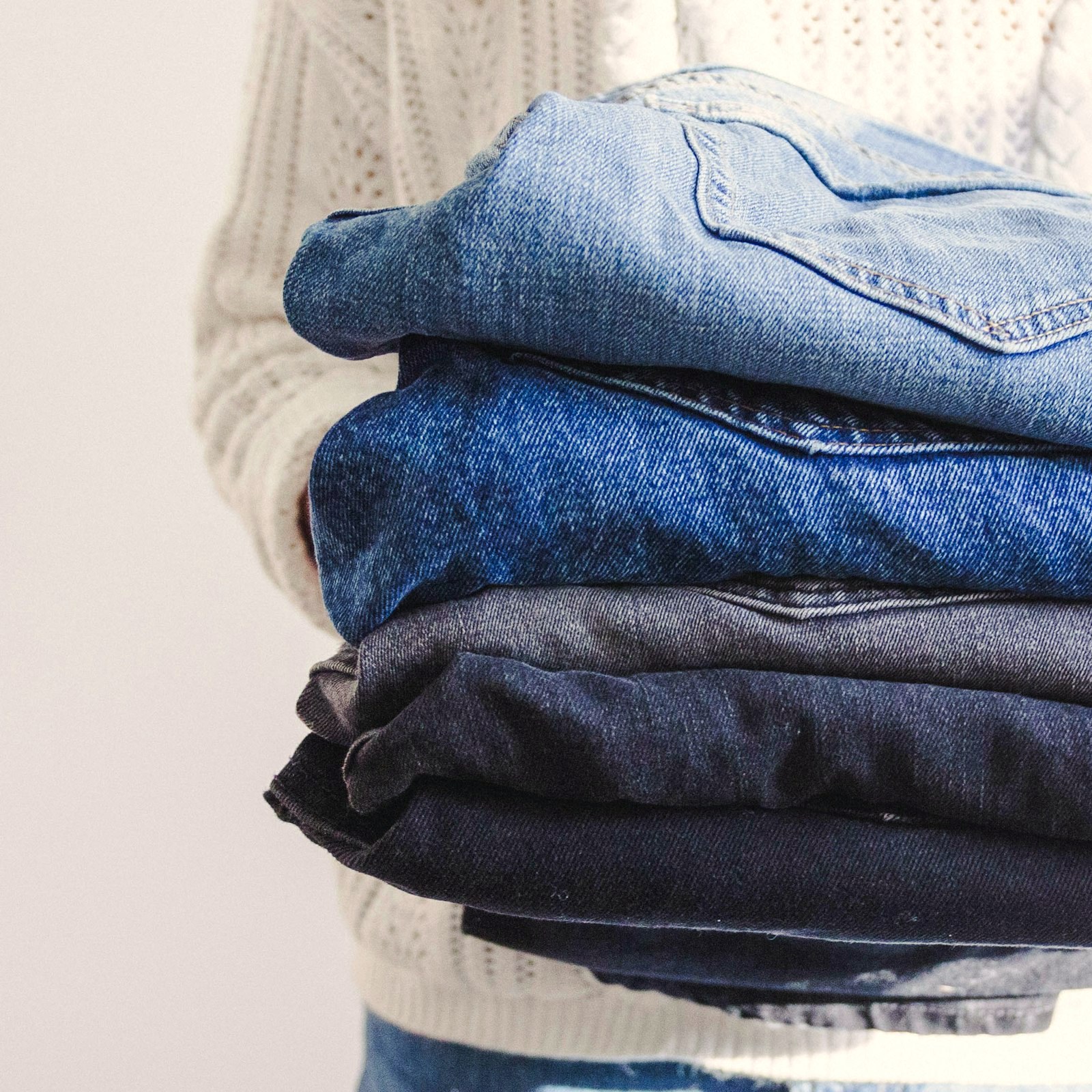
Exhibit two: the denim jacket, where the remake wins outright
On Verdict Card No. 51, the result reverses. The Iron Heart IH-526PJ wins the field at 86: a modified Type III in the house's flagship 21 ounce Japanese selvedge, the heaviest published cloth in the field, with felled seams and steel donut buttons, at $455. The Pure Blue Japan 18 ounce Type II follows at 84, its cloth woven by the maker's own mill, ruled ahead of the 3sixteen Type 3s, also 84, on the cloth row. Then the Card's count, which is the exhibit inside the exhibit: of the eight jackets graded, four print a full fibre split, and Levi's, Uniqlo and boohooMAN print neither a weight nor a mill. Read that against the method section. The copies publish their specifications because their tradition requires it. Two of the field's biggest originals publish neither of the two numbers the garment is bought on. The audit does not care whose grandfather made the pattern. It cares who prints the paperwork now.
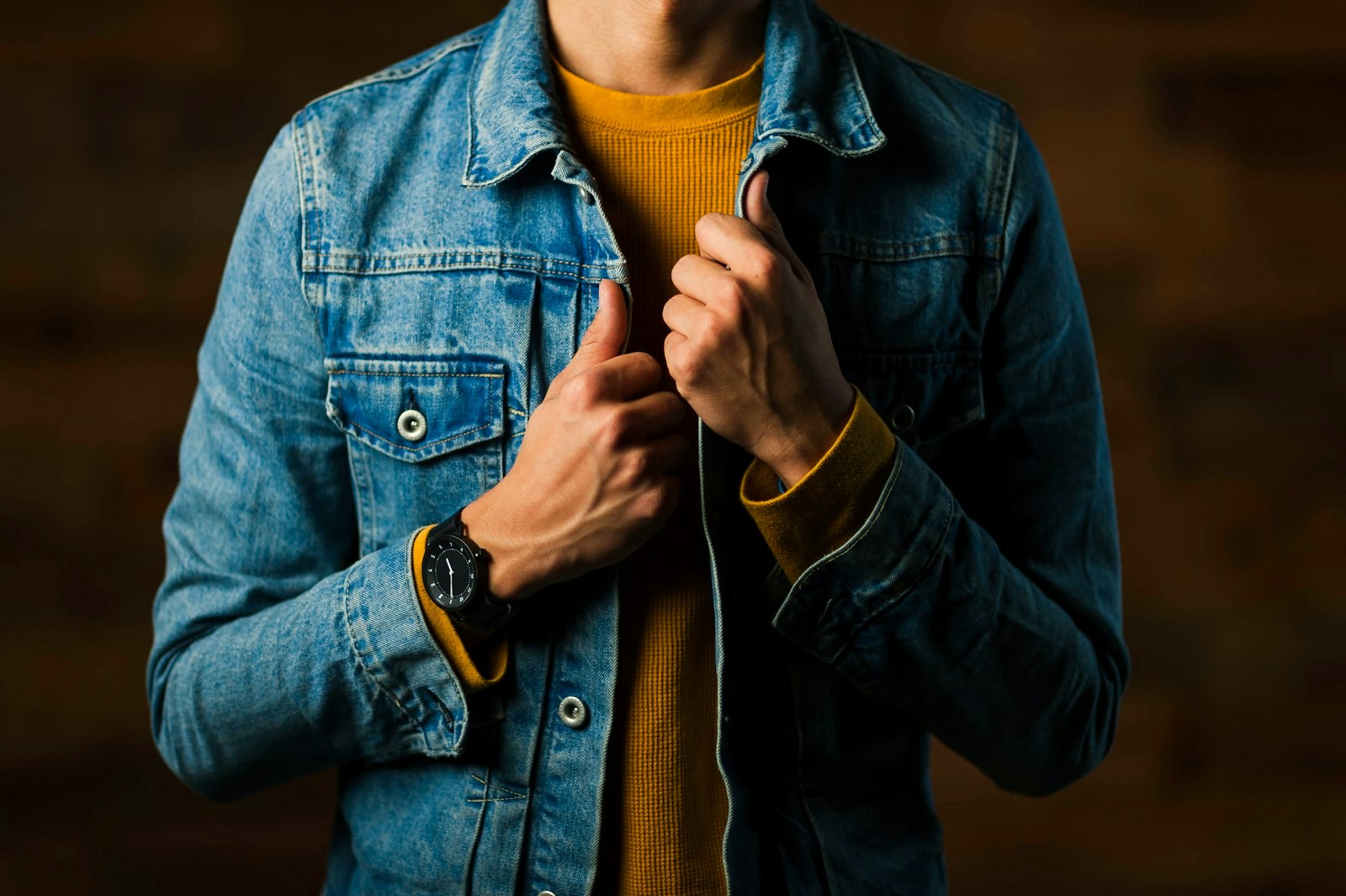
Exhibit three: the MA-1, and the inversion
On Verdict Card No. 61, the tradition produces its cleanest single result. The Buzz Rickson's MA-1 wins at 84: a heavy nylon twill custom-woven to the 1957 USAF specification, a wool fibre fill, pocket linings quantified, a copied Crown zipper, and a rib knitted from two-ply 100 percent worsted wool. The Card's count gives it the edge in one line: of the eight bombers graded, exactly one maker publishes its rib's composition, and it is the Japanese reproduction. The Alpha Industries MA-1, the American end of the same pattern, stands at 79, an honest jacket at working money, and its page prints the shell split and stops there: the rib's fibre and the zip's maker go unprinted. The cost table prices the difference without flinching, about $0.67 a wear against about $1.28. Name the finding plainly, because the page's argument turns on it: the copy out-publishes the original. A reproduction carrying more of the 1957 specification in print than the current American jacket does is ametora's whole method caught in one table, and it happened on a Card built to grade bombers, not to prove anything about Japan.
Exhibit four: the Oxford, where the benchmark moved
The most Ivy garment in the wardrobe closes the evidence. On the Oxford ranking, the winner is the Kamakura Shirts Oxford Button-Down at 93, and the Card's collar audit is the detail that matters: Kamakura's unlined roll is the modern benchmark for the roll this ranking scores. Brooks Brothers, which invented the button-down collar in 1900, still scores a perfect 20 for that roll on the same page. The inventor ties the benchmark it created; the Card goes to the Japanese maker on the rest of the record, and on the ranking's longevity scores both shirts are decade shirts. That is the tradition's mature form, beyond denim and flight nylon: not a copy chasing an original, but a maker keeping a specification at its peak after the peak became history, in the original's own signature garment.
The loopwheel note, printed honestly. The cloth the tradition prizes most, loopwheel cotton, is graded on this site, and the graded record belongs to a German maker: Merz b. Schwanen's loopwheel tee, 245 gsm, takes the cloth crown at 82 on the white tee Card, and its 206 loopwheel henley scores 82 on the henley Card. This page prints that without sanding it down, because it proves the page's own rule. The Cards grade the method, not the passport. Loopwheel survives as a specification wherever a maker still runs the frames and prints the weight, and the audit follows the paperwork across any border it likes.
Where it fails: the reference-led end
Every decode on the hub has a costume version, and ametora's is the one that wears the references: the flag, the league logo, the souvenir, the camo, the picture of the thing instead of the thing. It is graded on the same pages as everything above. On the Japanese ranking, A Bathing Ape finishes at 57, with the verdict printed in the ranking's own words: the price buys the camo and the ape head, and the cloth underneath is ordinary. That is the reference-led failure in its purest form, a garment whose American references are impeccable and whose specification nobody involved bothered to publish, because the references were the product.
The sibling record sits one desk over, on the sukajan guide, under its thread-or-print test. The heritage standard, Tailor Toyo, scores 92. Honest Japanese mid-market jackets score 81. The printed tourist version scores 34: it keeps the picture and deletes the craft. Two garments, one failure, stated two ways. The reference is reproduced perfectly and the specification is gone, and a buyer grading by references cannot tell the 92 from the 34 until the garment is in hand, which is precisely the buyer the costume version is built for.
This is also where the hub's held-back half of the ruling earns its keep. The name is unproven because the name certifies nothing: it can be claimed by the IH-526PJ and by the printed souvenir in the same breath, and only the paperwork separates them. The defence is procedural, and it is the same defence this whole site runs on. Read the split. Check the Card. Then decide what the garment is. Ametora worn by reference, with no specification checked, is cosplay with better lighting, and the tradition's own best makers are the ones who made that sentence checkable.
The wardrobe it builds
The decode ends where the hub's format requires: in the wardrobe, compiled from the records above. Read the table as the argument on one screen. In three of the six rows the remake's record stands above the original's current one; in one the original wins; in one the original's invention still sets the benchmark its maker now ties; and in the last the graded record belongs to neither country, which is the point of grading.
| Piece | The original's record | The remake's record |
|---|---|---|
| The jean | Levi's 501, 81 on the jeans Card, under $85 | Iron Heart IH-634S, 80, 21 oz selvedge, $385 |
| The denim jacket | The field's big originals print neither a weight nor a mill (Card No. 51 count) | Iron Heart IH-526PJ, 86, $455 |
| The flight jacket | Alpha Industries MA-1, 79, rib and zip unprinted | Buzz Rickson's MA-1, 84, the 1957 spec in full, $575 |
| The Oxford shirt | Brooks Brothers, a perfect 20 for the roll it invented in 1900 | Kamakura, 93, the Card, its unlined roll the benchmark |
| The fatigue trouser | The US Army pattern, as the reference | OrSlow, 89 on the Japanese ranking, $300 to $395 |
| Loopwheel cotton | The graded record is Merz b. Schwanen's, 82 on two Cards: the method, graded wherever it is practised | |
The entry piece: the jean, in either direction, the hub's ruling kept without amendment. The 501 for value and range, the IH-634S for cloth, one pair worn with the wardrobe that already exists. The second door is the fatigue trouser, OrSlow at 89, named on its ranking the single best trouser buy in the country. The full method, for any later piece, is the denim explainer's habit applied to everything: know what the specification is before pricing anyone's fidelity to it.
The Decoder Rule
An aesthetic that cannot survive its garments' composition lines is a costume. Ametora survives its composition lines more completely than any other decode on the hub, because its garments print their specifications as a matter of tradition, and twice on this site's Cards the copy publishes more of the original than the original now does. The name stays unproven, because names are not graded. Read the spec, check the Card, and let the word come last, if it comes at all.
What this page does not claim
Five limits, printed in the open, in the hub's manner. First: no ametora ranking exists on this site, and none is invented here. Every score quoted lives on its own Card or ranking, linked, where its basis is printed. Second: the word ametora appears on exactly one other page, the hub. This spoke deepens the hub's ruling; it does not revise it, and where the two could be read differently, the hub's six words govern: survives in cloth, unproven in name. Third: the history section is an outline from published accounts, chiefly Marx's, not new reporting; no artifact, interview or coverage claim has been manufactured for it. Fourth: the photo bank holds no selvedge-edge or loopwheel macro, the one denim macro candidate having been rejected at harvest for a readable third-party label, so the cloth at the centre of this page is shown in garments and streets, captioned for exactly what they are. Fifth: Young Cotton is a New York magazine. This page is written by its Asia desk, whose editor's roots in the region stand on the team page; no office in Japan is claimed or implied, and Japan appears here as what it is for this magazine, a grading subject and the craft influence behind half the records above.
FAQ
What is ametora?
Ametora is a contraction of American traditional: the Japanese remake of classic American clothing, Ivy League tailoring, five-pocket denim, workwear, flight jackets and sportswear, rebuilt in Japan to the originals' best historical specifications, with heavier cloth and stricter construction than the current originals usually get. The standard published history is W. David Marx's Ametora: How Japan Saved American Style. On the Aesthetic Decoder hub this desk rules it survives in cloth and unproven in name, and this page is that ruling at full length: the word appears on no other page of this site, no ametora ranking exists here, and everything graded below is graded on the garment Cards where the pieces already stand.
Is ametora just buying Japanese brands?
No. Buying Japanese is a geography; ametora is a discipline aimed at a specific back catalogue, the classic American wardrobe. The top of our Japanese ranking is Auralee at 94, a modern design house whose clothes answer to no American original, and it is not an ametora maker in any useful sense. The ranking's ametora-shaped entry is OrSlow at 89, whose US Army fatigue pants are a faithful reproduction of an American pattern, named there the best trousers on the list. A Japanese label selling its own designs is a different subject, graded on a different page. Ametora begins where a maker takes an American garment's best historical version as its specification and submits to being graded against it.
Why did the Levi's 501 beat the Iron Heart jean if the remake has the better cloth?
Because the Card grades the whole garment, not the cloth alone. On our jeans ranking the Levi's 501 wins at 81 on fit range and value: rigid 100 percent cotton, a button fly, the deepest size run in the field, at a list price under $85. The Iron Heart IH-634S is second at 80 as the finest cloth in the field, 21 ounces of Japanese selvedge at $385 in a single straight cut, beaten on arithmetic alone, as the Card prints. The remake does win elsewhere on the record: the denim jacket Card, where the Iron Heart IH-526PJ takes the field at 86, and the bomber Card, where the Japanese reproduction out-publishes the American maker. A method that only ever crowned the copy would be marketing. This one is graded, and the grades land where the paperwork puts them.
What is the Buzz Rickson inversion?
It is the bomber ranking's central finding, and the cleanest single exhibit for this whole page. The Buzz Rickson's MA-1, a Japanese reproduction of the 1957 flight jacket, wins the Card at 84 and prints its specification in full: heavy nylon twill custom-woven to the 1957 USAF specification, a wool fibre fill, the pocket linings' ratios, a copied Crown zipper, and a rib of two-ply 100 percent worsted wool. It is the only maker in the field that publishes its rib composition at all. The Alpha Industries MA-1, the American end of the same pattern at 79, prints its shell split and leaves the rib's fibre and the zip's maker unprinted. The copy out-publishes the original. That inversion, a reproduction carrying more of the original specification in print than the current original does, is ametora's method caught in a single table.
How is ametora different from quiet luxury?
Quiet luxury is a property of garments: cloth and construction as the signal, logos at zero, graded on this site as a standing index. Ametora is a relationship to a specific historical wardrobe: American classics, at their best historical versions, reproduced to a published specification. The two overlap in palette and restraint, and a Kamakura Oxford satisfies both at once, which is why it wins its Card at 93. They differ in reference. Quiet luxury has no original to be faithful to; its test is the composition line in front of it. Ametora's test is double: the composition line, and the dated specification behind it, the 1957 pattern, the 21 ounce cloth, the collar roll as it was first made. One grades the garment. The other grades the garment against its own history.
What is the entry piece for ametora?
The jean, in either direction, as the hub rules and this page keeps. The original for value: the Levi's 501 at 81, under $85, the deepest size run in its field. The remake for cloth: the Iron Heart IH-634S at 80, 21 ounces of Japanese selvedge at $385, a project rather than a default and priced as one. One pair, worn with the wardrobe that already exists, teaches the whole method: read the specification, compare it with the original's, and pay for the difference only where the paperwork shows it. The fatigue trouser is the second door, OrSlow at 89 on the Japanese ranking, $300 to $395, named the best trouser buy in the country on that page. Everything else in the wardrobe table is a later decision, made the same way.
Next
The hub this spoke hangs from is the Aesthetic Decoder, where the other six decodes stand and the rule is printed once for all of them. The records this page rules from: the Japanese ranking, the jeans ranking, Verdict Card No. 51 on denim jackets, Verdict Card No. 61 on bombers, and the Oxford ranking. The sibling Asia desk guide, built on the same thread-or-print test, is the sukajan guide. The cloth literacy underneath all of it is the denim explainer, and the scoring basis for every number quoted here is the Methodology page. Measure first, then decide: the order of operations this tradition has run for fifty years, and the only one this desk trusts.