
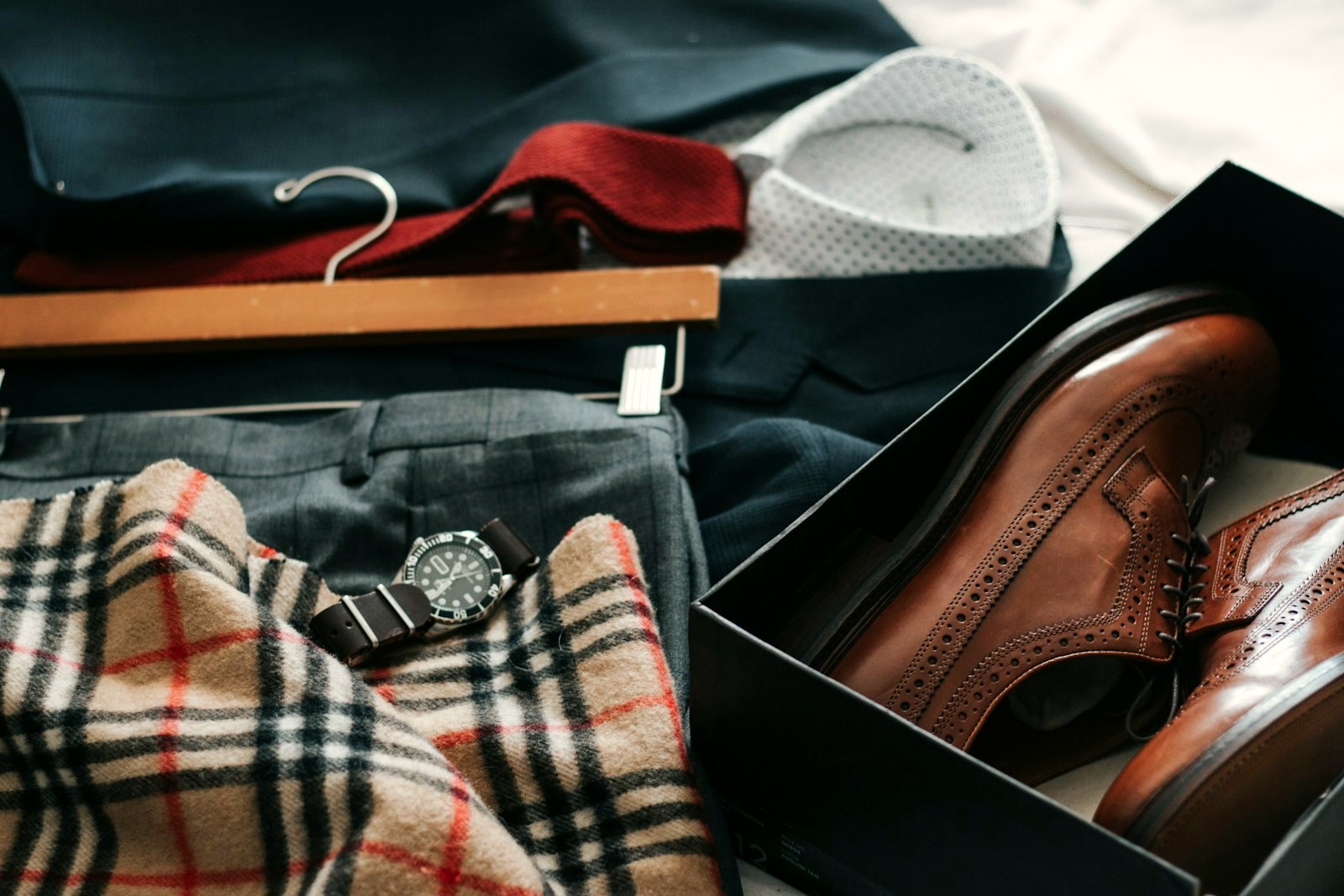
The blazer's natural assembly, laid flat: navy jacket, grey trousers, leather shoes, the colour break between jacket and trouser doing the work. The frame is the bank's and it is the same assembly the wearing brief leads with, because the bank holds no photograph of a worn unstructured blazer; the gap and the harvest list are named in the honesty section below rather than filled with a structured suit jacket wearing the wrong doctrine.
Checked and updated October 2026
The verdict, up front: seven blazers scored out of 100 on cloth 30, construction 20, fit and species 20, value 15, longevity 15, plus the one sent home. The Spier & MacKay Navy Hopsack Sport Coat wins at 85, a stated half canvas, an unpadded shirt shoulder and a merino hopsack at $328; the score is an audit, since this site's Business Casual Capsule gave the same garment 85 without published rows, and the rows rebuilt from the maker's record land on the same number. The Drake's Games Blazer follows at 81 with the fullest cloth record in the field, the only published cloth weight on the page. The Boglioli K-Jacket and the Suitsupply Havana tie at 76, ruled on the construction row, 17 to 13, the ruling printed on both cards. And the blazer sent home, at 29, is the ASOS DESIGN double-breasted blazer in stone twill, 66 percent polyester under a padded shoulder, its construction published nowhere. The count underneath the ranking is this Card's test, printed in full below: of the seven woven blazers scored, three state what holds their chest up; one of the eight publishes its cloth's weight; two name their cloth's mill, and it is the same mill both times. Two scope rulings before the ranking starts. This Card grades the soft and half-canvassed blazer sold as a separate: bespoke, made to measure and suit separates are out of scope, because a suit jacket is half a garment by the orphan rule printed in How to Wear No. 03, and the structured full-canvas class is a different field. And a brand score is never a garment score: where a house holds one on this site, it is printed on the card and kept separate, in both directions.
The finding: the split is published, the chest is not
A blazer's life is decided by one specification no photograph can show: what, if anything, stands between the cloth and the lining at the chest. Canvas moulds to the wearer and ages with him. A soft front with no canvas lets the cloth do the work and exposes every flaw in the making. Fusible interlining, glue, is smooth for a season and then bubbles at the chest with heat and dry cleaning, and the jacket is finished. Every other fact about a blazer can be photographed: the drape, the shoulder line, the lapel roll. This one cannot, which is why this desk expected it to be the least published number in tailoring, and counted.
The count, across the eight garments scored below. Construction stated on the maker's own product record: three of the seven woven blazers (the eighth garment is a knit, which has no canvas to state). The three are the winner, whose maker prints half canvas on its own construction page, and the two unstructured Italians of the field, Drake's and Boglioli, whose stated construction is that there is none. Cloth weight published: one of eight, the Drake's Games Blazer at 8.8 ounces, against a field of Super numbers, yarn counts and silence. Cloth mill named: two of eight, Suitsupply and J.Crew, and both name the same mill, Vitale Barberis Canonico of Biella. Full fibre split published: six of eight, the near-perfect column, because a care label forces it. Read the columns together and the industry's paperwork habit stands exposed: it publishes what the label law requires and what a photograph can sell, and it leaves the chest, the one fact that decides whether the jacket is alive in five years, to be discovered by wearing it. Buy the record: a maker who states the canvas, or states plainly that there is none, has told you the thing the photograph was hired to hide.
How the scores work
Every blazer is scored out of 100 on the same five rows. Cloth (30) reads the published cloth record: the fibre split as printed; the weight where a maker publishes one, charged where the Super number is offered instead, since a yarn count is not a weight; the mill named or left as a house word; provenance credited where printed. Construction (20) is the chest and the build around it: full canvas, half canvas, unstructured or fused, as published, with silence charged as silence; the shoulder construction as named; the lining as published; the button material named or not. Fit & Species (20) is the born-alone test of the wearing brief graded as published: patch pockets, texture, contrast buttons, a shoulder that reads soft rather than padded; the fit library a reader can actually enter; cuffs a tailor can shorten. Value (15) divides the price by the published record and by the seasons the longevity row scores, printed in the cost table below. Longevity (15) is the ownership audit: how the construction ages, whether the house still sells the model, and whether a making culture stands behind the garment. Row scores add to the total, on every card.
The ranking
Spier & MacKay Navy Hopsack Sport Coat
The winner: the stated half canvas
$328 list, the maker's own product page (the maker's product site sits behind a bot wall for this desk's fetcher; the door is the address its own construction page hands out, and the price is the one its retail record carries)
Buy this if you buy one blazer: a half canvas its maker states in the open, a soft shirt shoulder, a merino hopsack and horn buttons at the price of a fused high-street jacket.
This card is an audit, and it prints the word. The Business Casual Capsule gave this garment 85 with no published rows, from the maker's reputation and this desk's standing record of the house (the brand stands at 76, audited, on Brands Like No. 26, and is not the number on this card). This Card rebuilt the rows from the maker's own published record, and the record landed on the same number, which is printed as confirmation rather than presented as a fresh discovery. What the maker publishes, from its own construction page for the Moro cut: a half-canvas chest, an unpadded spalla camicia shoulder borrowed from the Neapolitan shirt tradition, natural cloth from Italian and English mills, two fits, and dummy sleeve buttons so a tailor can shorten the sleeve without a fight. The graded garment, the maker's navy hopsack, adds the rest of the record: a Super 110s merino hopsack, a quarter butterfly lining in Cupro, genuine horn buttons, patch pockets.
The cloth takes 25. A named fibre, a named weave and a yarn count are a strong record; what it is not is a weight, and the mill for this cloth is named by country rather than by house. The maker's own range proves it can do better: its Luigi Botto waffle sibling prints 320 grams a square metre and names the mill. The graded cloth's silence is charged two points and printed, because the audit grades the hopsack's record, not the range's best page. Construction takes 18, the field's best. The half canvas is the honest middle of tailoring and it is stated where a buyer can read it before paying, which three of seven woven makers in this field manage. The soft shoulder is the species' signature done properly: bought, per the wearing brief, because it cannot be tailored after the fact, and here it is published as a construction rather than implied by a photograph. Fit and species take 16: patch pockets, texture in the cloth, horn against navy, slim and contemporary fits side by side, and the born-alone test passed on every line. Value takes 14: $328 for a stated half canvas is the field's arithmetic outlier, undercutting the silent makers by hundreds. Longevity takes 12: the construction moulds and ages the way canvas does, the sport coat is this young house's signature line rather than a seasonal experiment, and the house's making culture is the one its whole record argues.
Drake's Games Blazer Mk. I, Navy Vintage Wash Cotton
The fullest cloth record in the field
£795 at the maker's own store, about $1,010 at this check's exchange
Buy this if the cloth is the argument: the only maker on this page that publishes its cloth's weight, in an unstructured cotton jacket made to soften with every wear.
The cloth row is won here, and it is won on a number nobody else prints. The maker's own product page publishes the split (100 percent cotton), the construction (unstructured, stated in those words), the lining (none in the body, sleeves lined), the buttons (horn), the pockets (patch, with a flapped ticket pocket), the lapel record (a three-roll-two), the making (Italy), and the one figure this entire field otherwise withholds: the cloth weighs 8.8 ounces. The mill itself is unnamed, given as a Japanese house with half a century of work behind it, and the desk charges the unnamed name; but provenance by country plus a weight is still the fullest cloth record on this page, and it takes 27 of 30.
Construction takes 17. Unstructured is a construction statement, and this maker makes it in print rather than in drape: no canvas, no padding, twin-needle seams, a half-lined back yoke, the jacket's softness published as its specification. The vintage wash is the same honesty applied to ageing: the cotton is pre-softened and will fade at the seams, which the maker describes as the garment's character rather than hiding it in the care instructions. Fit and species take 15: cut from the house's games-jacket pattern, sized 34 to 48, worn by a named model whose height is printed, with the maker's own note that readers often size down, the transparent advice the fit row exists to reward. Value takes 9: £795 is the field's second-highest ticket, and the record divides it honestly without closing the gap to a $328 half canvas. Longevity takes 13: the Games line has run through seven marks since the house settled its pattern, the house has dressed men since 1977, and a cotton jacket built to soften rather than to hold a crease ages by design rather than by failure. The four points it loses to the winner are the four the price and the unnamed mill account for; on paperwork alone, this is the blazer the rest of the field should be embarrassed by.
Boglioli K-Jacket
The soft original, graded as a garment
$1,795 at the US retail record for the graded model; the maker's own store lists the model from CHF 1,000
Buy this if you want the garment the species is named after and have read what its paperwork does not say: the unstructured original, sold on drape, at a drape's price.
Two numbers stand on this card and they are never confused. The brand stands at 90 on the Italian ranking, where the K-Jacket is its key piece; that 90 grades the house. The 76 here grades the garment, on this Card's basis, and the gap between them is the most instructive number on the page: the house's authority is real and its product paperwork is not where the authority lives.
The garment's record, as published: unstructured and unlined, stated plainly on the maker's own collection page as the model's identity; garment-dyed, the house's signature process, the jacket washed after making so the cloth takes colour unevenly and softly; patch pockets; a two-button front; made in the house's own factory in Gambara, as it has been since the model appeared in 2000. The graded model is a wool, silk and linen cloth per its retail record. Cloth takes 25: noble fibres and a process no competitor copies well, charged where the record stops, since the maker publishes no percentages for the graded model, no cloth weight and no mill, a silence the field's winner and runner-up both avoid in part. Construction takes 17, and it wins this card its tie: against the Suitsupply Havana, also 76, the ruling is printed on both cards, the K-Jacket's chest is a stated construction, nothing in it, published as the garment's whole idea, while the Havana's canvas goes unnamed in its maker's own copy; construction 17 to 13 decides third place. Fit and species take 14: the soft shoulder is the original of the species, and it is also the fit with no appeal process, bought exactly right or not at all, with Italian sizing 46 to 58 the only published fit paperwork. Value takes 6: $1,795 at the American retail record, or CHF 1,000 and up at the maker's own store, divides against a record thinner than garments a fifth of its price, and the row prints that without flinching. Longevity takes 14, the field's best: a model a quarter century old, made in the maker's own factory, in cloth dyed to look better worn than new; the garment is built to outlive its paperwork, which is the house in one sentence.
Suitsupply Havana Jacket
The named mill, the unnamed chest
About $330 (3,499 NOK at the maker's own store for the graded tropical wool configuration); the maker's catalogue door is below, and US pricing varies by cloth
Buy this for the cloth paperwork: a maker that names its mill on every jacket and, on the same page, never once says the word canvas.
The brand stands at 74, derived, on Brands Like No. 26, and is printed here so it is never confused with the garment's 76. The Havana is this house's soft-shouldered separate, and its published record is the field's strangest split personality. Cloth takes 26: the maker's own catalogue names the mill on every cloth it sells, Vitale Barberis Canonico, Angelico, E.Thomas, Moon, Botto Giuseppe, a library no other maker on this page matches, and the two share of eight in this field who name a mill at all are this house and J.Crew, both naming the same Biella house. The graded configuration is a pure tropical wool by VBC, a fine open weave for warm rooms. What the cloth record never gives is a weight, and the percentages hide inside the word pure.
Construction takes 13, and it loses this card its tie. The ruling is printed on both cards: at 76 all, the Boglioli K-Jacket takes third place on this row, 17 to 13, because its chest is a stated construction and this one's is not. Read the maker's own product copy end to end and the word canvas does not appear. The shoulder is soft, the pockets are patch, the silhouette is published in photographs, and the single specification that decides the jacket's life is carried by the house's general reputation rather than by the garment's own page. This desk grades the record, and the record is silent at the exact coordinate this Card exists to measure. Fit and species take 15: the fit library is the broadest here, the Havana's soft shoulder and patch pockets pass the born-alone test in print, and the house's alteration culture is part of the offer. Value takes 11: at about $330 the price matches the winner's ticket almost exactly, and divides against a thinner construction record, which is the row's whole argument. Longevity takes 11: the Havana has been the house's staple for over a decade and the house stands behind its making at scale; the canvas it declines to name cannot be scored for ageing, and the row says so.
J.Crew Ludlow Legacy Blazer in Italian Wool Flannel
The mill named, the canvas whispered
Listed at $450 by the maker. This card ships without a buy pill: the maker's own product address for the garment, its Item BM210, was not captured verbatim in this pass, and this desk does not guess a door. The backfill is owed and named in the honesty section.
Buy this for the cloth's name: a Biella mill with a founding date printed on the record, in the American sport coat pattern, let down only by what the maker's copy will not say about its chest.
The brand stands at 73 on Brands Like No. 11; the garment's 75 is its own. The maker's published copy for this blazer, its Item BM210, is a study in two registers. On the cloth it is exemplary: 100 percent wool, woven by Vitale Barberis Canonico of Biella, established 1663, the mill and its founding date printed where a buyer reads them, one of only two named mills in this field. Genuine horn buttons are printed. The lapel record is printed: a three-roll-two front, the American sport coat's signature. A partial lining in Bemberg, a fibre better than the Cupro class most makers stop at, is printed.
Cloth takes 25 on that record, charged the unpublished weight. Construction takes 15, and the two missing points are the card's story: the word canvas does not appear in the maker's own product copy. A half-canvas chest is attested for this garment in hands-on reviews, by writers who opened the jacket and felt the canvas in the chest piece, and this desk prints that attribution rather than adopting it, because the rule of this Card is that the maker's own record is the evidence. A maker who names a mill founded in 1663 and leaves its chest to be reported by reviewers has graded its own priorities, and the row follows. Fit and species take 14: the Ludlow cut is the slim American answer, a second Crosby fit beside it, nonfunctional cuff buttons a tailor can work around, patch-adjacent detailing kept quiet; the born-alone read is genuine if more office than club. Value takes 10: $450 against the winner's $328 for a record that is stronger in exactly one column. Longevity takes 11: the Legacy name is the house reviving its own archival pattern, model continuity argued in the name itself, and a canvassed chest, where present, ages the way the row hopes rather than the way it can prove.
Massimo Dutti 100% Wool Check Blazer
The honest label in the quiet range
This card ships without a price and without a buy pill: the maker's own page for the graded garment resisted a price capture in this pass, and this desk does not print a price it could not read. The garment is the maker's reference 6057/768, sold from its own store.
The high-street wool blazer done without costume: a full fibre claim on the label, a fully lined build stated in print, and silence where the canvas should be.
The brand stands at 71 on Brands Like No. 05; the garment's 65 is its own, and the gap is the Inditex pattern this site has graded before: the house's taste outruns its product paperwork. What the maker's own page states for this blazer is a clean, short record: 100 percent wool, printed where the split lives; a check woven into the cloth rather than printed on it; a notch lapel; three buttons; two patch pockets; a centre vent; and a full lining, stated as a fact of the build. That last line matters more than it looks. In this field the lining is the specification makers most often let a photograph imply, and this page states it.
Cloth takes 22: a full-wool claim with the check in the weave, charged the unnamed mill and the unpublished weight, the standard high-street silence at two removes. Construction takes 12: the lining is stated and the canvas is not, which places the garment in the field's silent majority at the chest; nothing on the page claims a softness the build has not earned, and nothing fuses the record either, since the word is simply absent. Fit and species take 12: patch pockets and a woven check pass the born-alone test, the model's height is printed on the page, and the fit paperwork stops there. Value takes 9: scored without a printed price, on the house's known band for the class and the record as published, and the row is flagged rather than faked; a desk that convicts others for unpublished numbers does not invent one of its own. Longevity takes 10: a seasonal range garment from a house whose lines turn over, graded on the cloth's honesty rather than on continuity it does not claim. At 65 this is the floor of the respectable field: everything below it is either another species or a costume.
Uniqlo Comfort Jacket
The knit species, graded as itself
$59.90 list. This card ships without a buy pill: the garment stood sold out at Uniqlo US at this check, with a restock notification offered, and this desk does not link a door that cannot be walked through.
Buy this knowing exactly what it is: a knitted jacket with the best fit paperwork in the field, the travel and spare-chair blazer, not a woven blazer's understudy.
The species ruling, printed where it is graded: this garment is a jersey knit wearing a blazer's silhouette, and it is scored as that species, not as a woven blazer that failed. It has no canvas because its class has none, the way a cardigan has none; its shape comes from the knit. Judged on those terms the record is a small masterclass in publishing. The maker's own page prints the full split with its ranges (the shell runs 68 to 70 percent polyester against 30 to 32 percent cotton across colourways, the lining 100 percent polyester), prints the construction that exists (a knitted body, lined sleeves, a tailored collar impression pressed into jersey), and prints what no woven maker on this page manages: complete garment measurements for every size, chest, length, shoulder and sleeve, so the fit is checkable before the box arrives.
Cloth takes 10: the split is printed in full and the cloth is a polyester-led jersey, disclosure credited and cloth convicted in the same breath, the two judgements this desk keeps separate on every card. Construction takes 11: everything the species has is published, and the species has little; there is no chest to mould and no lining story beyond the sleeves, and the row prices the class rather than punishing the honesty. Fit and species take 16, the field's best paperwork: measured garments beat adjectives, and this is the only card where a reader can verify the shoulder before buying it, which is the wearing brief's first doctrine delivered by the cheapest garment here. Value takes 14: $59.90 for a record this complete is the cost table's floor, about $0.75 a wear across its scored life, and the row prints beside it that the figure buys two years, not ten. Longevity takes 7: jersey bags at the elbow, the model cycles with the seasons, it stood sold out at this check, and the house itself files it under comfort. The brand stands at 84 on Brands Like No. 08, printed so the distance is visible: a great house's honest knit is still a knit, and at 58 it outranks the costume below by twenty-nine points because it never pretended otherwise.
ASOS DESIGN Double Breasted Blazer in Stone Twill
Sent home: the costume
£85 list at the maker's own store, about $108, found at £29.99 and out of stock in this pass, the markdown being the garment's permanent condition. The skip ships doorless.
Sent home. The conviction rests on the maker's own published record, which is the only evidence this desk uses, and the record convicts in the maker's own words. The cloth: 66 percent polyester, 28 percent viscose, 6 percent elastane, printed in full on the garment's page, and the desk credits the printing while convicting the cloth, a majority-synthetic twill being the shiny polyester species the wearing brief names as its skip in so many words. The silhouette: double breasted, peak lapel, boxy fit, and padded shoulders, the structured costume read, a blazer drawn from photographs of blazers by a pattern desk that sells the outline. The construction: published nowhere, no canvas word, no lining record, no button material, nothing between the cloth line and the price. What the garment is, in its maker's own paperwork, is a fibre split and a silhouette.
Cloth takes 5. Construction takes 6, for a garment whose page cannot say what holds it up. Fit and species take 9: the boxy fit is at least named, the model's height and size are printed, and the born-alone test fails on the padded shoulder and the costume cloth together. Value takes 5, and the cost table prints why: at about $108 across one scored season of wears, this garment costs about $3.60 a wearing, dearer per wear than the Drake's Games Blazer at £795, because cheapness divided by a short life is not value. Longevity takes 4. The garment found at £29.99 inside its own launch season is the market grading the same record this page graded. Nothing here alleges the jacket looks wrong in a photograph. The photograph is the whole product, and a blazer is the one garment in the wardrobe whose worth lives exactly where a photograph cannot go.
The record table: what each maker actually publishes
The ranking divided by its paperwork. A tick is a fact stated on the maker's own product record for the graded garment; a dash is a silence, printed as one.
| Blazer | Fibre split | Cloth weight | Mill named | Construction stated | Lining stated | Button material |
|---|---|---|---|---|---|---|
| Spier & MacKay Hopsack | Yes | No | By country | Half canvas | Quarter, Cupro | Horn |
| Drake's Games Mk. I | Yes | 8.8 oz | By country | Unstructured | Unlined body | Horn |
| Boglioli K-Jacket | Fibres, no split | No | No | Unstructured | Unlined | Not stated |
| Suitsupply Havana | Name claim | No | Yes | No | Not stated | Not stated |
| J.Crew Ludlow Legacy | Yes | No | Yes | No | Partial, Bemberg | Horn |
| Massimo Dutti Wool Check | Yes | No | No | No | Fully lined | Not stated |
| Uniqlo Comfort Jacket | Yes | No | No | Knit, by species | Sleeves lined | Not stated |
| ASOS DESIGN Stone Twill | Yes | No | No | No | Not stated | Not stated |
Read the construction column against the split column and the finding stands without commentary: the fact the label law forces is published six times in eight, and the fact the maker chooses is published three times in seven woven garments, two of the three being statements that the chest is empty by design. The two houses that name their mill on the record, Suitsupply across its whole catalogue and J.Crew on this garment, leave the canvas word off the same pages. The fullest construction statements in the field sit at $328 and in the unstructured Italians' published identity. The chest is tailoring's least published specification because it is tailoring's least photographable one, and this table is the receipt.
Cost per wear, printed in the open
The assumption, printed before the numbers: a blazer in rotation is worn about 40 times a year. The life column is the service life our longevity row scores for, counted in years before the construction or the cloth retires the garment from the front of the rotation, not a promise. Sterling prices are converted at about £1 to $1.27. Massimo Dutti is excluded from the table because its price resisted capture; the desk does not cost what it could not read.
| Blazer | Price | Scored life | Cost per wear |
|---|---|---|---|
| Uniqlo Comfort Jacket | $59.90 | 2 years | $0.75 |
| Spier & MacKay Navy Hopsack | $328 | 10 years | $0.82 |
| Suitsupply Havana | About $330 | 8 years | $1.03 |
| J.Crew Ludlow Legacy | $450 | 8 years | $1.41 |
| Drake's Games Blazer Mk. I | £795 | 8 years | $3.16 |
| ASOS DESIGN Stone Twill (skip) | About $108 | 1 season | $3.60 |
| Boglioli K-Jacket | $1,795 | 12 years | $3.74 |
The table's shape is the ranking's economics in one view. The winner sits seven cents from the floor, because a stated half canvas at $328 amortises like equipment rather than like fashion. The knit is the cheapest line in the table and the shortest life in it, which is its honest bargain printed in numbers. And the sent-home garment, the cheapest ticket in the field after the knit, costs more per wearing than the £795 Drake's: the costume is the expensive option, at the rate a short life charges.
The skip: the costume at 29
Every rule of this Card lands on the ASOS blazer at once, and each lands on its maker's own page. The cloth is the named skip of the wearing brief, majority polyester under the word twill. The shoulder is padded, the silhouette the field's other seven are published against. The construction is absent at the exact coordinate this Card measures, on a page that found room for the fibre split because the law made it. And the price confesses the rest: £85 at list, £29.99 inside its own season, about $3.60 a wearing across the life the longevity row can score for it, dearer per wear than a £795 jacket from a house that publishes its cloth's weight. The desk does not allege the garment photographs badly. It alleges, on the record, that the photograph is the product, and that a blazer's worth lives in the one place a photograph cannot reach. Buy the winner and the arithmetic. Buy the knit and know its species. The costume is the only garment on this page sold as something it is not, and 29 is what that record earns.
Which blazer to buy
If you buy one: the Spier & MacKay hopsack, the stated half canvas at $328, navy first, worn over grey trousers exactly as the hero lays it out. If the cloth record is the argument: the Drake's Games Blazer, the only published weight in the field, in cotton that is made to fade honestly. If you want the original: the Boglioli K-Jacket, bought at the maker's own store if the CHF door serves you, and bought knowing its garment paperwork is thinner than its twenty-five years deserve. If you want the mill library: the Suitsupply Havana, chosen by its cloth's name, with the unnamed chest read on its card first. If you want the American pattern: the J.Crew Ludlow Legacy, the Biella flannel with the three-roll-two front. If the budget is a working one: the Massimo Dutti wool check, the respectable floor, or the Uniqlo Comfort Jacket as the knit it honestly is, the spare blazer for travel and warm rooms. How to wear whichever you buy, the shoulder, the button and the cuff rules in full, is How to Wear No. 03; where the blazer sits among the jackets is mapped in the jackets index; and the winner's second life, three outfits deep, is built into the Business Casual Capsule.
Questions, answered
What is the best blazer for men?
The Spier & MacKay Navy Hopsack Sport Coat, at 85 out of 100: a half-canvas chest its maker states in the open, an unpadded spalla camicia shoulder, a Super 110s merino hopsack, a quarter lining in Cupro and genuine horn buttons, at a $328 list. The score confirms the 85 this site's Business Casual Capsule gave the same garment without published rows; this Card rebuilt the rows from the maker's record and landed on the same number. The fullest cloth record in the field belongs to the Drake's Games Blazer at 81, the only maker here that publishes its cloth's weight. The blazer sent home, at 29, is the ASOS DESIGN double-breasted blazer in stone twill, 66 percent polyester with a padded shoulder and no construction published anywhere on its page.
What is the difference between a blazer and a suit jacket?
A blazer is a whole garment and a suit jacket is half of one. The suit jacket was cut to be worn with matching trousers and carries the evidence: smooth worsted cloth, flap pockets, a padded structured shoulder, buttons toned to the cloth, a full lining. The blazer was born alone: patch pockets or textured cloth, a soft or natural shoulder, horn or metal buttons that contrast, half a lining or none. Worn over odd trousers, the orphan suit jacket reads as a suit whose trousers wore out. The rule, printed in full in How to Wear No. 03: if it came with trousers, it stays with them. Every garment on this page is sold as a separate and graded as one.
Should a blazer be half canvas, full canvas or unstructured?
Any of the three, provided the maker says which. A half canvas gives the chest a shape that moulds to the wearer and is the honest middle of tailoring. An unstructured blazer removes the canvas entirely and lets the cloth do the work, which is the soft Italian answer and the harder one to make well, because there is nowhere to hide sloppy work. What fails is the fourth option: fusible interlining, glue, which bubbles and delaminates with heat and dry cleaning, and which no maker in this field admits to using. Of the seven woven blazers scored here, three state their construction on the maker's own product record. The rest sell a drape in a photograph and leave the chest out of the paperwork.
Why do so few blazers publish their construction?
Because the chest is the one part of a blazer a photograph cannot sell and a returns desk cannot see. Counted across the eight garments on this page: three of the seven woven blazers state their construction, one of eight publishes a cloth weight, two of eight name their cloth's mill, and six of eight publish a full fibre split. The split column is nearly perfect and the construction column is nearly empty, which is the finding in one sentence: the industry publishes what a care label forces it to publish and goes quiet on the specification that decides whether the jacket is alive in five years or bubbling at the chest. Buy the record: a maker who states the canvas, or states that there is none, has told you the thing the photograph was hired to hide.
Is a knit blazer a real blazer?
It is a real garment and a different species, and this page grades it as one rather than as a failed woven. A knitted or jersey blazer has no canvas, no woven cloth and no lapel roll in the tailoring sense; its shape comes from the knit itself, the way a cardigan's does. Graded on that basis, the Uniqlo Comfort Jacket takes 58: it publishes its full split, it publishes garment measurements for every size, the best fit paperwork in this field, and its cloth is a polyester-led jersey priced honestly at $59.90. What it cannot do is the woven blazer's job in a formal room, and its own maker files it under comfort for a reason. The species is acquitted. The costume version, a woven-look jacket in synthetic cloth with a padded shoulder and no published construction, is the one sent home on this page.
How much should a blazer cost per wear?
At forty wears a year, the ranked field on this page runs from about $0.75 a wear, the Uniqlo Comfort Jacket across two scored years, to $3.74, the Boglioli K-Jacket across twelve. The winner is near the cheap end: the Spier & MacKay hopsack at $0.82 a wear across ten scored years, because a stated half canvas at $328 amortises like equipment. The lesson the table prints every time is that cost per wear rewards a published record over a low ticket: the sent-home ASOS blazer, at about $108, runs about $3.60 a wear across its single scored season, dearer per wearing than the Drake's Games Blazer it will be photographed imitating.
How this ranking stays honest
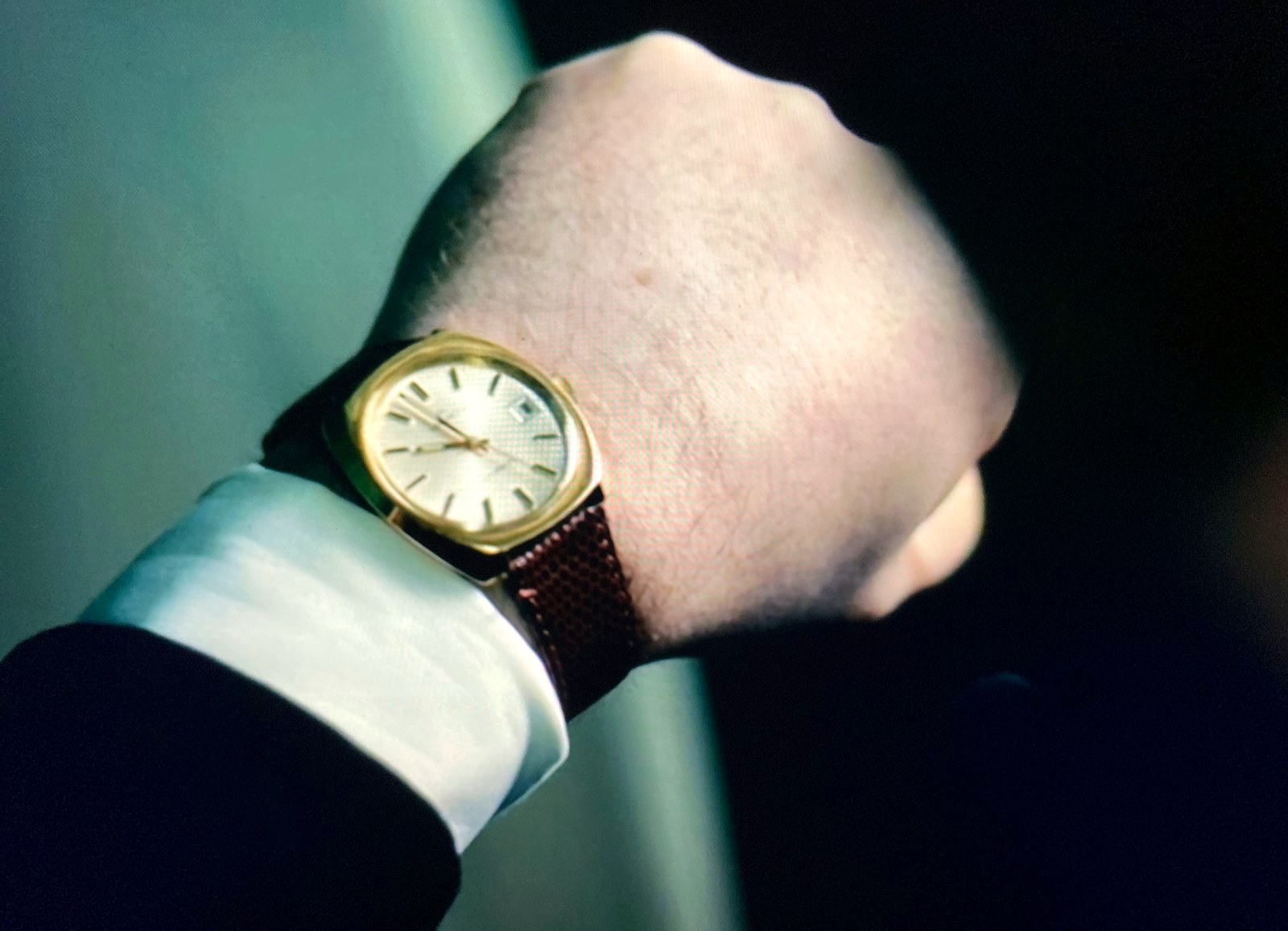
The scope, the rests, the prose answers and the capture notes, printed. Scope: this Card grades the soft and half-canvassed blazer sold as a separate. Bespoke and made to measure are out of scope because their record is a fitting, not a page, and a Card that grades published records cannot score a conversation. Suit separates are out of scope by the orphan rule: a jacket cut to match trousers is half a garment and is graded with its suit or not at all. The structured full-canvas class, the Canali end of the Italian record, is a different field with a different buyer, and it is not sentenced here for failing a softness test it never sat. H&M was rested deliberately: its $99 blazer already stands as an exhibit in the Rag & Bone record on this site, this Card does not re-grade it, and the house's derived brand score and its running garment derivation stand untouched by this page. Todd Snyder, at 79, and Brooks Brothers, at 77, hold their brand records and were not seated; the field's seven chairs were filled by records a blazer buyer can divide, and neither house's current blazer paperwork was captured in this pass. The audit, repeated plainly: the winner's 85 began as this site's own capsule score, printed there without rows; this Card rebuilt the rows from the maker's published record and landed on the same total, and prints the agreement as an audit result rather than a coincidence. On capture: the Spier & MacKay door is the product address the maker's own construction page hands out; the maker's product site sits behind a bot wall for this desk's fetcher, and the door and the $328 list are flagged for the parent's re-verification, the garment's construction record itself verified from the maker's own construction page and its published product description. The J.Crew garment is the maker's Item BM210 and its copy is graded as the maker's text; its maker's product address was not captured verbatim and its card ships without a pill for that reason, the backfill owed. The Massimo Dutti price resisted capture on the maker's page; its card prints no price and its cost-table seat is left empty in the open. The Suitsupply door runs to the maker's own catalogue search, the graded configuration priced from the maker's own store in Norwegian kroner and converted at this check's rate; US cloth pricing varies and the card says so. The Uniqlo garment stood sold out at Uniqlo US at this check. Three cards ship without buy pills, for the reasons printed on them; the skip ships doorless. Stale sibling, flagged for the parent: How to Wear No. 03's sixth question still answers that no blazer Verdict Card exists on this site; at this ship it is stale, and its amendment to cite this Card and its winner belongs to the same deploy that wires this page. On photography: the magazine's bank holds no photograph of a worn unstructured blazer, an admission the wearing brief printed before this Card existed. The hero is the flat-lay assembly both pages share, the body frame is the cuff junction, both captioned for exactly what they show, the cards run without images, and the harvest list names what is missing: an unstructured navy blazer worn over odd trousers in street light, a spalla camicia shoulder at fitting distance, a lapel roll at macro range, and a half-canvas chest piece photographed during making. Prices and specifications were checked against the makers' own listings in October 2026; where a figure could not be verified from the maker's page, the page says so at the figure's elbow. The full method is written out on the methodology page.