
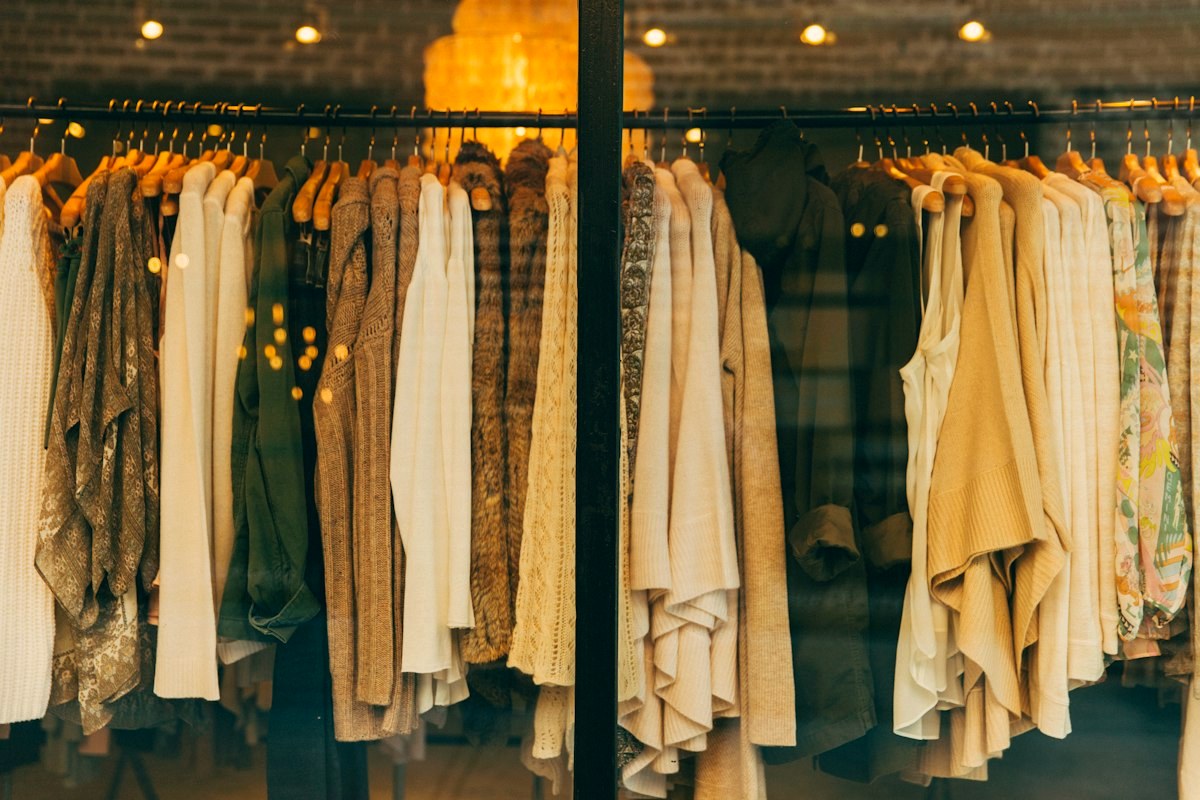
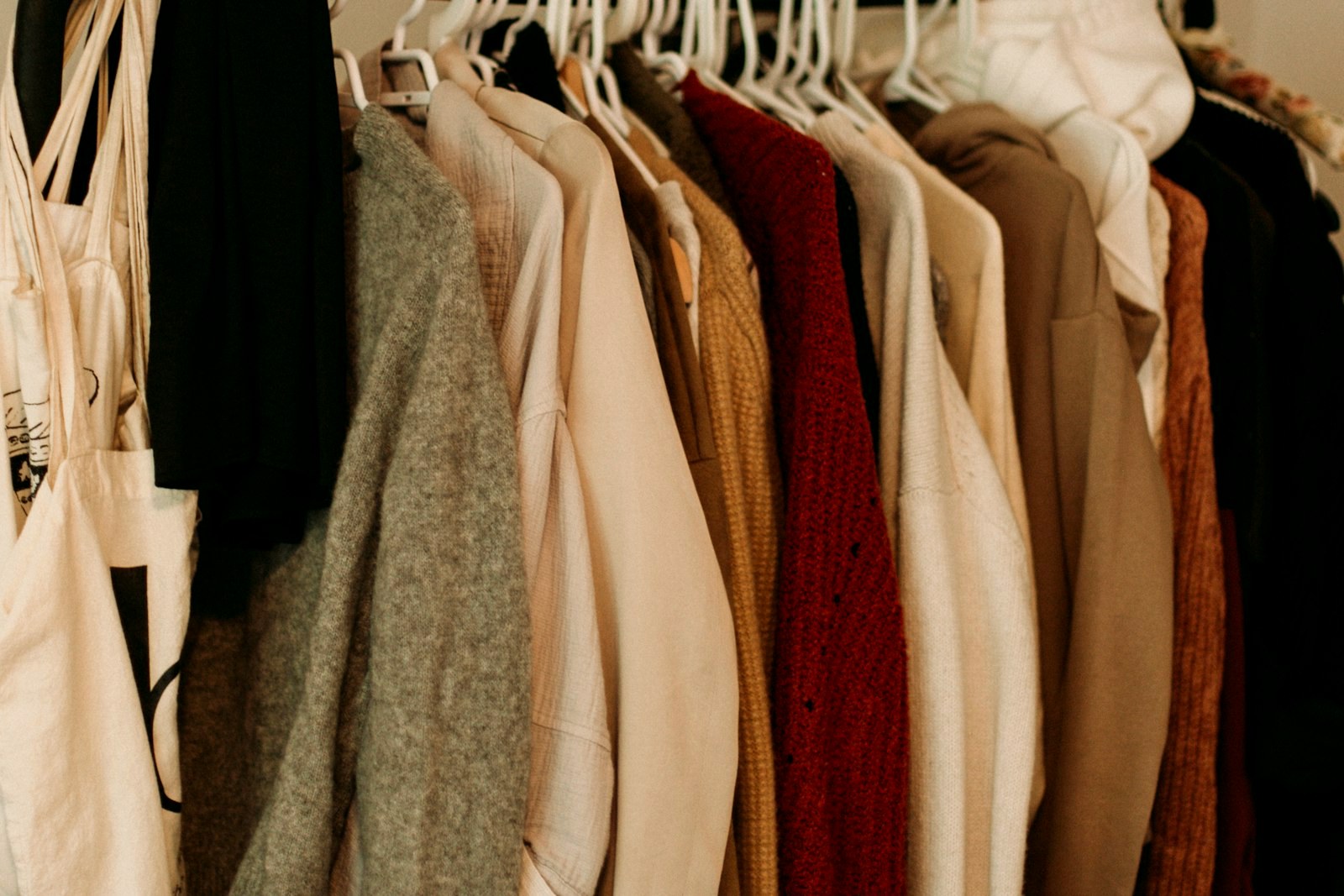
The rail the garment hangs on, in its own colours. Our bank holds no photograph of a field jacket on a body in any species, a gap our styling brief admits and this page repeats rather than covering with a borrowed shot, so the page opens on the rail itself.
Checked and updated October 2026
The verdict, up front: eight field jackets scored out of 100 on the house basis for the garment: cloth and weight honesty 30, pocket architecture 20, fit and layering 20, value 15, longevity and service 15. The L.L.Bean Original Field Coat wins at 84: a two-ply 10 ounce cotton canvas with its treatment named, five pockets counted and typed, and a button-out wool and nylon liner that makes the garment a system, at $220. The Alpha Industries M-65 follows at 82, the original pattern from the house that manufactures it to military specification, at $250. The Orvis Heritage Field Coat is third at 80, on the fullest pocket record in the field, and it ships without a buy link because its maker's US page could not be read at this check. And the jacket sent home, at 38, wears the field's furniture, flap pockets at the chest and hips and a placket over a zip, above a cloth its maker describes in its entirety as cotton fabric. The field's own question runs through every card: of eight garments, two publish a shell weight, two name a mill, two state a composition in percentages, two state the word bellows, and none names the brand of its zip.
First, know which species you are in
The field rail sells four species under one name, and this ranking separates them in print and grades each as itself, on the species record our field jacket styling brief prints and the jackets index files: the type stands at formality 2 and warmth 3, cloth cotton sateen and cotton and nylon, season spring and autumn over layers, bought on the index's rule, printed whole: four pockets you will actually use, cut closer than the surplus original. The true field jacket: the M-65 pattern as issued, four bellows pockets, a drawstring waist, a hood folded into the collar, a zip under a storm flap, cut to close over layers. Three garments here are this species entire, the Bean, the Alpha and the Orvis, the last in its weatherproofed country form. The safari or bush jacket: the field pattern's tailored cousin, four working pockets and a drawn waist on a shirt-collared body, graded as itself where its pockets work and its cloth is printed, which is the boundary this Card rules: the safari jacket is a species, the high-street utility jacket with flaps over nothing is not, whatever its label says. One garment here is the safari species, the Spier & MacKay. The waxed field coat: the same architecture in waxed cotton, ruled whole by the waxed record, styled in How to Wear No. 28 and ranked in Verdict Card No. 74, whose garments are cross-referenced here and never graded twice. One garment here, the Filson, is a different member of that species, graded once, on this page, as its field-pattern member. The field-styled fashion jacket: the pocket layout redrawn as silhouette, graded on whether any cloth fact stands behind its price. Two garments here are this species, and their records could not differ more: one prints its composition to the percentage and its bellows pockets by name, and the other is the skip.
The family law is the work family's, printed in the styling brief: cloth first, hardware second, silhouette third, and the pants index's law for every issued garment: the features are tools, and a feature that stops working is a costume. The chore coat, ranked in Verdict Card No. 47, is this garment's sibling at the same formality, separated by architecture: patch pockets and a room garment's shoulder against bellows pockets and a layering system's cut. This Card is scored on the tests the styling brief prints: the stack test for fit, the pocket law for furniture, and the cloth column for everything.
How the scores work
Every jacket is scored out of 100 on the same five rows, settled from the chore coat Card's basis, the work record itself, and adapted to this garment. Cloth and weight honesty (30) reads the cloth record first: the shell weight in ounces as published, the fibre or composition stated or withheld, the mill named or silent, and the finish's terms printed or implied. On this garment the weight is not a detail: the index files the type in sateen, and a maker who prints no number is graded on the silence. Pocket architecture (20) counts the furniture the way the waxed Card counted renewal paths: pockets counted and typed by the maker, bellows against flat, closures stated or left to photographs, and the game bag, the handwarmers and the interior pockets credited where they are published. Fit and layering (20) is scored against the index's own season, spring and autumn over layers: the cut as published, the drawstring or cinch as a fit instrument, the liner system where one exists, and the size library. Value (15) is the score divided by the bill. Longevity and service (15) is the life the construction can hold, the maker's repair or renewal record where one is published, and the candour of the record behind it. One discipline governs the whole page: the houses behind these garments already stand ranked in this magazine, L.L.Bean at 87, Filson at 85, Spier & MacKay at 76, J.Crew at 73 and Zara at 48 in their family rankings, with Orvis at 70 in the tree's brand record, and those brand scores are evidence here, never garment scores. A house can stand high and its garment lower, or the reverse, and where that happens the card prints both numbers and lets the record explain them.
The ranking
L.L.Bean Original Field Coat with Button-Out Wool/Nylon Liner
Price at last check: $220 at the maker's store, the wool and nylon liner included. A cotton-lined sibling stands in the same line at $180.
Buy it on the fullest cloth record in the field and the only complete layering system: a weighed canvas, five typed pockets and a liner that buttons out, in a line the maker has sold since 1924.
The cloth: a two-ply 10 ounce cotton canvas, printed by the maker with its treatment named, the Nor'easter finish, and prewashed before it is sold. That is the heaviest published shell in this field and the only one over five ounces, and the cloth row's 27 pays for the completeness: weight, ply, fibre and finish in one published block, a record no other maker here matches entire. The debits are printed rather than buried: no mill is named for the canvas, and the canvas is a work cloth rather than the index's sateen, which is the coat's honest species position, the American field coat branch of the family rather than the M-65 line. The liner is part of the cloth record and it is published in full: 85 percent wool and 15 percent nylon, buttoning out, with nylon-lined sleeves over 100 grams of Thinsulate.
The pockets and the fit: five pockets, counted and typed by the maker: two angled hand pockets, two lower patch pockets and a zipped chest pocket. The pocket row's 15 credits the count and the typing and charges the construction: these are patch pockets, not the pattern's bellows, and only the chest pocket's closure is stated. The fit row's 19 is the field's highest, because this is the only garment here that is a system rather than a shell: the button-out liner answers the index's season directly, spring and autumn over layers with the warmth climbing as the brief prints it, the underarm gussets and bi-swing back are published, the maker's own figures print a garment weight of 3 pounds and centre-back lengths for Regular and Tall, and the line has stood since 1924, which the longevity row reads beside the house's standing guarantee. The house stands at 87 in its brand ranking; the garment places three points under its house, on the patch pockets.
Alpha Industries M-65 Field Jacket (Heritage)
Price at last check: $250 at the maker's store.
Buy it as the pattern itself: the M-65 as its original manufacturer still builds it, six pockets, the hood in the collar and three drawstrings, with the composition printed and the weight withheld.
The cloth: the shell is published as a 50/50 nylon and cotton blend with a 65/35 cotton and polyester lining, which is the index's own cloth entry, cotton and nylon, stated in percentages by one of only two makers in this field. The maker states its standing plainly: the original manufacturer of the M-65, building to military specifications. What no page publishes is the cloth's weight in ounces, and the cloth row's 24 charges it: the specification the house invokes is a real one with a number in it, and the number is not printed where a buyer reads it. Set beside the winner, the split is exact: the Bean prints the weight and withholds the mill, the Alpha prints the composition and withholds the weight, and the rows price both silences.
The pockets and the fit: six pockets, counted on the maker's page: four exterior body pockets on the pattern's bellows architecture, an interior welt pocket and an interior zipped pocket, the fullest count in the true species and the pocket row's 18, a point under the Orvis only because Orvis publishes its closures pocket by pocket. The furniture is the pattern entire: the hood concealed in the collar, drawstrings at hood, waist and hem, buttoned epaulettes, a bi-swing back and cuff tabs, with the signature wire zipper named as a type. The fit is published with a candour the row credits: the original 1965 military fit, oversized by design for layering, which is the index's season worn as the pattern intends and the surplus volume our styling brief warns against, answered here by the maker's own size library rather than by a surplus bin's accident. At $250 it is the dearest of the true species, and the value row prices the provenance accordingly.
Orvis Heritage Field Coat
Published price: £279, the UK RRP in the garment's published record. The maker's own US product page could not be read at this check, so no US price is printed and this card ships without a buy link.
Buy it, where you can read its maker's page, for the most complete field furniture in this ranking: bellows pockets, handwarmers, a game bag and two interior pockets, every closure published.
The cloth: a dry-waxed cotton canvas, the maker's own words for the garment, with a brushed cotton twill lining published beside it. The waxed finish places the coat in the family's weatherproofed species, and the boundary is printed here the way this Card prints it everywhere: its waxed siblings are ranked in the waxed Card and are not graded again; this garment is the country field coat, graded once, as itself. The cloth row's 23 credits the named finish and the published lining and charges the silence the whole waxed species shares with this field: no shell weight stands anywhere in its record. The house stands at 70 in this magazine's brand record; the garment places ten points above its house, because the record below is the fullest furniture account any maker here publishes.
The pockets and the fit: seven pockets, and the pocket row's 20 is the field's only full mark. The maker's published copy counts them: lower bellows pockets that snap shut, upper slash handwarmer pockets, a rear-entry lined waterproof game bag, and two interior pockets, with the closures stated rather than left to photographs. Around them the working record completes itself: gusseted underarm panels with grommets, shooting patches at the shoulders, reinforced elbow patches, corduroy lining at the collar, cuffs and storm flap, a brass zip under a buttoned storm flap and a bi-swing back, in a roomy fit published as roomy. The value row's 11 carries the card's disclosure in a number: the only price its record prints is the UK figure, and a ranking that cannot read the maker's own US page prices the garment on the record it has and ships the card without a door rather than with an unverified one.

Filson Dry Wax Short Field Jacket
Price at last check: $299 at the maker's store, in Burnt Olive.
Buy it for the deepest materials page in the field, four cloths with three weights and a named mill. Its front pockets are welted flat, and the rows charge the field pattern for them.
The cloth: the materials record is the fullest single page in this ranking, and it is printed here entire: a 4.5 ounce dry-waxed 100 percent cotton shell from British Millerain, a 6 ounce cotton canvas lining the upper torso, a 1.5 ounce polyester lining the sleeves, and a 9 ounce cotton cavalry twill at the collar. Four cloths, three weights, a named mill, on a garment whose species runs on cloth. The cloth row's 26 stands a point under the winner's only because the winner's shell is the heavier working canvas and its system is complete; on candour alone this page is the field's standard. The species boundary is printed as this Card prints it: this is a dry-waxed garment, a different Filson from the Tin Cloth Short Lined Cruiser the waxed Card ranks at 87, and it is graded once, here, as the field-pattern member of the waxed species, not a second time there.
The pockets and the fit: here the charge is plain. The front pockets are welted, which is to say flat, and on a garment sold under the field name the bellows pocket is the pattern's signature furniture: the pocket row's 12 records two welted front pockets, an interior stow pocket and a lined rear reach-through game pocket, four counted, with the defining construction absent. The rest of the record is the house's own: a two-way zipper behind a wind guard, snap-tab cuffs, and a dry wax the maker states is machine washable, which is a renewal path printed where the waxed species usually prints a reproofing cycle, and the longevity row's 14, the field's highest, pays for it beside the house's published repair standing. The house stands at 85 in Brands Like No. 31; the garment places seven points under its house, and the whole gap is the front pockets.
Spier & MacKay Field Jacket in Abraham Moon Tweed
Published price: $298 in the garment's published record. The maker's own product page could not be pinned at this check, so this card ships without a buy link.
Buy it as the safari species graded as itself: a named Yorkshire mill and a drawn waist from the house whose garment records win rankings in this magazine, at a tailoring price.
The cloth: 100 percent wool tweed from Abraham Moon, the mill named in the garment's published record, which makes this one of two cards in the field whose cloth carries a mill's name, and the only one in a tailored cloth. The safari species was never a sateen species: its cloths are drill, twill and, in the tailored houses, tweed, and this Card grades the record as the species prints it. The cloth row's 23 credits the named mill and the complete fibre statement and charges what the record withholds, a weight in ounces, the same silence charged to Alpha and Orvis above it. The record this desk graded is the garment's published record as surveyed in Analog/Shift's safari jacket history, labelled as such: the maker's own product page could not be pinned at this check, and the card ships without a buy link rather than with a guessed one.
The pockets and the fit: the field jacket is this house's safari pattern, the four-pocket architecture on a tailored body, with an interior drawstring published for shape, the safari species' fit instrument in place of the M-65's waist cord. The pocket row's 14 states the record's limit honestly: the pattern is attested and the drawstring is printed, but no maker's page this desk could read enumerates the pockets or their closures, and a count inferred from the pattern earns less than a count published by the maker, which is the whole arithmetic of this Card's pocket row wherever it lands. The fit row's 16 credits the drawn waist and the house's two published fits across its tailoring. The house stands at 76 in its brand ranking, with garment wins across this magazine's tailoring Cards; the garment places two points under its house, on the thinness of the record rather than the cloth.
J.Crew Field Mechanic Jacket
Published price: $198, the list in the garment's published review record. No current maker product page could be verified at this check, so this card ships without a buy link.
Buy it knowingly, as the high-street field jacket at its most workmanlike: all cotton, a hood that folds away and a waist that cinches, graded on a review record because the maker's own page could not be verified.
The cloth: all cotton, garment-dyed and broken in, on the garment's published review record, which is labelled here because it is what this grade rests on: the retailer's current product page for the jacket could not be verified at this check, and this Card grades the record that exists and says so, the same terms on which the waxed Card graded its pill-less Patagonia. No weight is published, no composition split stands behind the words all cotton, and the shell is untreated, a fact its reviewers print and the cloth row's 16 charges beside the fibre's honesty. The jacket the waxed species would call a fair-weather shell is, on this garment, the honest position: it is the sateen original's civilian form, and it does not claim a finish it does not carry.
The pockets and the fit: pockets in number is the review record's whole count, lots of them, and the pocket row's 13 is what an unenumerated abundance scores on a Card that counts furniture: the architecture is the M-65 homage the reviewers name, the layout is right, and no maker-published count or closure stands behind it. What is published and credited: a hood that folds into the collar, the pattern's honest piece of kit; a waist that cinches, the fit instrument working; an unlined body with lined sleeves, stated; and room to layer without the surplus box, the index's cut rule met in the wearing. The retailer's house stands at 73 in its brand ranking; the garment places nine points under its house, and the gap is the record: the house's ranking rests on its whole catalogue, and this garment's grade rests on what could be read about it.
mnml Flocked M65 Jacket
Price at last check: $108 at the maker's store, sold out in every size at this check, so this card ships without a buy link.
Buy it, if it restocks, as the fashion species with its furniture intact: real bellows pockets and a printed composition. The distressing is applied by hand, and the rows charge the garment for arriving pre-worn.
The cloth: 98 percent cotton and 2 percent spandex, flocked, published entire on the maker's page, one of only two compositions in percentages in this field, and the candour is credited before the charges: the cloth row's 13 then prices what the cloth is. A flocked, heavily garment-washed fabric with hand-applied vintage staining and dirty spray is a costume finish on the pattern's own terms: the field jacket's fade is its service record, earned by wear, and a jacket that arrives with its record pre-written has spent the garment's whole ageing contract before its owner could write any of it. The raw-cut hem and the elbow cutouts are the same transaction in construction. Against the skip below it, the distinction matters and this card prints it: this maker publishes its cloth to the percentage and its pockets by name. The fashion species is graded on whether any cloth fact stands behind its price, and here, unusually, facts stand.
The pockets and the fit: oversized front bellows cargo pockets with flap closures, stated in words, which makes this fashion jacket one of two garments in the field whose makers say the word bellows, the other being the Orvis at No. 3. The pocket row's 14 credits the species' best fashion furniture and charges the count: two pockets are described where the pattern carries four, with a stand collar, an extended storm tab over a concealed zip and shoulder epaulettes completing a silhouette the maker's own copy calls cropped and boxy with dropped shoulders. The fit row's 10 is that silhouette priced against the index's season: a cropped body is not cut over layers, and the layering engine's civilian descendant has traded the engine for the outline. It was sold out in every size at this check, and the card ships without a door, as a dead-door card does.

Zara Relaxed-Fit Utility Pocket Jacket
US price at last check: $169 at the maker's US store. It ships without a buy link, the way this desk sends home the garments it convicts.
Leave it. Four flap pockets and a concealed zip at a field jacket's price, over a cloth the maker's entire published record describes as cotton fabric.
The cloth: the maker's published record for this garment, printed entire, is a relaxed-fit jacket crafted from cotton fabric, with a washed effect. No composition split stands behind the word cotton on the page this desk read, no weight, no mill, no finish with terms, no lining statement: the cloth row's 8 is what two words of cloth record score in a field where the winner prints a weighed, treated, prewashed canvas and the fashion jacket at No. 7 prints its percentages. The washed effect deserves its own sentence, because it is the mnml transaction without the mnml candour: the garment arrives pre-faded, its service record written by the wash house, while publishing none of the facts that would let a buyer judge what was washed.
The pockets and the fit: flap patch pockets at the chest and hips, four counted, and the count is credited in the pocket row's 11: the layout is the field pattern's layout. What the row charges is the construction: patch pockets under flaps, flat against the body, where the pattern's furniture is the bellows, the expanding pocket the whole garment is named for, and no closure, lining or interior pocket is published beside them. A lapel collar stands where the pattern's stand collar and concealed hood belong, and a zip concealed by a button placket is the record's one honest piece of weather furniture. The house stands at 48 in Brands Like No. 6; the garment places ten points under its house. At $169 it asks the Alpha's neighbourhood price, $81 under it, for a record that would not fill the Alpha's first paragraph.
The cloth and pocket table
Every entry below is the maker's own published record for the garment, checked against the maker's pages or their published listings in October 2026. Where the record is silent, the table prints the silence: on a field jacket, the missing entries are the garment's construction, and the construction is the datum.
| Jacket | Cloth, as published | Pockets, as published | Lining and hardware, as published |
|---|---|---|---|
| L.L.Bean Original Field Coat | Two-ply 10 oz cotton canvas, Nor'easter treatment, prewashed; mill not named | Five: two angled hand, two lower patch, one zipped chest; patch, not bellows | Button-out liner 85% wool, 15% nylon; sleeves nylon over 100g Thinsulate; button front; corduroy collar and cuffs |
| Alpha Industries M-65 Heritage | Shell 50% nylon, 50% cotton; weight not published | Six: four exterior on the bellows pattern, one interior welt, one interior zipped | Lining 65% cotton, 35% polyester; concealed hood; drawstrings at hood, waist and hem; wire zipper; bi-swing back |
| Orvis Heritage Field Coat | Dry-waxed cotton canvas; weight not published | Seven: snap-close lower bellows, upper slash handwarmers, rear game bag, two interior zipped | Brushed cotton twill lining; brass zip under buttoned storm flap; corduroy collar, cuffs and flap |
| Filson Dry Wax Short Field Jacket | 4.5 oz dry-waxed cotton, British Millerain; 6 oz canvas and 1.5 oz polyester linings; 9 oz cavalry twill collar | Four: two welted front, one interior stow, one rear reach-through game pocket; flat, not bellows | Two-way zipper with wind guard; snap-tab cuffs; machine-washable dry wax |
| Spier & MacKay Field Jacket | 100% wool tweed, Abraham Moon; weight not published | The safari four-pocket pattern; count and closures not enumerated on a maker's page this desk could read | Interior drawstring published; lining not stated in the record read |
| J.Crew Field Mechanic Jacket | All cotton, garment-dyed; weight and split not published (review record) | Count not enumerated in the record read; the M-65 layout attested | Unlined body, lined sleeves; hood folds into collar; waist cinch (review record) |
| mnml Flocked M65 Jacket | 98% cotton, 2% spandex, flocked and garment-washed; weight not published | Two oversized bellows cargo pockets with flap closures, stated | Stand collar with storm tab; concealed zip; shoulder epaulettes; raw-cut hem |
| Zara Utility Pocket Jacket | "Cotton fabric"; nothing further published | Four flap patch pockets, chest and hips; flat, not bellows | Lapel collar; zip concealed by a button placket; lining not published |
Read the table as the ranking does. The cloth column: a shell weight is printed where a buyer reads it by two of the eight makers, the Bean at 10 ounces and the Filson at 4.5, and a mill is named by two of eight, British Millerain and Abraham Moon. A composition in percentages is printed by two of eight, the Alpha and the mnml, and a complete fibre statement by two more, the Spier & MacKay at 100 percent wool and the Filson at 100 percent cotton. The remaining records are a fibre name, a weave name or, at the skip, two words. The pocket column, this Card's own count: a pocket count is published by six of eight, and it runs from the Orvis's seven to the mnml's two; bellows construction is stated in words by two of eight, the Orvis and the mnml, with the Alpha's four exterior pockets standing on the pattern's architecture rather than on the word. Closures are published pocket by pocket by one maker entire, the Orvis. The hardware column: a lining is published, or its absence stated, by five of eight, the Bean, the Alpha, the Orvis, the Filson and the J.Crew; a zip is described by type on four cards and named by brand on none: zero of eight.
Cost per wear, printed in the open
The assumption, printed before the numbers: a field jacket in rotation is worn about 40 times a year across the shoulder seasons. The life column is the service life our longevity row scores for, counted in years for jackets whose construction is published and on the record's own terms where it is not. The Orvis figure is its published UK price across its scored life, printed in pounds because no US price could be printed.
| Jacket | Price | Scored life | Cost per wear |
|---|---|---|---|
| L.L.Bean Original Field Coat | $220 | 12 years | $0.46 |
| Filson Dry Wax Short Field Jacket | $299 | 12 years | $0.62 |
| J.Crew Field Mechanic Jacket | $198 | 8 years | $0.62 |
| Alpha Industries M-65 Heritage | $250 | 10 years | $0.63 |
| mnml Flocked M65 Jacket | $108 | 4 years | $0.68 |
| Orvis Heritage Field Coat | £279 | 10 years | £0.70 |
| Spier & MacKay Field Jacket | $298 | 10 years | $0.75 |
| Zara Utility Pocket Jacket | $169 | 3 years, generous | $1.41 |
The table's shape is the field in miniature. The cheapest wear is the fullest record at the honest price, because a published construction is how a working jacket earns a long denominator. The dearest ticket, the Filson at $299, wears at 62 cents because its maker's renewal and repair record stretches its life to the winner's span. And the skip is the dearest wear on the page at about $1.41 despite the second-lowest ticket in the field, which is the fashion arithmetic stated plainly: an unpublished cloth has no life a ranking can score for, so the cheap jacket is the expensive one.
Which jacket to buy
If you buy one: the Bean, the only complete system in the field, a weighed canvas, five typed pockets and a liner that buttons out, at $220. If the pattern itself is the argument: the Alpha, the M-65 from its original manufacturer, bought with its unpublished weight known before you pay. If pockets are the job: the Orvis, seven of them with their closures published, bought where its maker's page can be read. If the materials page is what you read first: the Filson, four cloths and a mill, with its flat front pockets known. If the safari is the species you want: the Spier & MacKay, a named mill and a drawn waist from a tailoring house. If the high-street version is the point: the J.Crew on its review record, or the mnml if it restocks, the fashion jacket that publishes its cloth. Wearing any of them well is briefed in How to Wear a Field Jacket, this Card's sibling brief, whose index numbers and pocket law this ranking was scored on; the waxed species is ranked in Verdict Card No. 74, and the family's quiet-room sibling in Verdict Card No. 47.
Questions, answered
What are the best field jackets for men?
The L.L.Bean Original Field Coat with its button-out wool and nylon liner, scored 84 out of 100: the field's fullest cloth record, a two-ply 10 ounce cotton canvas with the treatment named, five pockets counted and typed by the maker, and a liner system that makes the index's warmth 3 climb, at $220. The Alpha Industries M-65 Field Jacket follows at 82, the sateen original's own pattern from the house that built it for the Army, at $250. The Orvis Heritage Field Coat is third at 80, on the fullest pocket record in the field, seven pockets with their closures published. The jacket sent home, at 38, hangs four flap pockets over a cloth its maker describes in two words.
What counts as a field jacket?
On this site's printed record, a multi-pocket utility jacket in a field cloth, filed by our jackets index at formality 2 and warmth 3, cloth cotton sateen and cotton and nylon, season spring and autumn over layers, bought on the index's rule: four pockets you will actually use, cut closer than the surplus original. This ranking separates four species in print and grades each as itself: the true field jacket on the M-65 pattern, the safari or bush jacket, the waxed field coat (whose garments are ranked in the waxed Card, No. 74, and cross-referenced here rather than graded twice), and the field-styled fashion jacket, graded on whether any cloth fact stands behind its price.
How much should a field jacket's cloth weigh, and who publishes it?
Two of the eight makers here publish a shell weight where a buyer reads it: L.L.Bean prints a two-ply 10 ounce cotton canvas, and Filson prints a 4.5 ounce dry-waxed cotton shell with three more weighed cloths inside it. A mill is named by two of eight, British Millerain on the Filson and Abraham Moon on the Spier & MacKay field jacket. A composition in percentages is printed by two of eight, Alpha Industries at 50/50 nylon and cotton and the mnml fashion jacket at 98 percent cotton and 2 percent spandex. The other six ask to be bought on a fibre name, a weave name or the word cotton alone.
Do the pockets matter, and how many should a field jacket have?
The pockets are the garment's defining furniture, and our styling brief prints the law for them: four pockets you will actually use, because a feature that stops working is a costume. Six of the eight makers here publish a pocket count a buyer can check: Orvis counts seven, with bellows pockets that snap shut, handwarmer pockets, two interior pockets and a rear game bag; Alpha counts six; L.L.Bean counts five and types each one; Filson and Zara count four each. Bellows construction, the expanding pocket the pattern was built around, is stated in words by two of eight, Orvis and the mnml fashion jacket. Two listings, the Spier & MacKay and the J.Crew, leave the count to be inferred from photographs.
Field jacket or waxed jacket: which ranking covers the waxed field coat?
The waxed field coat is the field pattern weatherproofed, and this site rules it whole in the waxed record: How to Wear No. 28 styles it and Verdict Card No. 74 ranks its garments, the Filson Tin Cloth Short Lined Cruiser at 87 and the Barbour Classic Bedale at 82. This Card does not grade those garments a second time. The one waxed garment ranked here, Filson's Dry Wax Short Field Jacket at 78, is a different garment from the Tin Cloth cruiser, graded once, as the field-pattern member of the waxed species, with the boundary printed on its card.
How much should a good field jacket cost?
The ranked field runs from $108 for the fashion M-65, sold out in every size at this check, to $299 for the Filson, with the Orvis priced in its published record at a UK RRP of £279. The honest middle is $220 to $250, where the two fullest records in the field stand: the Bean at $220 and the Alpha at $250. Cost per wear rearranges them less than usual, because the leaders are also the longest-lived: at forty wears a year the Bean costs about 46 cents a wear across twelve years and the Filson about 62 cents across twelve, while the $169 skip, given a generous three years, costs about $1.41 a wear, the dearest wear on the page.
How this ranking stays honest
Three rests, three door notes and one debt, printed. The Tom Beckbe Tensaw was rested by the boundary, not by its record: it is ranked at 78 in the waxed Card as the waxed species' garment, its house stands at 72 tagged the American field jacket in the family rankings, and this Card cross-references both rather than grading the coat a second time. OrSlow's M-65 was checked and rested: the Japanese ranking's record names the house's standard, military patterns rebuilt in Japanese mills, and no maker page in a form this desk could read publishes the garment's own record, so the pattern's premium rebuild waits for a readable one. Cockpit USA's M-65 was rested on the same terms: a made-in-USA record that stands in third-party guides rather than on a maker's page this desk could verify. H&M was rested deliberately, and no H&M garment is engaged or scored on this page. On doors: three cards link the maker's own product page for the garment, the Bean, the Alpha and the Filson. The Orvis card ships without a buy link because its maker's US product page could not be read at this check and no US price is printed; the Spier & MacKay and J.Crew cards ship without buy links because their grades rest on labelled published records, a safari survey and a review record, rather than on maker pages this desk could pin; the mnml was sold out in every size at this check; the skip ships without a link, as convicted garments do. The debt: How to Wear No. 32 prints its ranking FAQ in the not-as-a-Card form and states what exists in print instead; the standard amendment of that FAQ, in the brief's schema and its rendered text alike, citing this Card, is owed in the deploy that ships this page. On photography: this page uses cloth, rail and ground studies from the magazine's own bank, no product photography, and the bank holds no field-jacket-on-body frame in any species, a gap the styling brief admits and this page repeats rather than covering with a mislabelled picture. Prices and records were checked against the makers' own listings in October 2026; where a figure rests on the published record rather than the maker's page, the card says so. The full method is written out on the methodology page.