

The waxed jacket's ground, captioned as exactly that: a worn boot on wet rock, the weather this garment was drawn for. Our bank holds no photograph of a waxed jacket, worn or folded, at any stage of its wax, a gap the ranking that grades these houses prints about its own page as well, so no frame on this page is captioned as a waxed jacket and no ranked jacket is pictured anywhere here. The care section prints the gap and the harvest list.
Checked and updated October 2026
The ruling, up front: a waxed jacket is the only coat in the wardrobe whose weatherproofing is a maintenance contract rather than a property, and wearing it well is mostly the management of that contract. Brands Like No. 30 has already ranked the houses that sell it: Filson at 85 the winner, Barbour at 81 derived in the open from its published cloth and its staffed bench, Peregrine at 76, Flint and Tinder at 74, Tom Beckbe at 72, Belstaff at 70, and Zara at 48 sent home for selling the effect without the wax. Four laws over that record. Wax is renewed or it is nothing: the finish wears at the creases on a published schedule, and the jacket's whole styling, its patina, its colour, its weather claim, is a function of where it stands in that cycle. The cut decides the room: the field cut is equipment drawn for riding and layering, the tailored cut is city tailoring in waxed cloth, and they do not enter the same doors. It sheds; it does not seal: against the taped seams of the membrane ranking, wax is the answer to the rain you walk through, and the membrane is the answer to the rain you stand in. And it goes over knitwear and under nothing: the waxed jacket is the weather layer entire, last on, first off, with no coat above it and no apology for the tax it charges in transfer and upkeep. The rains are here. This is the month the contract comes due, and the men who look right in these jackets are the ones who read it.
This brief: the maintenance contract · the cut decides the room · the pairings · the weather law · the colour order · the looks · the mistakes · care, and the re-wax
The decisive rule: wax is a maintenance contract, not a finish
Every other coat in this series is styled as a state: it is new or old, clean or worn, and the styling follows the state. A waxed jacket is styled as a cycle. The wax that makes it weatherproof is a substance dressed into cotton, and substances wear: at the elbow creases, at the pocket mouths, along the fold lines where the jacket is stuffed and hung, the finish thins on a schedule the maker publishes rather than hides. The Barbour ranking prints the schedule in the maker's own terms: a re-wax recommended annually depending on wear, the jacket returnable at any time to be re-waxed, repaired or altered, turnaround targets published by season, some 13,000 jackets a year through the benches. That is not aftercare copy. It is the garment's operating manual, and the styling of a waxed jacket begins with knowing where in the cycle yours stands.
Fresh wax reads formal. A jacket newly dressed, at the till or back from the bench, wears its wax evenly: the colour is at its deepest, the surface has a slight and even lustre, the creases have not yet mapped themselves, and the garment reads as the smartest version of itself it will ever be. This is the waxed jacket's dressed state, and it is temporary by design. The reader who wants the waxed jacket to stay looking like this forever has misunderstood the purchase in the same way the chore coat's buyer misunderstands pristine canvas in No. 13: the fresh state is the start of the record, not the record.
Broken-in wax reads field. As the cycle runs, the finish wears where the life is: pale lines bloom at the elbows and the placket, the shoulders lighten where the rain has done its work, the pocket mouths take the polish of hands. That map is the patina, and the ruling on it is the same ruling the chore coat brief prints for canvas, with one addition that is this garment's own. Earned wear is wear on maintained wax: a jacket whose creases are pale and whose surface still beads water everywhere else is a jacket mid-cycle, looking exactly as its maker intended at that age. Neglect is a finish that has stopped working: wax dried to a grey crackle, rain soaking straight through at the shoulders, a cloth that smells of the cupboard it lived in. The first is patina. The second is an expired contract being worn as a costume of the first, and the street, which reads these jackets the way it reads boots, can tell them apart at a glance. The repair for neglect is not a new jacket. It is a tin of wax or a trip to the bench, which is the whole point of buying the kind of jacket that offers both.
The transfer truth, printed plainly. Wax is a substance on a cloth, and before it has cured into the fibres and worn down at the contact points, it moves. A fresh jacket can shadow a pale trouser at the thigh, a cream knit at the collar, a light leather car seat on a warm day. The category's advertising does not print this paragraph; this page does, because a desk that grades these houses on their published honesty owes its readers the same standard. The tax is real, bounded and manageable: it is worst in the first weeks and after every re-wax, it fades as the finish settles, and it is handled by wardrobe management rather than regret, dark trousers and dark knits under a fresh jacket, the pale pieces kept for the broken-in stage, nothing light stored folded against it. The reader who cannot abide the tax has an honest alternative in the same ranking's winner, whose tin cloth is finished harder, and a more honest one still in the membrane ranking. What he should not do is buy the waxed jacket for the photograph and then blame the cloth for behaving like wax.
| The stage | The surface | What it reads as | The styling consequence |
|---|---|---|---|
| Fresh wax | Deep colour, even slight lustre, creases unmapped | The dressed state: the smartest the jacket will look | The tailored rooms and the pale wardrobe wait; dark pieces only until it settles |
| Mid-cycle | Pale crease lines at elbow and placket, water still beading | Patina: earned wear on a maintained finish | The jacket's best years: every pairing in this brief at full strength |
| Spent wax | Grey crackle, rain soaking at the shoulders | Neglect, whatever the wearer calls it | No styling rescues it: re-wax, or send it to the bench, before it is worn as weather gear again |
| The effect | A surface printed to resemble the first row | A photograph of the cycle with no cycle in it | Zara at 48: named in its maker's own words, waxed-effect, styled nowhere on this page |
The cut decides the room: field equipment and city tailoring
The waxed jacket is sold in two cuts that share a cloth and a name and almost nothing else, and most of the garment's styling failures are cut failures: the right jacket in the wrong pattern, judged as though the pattern were a detail. The ranking prints the field cut's specification in the anchor's own record: the Bedale was designed in 1980 as a riding jacket, a shorter length, rear vents, a nylon drip strip, and the classic cuts are described by their maker, and graded by the ranking, as relaxed fits drawn for riding and layering, the boxiness the design rather than a defect, in a size library running 30 to 52. That is equipment: a garment patterned to go over layers, to move on a horse and in weather, to hang from the shoulders like a tool hangs. Worn in the field, over knitwear, with the room it was drawn with, it is the most honest silhouette in the winter wardrobe. Worn over a pressed shirt in a smart room, it reads as a man who has brought his weather indoors and kept it on.
The tailored cut is the same cloth city-trained. The slimmed pattern of the Bedale's family, the Ashby read, narrows the body, cleans the shoulder and shortens the ease until the jacket reads as tailoring that happens to be waxed: it sits over a knit the way a car coat sits, closes a silhouette rather than covering one, and enters the rooms the field cut is refused, the office door, the restaurant, the city evening, on exactly the terms the overcoat enters them. The distinction is not quality; the ranking grades the houses, and both cuts live inside the anchor's 81. The distinction is register, and it is decided at the till, not at the mirror. Buy the field cut for a life spent outdoors in it. Buy the tailored cut for a life spent arriving in it. The reader who buys the field cut and then tailors his expectations has the transaction backwards, and no styling in this brief, no shoe, no trouser, no scarf, moves a riding pattern into a tailored room, because the room reads the pattern first.
The fit law follows the cut. The field cut is sized the way the chore coat is sized in No. 13, over the thickest knit it has to cover, closing without strain over the full stack, its room a specification the maker publishes and the ranking credits. The tailored cut is sized like a coat: close at the shoulder, the body following the body's line over a fine or mid knit and no more, because a tailored waxed jacket bought loose is the worst of both patterns, equipment's bulk without equipment's excuse. And one purchase warning belongs to the anchor's record and is printed wherever this page recommends the classics: the liner and the hood are sold separately, a system pricing the ranking docks in the open. Budget the jacket as a system, liner included, or the deep-cold version of it will be a surprise at a second till.
The pairings, ruled garment by garment
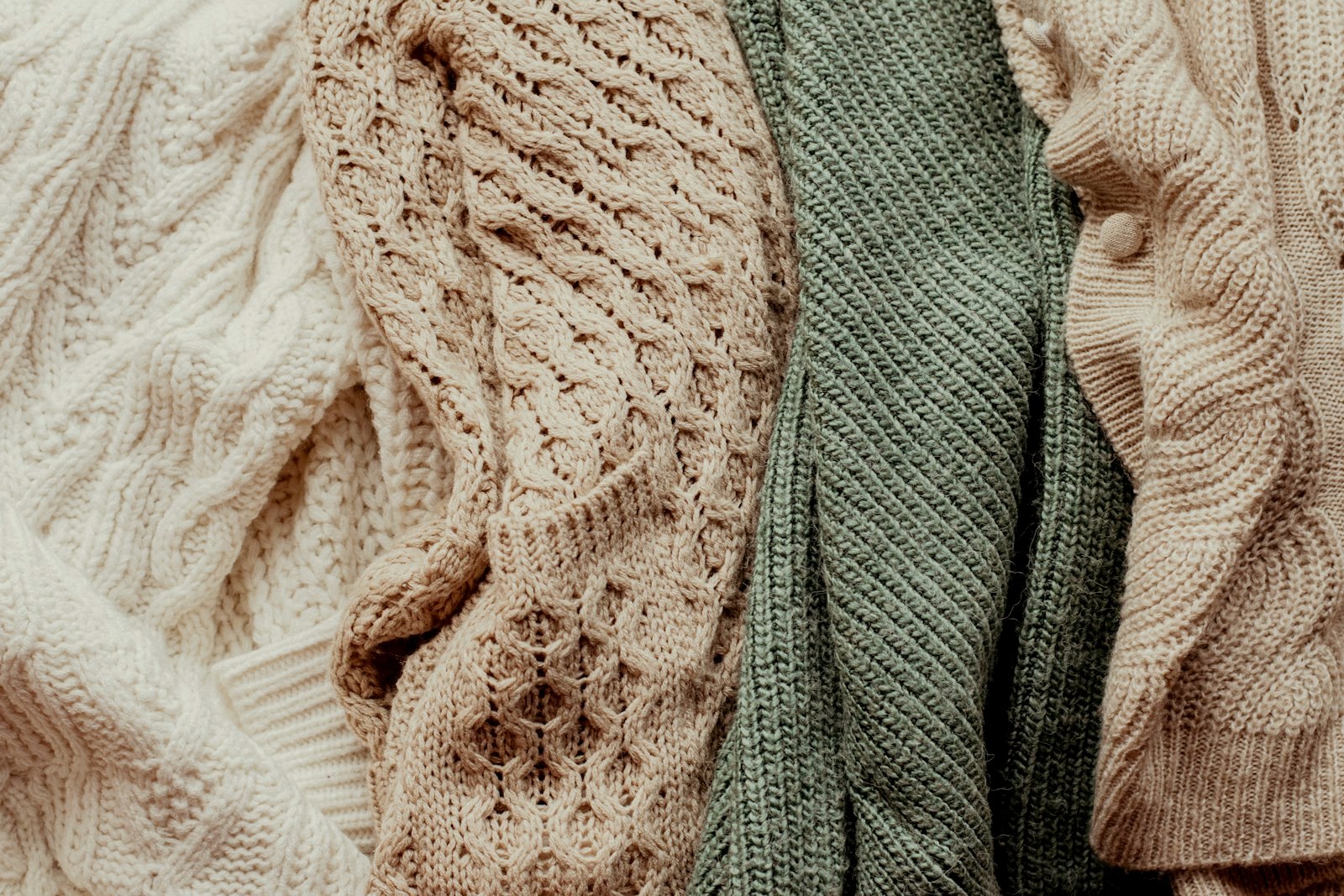
Over knitwear: the jacket's native layer. A waxed jacket carries no insulation of its own worth the name, so the knit beneath it is not a styling choice inside the outfit; it is the outfit's warmth, and the waxed cloth is its weather. The gauges are How to Wear No. 09's bands, unchanged. Fine gauge, roughly 24 to 30, under the tailored cut: the roll neck and the fine crew that keep the city silhouette closed and quiet, the pairing the looks section builds its town assembly on. Mid gauge, 12 to 20, under either cut and the standard country setting: a knit with a surface of its own to answer the matte waxed face, neither disappearing against it the way a fine knit disappears against corduroy's rib in No. 24. Heavy gauge, 7 and below, under the field cuts only, where the published room exists for it: the chunky knit and the waxed field jacket are the deep-cold country assembly entire, and under the tailored cut the same knit is the oversize failure worn from inside. In the cold that outruns knitwear alone, the base layer of Verdict Card No. 45 goes at the skin, and the waxed jacket completes a system it did not have to invent.
Over the blazer: the question, answered on the ranking's evidence. The answer is the FAQ's, and the argument is the ranking's fit row. The classic waxed pattern is a relaxed fit drawn for riding and layering, which means the field cut over a blazer does not layer two garments; it erases the lower one, swallowing the lapel and the shoulder line into a boxy weather silhouette and reading as transport that never arrived. The tailored cut is the exception, and it holds under the puffer brief's commuter conditions, restated for this cloth: the weather is genuine, the jacket is matte, quiet and city-patterned, and it is transit only, off at the door in the same motion as any coat, the blazer beneath treated as cargo rather than as a layering partner. The reader whose winter regularly demands warmth over tailoring has the same honest answer No. 27 gives: the tailored winter system, a proper overcoat over the knit, briefed in How to Wear No. 20. The waxed jacket's claim on the office is its own cut's claim, worn over knitwear to the office door, and it is a good claim. It does not need the blazer's.
Under nothing: it is the weather layer. No coat goes over a waxed jacket, and the refusal is construction rather than taste. The waxed cloth is a finished surface, slightly resistant, faintly lustred when fresh, and a coat worn over it drags against the finish, polishes it unevenly at the contact points and spends both garments' lines at once: the outer coat cannot close its silhouette over the waxed jacket's stand collar and hardware, and the waxed jacket's whole register, the weather layer worn open to the weather, is cancelled by being dressed as a mid-layer. The stack on this site is published and it ends at the wax: base, knit, waxed jacket, weather. The one over-layer admitted anywhere in this series is the rain shell over down, equipment over equipment on the Eos maker's own instruction in No. 27, and it is admitted because down dies wet. Wax does not die wet; it merely reaches the limit the weather law below prints, and at that limit the answer is a different outer layer, not a second one over the first.
With corduroy: the country assembly, complete. If the waxed jacket has a home outfit, this is it, and it is built from How to Wear No. 24's ranked field. Standard wale corduroy under a field-cut waxed jacket is the country register at its most coherent: two matte, textured, weather-honest cloths, the wax shedding above and the pile standing below, the knit between them at mid gauge on the parity rule No. 24 prints for the trouser. The colour order there runs straight into this brief's: the cord in tobacco or moss under the olive jacket is the assembly's first form, navy cord under the navy jacket its town form. Needlecord under the tailored cut carries the same cloths into the dressed rooms, with the knit tie of that brief's dressed assembly as the neck's option. And the double-corduroy ban has no analogue here: waxed cotton is not a pile, the jacket and the trouser never read as one cloth, and the pairing is the one above-and-below combination in the winter wardrobe that requires no exception argued and no conditions held.
With denim: the working register, under the wash-break's spirit. Denim under a waxed jacket is the American form of the same assembly, ruled by How to Wear No. 05's logic and No. 16's register: the jean below the waxed jacket is a cloth contrast, not a cloth match, so the wash-break law that governs denim against denim relaxes, and dark or faded denim both stand under olive and navy wax. What does not relax is the register discipline: denim and the field cut together are the full working read, the outfit of the truck and the yard, and in town the tailored cut over dark denim is the form that keeps the pairing a decision rather than a default. The one denim pairing refused is the double of the jacket itself: a denim jacket under a waxed jacket stacks two work jackets in one outfit, collar against collar, and reads as a wardrobe worn in duplicate, the full-wardrobe mistake of No. 27 translated into cotton.

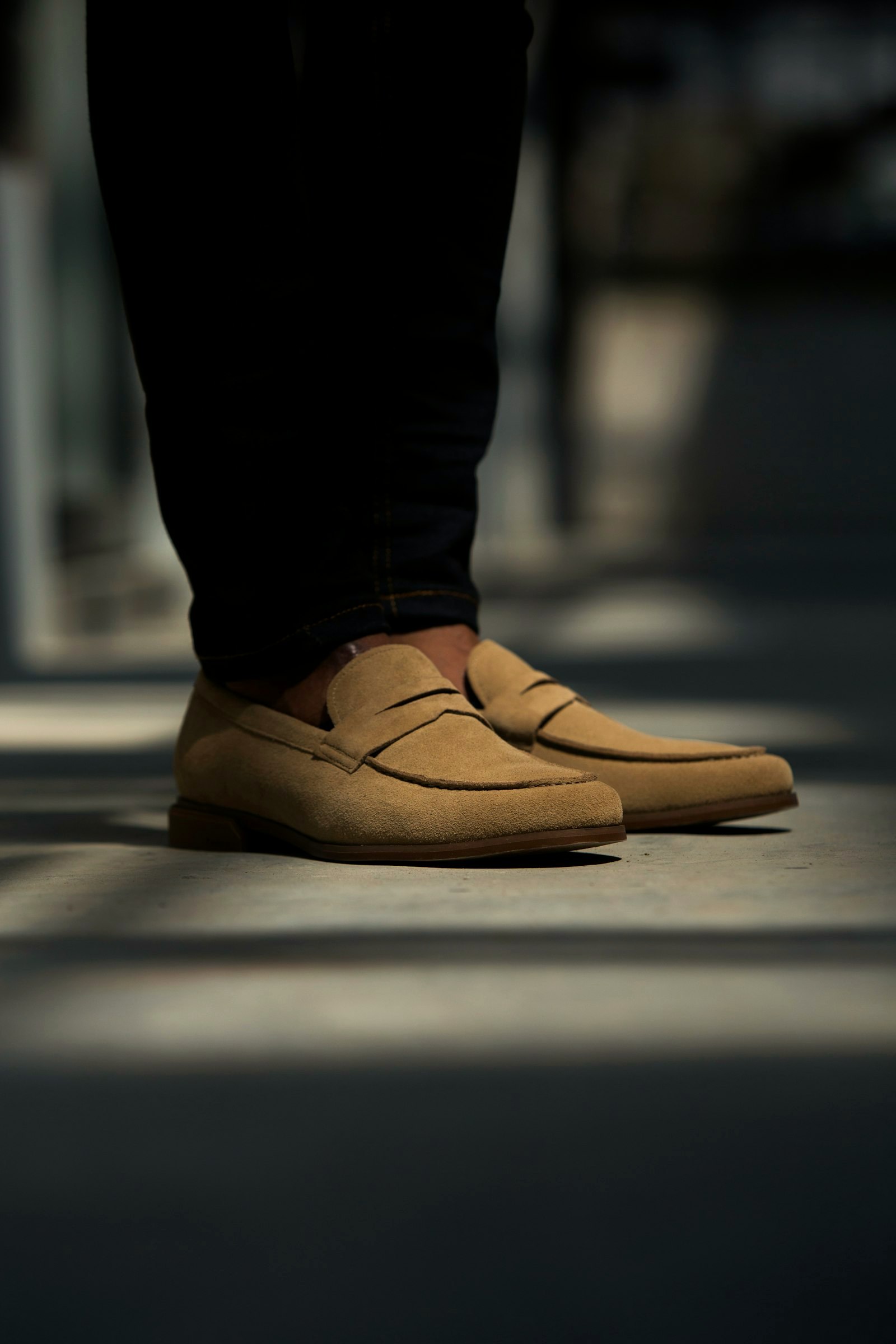
At the feet: boots in the field, suede in the town, ruled as styling. Nothing here is scored; the footwear beside a waxed jacket is register, argued the way No. 24 argues it beside corduroy. The boot is the field cut's default and the weather's answer: a grain or roughout boot shares the jacket's country register and its weather claim, and in the rain that justifies the jacket it is the only footwear in the wardrobe whose claim matches the coat's. The ranking's own frames make the point silently, boots in weather being the closest this page's bank comes to the jacket's world. The suede shoe is the tailored cut's answer in dry cold: two matte, napped or waxed surfaces in agreement, the dressed register of the country wardrobe carried into town, under the same condition No. 24 prints for corduroy, the colours kept clearly apart so the surfaces read as layers rather than as one material continued. The polished shoe is refused under both cuts: a mirror shine under a matte weather cloth is the poplin error at ground level, each finish making the other look mistaken. And the minimal white sneaker survives only under the tailored cut in the casual city read, where the contrast is the assembly's point; under a field cut in weather it is a shoe that has not read the forecast the jacket was bought for.
The weather law: wax sheds, it does not seal
The honest comparison is already published on this site, and this brief's weather law is that comparison worn. Verdict Card No. 44 ranks rain jackets on the sealed standard: taped seams, a named membrane, a published chemistry, and its winner, the Torrentshell 3L at 86 and $189, is a membrane system built for sustained rain. Against that standard the waxed jacket is not a failed rain jacket. It is a different instrument, older by a century, with a different envelope, and wearing it well means knowing the envelope's edges as precisely as the membrane's owner knows his pit zips.
Where wax wins. The showery three-season weather of ordinary life: rain that comes and goes across a day, wind with it, temperatures where breathability matters because the wearer is moving. Waxed cotton sheds that rain off a surface that does not rustle, does not shine like plastic and does not delaminate in year six; it is windproof by weave and wax together; it shrugs off the brush, the hedge and the dog that destroy a light membrane face; and when it is damaged, it is repaired and re-dressed by the bench that made it, on the ledger the ranking prints. For the commute, the country day, the wet market and the walk that is the point of the day, the waxed jacket is not the compromise. It is the correct tool, and its envelope covers most of the rain most men actually meet in a year.
Where the membrane wins. Sustained rain, the kind measured in hours: the all-day downpour, the standing-in-it weather of the platform, the site and the stadium. There the wax's honest limits arrive in order. The seams, stitched and unsealed, admit water first. The worn points, shoulders and crease lines where the cycle has thinned the finish, admit it second. And a soaked waxed jacket is a heavy, slow-drying garment that will not be ready tomorrow morning, where the membrane shell shakes off and goes again. The ruling is the FAQ's: rain you walk through, wax; rain you stand in, membrane. The wardrobe that owns both owns the whole sky, and the reader with one coat's budget buys by his rain: the showery life takes the waxed jacket and its decades, the drowned life takes the membrane and its chemistry, and neither man has bought wrong. The failure this section exists to prevent is the category error, the Bedale worn as a Torrentshell, the Torrentshell expected to age like a Bedale. Each is graded on this site, in its own ranking, on its own standard. Wear them on those standards and both verdicts hold.
The colour order: olive, navy, and black last
First buy: olive. The field's original green, the colour of the first oilcloths and of the Bedale's home register, and the colour whose patina is an improvement written in advance: olive deepens where the wax is fresh, lightens at the creases to a green-brown map, and takes the whole country wardrobe under it, tobacco and moss corduroy, every knit gauge, dark denim, without a single negotiation. It is also the colour that hides the transfer tax's evidence least badly on the pieces beneath it, since the country's palette is already dark and earthy. The man buying one waxed jacket buys olive, in the cut his life specifies, and the colour will never once be the reason an outfit fails.
Second buy: navy, the city colour. Navy takes the tailored cut to the office door: quiet against charcoal knitwear and dark tailoring in transit, cleaner in its patina than olive, its crease map reading as polish rather than as wear, which is the town's preference and a legitimate one. Navy is also the colour of the second waxed life, the urban rotation that the olive jacket's field register cannot cover without comment. Between olive and navy a wardrobe holds both cuts' colours in their home registers, and everything after them is taste.
Black last, on the standing logic. This series prints the same ruling for black in cloth after cloth, and wax is no exception: black shows every mark the finish collects, dust, pale rub, the transfer of its own wax lightened at the creases, and displays them all against its darkness; its patina reads as neglect a full cycle before olive's reads as character; and it lives at the fashion end of the register, beside the effect jackets the ranking sends home. Bought knowingly, as a city fashion piece in the tailored cut, it is a decision. Bought first, as a default, it is the one colour in the field that argues with the garment's whole idea, a maintained cloth whose maintenance shows worst on it.
The neck and the head, cross-read. The waxed jacket's collar is a stand collar built to close against weather, and it leaves the neck to the scarf of How to Wear No. 25 on the terms that brief prints: the once-around for the field cut's open front in mild cold, the Parisian fold under the tailored cut's closed line, cloth chosen against the transfer truth, a lambswool that takes a wax shadow at the contact line without complaint over a cream cashmere that will record it. Above it, the beanie of How to Wear No. 26: the watch cap at working cover with the field cut, the fine-gauge merino with the tailored cut in transit, both off at the door with the jacket, in the same motion, because the waxed jacket and its headwear are one weather system and a system comes off together.
The looks: the field, worn
Four assemblies, each built from Brands Like No. 30's ranked field and this brief's rulings. The frames are the bank's honest weather and knit frames, captioned for what they show; the bank holds no waxed jacket, and the care section prints that gap rather than let a denim jacket or a boot stand in for the garment itself.
Look one: the country standard. The Bedale at the anchor's 81 where the budget runs to it, Filson's Tin Cloth Cruiser at the winner's 85 as the heavier alternative: field cut, mid-cycle wax, over a mid-gauge knit and standard-wale corduroy in tobacco or moss from No. 24's field, a boot at the ground and the watch cap above the collar in real cold. This is the assembly the garment was invented inside, every cloth in it matte, textured and weather-honest, and its correctness is the correctness of a system mid-contract: the wax maintained, the cord unpressed, the knit carrying the warmth the shell sheds the rain off. At the ranking's prices it is also a thirty-year arrangement worn as an outfit, which is the deepest thing this page can say about any look in it.
Look two: the city tailored. The tailored cut in navy, the Ashby read of the anchor's family: over a fine-gauge roll neck or crew, needlecord or a dark tailored trouser under it, a suede shoe with its colour kept clear of the trouser's, the scarf at the Parisian fold on the cold days. Worn to the office door and treated there as a coat, which is what its pattern makes it. This is the look that answers the reader who loves the cloth and works in rooms the field cut cannot enter: the wax, the patina and the service ledger all survive the translation to town, because what changed was the pattern, not the contract.
Look three: the attainable field. Flint and Tinder's waxed trucker at 74, the full specification at $298, waxed on both sides and re-waxable at the kitchen table: over a tee or a henley in its first season, a mid knit as the cold builds, dark denim under it and a boot below, its shorter trucker body making it the driving and town-errand form of the same idea. Styled as what the ranking proved it is, the honest floor of the category, a real wax with a real renewal path at the price of the effect jackets' two-season resemblance. The look's discipline is its owner's ledger: no bench stands behind this jacket, so the re-wax is a habit the wearer keeps himself, and kept, it will outlast fashion pieces three times its price.
Look four: the sporting pattern. Tom Beckbe's Tensaw at 72, the field pattern rebuilt in Alabama, 8-ounce Halley Stevensons cloth over a mid or heavy knit, worn for the days the jacket is equipment in earnest: the shoot, the riverbank, the work out of a truck, its bi-swing back and bellows pockets doing the jobs they were published doing. Belstaff's Trialmaster at 70 belongs to this register's other branch and is styled here on its own paperwork: it is the riding jacket, armour and membrane, bought by the reader who rides and read as such, its wax a finish on a modern waterproof rather than the waterproofing itself. The skip appears in no look: a jacket named for the effect of this garment's substance does not get styled into the garment's brief. It gets cited, as the standing proof that the word waxed, unexamined, is worth exactly what Zara charges for it.
The ruling
Buy the waxed jacket as a contract and wear it as one. Know where your jacket stands in its cycle: fresh wax for the dressed weeks, broken-in for the field years, and a spent finish sent back to the tin or the bench before it is worn as weather gear again, on the schedule the maker publishes, annually depending on wear, seven business days in the quiet season. Choose the cut before the colour: the field cut for a life outdoors in it, equipment drawn for riding and layering, and the tailored cut for the city, tailoring in waxed cloth, because the room reads the pattern first and no pairing moves a riding cut into a tailored register. Layer it as the weather layer it is: base and knit beneath it on the published order, nothing above it, the blazer admitted only as cargo under the tailored cut in genuine weather and transit. Wear it in its weather, the rain you walk through, and give the rain you stand in to the membrane the rain ranking crowns. Keep its colours in their order, olive for the field, navy for the town, black last and knowingly, and pay its tax with open eyes: the transfer a fresh finish charges pale cloth, managed by the wardrobe, never denied. The field is ranked and this brief has not touched a number: Filson at 85 is the covenant, Barbour at 81 the original arrangement, Peregrine and Beckbe the specification honoured by small houses, Flint and Tinder the honest floor, and Zara at 48 the effect that keeps the word honest by confessing itself. A waxed jacket is cotton, wax and a promise, in that order. Keep the promise and the other two keep you dry for decades.
The mistakes
The sealed assumption. The waxed jacket worn into sustained rain as though it were a membrane shell, its owner soaked at the seams by the hour and concluding the garment is a fraud. The garment printed its envelope on its maker's pages and this brief prints it again: wax sheds, it does not seal. The fraud is in the assumption, not the jacket, and the repair is the weather law read before the forecast rather than after the platform: the showery day takes the wax, the drowned day takes the Torrentshell's taped seams, and a wardrobe that knows which day it is facing never has this argument with its coat.
Neglect dressed as patina. The jacket never re-waxed in a decade, grey, cracked and soaking at the shoulders, defended by its owner as character. It is the chore coat's pristine-canvas error inverted: where that coat refuses to live, this one refuses to be maintained, and both are costumes, the record faked in one direction or the other. Patina is wear on a working finish. A dead finish is a lapsed contract, and the lapsed contract's repair costs a tin of wax and an hour, which is the entire reason the category exists. The man who will not spend the hour should buy the membrane, whose maintenance is a wash, and leave the waxed jacket to the men who read contracts.
The field cut over tailoring, as an outfit. The Bedale closed over a blazer and tie in a smart room, presented as country dressing. It fails on the ranking's own fit record, a riding pattern drawn for layering worn as a layering partner, and it fails the way No. 13's chore coat over a tie fails: two registers claiming one torso. The tailored cut in transit is the licence, and it is a narrow one, argued to conditions. Everything wider is a man wearing his weather indoors and asking the room to grade it as style.
The washed jacket. The waxed jacket put through a machine wash, or sent to a dry cleaner by a helpful household, and returned with its finish stripped in patches, its weather claim gone, its cloth a map of where the wax used to be. The makers print the prohibition where their care is printed at all: the Beckbe page warns against hot water and dry cleaning in its own product copy, and the bench houses run a re-waxing service precisely because the finish is renewed by dressing, never by laundering. A waxed jacket is cleaned with a cold sponge and hung to dry. Anything more enthusiastic is the garment's one irreversible accident, short of fire.
Care, and the re-wax
Care for a waxed jacket is the contract's paperwork, and the terms are the makers' own, quoted in the ranking and applied here as law. Renew the finish on the published schedule: Barbour recommends a re-wax annually depending on wear, and the trigger is visible before it is urgent, rain beading unevenly, the shoulders and crease lines taking water darker than the rest. Send it to the bench if the house has one, with the turnaround printed in the open, seven business days for a re-wax in the quiet season and six to eight weeks for heavy repairs at the peak, some 13,000 jackets a year through the maker's benches, the work quoted and paid. Or keep the ledger at home where the house sells the wax and prints the guidance, Peregrine's and Beckbe's arrangement: a tin, a cloth, an hour, the jacket hung warm while the dressing settles. Either route is the category working as designed. The only wrong answer is neither.
The rest of the routine is restraint, of the same school as the chore coat's. Never machine wash, never dry clean, on the makers' printed warnings; sponge with cold water, brush the dried mud off, hang to dry away from direct heat, because heat is the finish's other enemy, softening the wax in storage, marking the cloth it touches and hurrying the cycle the schedule is meant to pace. Store it hanging, in a cool and aired place, never folded tight for a season, never in a plastic bag, and never against pale garments, on the transfer truth this brief prints in its first section. Expect the smell of a fresh tin for the first weeks after a re-wax, the honest odour of the substance doing the work, and read it the way the category's owners read it: as the receipt. And retire nothing. A waxed jacket whose cloth is sound is never finished; it is only ever between dressings, which is the sentence the whole category is built on, and the reason its best examples are older than their owners' marriages.
A note on our own photography: our photo bank holds no waxed jacket. No Bedale or Beaufort worn or folded, no fresh wax beside broken-in, no re-waxing in progress with the tin open, no crease map at macro range exists in the bank, a gap Brands Like No. 30 prints about its own page as well. The hero is the wet ground the garment was drawn for; the frames inside are the knit the layering law is argued from, the denim register ruled from below, and the suede the town pairing stands on, each captioned for exactly what it shows and none dressed as the subject. The harvest list names what is missing, a waxed jacket worn in olive and in navy in real rain, a fresh dressing beside a mid-cycle crease map, and a bench re-waxing in progress, and this page will take those frames the week they exist.
Questions, answered
What is the difference between a waxed jacket and a chore coat?
The finish, and everything that follows from it. The chore coat of How to Wear No. 13 is dry work cloth, canvas, moleskin, denim or twill, filed at formality 2 and warmth 2, a tool worn as a jacket whose job is carrying: pockets loaded, cloth that takes a knock, no weather claim made or kept. The waxed jacket is the same work-jacket silhouette in weatherproofed cloth, cotton dressed with wax until it sheds rain, and its job is shedding. The difference is a contract. The chore coat asks to be worn and patched. The waxed jacket asks to be worn, patched and re-waxed, on the maker's published schedule, annually depending on wear in Barbour's own words on the ranking that grades these houses. A chore coat in the rain is a wet coat doing its best. A waxed jacket in the rain is a maintained system doing the thing it was bought for, which is why this brief rules the wearing of it as the management of a finish, not just the choosing of an outfit.
Is a waxed jacket actually waterproof?
No, and the honest makers do not claim it is. Wax sheds; it does not seal. A freshly waxed cotton turns rain off its surface and keeps a shower, a commute and a wet afternoon off the man inside it, but it has no taped seams, no membrane and no storm system, and in sustained rain the water finds the seams, the creases and the places the wax has worn thin, in roughly that order. The comparison is published on this site: Verdict Card No. 44 ranks rain jackets on exactly that sealed standard, and its winner, the Patagonia Torrentshell 3L at 86, is a membrane jacket whose maker publishes the membrane's chemistry, at $189. The waxed jacket wins the other weather: the intermittent, showery, three-season rain of ordinary life, where it also works as a windproof, breathable, repairable coat that never rustles and never delaminates. The ruling is by duration. Rain you walk through, wax. Rain you stand in, membrane. A man who wears a Bedale into a downpour and complains has not bought a bad jacket; he has misread a contract this page prints in full.
Can you wear a waxed jacket over a blazer?
In transit, in the tailored cut only, and never as the outfit. The evidence is the ranking's own fit record: Brands Like No. 30 prints the classic waxed cuts as relaxed fits drawn for riding and layering, the boxiness the design rather than a defect, sizes running 30 to 52. A field cut built to go over layers on a horse goes over a blazer the way a tent goes over a table: completely, and with the table's shape abolished. The tailored read of the same jacket, the slimmed city pattern of the Bedale's family, is cut like a coat rather than like equipment, and over tailoring in genuine weather it does the overcoat's transit job in waxed cloth, off at the door with the coat it travelled as. The conditions are the puffer brief's conditions, because the logic is the same: real weather, a matte and quiet jacket, and transit only. Worn as a layering partner over a blazer in a room, any waxed jacket fails the way the chore coat over a tie fails in No. 13, two registers claiming the same torso, and neither cashing the other's cheque.
How often does a waxed jacket need re-waxing, and who does it?
On the maker's published schedule, which the ranking quotes rather than paraphrases: Barbour recommends a re-wax annually depending on wear, accepts the jacket back at any time to be re-waxed, repaired or altered, and publishes its turnaround targets, seven business days for a re-wax in the quiet season and six to eight weeks for heavy repairs at the peak, with some 13,000 jackets a year passing through its benches. The work is quoted after inspection and paid by the owner; the ranking grades that instrument exactly, a staffed price list where Filson's is a lifetime guarantee. The alternatives are printed in the same ledger. Peregrine and Tom Beckbe publish re-waxing guidance and sell the wax, and the ledger is kept in the owner's own hands, an hour with a tin and a cloth at the kitchen table. Flint and Tinder's trucker is re-waxable behind a retailer's policy, no bench behind it. What every route shares is the test for when: when rain stops beading and starts soaking at the shoulders and the crease lines, the finish is spent there, and the garment is asking, in the only language it has.
Does a waxed jacket mark other clothes and car seats?
A fresh one can, and this page prints it plainly because the category's advertising will not. Wax is a substance sitting in and on a cloth, and until it has cured into the fibres and been worn down at the contact points, it can transfer: a pale trouser under a new jacket, a light car seat on a warm day, a cream knit at the collar line can all pick up a shadow of it. The transfer is a season's tax, not a life sentence: it fades as the finish settles, and it is managed the way the garment's whole life is managed, knowingly. Dark trousers under a fresh jacket for its first weeks. The pale knit kept for the broken-in stage. A seat cover or a dark throw where leather is light and the commute is daily. And nothing pale stored folded against the jacket in the wardrobe, because the wardrobe is a contact point too. A maker who sells you a waxed jacket without this paragraph is selling the photograph. The cloth is better than the photograph, and it includes the tax.
What colour waxed jacket should you buy first?
Olive, because it is the colour the garment was invented in and the one its patina flatters most: the field's original green takes a crease map and a fade as a deepening rather than a damage, and it sits over the whole country half of a wardrobe, corduroy, moleskin, denim and every knit gauge, without a negotiation. Navy is the city buy, the colour the tailored cut wears to the office door, quieter against tailoring and charcoal knitwear, and the second jacket for the man whose waxed life is mostly urban. Black is bought last if at all, on the standing logic this series prints for black in every cloth: it shows every mark the wax collects rather than hiding them, its patina reads as neglect sooner than any other colour's, and it belongs to the fashion end of the register the ranking grades. The bright and the two-tone are declarations on the expedition model, bought knowingly or not at all. First buy olive, second buy navy, and let the patina make each of them yours on the schedule the care section prints.
What do you wear under a waxed jacket?
Knitwear, chosen by gauge, over the same base the rest of this site's winter system uses. A waxed jacket is a shell with no insulation of its own beyond a lining, so its warmth is borrowed entirely from what it closes over, and the classic cuts are drawn with the room for it: the ranking prints them as relaxed fits made for layering. The gauges are How to Wear No. 09's bands. Fine gauge, roughly 24 to 30, under the tailored cut in the city, the roll neck or the fine crew that keeps the silhouette a coat's. Mid gauge, 12 to 20, under the field cut, the standard country assembly, a knit with its own surface answering the waxed cloth's matte face. Heavy gauge, 7 and below, only under the field cuts with the room published for it, and never under the tailored cut, whose line it spends from inside. In deep cold the base layer ranked in Verdict Card No. 45 goes at the skin under the knit, and the waxed jacket remains what it is at every temperature: the weather layer, last on and first off.
Has Young Cotton ranked waxed jackets?
Yes, as houses. Brands Like No. 30 ranks seven brands like Barbour, scored out of 100 on fabric, construction, fit, value and longevity, and the waxed field is its whole subject. Filson wins at 85, on the heaviest cloth in the field and a lifetime guarantee. Barbour follows at 81, derived in the open on that page from its published 6-ounce Sylkoil record and its staffed re-wax bench. Peregrine stands at 76, Flint and Tinder at 74, Tom Beckbe at 72 and Belstaff at 70, its waterproofing now a membrane behind the wax, which cannot be re-waxed. Sent home at 48 is Zara, whose own product names read waxed-effect: no mill, no weight, no wax, and nothing to renew. This brief styles that ranked field; it does not re-score it, and every styling ruling here is written against the houses and the service ledgers the ranking printed.
Next
The ranked field this brief styles is Brands Like No. 30, every cloth weight, service term and silence printed. The sealed standard this brief keeps deferring to is ranked in Verdict Card No. 44, and the dry work cloth this jacket is confused with is briefed in How to Wear No. 13 and ranked in its own Card. The corduroy beneath the country assembly is ruled in No. 24, the scarf at its collar in No. 25 and the beanie above it in No. 26. The membrane system's own styling is No. 27, and every layer in the wardrobe, mapped by the body it covers, is the Body Map.