
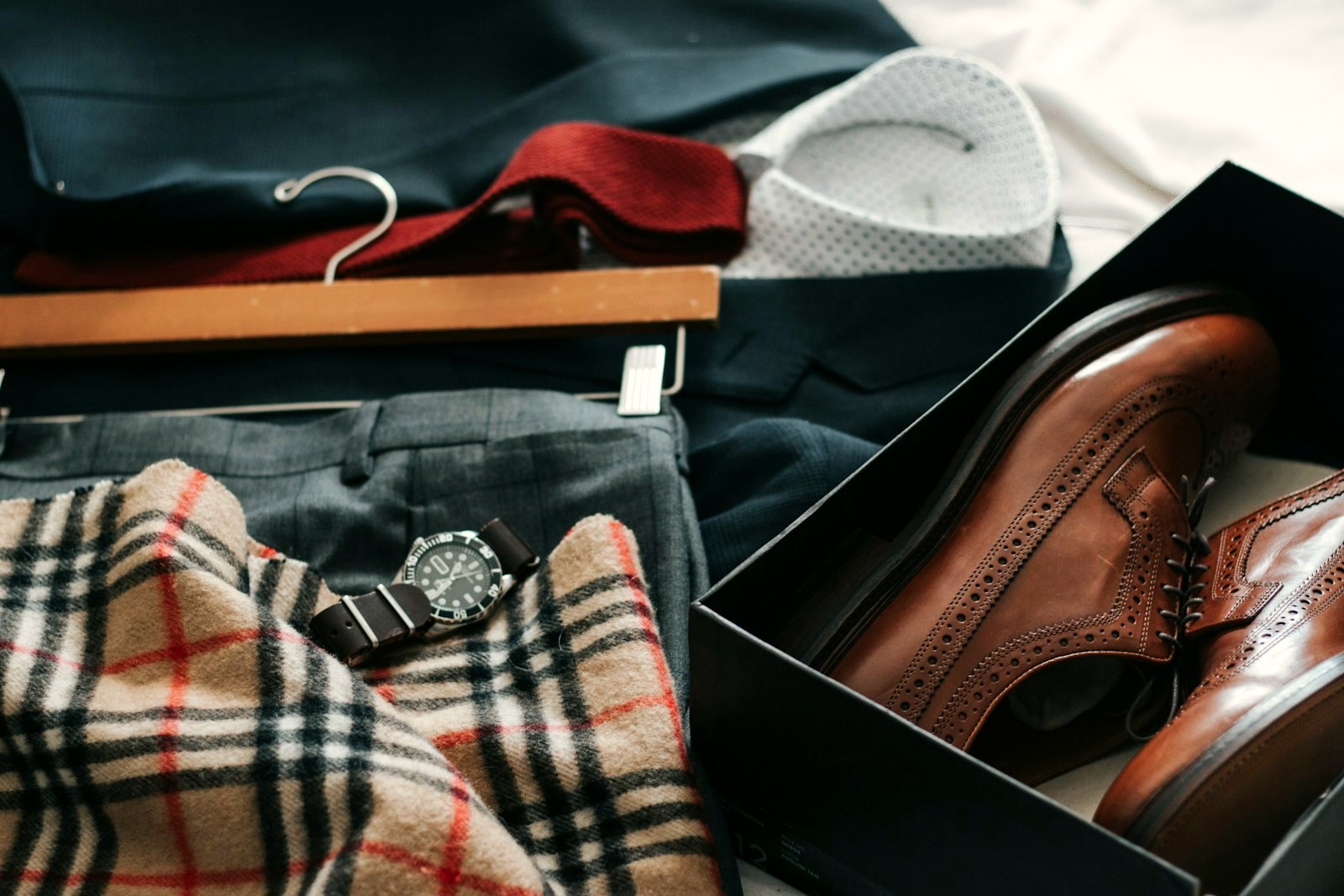
The corduroy's habitat, captioned as exactly that: tailored trousers, a blazer and brogues in a flat-lay, the rail this cloth hangs on all winter. Our bank holds no photograph of a corduroy trouser, worn or folded, at any wale, so no ranked pair is pictured anywhere on this page and no frame here is captioned as corduroy. The care section prints the gap and the harvest list, as the Card that ranks the cloth prints it too.
Checked and updated October 2026
The ruling, up front: corduroy is the season's most democratic cloth and its easiest to wear badly, and the failure has a name: the professor costume, an outfit assembled from corduroy's associations instead of its properties. This brief is the modern read, and it starts from the number the cloth prints on its own face. Verdict Card No. 38 prints the wale law this page is built on: needlecord at 14 to 16 wale dresses up, standard cord at 8 to 11 is the all-rounder, wide wale is a statement that dates fast. The wale is the formality dial. Everything else follows: one corduroy piece per outfit, with a single exception argued under four conditions; knitwear weighted to match the pile, because a fine merino disappears against 8-wale; the shirt fork, flannel doubles down, the Oxford cleans it up; and a colour order that buys tobacco and moss before black and treats burgundy as a warning. The ranked field is the Card's and it is not re-scored here: the Drake's Field Games at 79, the Fort Belvedere Stancliffe at 76, the L.L.Bean Stretch Country at 75, the Bugatchi Palmer at 69, the J.Crew double-pleated at 68, the Quince needlecord at 67, the Uniqlo easy ankle at 63, and the Brunello Cucinelli at 50 sent home, named in this brief as a warning and styled nowhere. It is October. This is the month the cloth earns its keep, and the month it is most often worn as a costume.
This brief: the wale dial · the double-corduroy ban · what goes on top · the footwear adjacencies · the colour order · the looks · the mistakes · care and the pile
The decisive rule: the wale is the formality dial
Corduroy is the one trouser cloth that prints its own gauge on its face. The wale, the number of ribs to the inch, is woven into every pair, visible across a room, and it decides before colour, before cut and before price what the trouser is allowed to do. Our types of pants index files corduroy at formality 3 of 5, the middle of the ladder, and prints the mechanism beside it: cloth moves a type a rung in either direction. The wale is the hand on that dial. Read the Card's law as three settings, and buy and wear by the setting, not by the word corduroy.
Needlecord, 14 to 16 wale: the dressed setting. Pile so short the cloth reads almost smooth at conversational distance, a trouser that sits under a blazer beside flannel and is mistaken for neither. This is the corduroy that enters offices and dinners: under the unstructured blazer of How to Wear No. 03, over a proper shoe, and, at the neck, with the one tie built for it. Verdict Card No. 40 judges the knit tie as its own species, square-ended, flat-knitted, living one register down from tailoring's formal end, the tie for soft shoulders and knitwear. Needlecord and the knit tie are the same idea in two cloths, formality lowered by texture rather than by sloppiness, and together they are the dressed cord assembly this brief recommends first. The surprise in the ranked field is where the needlecord lives: the field's only one is the Quince 5-Pocket at 67, $60, its 16 wale printed by its maker. The fine end of the dial is the cheapest seat at the table, and its five-pocket furniture is the only thing keeping it out of the blazer assembly's first rank: the wale dresses up, the pockets argue back, and a tailored needlecord at a higher finish is the gap in the field the Card leaves open.
Standard cord, 8 to 11 wale: the bridge setting. Visible ribs, honest texture, the all-rounder of the Card's law. Standard wale is the weekend-to-office bridge: country with an overshirt and boots on Saturday, presentable with an Oxford and a knit in a cold office on Monday, the same pair crossing both rooms because its register sits exactly between them. The ranked field is built at this setting. The Stancliffe prints its 8 in its name at 76, the floor of the band, a tailored full cut with fabric reserve for the tailor. The Bean prints its 11 in its name at 75, the top of the band, $79.95, the value answer of the whole ranking. Between those two printed numbers sits most of what a winter rotation needs, and the brief's looks below are built at this setting twice over, because it is the setting most readers will actually live in.
Wide wale, roughly 3 to 6 ribs: the statement setting. Bold corduroy, ribs you can count from the doorway, the cloth of a decade's silhouette. The Card's law is blunt about it: a statement, and statements date. Wide wale is bought deliberately, as one piece, worn as the outfit's single loud texture with everything around it quiet, and retired on the silhouette's schedule rather than the cloth's, because the pile will outlast the fashion that justified it. It is never the first corduroy a wardrobe buys, it is never doubled under any reading of the next section's exception, and it is the setting where the professor costume breeds fastest, because a wide rib forgives nothing about the company it keeps.
And the unprinted wale, which is also a setting. The Card charges two silences of exactly this kind and this brief inherits the charge. The winner itself, the Drake's Field Games at 79, publishes its weight, 15.4 ounces, and withholds its wale; the Bugatchi at 69 offers the phrase fine-wale with no number under it. Both are styled in the looks below on the evidence their cards do publish, cut, weight and fibre, and the desk does not guess a band for either. A maker who sells corduroy by adjectives alone is telling you the number, the Card says, and the styling consequence is real: an unprinted wale gets worn at the cautious end of its apparent register until the cloth proves otherwise in the hand.
| The setting | The wale | Its register | The ranked evidence |
|---|---|---|---|
| Needlecord | 14 to 16 ribs to the inch | Dressed: under a blazer, beside flannel, with a knit tie, the office and dinner setting | Quince 5-Pocket 67, the field's only needlecord, its 16 printed by its maker |
| Standard cord | 8 to 11 ribs to the inch | The bridge: weekend and cold office in the same pair, the rotation's working setting | Stancliffe 76 at a printed 8, L.L.Bean 75 at a printed 11 |
| Wide wale | Roughly 3 to 6 ribs to the inch | The statement: one piece, quiet company, bought on the silhouette's schedule | Unranked as a trouser field on this site; the Card's law dates it, and this brief styles it only as a single piece |
| Unprinted | Withheld by the maker | Worn cautiously, at the low end of its apparent register, until the cloth is in the hand | Drake's 79 (weight published, wale charged as silence), Bugatchi 69 (fine-wale a phrase, not a number) |
The double-corduroy prohibition, and its one exception
The prohibition first, without decoration: do not wear a corduroy jacket with corduroy trousers as a default, and never in the same wale and the same colour. Two pieces of the same ribbed cloth, head to knee, do not read as a suit, because corduroy has no suiting register to borrow; they read as a single costume assembled from a single bolt, and the costume is the professor. The eye reads matched texture before it reads cut or colour, and matched pile is the loudest match two garments can make. Denim survives its doubled form in some rooms because its twill is fine and its washes vary; corduroy's rib is coarse, its pile catches light in one direction, and two fields of it moving together announce themselves as an outfit about corduroy, which is the one thing a corduroy outfit must never be about.
The exception, argued precisely. There is one assembly this brief allows, and it is allowed because every element of it works to stop the two pieces reading as a set. Its conditions are four, and all four hold at once or the assembly is refused. First, the wales are a full band apart: a wide-wale jacket over needlecord trousers, or a needlecord jacket over standard trousers, never two pieces in the same band, because within a band the ribs rhyme and rhyming ribs are the costume's first note. Second, the colours are clearly different: tobacco over moss, navy over stone, a separation a stranger could name; never the same colour in any pairing, and never tone on tone, because same colour plus same cloth family is the suit signal whatever the wales do. Third, a third texture stands between them: a chunky knit or an overshirt at the waist and chest, breaking the pile's continuity so the two cords never touch visually. Fourth, the test: if the assembly, seen whole, could be described as a corduroy suit, it has failed, and the trouser changes to flannel or denim. Run all four and the outfit reads as two garments that share a cloth family the way a tweed jacket and a flannel trouser share a season: related, not matched. That is the entire exception. It is an advanced assembly, it is not a rotation habit, and the reader who has to ask whether his pairing passes the fourth condition already has his answer.
What the prohibition is not: a ban on corduroy above the waist. A corduroy overshirt over denim or flannel trousers, a corduroy chore coat over chinos, a corduroy trucker over a wool trouser: all legal, all good, because the outfit carries one ribbed piece and the rest of the rotation is smooth by comparison. The cloth is welcome anywhere in the wardrobe. It is welcome once per outfit.
What goes on top: match the knit to the pile
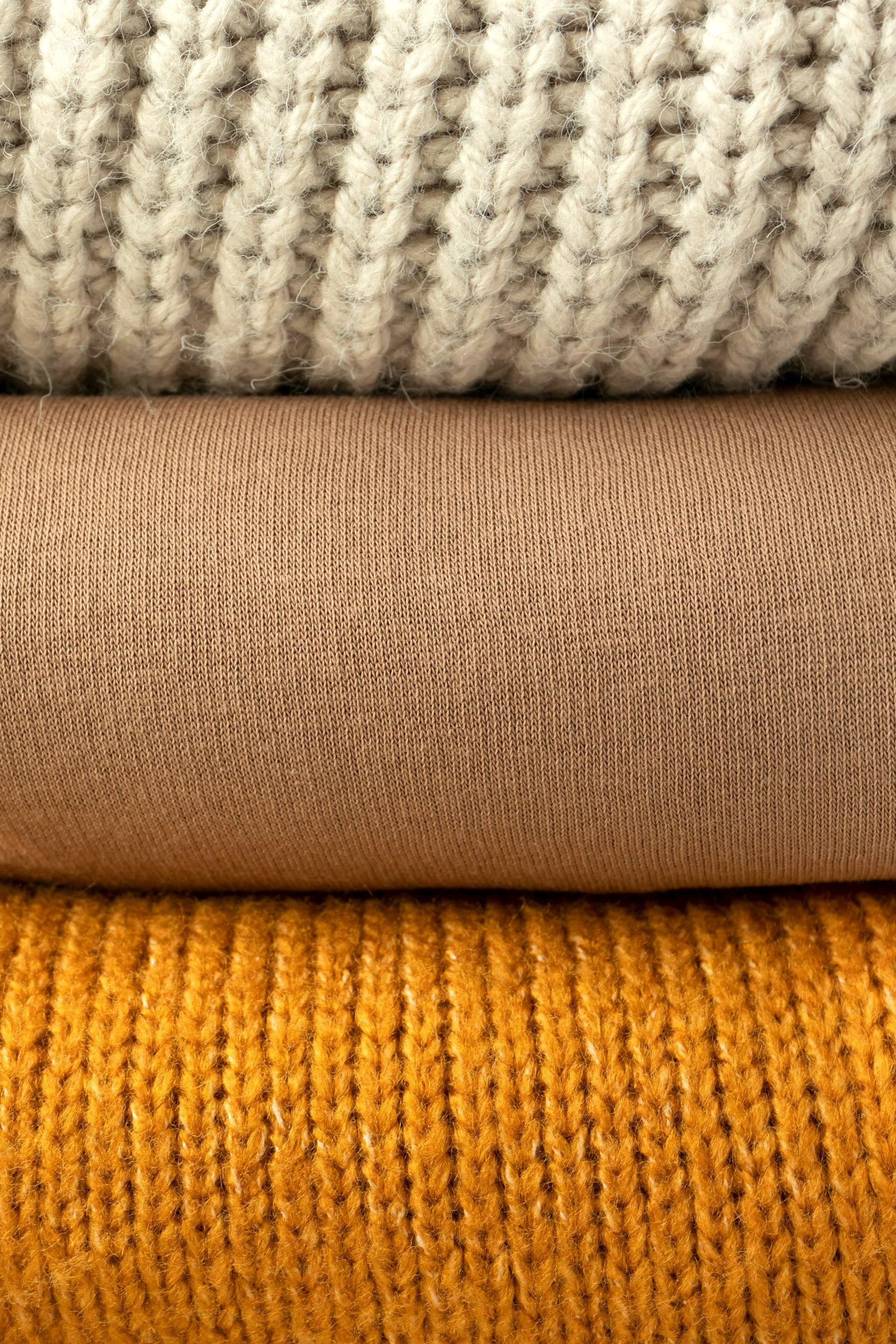
Corduroy's rib is a texture with a volume knob, and the top half of the outfit is set by where the wale has put it. The rule this brief prints is texture parity: the top's surface weight should stand beside the trouser's rib, not beneath it. A top that reads finer than the trouser makes the trouser look coarse; a top that reads coarser makes it look considered. Every pairing below is that rule applied at the three settings.
The knitwear ruling. Against standard and wide wale, a fine-gauge merino crew, the 24 to 30 gauge band of How to Wear No. 09, disappears. Its surface is smoother than the trouser's, its line thinner, and the outfit reads as a dressed top half that failed to show up: a base layer under a statement. What standard wale wants is the mid band and below, 12 to 20 gauge and heavier, a knit with its own rib or cable to answer the trouser's, the chunky crew and the shawl collar that share the cord's country register and its scale. Against needlecord the pairing inverts, and the fine knit is not merely legal but correct: two fine surfaces, the trouser reading almost smooth, the knit almost smooth, the outfit's texture budget spent at the tie and the shoe instead. Parity, not richness, is the rule: the winner's heavy cloth at 15.4 ounces takes the heaviest knits in the drawer without being shouted down, and the Bean's 9-ounce pile, the lightest published weight in the field, is the one standard cord a mid-gauge knit should not overwhelm.
The overshirt, which earns its place. The single best top for standard-wale corduroy in this brief's judgement is not a knit at all. It is the overshirt of How to Wear No. 10, a shirt-weight layer with a jacket's manners, and the assembly's reference garment is the one Verdict Card No. 06 ranked first: the L.L.Bean Chamois Cloth Shirt at 83, a brushed cotton with a matte surface that stands next to the pile without rhyming with it. Chamois over cord is the country assembly at its most honest: two work cloths, different weaves, the same warmth register, nothing pretending to be tailoring. It is also, not incidentally, the same house twice in one outfit, the Bean's Chamois over the Bean's 11-wale at 75, and the pairing works because both garments were built on the same doctrine of published specs and no costume.
The shirt fork: flannel doubles down, the Oxford cleans it. When the layer is a shirt, worn as the top or under a knit, the choice is a fork and both branches are ranked on this site. Flannel doubles down on texture. A brushed flannel shirt over corduroy stacks two soft, matte, cold-weather surfaces, and the read is wholeheartedly country: warm, coherent, and entirely out of the office's reach. Its class is ranked in Verdict Card No. 09, where the L.L.Bean Scotch Plaid stands at 85; a plain or muted flannel is the safer shirt, because a loud plaid over a ribbed trouser spends pattern and texture in the same outfit and the budget is one. The Oxford cleans it. An Oxford's basket weave reads smooth beside the rib, its collar gives the outfit a dressed frame, and standard wale over an Oxford is the bridge setting's office crossing, the Monday version of the Saturday pair. The pairing this page defaults to is the Oxford Verdict Card's winner, the Kamakura button-down at 93, its unlined collar sitting under a knit or a blazer without bulk. Rule of the fork: flannel for the days the cord is country, Oxford for the days it has to pass, and never a smooth poplin dress shirt, whose sheen against the matte pile is the one shirt pairing that makes both garments look wrong.
The footwear adjacencies, ruled as styling
Nothing in this section is scored. This site's rankings grade garments on published evidence, and footwear beside corduroy is a question of register, not of spec sheets, so the rulings below are styling law for the trousers the Card ranked, printed as such and carrying no numbers of their own.
The boot is the standard-wale default. A grain leather or roughout boot shares the trouser's country register and, just as much to the point, its scale: the rib of an 8 to 11 wale trouser is a visually heavy hem, and it wants a shoe with presence under it, a boot's shaft and substance answering the pile's weight. The Stancliffe and the Bean, the field's two printed standard cords, are boot trousers in this brief's looks below, in tobacco and moss above all, where the boot's brown and the cord's brown are kept a clear shade apart so the outfit's two leathers and cloths read as layers, not as a dye lot. In real cold the stack completes upward, the overcoat of How to Wear No. 20 over the whole assembly, boot to collar, each layer's texture a step apart from the next.
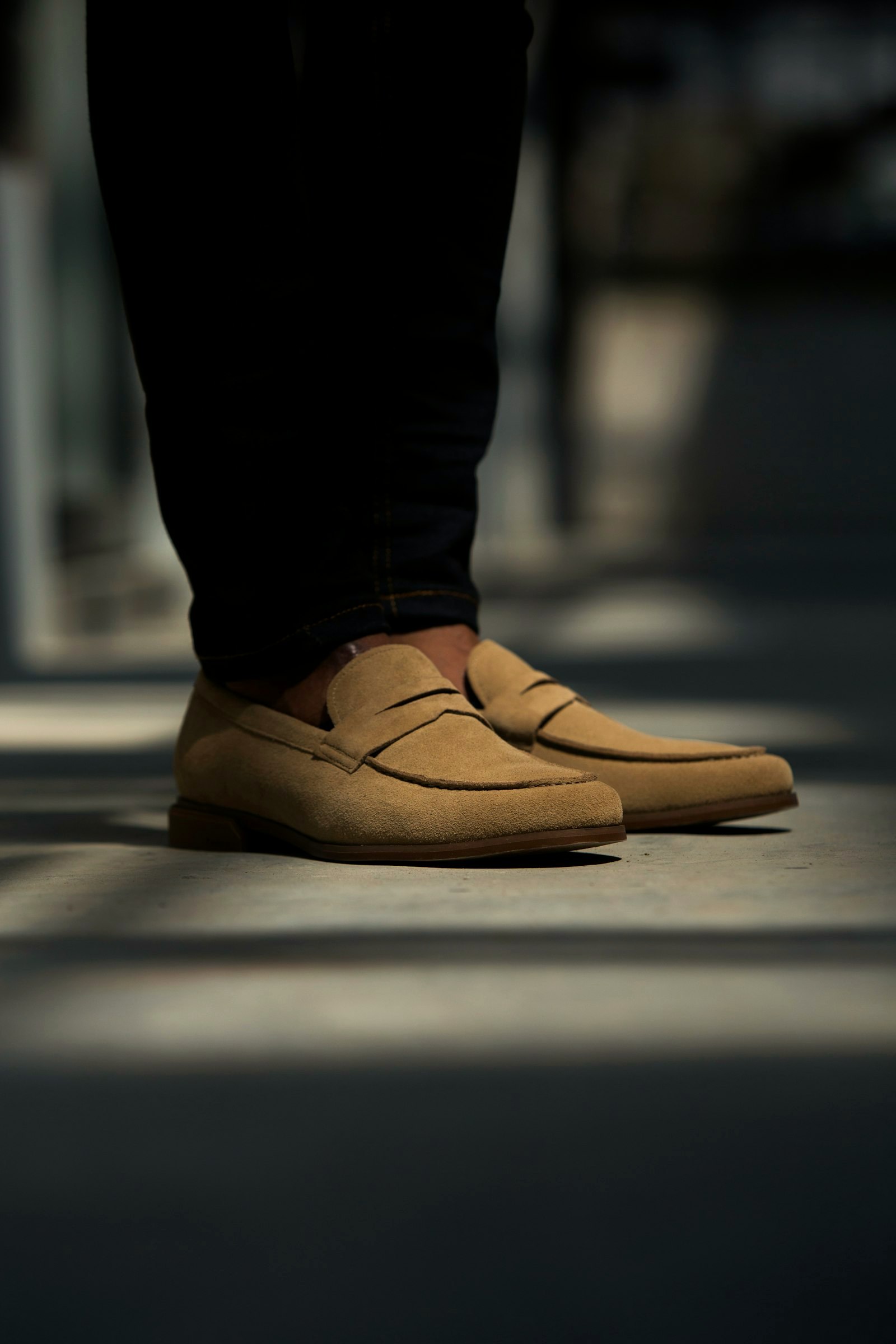
The suede shoe is the pile's cousin. Suede and corduroy are the wardrobe's two napped surfaces, cut fibre standing off a ground, and they agree with each other the way few textures do. A suede derby or loafer is the dressed answer under needlecord, where a polished leather shoe's shine would fight the outfit's matte discipline, and the soft answer under standard wale when the boot is too much machinery for the room. One condition governs the whole adjacency: keep the colours clearly apart. Suede and corduroy in the same tone, a tobacco shoe under a tobacco trouser, read as one material continued past the hem, a single napped column that swallows the outfit's one clean break. A shade's distance is enough; a tone's identity is the failure.
The white sneaker question, answered. It is the pairing readers actually ask about, so it gets a verdict instead of a shrug: yes, in the casual read; no, in the dressed one; and the shoe decides which read you are in. A clean, minimal leather sneaker under standard-wale corduroy, or under the relaxed and easy cuts in the looks below, is the modern assembly's signature: the white shoe's smoothness sets the rib off by contrast, the outfit reads deliberate, and the professor has left the building. The same shoe under the needlecord-and-blazer assembly spends the register the fine wale bought, handing back in one detail everything the dressed setting assembled. And under no wale does a chunky runner work: its scale fights the trouser's line, its technical surfaces fight the cloth's matte honesty, and the pairing reads as two outfits in a dispute. The sneaker that earns corduroy is minimal, leather, clean, and quiet, which is to say it follows the same law as everything else in this brief: one loud element per outfit, and the trouser is already it.
The colour order: tobacco, moss, navy, and the burgundy warning
First buy: tobacco. The warm, mid brown that is corduroy's home colour, the shade the cloth's country register was built in. Tobacco takes the whole top half of a fall wardrobe without an argument: navy and charcoal knits above it, the Chamois's brushed tones, cream and grey, and below it the boots and suede of the footwear section in their own browns, kept a shade apart. It also reads as corduroy at a glance, which the first pair should: the wardrobe is learning the cloth, and the colour that teaches it is the one that announces the rib rather than hiding it.
Second buy: moss. The deep, greyed green does tobacco's work against a different half of the drawer: brown shoes come forward, cream and oatmeal knits warm up, and the pair covers the days tobacco's warmth is the wrong temperature for the rest of the outfit. Between tobacco and moss, a standard-wale rotation has its country register complete, and either colour in the Bean's printed 11 wale at $79.95 is the cheapest complete version of that register this site has ranked.
Navy is the office read. Bought third in this brief's order, or first by the reader whose corduroy has to work for a living: navy is the colour that carries standard and fine wales into rooms where tobacco reads as leisure, and it is the colour the Card gives its winner, the Drake's Field Games at 79, buy it in navy as the pair the whole cold rotation leans on, $1.24 a wear defended by the ranking's own table. Navy cord over the Kamakura Oxford is this brief's office assembly entire, the bridge setting crossed at its most formal, and it is the one corduroy outfit that never has to explain itself.
Black last, and the burgundy warning. Black corduroy is bought last if it is bought at all. The pile collects every pale fibre in its environment and displays the collection; the tips of the pile fade grey ahead of the ground, so the pair ages in public; and the colour reads as neither country nor office, a trouser in a ribbed cloth that seems to be apologising for the rib. The reader who wants a black trouser has excellent smooth options elsewhere in the index. Burgundy is the stronger warning, and this brief prints it as one: burgundy is the professor costume's signature colour. It is the shade in which corduroy is most likely to date an entire outfit to a faculty lounge, especially at standard wale and anywhere near tweed, elbow-adjacent knitwear or a bookish shoe. If burgundy is bought at all, it is bought fifth, in needlecord, dressed with the blazer and the knit tie, in an outfit with enough modern structure around it to out-argue the association. Most drawers should let it go unpurchased, and lose nothing.
The looks: the field, worn
Four assemblies, each built from Verdict Card No. 38's ranked field and this brief's rulings. The frames are the bank's honest trouser and texture frames, captioned for what they show; the bank holds no corduroy, and the care section prints that gap rather than let a smooth trouser stand in for a ribbed one.
Look one: the dressed needle. The Quince needlecord at 67, the field's only 16-wale, under the unstructured blazer of No. 03, a fine merino crew beneath it in the parity rule's dressed direction, a knit tie from the species Verdict Card No. 40 judges on its own terms, and a suede derby with its colour kept clear of the trouser's. This is the assembly that answers the office question at the fine end of the dial: every surface matte, every texture fine, the corduroy invisible as corduroy until someone stands close enough to read the rib. The five-pocket furniture is the look's one argument, printed on the Card and owned here: at $60 the experiment is cheap, and a tailored needlecord is the upgrade this look is waiting for the market to publish specs for.
Look two: the office bridge. The Drake's Field Games at 79, in navy, on the Card's own call. The Kamakura Oxford at 93 beneath, a fine-to-mid knit over it or the blazer on the cold days, a leather shoe with structure. The winner's wale is unprinted and this look says so rather than assigning it a band: what the Card verifies is the cloth's weight, 15.4 ounces, the fullest tailored build in the field, pleats and side adjusters and a French bearer, and on that evidence the pair carries the office assembly at $1.24 a wear. Where the Drake's money is not in the season, the Bugatchi Palmer at 69 is the dress end of the same look, a published 99 percent cotton and a slim tailored shape at $398.

Look three: the country standard. The Stancliffe at 76 in sage or khaki drab, or the Bean at 75 in tobacco or moss, the two printed standard cords, worn two ways off one rail. The first is the Chamois overshirt at 83 over the trouser, boots below, the No. 10 assembly in its home weather. The second is the chunky knit and, on the days the shirt fork goes country, a muted flannel in the Scotch Plaid's class at 85. In real cold the overcoat closes over either version, No. 20's weather layer over the pile, and the outfit's textures step boot, rib, knit, coat without two of them rhyming. This is the look the cloth's reputation should have been built on, and the one most readers will wear most: at $0.27 a wear, the Bean version is also the cheapest serious winter outfit this site has put a number on.
Look four: the relaxed modern. The J.Crew double-pleated at 68, its relaxed silhouette the shape of the season and its unpublished fibre line charged here as it is charged on its card, or the Uniqlo easy ankle at 63 where the budget is the budget. A plain crew or a sweatshirt above, in the parity rule's mid weights, and the clean white minimal sneaker below, under the footwear section's verdict: the contrast is the assembly. This is the anti-professor look, corduroy worn at the silhouette and the shoe of the current decade rather than the cloth's own mythology, and it is the look that keeps the category young without a single costume note in it. The Brunello at 50 appears in no look on this page, by the Card's verdict and this brief's agreement: a fibre line that hides its split does not get styled, it gets cited, as the standing proof that price is no alibi.
The ruling
Buy the trouser by its wale and wear it by the same number. Needlecord for the dressed rooms, with the blazer and the knit tie; standard wale for the bridge, the pair that works Saturday and Monday alike; wide wale once, as a statement, with quiet company. One corduroy piece per outfit, the exception allowed only when the wales are a band apart, the colours are strangers, a third texture stands between, and no one alive would call it a suit. Match the knit's weight to the pile, fork the shirt honestly, flannel for country and Oxford for passing, and let the shoes follow the register: boot for standard, suede for dressed, the clean white sneaker only where the read is casual. Buy tobacco first, moss second, navy for the office, black last, and burgundy, if ever, fifth and dressed. The field is ranked and this brief has not touched a number: the Drake's at 79 is the reference, the Bean at 75 is where the rotation starts for most drawers, the Quince at 67 is the fine end's cheap experiment, and the Brunello at 50 is the warning that keeps the category honest. Corduroy is not a costume and it is not a personality. It is a cloth with its gauge printed on its face, the most honest trouser in the winter wardrobe, and worn by its number it earns the whole season.
The mistakes
The professor costume, assembled whole. No single piece of it is a failure: a standard-wale trouser, a tweedy jacket, a burgundy or plaid note somewhere, a bookish shoe, a beard doing structural work. Assembled whole, the outfit stops being clothes and becomes a character, and the corduroy takes the blame because it is the loudest texture in the stack. The fix is subtraction, not substitution: one heritage element per outfit, the cord counting as that element by default, everything else in the assembly drawn from the current decade's quieter drawer. The looks above are the costume with the subtraction done, which is the whole content of the phrase modern read.
Matched double corduroy. The same wale, the same colour, jacket and trouser from the same cloth family worn as a set. It fails the fourth condition of the exception before the other three are even examined: it reads as a suit in a cloth that has no suiting register, and a suit that is not a suit is a costume with tailoring. The matched set is also the one corduroy purchase this brief calls unrecoverable by styling: separated, each piece is a fine garment; together, they are a decision the rest of the outfit cannot out-argue. Buy the trouser and the jacket in different cloths and both live. Buy them as a pair and they die together.
The fine knit against standard wale. The quietest mistake in this brief and the commonest in offices: a fine-gauge merino, bought well, worn over an 8 or 11 wale trouser, and disappearing. The outfit reads bottom-heavy, all the texture below the waist and a rumour above it, and the wearer looks underdressed in garments that are individually correct. Parity is the whole repair: the mid and chunky gauges move up the rotation on cord days, the fine knits move to the needlecord and the smooth trousers, and both halves of the wardrobe get worn in the company that flatters them.
The mirror-shine shoe with country cord. A high-shine formal shoe under a standard-wale trouser in a country colour is the footwear version of the poplin error: one surface polished to a mirror, the other matte to its roots, each making the other look mistaken. The dressed cord settings take suede or a soft-grained leather precisely because their finish is matte like the cloth's; the country settings take the boot. Shine belongs to the smooth trousers and the formal end of the ladder, and corduroy, at any wale this page styles, is not on that end.
Care, and the pile
The Card prints the physics and care follows it: the pile is cut loops standing on end, and everything that ends a corduroy is something happening to those loops. Sitting crushes the pile flat at the seat, and crushed pile reflects light differently from standing pile, which is the seat shine, a lighting effect in a damaged surface rather than a stain. The knee bends the pile back and forth until fibres break, which is the bald patch. Neither is a defect in the cloth. Both are the cloth's published terms of service, and they are managed, not cured.
The management, in the order of the wears. Rest the pair a day between wears, the Card's first rule, so the pile recovers the crush it can recover; a corduroy worn daily is a corduroy being flattened on a schedule. Brush after wearing, one way, with the nap, with a clothes brush kept for the purpose: brushing is not grooming vanity, it is pile direction, and direction is most of what separates a fresh seat from a shiny one at conversational distance. Wash inside out when the maker allows washing at all, the Bean's machine-wash line being the field's easiest care and the Stancliffe's dry-clean recommendation its most expensive, a real cost of ownership its card prints. And never press the seat: the iron that claims to rescue the shine crushes the ribs that cause what shine remains, trading a lighting effect for a flattened stripe.
The crease ruling, printed because readers ask. A pressed crease does not survive in corduroy, and this brief rules that a fact to accept rather than a fault to fight. The crease is a fold the cloth is asked to remember, and pile cloth's memory is its rib: along any pressed line the ribs are crushed flat, so the crease that does form is a shiny stripe, the seat's failure mode drawn down the front of the leg. Corduroy takes instead a soft front line from hanging, stored by the waistband or folded, and its formality was never carried by the crease in the first place. It is carried by the wale and the cut, the dial and the pattern, both of which survive a decade of soft lines intact. The tailored pairs in the field, the Drake's with its pleats and the Stancliffe with its reserve, are built on exactly this understanding: the pleat is sewn, the line is suggested, and the cloth is left to be cloth.
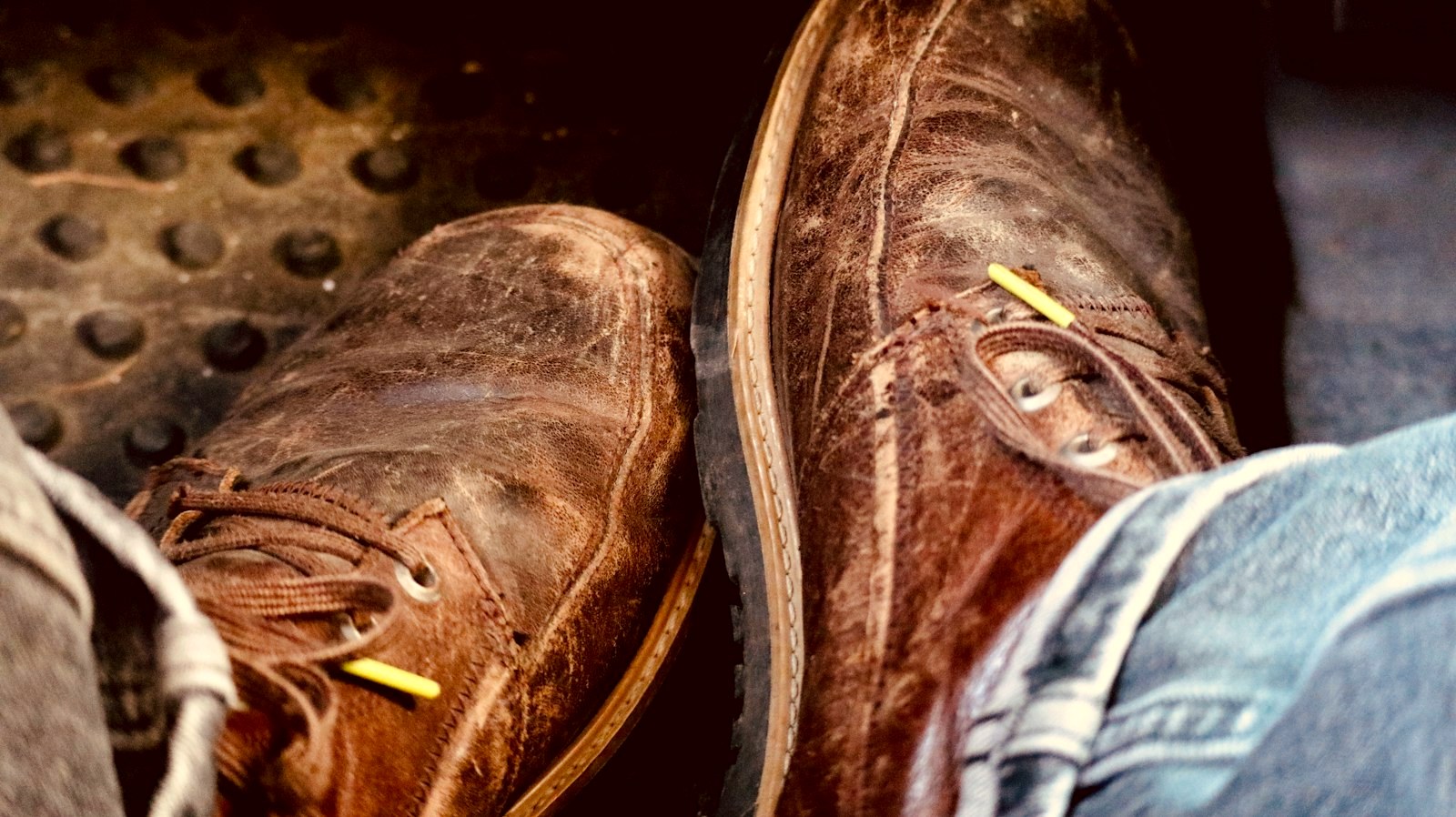
A note on our own photography: our photo bank holds no corduroy. No corduroy trouser worn or folded, no wale macro at any gauge, no crushed seat beside a fresh one exists in the bank, a gap Verdict Card No. 38 prints about its own page as well. The hero is the tailored flat-lay the cloth hangs beside; the frames inside are the knit textures the parity rule is argued from, the trouser slot filled by chinos and captioned as chinos, and the two footwear adjacencies, each captioned for exactly what it shows and none dressed as the subject. The harvest list names what is missing, a corduroy trouser worn in tobacco and in navy, a wale macro at the needle and standard settings, and a seat's shine beside fresh pile, and this page will take those frames the week they exist.
Questions, answered
What wale of corduroy should you wear?
The wale is the number of ribs per inch of cloth, and it is this fabric's formality dial, on the law Verdict Card No. 38 prints. Needlecord at 14 to 16 wale is fine enough to dress up: it sits under a blazer beside flannel and takes a knit tie. Standard cord at 8 to 11 wale is the all-rounder, the weekend-to-office bridge, the wale the ranked field is built on: the Fort Belvedere Stancliffe prints its 8 in its name, the L.L.Bean Stretch Country prints its 11 the same way. Wide wale, roughly 3 to 6 ribs to the inch, is a statement, and statements date fast: wear it as one piece, chosen on purpose, never as the start of a collection. The field's only needlecord is the Quince 5-Pocket at 16 wale, which is why the dressed end of this cloth is also its cheapest experiment at $60.
Can you wear a corduroy jacket with corduroy trousers?
Almost never, and the exception has four conditions, all of which have to hold at once. The wales must be a full band apart, a wide-wale jacket over needlecord trousers or the reverse, so the two cloths never read as one cloth. The colours must be clearly different, never the same colour in any pairing and never tone on tone, because same colour plus same cloth family is the suit signal whatever the wales do. A third texture, a knit or an overshirt, must sit between the two pieces at the waist and chest. And the assembly must never read as a suit: the moment a stranger would call it a corduroy suit, it has failed and become the professor costume. Outside those four conditions the rule is one corduroy piece per outfit, and the one piece is usually the trouser.
What do you wear on top of corduroy trousers?
Knitwear whose weight matches the pile, on this brief's texture-parity rule. Corduroy's rib is the loudest texture in the outfit, and a fine-gauge merino crew disappears against standard 8 to 11 wale, reading as a base layer under a trouser that is doing all the talking: against standard and wide wale, wear mid and chunky gauges that hold their own surface. Against needlecord the fine knit is correct, because both surfaces are fine. The overshirt earns its place over standard wale, the assembly built on Verdict Card No. 06's winner, the L.L.Bean Chamois Cloth Shirt at 83. For shirts the ruling is a fork: flannel doubles down on texture, the country read, its class ranked in Verdict Card No. 09 with the Scotch Plaid at 85; the Oxford cleans the cloth up for the office, and the pairing this page defaults to is the Oxford Card's winner, the Kamakura button-down at 93.
What shoes go with corduroy trousers?
Three adjacencies, ruled here as styling and scored nowhere on this page. The boot is the standard-wale default: a grain or roughout boot shares the trouser's country register and stands up to the rib's visual weight. The suede shoe is the pile's cousin, two napped surfaces that agree, and it is the dressed answer for needlecord and the soft answer for standard wale, with one condition: keep the colours clearly apart, because suede and corduroy in the same tone read as one material continued. The white sneaker question, answered: yes in the casual read, a clean minimal leather sneaker under standard wale or the easy cuts, because the contrast is the point of the modern assembly; no in the dressed needlecord assembly, where it spends the register the fine wale bought; and never a chunky runner under any wale, because its scale argues with the trouser's line.
What colour corduroy trousers should you buy first?
Tobacco first, on this brief's order. The warm brown is the cloth's home colour: it takes navy and grey knitwear above it, boots and suede below it, and it reads as corduroy rather than as a trouser that happens to be ribbed. Moss is the second buy, the green that does the same work against brown shoes and cream knits. Navy is the office read, and it is the colour Verdict Card No. 38 gives its winner: the Drake's Field Games at 79, buy it in navy as the pair the cold rotation leans on. Black is bought last if at all: it shows every fibre of lint the pile collects, fades grey at the pile tips, and reads as neither country nor office. And the burgundy warning, printed plainly: burgundy is the professor costume's signature colour, the one most likely to date the whole outfit to a faculty lounge. If it is bought at all it is bought fifth, in needlecord, dressed, with nothing tweedy anywhere near it.
Why do corduroy trousers go shiny at the seat, and can you stop it?
Because of what the pile is, on Verdict Card No. 38's printed physics. Corduroy's pile is cut loops standing on end. Sitting crushes the pile flat at the seat, crushed pile reflects light differently from standing pile, and that difference is the shine. The knee bends the pile back and forth until fibres break, and broken pile is the bald patch. Neither can be stopped outright; both can be slowed. Rest the pair a day between wears so the pile recovers what it can, brush the pile one way, with the nap, after wearing, wash inside out, and never press the seat, because pressing crushes the ribs it claims to rescue. Weight is the standing defence, which is why the Card tracks published cloth weight: the winner's 15.4 ounces crush later than a 9-ounce pile. The crease is part of the same physics and this brief rules it a non-problem: a pressed crease crushes the ribs along its own line, corduroy takes a soft front line from hanging instead, and its formality is carried by wale and cut, not by a knife crease.
Has Young Cotton ranked corduroy trousers?
Yes. Verdict Card No. 38 ranks eight, scored on cloth and wale honesty, construction, fit, value and longevity. The Drake's Field Games trousers win at 79, at $595 and $1.24 per wear. The Fort Belvedere Stancliffe follows at 76, the L.L.Bean Stretch Country is the value answer at 75 and $79.95, then the Bugatchi Palmer at 69, the J.Crew relaxed double-pleated at 68, the Quince needlecord at 67, the Uniqlo easy ankle at 63, and the Brunello Cucinelli double-pleated is sent home at 50, a $1,350 trouser whose fibre line reads cotton and polyester with the split unpublished. This brief styles that ranked field; it does not re-score it, and every styling ruling here is written against the garments the Card graded.
Next
The ranked field this brief styles is Verdict Card No. 38, every wale count, fibre line and price printed. The dressed pairing's tie is ranked in Verdict Card No. 40, the overshirt's in Verdict Card No. 06, the flannel's in Verdict Card No. 09 and the Oxford's in the Oxford Verdict Card. The blazer that carries the needlecord is briefed in How to Wear No. 03, the overshirt in No. 10, and the coat that closes over the country stack in No. 20. The trouser family's full ladder, with corduroy's rung on it, is the types of pants index.