
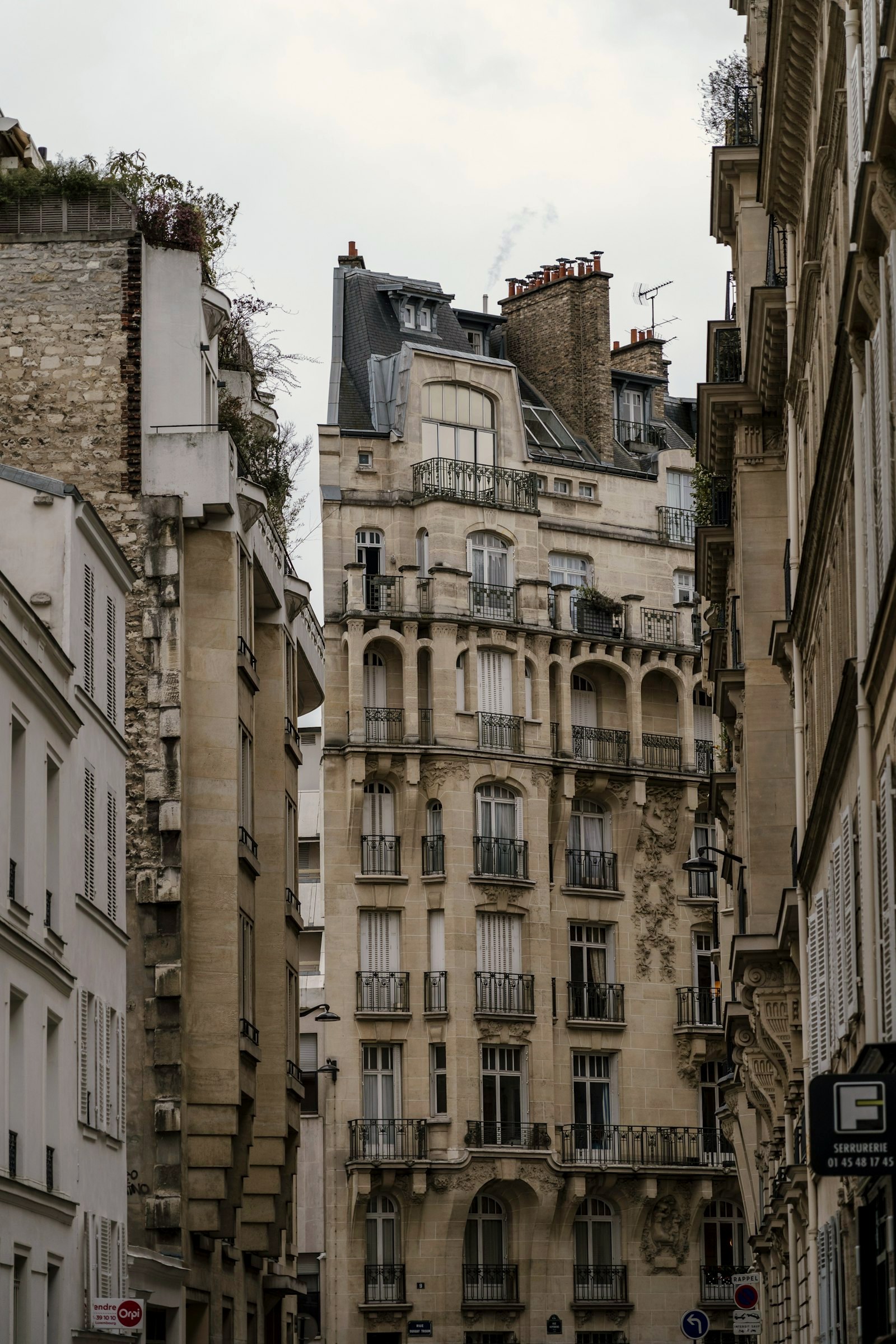
The commute is this garment's workplace: a city street in the wet months. Our bank holds no photograph of a rain shell, worn or folded, so no ranked jacket is pictured anywhere on this page and no frame here is captioned as one. The care section prints the gap and the harvest list.
Checked and updated October 2026
The verdict, up front: seven rain jackets scored out of 100 on cloth 30, construction 20, fit and layering 20, value 15, longevity 15, plus the designer windbreaker sent home. The Patagonia Torrentshell 3L wins at 86: not because its membrane is magic, but because its maker publishes the fullest paperwork in the field, the membrane's chemistry, the face denier, the feedstock, the certifications, and then fits pit zips and storm flaps and charges $189. The Arc'teryx Beta is second at 79, the named-membrane standard, whose own waterproof figure exists but lives where its maker put it: in a customer-service answer, not the spec block. And the jacket sent home, at 36, is a $995 water-repellent nylon windbreaker with a ribbon on its hood. It is October. Rain is the month's weather, and this is the garment graded on the claim it makes about it.
First, know what a rain jacket claims to be
A rain jacket is a promise with a zip, and this page grades the promise before the garment. The promise has three parts, and a maker can publish or withhold each one. The membrane: the layer that actually stops water, either named and specified, like GORE-TEX ePE or Marmot's NanoPro, or a house word, TEK, Omni-Tech, H2No, Squall, behind which the chemistry may be excellent and is certainly unpublished. The figure: the hydrostatic head in millimetres and the breathability in grams, the only numbers in the category that can be compared across brands, printed by two systems in this field and withheld by the rest. And the seams: a membrane with untaped needle holes is a sieve with good marketing, which is why this site's jacket index prints its buying rule for the type in one line: taped seams and a named membrane, or it wets through in twenty minutes. Every card below reads the promise first and the jacket second. The silences are not gaps in this page's research. Read as a set, they are the research.
Two boundaries, drawn in the open. The trench coat is this garment's tailored ancestor and its modern rival: gabardine sheds weather by weave, breathes while it does it, and carries formality the shell cannot, and its wearing is briefed in How to Wear No. 02. This page is only for the membrane shell, the hooded, taped, packable instrument you wear over the day's clothes when the forecast is a fact. And this is a garment Card about rain, written for the commute and the trip: the shells below are graded on whether a man crossing a wet city in October stays dry, not on their standing in any trail culture, and the one alpine name in the field is graded on the same pavement as everyone else.
The physics, briefly. A waterproof-breathable membrane is a film with pores or a chemistry that passes vapour and blocks liquid, and every one of them moves less moisture than a walking body produces, which is why the honest jackets fit pit zips and the dishonest ones print a breathability adjective. The DWR finish on the face is not the waterproofing; it is the beading that keeps the face from wetting out and suffocating the membrane, and it is a consumable. And the category's death has a name, delamination: the day the waterproof layer flakes off the cloth it was printed or bonded to, the jacket becomes a windbreaker with memories. The longevity row prices that day for every garment here.
How the scores work
Every jacket is scored out of 100 on the same five rows. Cloth (30) reads the membrane claim as a claim: a named system with a published figure scores; a named system with published chemistry scores; a house word with neither is scored as the word it is, and the face fabric's denier, where the maker publishes one, is read as the durability evidence it is. Construction (20) reads the seals and the vents: seam taping published or silent, pit zips against sealed theatre, hood architecture, storm flap against bare zip, cuff and hem closures. Fit and layering (20) is the October test: does it go over a knit without a fight, and does the maker say so or leave you to guess. Value (15) is the score divided by the bill, with promotional pricing printed where a maker's list price is a rumour. Longevity (15) is the delamination audit: 3-layer constructions with a protective backer are costed against 2.5-layer printed coatings, re-proofing honesty is credited, and the cost-per-wear table below prints the arithmetic. Row scores add to the total, on every card.
The ranking
Patagonia Torrentshell 3L Jacket
The Winner
US list price at last check: $189.
Buy it as the one shell in the bag and on the commute. The fullest published paperwork in the field, pit zips, and a membrane whose maker tells you what it is made of.
The cloth: the maker's materials line is the disclosure standard for the whole category, and it is worth reading as one: a 3-layer shell whose face is 50-denier ECONYL, 100 percent recycled nylon ripstop with its feedstock named, over a polycarbonate polyurethane membrane with 13 percent biobased content, the only membrane chemistry any maker in this field publishes, finished with a tricot backer and a DWR in which fabric, membrane and finish are all made without intentionally added PFAS, in fabric certified bluesign approved, sewn in a Fair Trade Certified factory. Two charges, printed in the open. The maker prints no hydrostatic figure for H2No on the product page, so the membrane's performance is certified by the maker's standard rather than stated as a number, and the row scores the disclosure that exists rather than the one that should. And the 50-denier face is a midweight cloth, chosen for packability over the Beta's 80-denier armour.
The build and the fit: the construction is the complete commuter set, all of it published: a two-way adjustable hood with a laminated visor that rolls down and stows, a centre zip with storm flaps outside and in, venting pit zips with welted flaps, hook-and-loop cuffs and a drawcord hem, and the whole jacket self-stuffs into its own hand pocket, at 400 grams. The fit is the maker's regular, and its own fit guide states the October answer in so many words: technical garments of this cut may be worn over heavier midlayers. It is not tailored and does not pretend to be; it is a shell that goes over the knit and the day, which is the job. Behind the longevity row stands the maker's guarantee and repair culture, the strongest in the field, and the 3-layer build that protects the membrane from the skin side, which is where membranes go to die.
Arc'teryx Beta Jacket
The Named-Membrane Standard
Price at last check: $400 at the maker's store.
Buy it if the shell is a decade purchase and the face fabric matters more than the vents. Know that at $400 the pit zips are the $100 step up to the SL.
The cloth: a GORE-TEX ePE membrane, the named system the rest of the field is measured against, under a face fabric whose denier the maker publishes at 80, the heaviest in the field and the durability argument in one number, with a C-KNIT backer for comfort against skin and the whole system free from intentionally added PFAS. Now the finding this page exists to print. The membrane has a figure, 28,000 millimetres of water column, and the maker's specification copy does not print it. The number appears on the maker's own product page inside a customer-service answer to the question of whether the jacket is rainproof: like all of our GORE-TEX jackets, it has a 28,000 mm water column rating. The standard-bearer's figure is real, verifiable and buried, and the cloth row scores all three of those facts. The same page's answers confirm an FC0-DWR finish and admit, in the maker's words, that it will gradually wear down and can be restored by reapplication, the most honest re-proofing sentence in the field.
The build and the fit: the hood is the field's best architecture, a low-profile StormHood that adjusts with one pull and turns with the head, over WaterTight zippers whose reverse-coil design seals without a flap, in a regular fit with articulation that layers over a knit without argument, the October test passed by cut rather than by promise. One debit, and it is not small: there are no pit zips. The maker's feature set lists none, its reviewers confirm none, and at $400 the absence is a decision, made by the maker, to sell the venting with the $500 SL instead. The construction row charges it at the price. Longevity is the 3-layer laminate's: an 80-denier face, a protected membrane, a maker's repair and trade-in program behind it, costed at a decade in the table below.
Marmot PreCip Eco Jacket
The Figures, Published
US list price at last check: $135; the maker's own store page could not be captured at this check, so this card ships without a buy link.
Buy it as the attainable shell with its numbers showing. The pit zips are generous, the coating class is the known clock, and the price is honest.
The cloth: NanoPro, the maker's own system, and the only attainable membrane in the field that publishes its figures: 10,000 millimetres of hydrostatic head and 17,000 grams of breathability, printed in the system's specifications for anyone to check, which is more than the winner's maker prints for H2No and more than TEK, Omni-Tech or Squall print at all. The face is 100 percent recycled nylon ripstop, the finish is PFC-free, and the construction is 2.5-layer, which is the cloth row's ceiling and the longevity row's floor: the waterproof layer in a 2.5-layer jacket is a coating printed on the cloth, and printed coatings are the delamination class, however good the day-one numbers are. The row scores the published figures and the honest architecture together, and lands where it lands.
The build and the fit: construction is this card's surprise: 100 percent seam taped, stated outright, a storm flap over the centre zip, pit zips the reviewers call huge, a hood that rolls away into the collar, hook-and-loop cuffs and a drawcord hem, the whole set at a list price of $135, stowing into its own pocket at roughly ten ounces. The fit is a regular athletic cut with the maker's articulated arm; it layers over a light knit and argues over a heavy one, which the fit row prints rather than discovers for you. The maker's lifetime warranty stands behind the longevity row, and the row still costs the coating class at five scored years, because a warranty replaces a dead jacket and this page prices the death. One capture note, on the card rather than buried: the maker's own store page resisted capture at this check, so the list price is taken from the current review listings of the maker's price and the card ships without a buy link rather than with an unverified door.
L.L.Bean Trail Model Rain Jacket
The Attainable Institution
Price at last check: $99.95 at the maker's store.
Buy it as the household shell: the taping line printed, the price a fact instead of a promotion, and the fit caveat read before you layer it over a sweater.
The cloth: a 2.5-layer TEK shell, and TEK is a house word: the maker publishes no chemistry for it, no figure, and no denier for the 100 percent recycled nylon face. What the maker's page does publish, and what lifts this card above the other house words, is the construction truth in plain text: the waterproof interior is bonded to the exterior shell in a laminate, which the maker argues, correctly, is the durable way to build a 2.5, and the seams are fully taped, printed in the product details where a buyer can read them. In a field where half the makers will not say the word taped, the institution says it at $99.95. The cloth row scores the unnamed chemistry and the published taping together.
The build and the fit: a three-point adjustable hood, a centre zip under a Velcro-closure storm flap, adjustable hem and cuffs, three zip pockets, and the jacket packs into its own hand pocket at under a pound, the complete everyday set with one absence: no vents are published, and none were found, so the construction row assumes the membrane breathes alone. The fit is where the maker's own copy charges itself: the page prints Slightly Fitted, and, in the line this desk wishes every maker would copy, Best with lightweight layer. In October that is a real limitation, printed by the seller rather than discovered by the buyer, and the fit row scores the garment down and the honesty up. Longevity rides on the bonded laminate, a step above the printed coatings below it in this ranking, costed at six years.
Columbia Watertight II Jacket
The Proprietary Claim
Price at last check: $70 at the door linked below, against a $100 list at the maker's store.
Buy it on the street price as the spare and the travel shell: the seams are sealed on the maker's own spec sheet, and the membrane behind them is a name you are asked to trust.
The cloth: Omni-Tech, the brief's test case of a proprietary claim graded exactly as a claim. The name is a registered promise, waterproof and breathable, and behind it the maker publishes no chemistry, no figure and no denier, anywhere in the materials this desk could read, including the maker's own product spec sheet. That sheet, to its credit, publishes the construction in full: 100 percent nylon, a fine mesh lining, and the words fully seam sealed beside the Omni-Tech name, which is the one verifiable sentence in the claim and the reason this card sits above the Squall rather than beside it. The membrane may be fine. The paperwork is a name, and the cloth row grades the paperwork.
The build and the fit: an attached adjustable storm hood, hook-and-loop cuffs, a drawcord hem, an abrasion-resistant chin guard, two zippered hand pockets and the jacket packs into one of them, a clean, complete, ventless set: there are no pit zips, so the membrane's unpublished breathability is the only venting there is. The fit is the maker's modern classic, a regular cut at a 29-inch back that layers over a knit without the Bean's printed caveat. Value is the card's engine: a $100 list that the maker's own store discounts as a rhythm and the retail channel sells at $54 to $70, so the jacket most buyers actually purchase is a seventy-dollar sealed shell, and the row scores the garment at the price it transacts. Longevity is the 2-layer coating class, costed at four years, with the mesh lining at least keeping the coating off the skin.
Lands' End Squall Waterproof Rain Jacket
The Institution, Quietly
Price at last check: $82.47 with the maker's standing code, against a $164.95 list at the maker's store.
Buy it only at the code price, and know what you are buying: a seam-sealed house system whose maker publishes almost nothing else about it.
The cloth: the Squall is the oldest name in this field, a system with four decades of weather behind it, and on paper it is nearly silent. The maker's copy for the line attests a fully seam-sealed, wind- and waterproof shell, and this desk credits the attestation; beyond it, the product page at this check published a price and very little a reader could hold: no membrane name beyond the system's own, no figure, no denier, no fibre line captured. The cloth row scores what is published, and what is published is a surname and a seam claim. The institution's defence is its record, and records are not specifications.
The build and the fit: the family's published set is respectable: an adjustable hood, sleeves and hem, a brushed tricot chin guard, a chest pocket, a packable shell. It is also, at a $164.95 list, the most expensive house word in the field, and the value row reads the list the maker prints rather than the code the maker lives by: at the same check the maker's store showed the jacket at $82.47, half the list, as it shows most things most weeks, a pricing theatre this desk has charged before and charges again. At the code price the jacket is a fair buy. The row scores the theatre. Fit is a regular American cut that layers without drama, and longevity is costed at six years on the system's long record rather than on any construction the maker describes, because it describes almost none.
Uniqlo BLOCKTECH Parka
The Honest Finish
Price at last check: $59.90 on the maker's product page, against the $79.90 its own category page prints.
Buy it as a windproof parka that survives a shower, at the price of one, with the maker's own asterisk read and believed. Do not buy it as a rain jacket.
The cloth: there is no membrane in this garment, and the maker, to its lasting credit, nearly says so. The product page's own words: a windproof, water-breathable fabric, a water-repellent finish that protects against light rain, and then an asterisk, the finish is not permanent. BLOCKTECH is a windproofing system wearing a rain jacket's shelf space, and graded as a rain system it has almost nothing to publish: no waterproof figure, no membrane, no taping claim, a seam-entry design and a water-resistant front fastener instead. The cloth row is the field's lowest among the ranked, and the prose around it is the warmest in this section, because a maker that prints its own asterisk has done this page's job for it. The brand stands at 84 in Brands Like No. 08 as the value benchmark, and this is that house honesty at the weather's edge: the claim is small, and it is exactly as large as the truth.
The build and the fit: as a parka, the architecture is considered: a 3D cut that gives the shoulders room, a regular fit that layers over knitwear by design, a hem drawstring and hook-and-loop cuffs, in sizes XXS to 3XL, the widest run in the field and the fit row's best attainable score. As rain construction it is a finish and a fastener, and the construction row keeps the two judgements separate and lands low. Value is real at the page's $59.90, and the value row notes the maker's category page prints $79.90 for the same garment, a smaller theatre than the Squall's but the same genre. Longevity is the shortest clock here, priced at three years: a finish its maker calls impermanent is the whole of the waterproofing, and when it fades what remains is a good windproof parka, which is what it always was.
Moncler Grimpeurs Hooded Jacket
The Skip
Price at last check: $995 at US retail.
Leave it. At $995 the garment should stop rain. By its maker's own description, it repels it, briefly, with a ribbon on the hood.
The cloth: water-repellent nylon. That is the whole of the material claim, in the maker's own description as carried by its retail doors: a hooded windbreaker constructed from water-repellent nylon, with a tricolor ribbon along the hood. No membrane is named because there is none to name. No seam claim is made. No figure exists. Set it against the field it shares a shelf with: at the same check, $189 bought a published membrane chemistry, a named feedstock and a 3-layer taped construction, and $995 buys a finish, the same class of surface treatment Uniqlo sells at $59.90 with an asterisk admitting it fades. The house is not new to this page's arithmetic: Moncler already holds the Logo Tax anti-award in this site's awards, scored 55 in the Italian ranking, and the Grimpeurs is that tax collected at the weather's edge.
The build and the fit: elastic cuffs and an elastic hem, the gym closure this desk convicts wherever it wears luxury language, snap-button pockets, a regular fit with a boxy waistline. Nothing here is badly sewn; everything here is specified like a windbreaker and priced like equipment. The longevity row gives the nylon shell its due, seven points for a cloth that will outlast its finish and its fashion in that order, and the value row gives the transaction its due, which is one point: five Torrentshells, or ten Watertights at street price, against one repellent windbreaker. It ships without a buy link, the way this desk sends home the garments it convicts.
The claim table: what each maker actually publishes
Every cell below is the maker's own published position at this check. Where a maker publishes nothing, the table prints the silence rather than an estimate: the silences are this page's findings, and they are printed in the same size of type as the figures.
| Jacket | Membrane claim, as published | Waterproof figure published | Seams, as published | Venting |
|---|---|---|---|---|
| Patagonia Torrentshell 3L | H2No Performance Standard, 3-layer; membrane chemistry published (polycarbonate PU, 13% biobased); 50-denier ECONYL recycled nylon face | None on the product page | Taping line not printed in the maker's copy read; 3-layer construction | Pit zips, welted |
| Arc'teryx Beta | GORE-TEX ePE, named; 80-denier face published; C-KNIT backer | 28,000 mm, stated in the maker's product answers, not its specifications | Fully taped, per the family's published spec tables | None. No pit zips at $400 |
| Marmot PreCip Eco | NanoPro, named; 100% recycled nylon face | 10,000 mm and 17,000 g/m2, published for the system | 100% seam taped, stated | Pit zips |
| L.L.Bean Trail Model | TEK, a house word; chemistry unpublished; 100% recycled nylon | None published | Fully-taped seams, printed on the product page | None published |
| Columbia Watertight II | Omni-Tech, a house word; chemistry unpublished | None published | Fully seam sealed, on the maker's own spec sheet | None |
| Lands' End Squall | The Squall system; chemistry, denier and fibre line not captured from the maker's page | None published | Fully seam-sealed, attested in the maker's line copy | None published |
| Uniqlo BLOCKTECH Parka | No membrane. Windproof fabric, water-repellent finish, light rain only, in the maker's words | None, and none claimed | No taping claimed; seam-entry design claimed | None |
| Moncler Grimpeurs | Water-repellent nylon, in the maker's description | None | No seam claim published | None |
Read the table as the ranking does. Two systems publish a number. One maker publishes a chemistry. Two product pages print the taping line. And the bottom two rows publish, between them, an asterisk and a ribbon.
The city coat, answered in prose
One shell stands in this site's print already and is not ranked here, on a rule rather than a slight. Nanamica's 2L GORE-TEX Cruiser Jacket is the key piece of the Japanese ranking, a GORE-TEX membrane cut with a tailored coat's manners, the trench's true modern rival: weatherproofing by chemistry at a formality gabardine cannot reach downward and a shell cannot reach up to. At this check the maker's US store lists the Cruiser family at $650 to $730. It is not ranked on this page because the desk's capture from the maker's current store was a name and a price, and this page does not score a garment it could not read; its standing here is what it is in the Japanese ranking, the city's answer, noted for the reader whose rain problem is also a tailoring problem. The day its maker publishes the Cruiser's full specification where this desk can hold it, it earns a card.
Cost per wear, printed in the open
The assumption, printed before the numbers: a rain jacket in rotation is worn about 40 times a year, October through the spring rains, commutes and trips together. The life column is the service life our longevity row scores for, counted in years before delamination or finish death retires the garment from rain duty, not a promise. The Squall is costed at its list price, with its code price printed beneath the table. The Columbia is costed at its list; its street price would put it beside the Bean.
| Jacket | Price | Scored life | Cost per wear |
|---|---|---|---|
| L.L.Bean Trail Model | $99.95 | 6 years | $0.42 |
| Uniqlo BLOCKTECH Parka | $59.90 | 3 years | $0.50 |
| Patagonia Torrentshell 3L | $189 | 8 years | $0.59 |
| Columbia Watertight II | $100 | 4 years | $0.63 |
| Marmot PreCip Eco | $135 | 5 years | $0.68 |
| Lands' End Squall | $164.95 | 6 years | $0.69 |
| Arc'teryx Beta | $400 | 10 years | $1.00 |
| Moncler Grimpeurs | $995 | 3 years | $8.29 |
The table's shape is the category's economics in one view. The Bean amortises best because a bonded laminate at $99.95 is a long denominator under a short numerator. The winner costs fifty-nine cents a wearing for the fullest disclosure in the field, and the Beta's dollar a wearing is the honest price of the decade garment, printed in its hearing. At the Squall's standing code price of $82.47 its line would read $0.34, the best in the table, which is precisely why the value row scores the list instead: a price that requires a code is a claim, and claims are graded as claims. And the skip costs eight dollars and twenty-nine cents every time it is worn, for a finish.
The skip: Moncler's Grimpeurs at 36
Every house rule that governs this site's rankings lands on this jacket at once. The garment type is wrong: it is a windbreaker, by its maker's own description, in a ranking of rain jackets, admitted because its price and its shelf insist it belongs in the conversation. The claim is the weakest in the field: water-repellent nylon, a surface finish, the class of treatment the cheapest honest garment here sells for $59.90 with a printed admission that it fades. The construction is the gym set, elastic at cuff and hem, snap pockets, at $995. And the context convicts it without outside witnesses: the same house holds this site's Logo Tax anti-award, and its rain-season nylon is the tax in its purest form, a four-figure charge for the space where a membrane should be. Buy the Torrentshell and keep the $806: you will be drier, and the paperwork will be better reading. Buy the BLOCKTECH if the shower is all you face: its maker will tell you the truth for a sixteenth of the money.
Which jacket to buy
If you buy one: the Torrentshell 3L. It is the only shell here that is specified like equipment, built like equipment and priced like clothing. If the shell is a decade purchase: the Beta, accepting the missing pit zips as the price of the 80-denier face and the named membrane, or the SL at $500 if the vents matter more than the armour. If the budget is the argument: the Trail Model at $99.95, sized for the layers you actually wear under it. If you want the numbers before the name: the PreCip Eco, the attainable shell that publishes its figures. If you need a spare by Friday: the Watertight II at its street price. If your rain is a five-minute shower between buildings: the BLOCKTECH, bought as the windproof parka it is. The rest of the wet shelf is ranked too: the coats that close over all of it are briefed in How to Wear No. 20, the trench's case is made in No. 02, and every torso layer in the wardrobe is mapped in the Body Map.
Questions, answered
What are the best rain jackets for men?
The Patagonia Torrentshell 3L, scored 86 out of 100: the only jacket in the field whose maker publishes its membrane's chemistry (a polycarbonate PU membrane with 13 percent biobased content), its face denier (50) and its feedstock (ECONYL recycled nylon), with pit zips, storm flaps on both sides of the zip and a hood that stows, at $189. The Arc'teryx Beta follows at 79, the named-membrane standard, charged for having no pit zips at $400. The jacket sent home, at 36, charges $995 for water repellency.
What does a waterproof rating in millimetres mean, and which jackets publish one?
The millimetre figure is a hydrostatic head: the height of a column of water the cloth holds back before it leaks, measured in a lab. Higher is drier under pressure, at straps and knees and in driven rain. In this field only two systems publish a figure a buyer can find: the GORE-TEX ePE membrane in the Arc'teryx Beta, at 28,000 mm, a number its maker states in a customer-service answer on its own product page rather than in the specifications, and Marmot's NanoPro, published at 10,000 mm with 17,000 grams of breathability. Patagonia prints no figure for H2No on its product page, and L.L.Bean's TEK, Columbia's Omni-Tech and the Lands' End Squall system publish no figure anywhere their makers' pages offer one. A missing figure is not proof of a weak membrane. It is proof of an unverifiable claim, and this page scores it as one.
Is a named membrane like GORE-TEX worth more than a house membrane like Omni-Tech or TEK?
The name itself is worth nothing; what the name usually carries is a published standard behind it, and that is what you are paying for. GORE-TEX publishes its membrane's figure and licenses its construction; the Beta wearing it scores 79. Columbia's Omni-Tech and L.L.Bean's TEK publish no figure and no chemistry, so their claims cannot be checked, only trusted; the jackets wearing them score 69 and 73, carried by honest construction and honest prices rather than by their membranes' paperwork. The exception that proves the rule is the winner: H2No is a house membrane too, but Patagonia publishes its chemistry, its denier and its certifications, and disclosure, not the logo on the membrane, is what the cloth row pays for.
Are pit zips worth it on a rain jacket?
Yes, and this page scores them, because a membrane's breathability is a laboratory number and a pit zip is a hole you can open. Every membrane in this field moves less vapour than a moving body makes; the jackets that admit it and fit the mechanical answer, the Torrentshell and the PreCip Eco, take the construction marks. The charge lands hardest at the top of the market: the $400 Arc'teryx Beta has no pit zips at all, a fact its maker's feature list confirms by silence and its reviewers confirm in print, and the $100 spent stepping up to the Beta SL buys them back. On a commute, where the rain stops and the train is warm, the pit zip is the difference between arriving dry and arriving steamed in your own weather.
How long does a rain jacket stay waterproof, and what is delamination?
Two clocks run on every shell. The face finish, the DWR that makes water bead, wears off in seasons: Arc'teryx's own product answers say its FC0 finish will gradually wear down and can be restored by reapplication, and Uniqlo prints an asterisk on its parka admitting the finish is not permanent. The membrane clock is slower and final. In a 2.5-layer jacket the waterproof layer is a coating printed on the cloth's inside, and when it ages it flakes and peels: that is delamination, and it is this garment's death, costed on this page at four to five years for the printed-coating class. In a 3-layer jacket a fabric backer is bonded over the membrane and protects it from skin oils and abrasion, which is why the Torrentshell and the Beta are costed at eight to ten years. Wash the jacket, dry it as directed, re-proof the face: you are servicing both clocks.
Is a water-repellent jacket the same as a rain jacket?
No, and the difference is the whole of this page. Water-repellent is a finish: a treatment on the cloth's surface that sheds light rain and then, as every maker who is honest about it admits, fades. Waterproof is a structure: a membrane or coating sealed at the seams, which is why this site's jacket index prints its buying rule as taped seams and a named membrane or it wets through in twenty minutes. Uniqlo's BLOCKTECH parka is the honest repellent: its maker claims light rain only, in writing, and it is ranked here at 60 as exactly that. The Moncler Grimpeurs is the dishonest end of the same word: a water-repellent nylon windbreaker at $995, with no membrane, no seam claim and no figure, sent home at 36. The word is the same. The price of believing it differs by $935.
How this ranking stays honest
Three rests and five capture notes, printed. H&M was rested deliberately: the desk chose to grade the whole price ladder's claims rather than add a fourteenth garment to the running H&M derivation, which stands untouched on Brands Like H&M. The North Face, REI's house shells and the ultralight school were rested because this Card grades the commute-and-trip shell class; the trail-first instruments are a different ranking on a different day. Nanamica's Cruiser is answered in prose above rather than ranked, because the desk's capture from its maker's store was a name and a price. On capture: Patagonia's own product page served its queue notice at this check, so its price and specification were verified across the maker's current retail listings and are flagged for direct re-verification in the November pass, as are Marmot's own store page and a live door for the PreCip Eco, the Lands' End specification block, and a Columbia door on the maker's own domain. On photography: the magazine's bank holds no rain shell, no wet street and no taped seam to photograph, a gap the desk admits here rather than covering with a mislabelled picture; the hero is a Paris street, the commute the garment serves, the cards run without images, and rain frames stand at the top of the harvest list: a shell worn in rain, a seam's taping at macro range, a wetted-out face beside a beading one. Prices and specifications were checked against the makers' own listings in October 2026; where a figure could not be verified from the maker's page, the page says so at the figure's elbow. The full method is written out on the methodology page.