
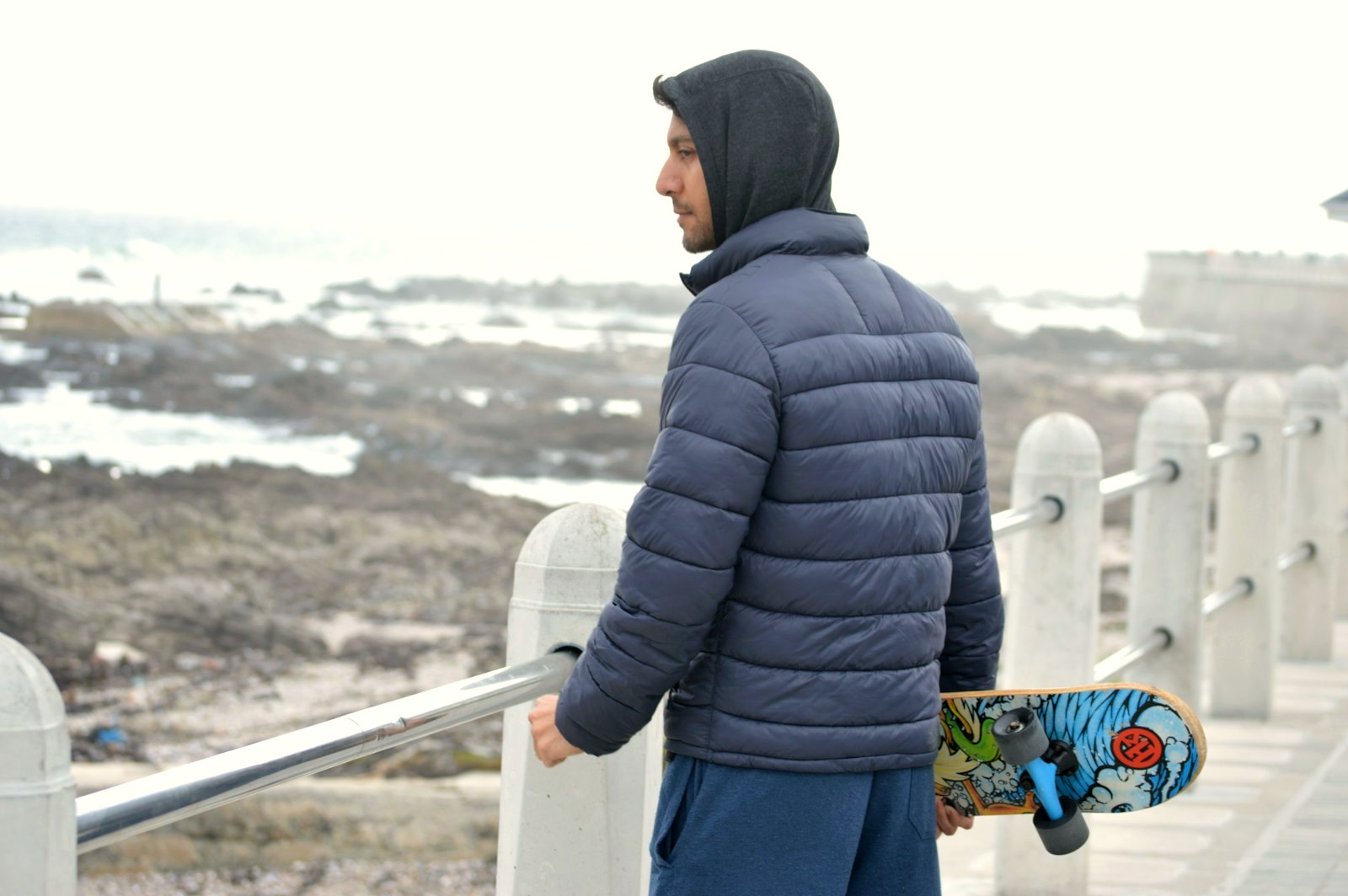
The garment in its working register: a navy puffer worn open over layers, on body, in real light. It is not any ranked jacket; our bank holds exactly two puffer frames and no photograph of the seven below, no baffle at macro range and no lofted down, so the ranked jackets are pictured nowhere on this page and this frame is captioned as what it is. The care section prints the gap and the harvest list, as the Card that ranks the field prints it too.
Checked and updated October 2026
The ruling, up front: the puffer is the most technically honest garment in the winter wardrobe and the one most often worn as an afterthought, bought as weather equipment and then thrown over whatever the day was already wearing, at whatever size felt roomy in the shop. This brief rules the wearing of it, against the field Verdict Card No. 46 has already ranked: the Feathered Friends Eos at 88, the Rab Microlight Alpine at 84, the Patagonia Down Sweater at 82, the Arc'teryx Cerium Hoody at 80, the Patagonia Nano Puff at 76 as the synthetic on its own record, the Uniqlo Seamless Down Parka at 74, the Canada Goose Crofton Hoody at 68, and the Moncler Maya at 52 sent home, named here as a warning and styled nowhere. Four laws over that record. Loft is the silhouette: the baffle scale is the formality dial, micro dresses, expedition declares, and the fit is made at the shoulder and the hem or the jacket is a sleeping bag with sleeves. It is bought over the knit, never over the blazer: the layering allowance is printed honestly by the field's own fit records, and tailoring under a puffer is refused, with one commuter exception argued to its conditions. Nothing tailored goes over it: the puffer is the outer layer of its system, and the overcoat-over-puffer assembly is refused outright. And it is stored loose or it is stored dying: loft dies compressed, a season at a time, in the stuff sack it travelled in. The cold is arriving. This is the month the puffer comes out of whatever it was crushed in, and how it is worn is the whole of how it works.
This brief: loft and fit · the length ruling · what goes under it · what goes over it · colour and shine · the bottom half · the looks · the mistakes · care and storage
The decisive rule: loft is the silhouette
Every other winter coat is cut first and insulated second: the overcoat's line exists before its warmth does, and a man chooses its silhouette the way he chooses a jacket's. A puffer reverses the order. Its silhouette is its insulation, worn outside: the volume you see is the still air the down is holding, and the baffles that parcel the down are the garment's architecture, visible across a street. Which is why the puffer is worn worst by the men who buy it best: they grade the specification, quite correctly, on the Card's evidence, and then wear the garment as though its shape were weather's business rather than theirs. The shape is the styling. Read the baffle before the colour, and the fit before the baffle.
The baffle scale: the formality dial. Corduroy prints its gauge as wale and the beanie prints its as rib; the puffer prints its as baffle width, and the dial turns the same way. Micro-baffle dresses. Narrow channels hold the down in small parcels, the surface reads almost quilted-smooth at conversational range, and the jacket can sit in the city's register without declaring the mountain. The ranked evidence is the Rab Microlight Alpine at 84, micro baffles across the body and shoulders with smaller nano baffles under the arms, zoned where heat and movement argue for less fill: the dial's dressed end, engineered rather than styled into existence. The mid baffle is the city's. The standard channel width of the field's working jackets, the Down Sweater's patterned stitch-through quilting its reference build, is the all-rounder setting: visibly a down jacket, honestly one, at home from the platform to the school gate to the cold office's door. Expedition baffle declares. Wide, high-loft channels are a warmth claim made in silhouette, and like wide wale and the chunky knit before them, they date and they dominate: the outfit becomes about the jacket, every other garment in it demoted to the jacket's support act. Expedition loft is bought for expedition cold, worn knowingly, and retired on the silhouette's schedule. As a daily register in a heated city it is a declaration the wearer is usually not making on purpose.
The fit law: shoulder and hem, or it is a sleeping bag. A puffer insulates the air its down holds still, and it keeps that air only where the garment closes. The two closures that matter are the shoulder, where the jacket's weight and shape are set, and the hem, where the bellows opens. Fitted at the shoulder means the seam sits at the shoulder's own point and the chest closes without strain over the layer beneath: a dropped, slumped shoulder on a puffer is not ease, it is loft hanging off the frame it was cut for. Sealed at the hem means the drawcord drawn and the cuffs closed, the system buttoned against the pumping that walking performs on loose clothing. The failure has a name because it is the category's commonest sight: the jacket bought two sizes up, for layering room, worn open at the hem over a T-shirt, is a sleeping bag with sleeves, its expensive down holding air that leaves at every step. The ranked field's winner publishes an 11.8-ounce jacket whose warmth is a system of closures; worn unclosed, it is an 11.8-ounce blanket.
The layering allowance, printed honestly. Every puffer is bought over something, and the honest question is what. This brief's answer is the knit, and the field's own fit records say the same in the makers' words. The Eos is cut close in its maker's lightweight pattern, to serve as an outer layer in mild cold or a mid layer under a shell: its allowance is a knit, stated by its cut. The Cerium is patterned to stay close through chest, waist and hip for clean layering, the premium school's version of the same sentence. And the Down Sweater's current generation makes the allowance's confession in public: a trimmer cut, with its maker's own advice to size up for room at the hips, which is a maker admitting the allowance is finite and telling the buyer where it runs out. Read together, the three records print the law: a puffer's size is chosen over the heaviest knit it will close over, and no honest maker's cut in this field is built over tailoring. The reader who tries a puffer over a blazer in the shop and reaches for the next size has the transaction backwards, and the blazer section below gives him the whole argument.
| The setting | The baffle | The ranked evidence | Its register |
|---|---|---|---|
| Micro | Narrow channels, surface near smooth | Rab Microlight Alpine 84, micro and nano zoning published | The dressed end: the city, the commute, the closest this garment comes to quiet |
| Mid | The standard channel width | Down Sweater 82, patterned stitch-through quilting; Eos 88, sewn-through | The all-rounder: the working winter, platform to office door |
| Expedition | Wide, high-loft channels | Unranked as a styling field here; the Card grades layering puffers, not expedition shells | The declaration: bought for real cold, worn knowingly, dates on the silhouette's schedule |
| Gloss fashion | Quilting as decoration | Moncler Maya 52, sent home: boudin quilting in nylon laqué, no warmth figure published | The photograph: named as a warning on this page, styled nowhere |
The length ruling: hip, thigh, and the convicted crop
Length is where the puffer's two natures, equipment and fashion, stop pretending to agree, and the ruling is made by temperature before it is made by taste. Hip length is the city's contract. The ranked field is a hip-length field: jackets that close at the hip, seal the torso, sit for a train seat and a driving wheel without negotiation, and layer under a shell when the rain is real. For the commute, the office door and the general winter, hip length is not the compromise; it is the design, the length at which the garment's closures all work at once. Thigh length is the parka contract. When the cold is the point, when the wearer stands on platforms, walks distances, works outdoors or watches sport standing still, the insulation has to cover the seat and the top of the leg, and the longer parka class is the honest buy, its extra length a specification rather than a style. The Uniqlo's parka name at 74 is the field's nod to that contract at the attainable end. The cropped length is convicted. A puffer ending at or above the waist abandons the hem seal the fit law depends on, insulates the chest and leaves the kidneys to the wind, and exists for the photograph. Its exhibit is ranked and priced: the Maya is a short, hip-length fashion cut at about $1,900 whose maker publishes no fill power and no fill weight, a garment whose length and whose paperwork make the same statement. Buy a cropped puffer as a top if you buy it at all, priced as a top, and never as the answer to a cold month.
What goes under it: the system's order
A puffer is the last layer of a system, and the system is already published on this site in its order. At the skin sits the base layer, the garment Verdict Card No. 45 ranks, whose jobs are moisture and the first still air, and whose fit is close because everything above it is cut counting on it. Over it, the knit mid-layer: the crew, the quarter-zip, the sweatshirt of the cold office, carrying the outfit's register for the moment the jacket opens at the door or comes off at the desk, which is most of the working day. The puffer closes over that knit and nothing bulkier, sized on the fit law in the first section. Worn in that order, each layer is doing the job its ranking graded. Worn out of it, with the puffer asked to be the whole system over a T-shirt, the most expensive layer in the stack is doing the cheapest layer's work, badly, because down over bare skin in a draughty oversize shell is the sleeping-bag failure again, indoors at the mirror.
What never goes under it: the blazer. The question is asked every winter and this brief answers it the way the beanie brief answers its own version: the assembly is refused. The reasons are construction, not snobbery. A blazer is a shaped garment whose value is a line, shoulders built, chest cut, lapel rolled; a puffer over it crushes the line flat, swallows the lapel into a baffled collar, and produces the silhouette of a man wearing his coat indoors and his jacket outdoors at once. The fit arithmetic refuses it too: no honest cut in the ranked field is built over tailoring, so the puffer that closes over a blazer is the puffer sized wrong over everything else it will ever meet, the knit included. The one commuter exception survives, argued to its conditions, and all of them hold at once or the assembly is refused. The cold is genuine, the walk itself the problem, not a two-minute dash between heated doors. The jacket is matte, mid or micro baffled, hip length, read as equipment rather than as an outfit. And it is transit only: off at the door, in the same motion as the coat it travelled with, the blazer beneath it treated as cargo that was transported, never as a layer that was styled. The reader whose winter commute regularly demands warmth over tailoring is owed the honest answer, and it is not a bigger puffer: it is the tailored winter system, a proper overcoat over knitwear, briefed in How to Wear No. 20, where the coat's allowance is built for what goes under it.
Two corollaries, printed because the street keeps committing them. A hooded knit under a hooded puffer stacks two hoods into a collar with ambitions, a rolled bolster at the neck that pushes the jacket's own hood off its line and reads as packing material; one hood per outfit, and the puffer's wins. And the heavy expedition knit under a micro-baffle jacket spends the close fit from inside: the Rab's zoning and the Cerium's patterning are cut against a base layer and a mid knit, and a chunky sweater under either is the oversize failure worn in reverse, the right jacket made wrong by its contents.
What goes over it: nothing tailored, one shell
The puffer is the outer layer of its system, and this section is the shortest law in the brief because the garment leaves so little to argue. The overcoat over the puffer is refused. Both are outer silhouettes, and they do not nest: the overcoat is cut to close over tailoring and knitwear along a tailored line, and a puffer under it is volume the coat was never patterned to hold. The coat's shoulders spend themselves containing loft, its chest stands off, its line, the entire reason the garment exists in How to Wear No. 20's system, is surrendered to a baffled filling. The assembly reads, at any distance, as a man wearing everything he owns against a cold he has not dressed for in layers but in bulk. Choose the system the day requires: the tailored system, coat over knit, or the puffer system, base and knit under down. They are both complete. They do not stack.
The one over-layer admitted is equipment. In real rain, a waterproof shell goes over a down jacket, and the admission is the ranked field's own paperwork rather than this brief's invention: the Eos's maker prints in its own copy that for sustained rain, bring a waterproof shell, because down's loft is air held in a cluster and water collapses the cluster. The shell over the puffer is therefore not a second outfit; it is the down system's rain component, ranked in the rain jackets ranking, worn for the weather's duration and no longer. The distinction this brief draws is the one the whole page runs on: equipment over equipment is a system, tailoring over equipment, or equipment over tailoring, is a costume. The shell passes because it claims nothing but weather. The overcoat fails because it claims a register the puffer underneath has already spent.
Colour and shine: matte is the register
A puffer's shell is the largest single surface in a winter outfit, and its finish decides the garment's register before its colour gets a vote. Gloss reads fashion. The lacquered shell takes light in a continuous shine, announces itself across a room, and pairs the jacket with the fashion register whatever its insulation does. The field's exhibit is again the skip: the Maya's nylon laqué is a glossy lacquered finish its ranking calls the garment's loudest specification, louder, in the event, than any warmth claim its maker declined to publish. Matte reads equipment. Every serious jacket in the ranked field wears a matte or near-matte shell, because the technical register's whole claim is that the garment is a tool, and tools do not shine. Matte is therefore the office answer: a matte, dark, mid or micro baffled puffer over a knit is the one build of this garment that can arrive at a workplace, a client door or a school meeting without the jacket becoming the meeting's first topic. Shine is not banned; it is ruled a decision, made knowingly, in the register that owns it, which is the fashion register, priced like the Maya and graded like it too.
Black's tax, shared with corduroy. How to Wear No. 24 rules black corduroy bought last because the pile collects every pale fibre in its environment and displays the collection. The matte black puffer runs the same physics on a smoother cloth: a dark matte shell is a lint field, every fibre the coat check, the knit beneath and the day itself contributes shows against it at conversational range, and the jacket that left the house as equipment arrives as housekeeping. Black is not refused; it is bought with its maintenance priced in, a lint roller at the door, or bought after navy and charcoal, which collect the same day and decline to exhibit it. The bright colours are declarations. Expedition orange, signal yellow, the mountain's colours, exist to be seen by rescuers and photographers, and in the city they declare the mountain register at full volume whether or not the wearer has been near one. Worn knowingly, as the outfit's one loud surface under the volume budget's law, they are a legitimate statement with a long history in street dress. Worn as a default, because the jacket was on sale in that colour, they are the wearer being announced by his coat. The colour order this brief prints for the first puffer is the winter wardrobe's standing order: navy or charcoal first, black with its tax understood, colour with intent second, and gloss only ever on purpose.
The bottom half: the volume budget
An outfit has a volume budget, and the puffer spends most of it by itself. The law this brief prints is the same law the corduroy brief prints for texture and the scarf brief prints for pattern, translated to mass: one voluminous garment per outfit, and the puffer is always the one. Everything below the jacket is therefore chosen in the jacket's subtraction. The trouser narrows as the jacket lofts. Under a micro-baffle jacket the regular straight trouser of the working wardrobe stands unchanged, because the jacket has spent little. Under a mid baffle the trouser gives a little, a tapered leg answering the jacket's rounded mass with a narrowing line, so the silhouette reads as a taper rather than a column. Under expedition loft the trouser narrows properly and everything wide, the relaxed double pleat, the wide cord, the cargo, is refused: two volumes in one outfit do not read as abundance, they read as a man inside a duvet with legs, and the legs are blamed for the jacket's decision. The ranked field's hip lengths help the budget by ending where they do; the thigh-length parka spends further down the leg and narrows the trouser's allowance by the same amount.
Footwear weight is styling here, argued as such and scored nowhere. A lofted jacket raises the outfit's centre of visual mass, and the shoe is the counterweight at the ground line. The boot is the mid and expedition baffles' answer: substance at the hem, a sole and a shaft that hold the trouser's narrowed line against the jacket's volume, the pairing this page's looks default to. A substantial derby or a suede boot serves the micro-baffle's dressed end. The minimal white sneaker, corduroy's modern answer, is spent by loft: under a micro-baffle in the casual read it survives on contrast, and under mid or expedition volume it disappears, a rumour of a shoe under a weather system, and the outfit reads unfinished at exactly the point it meets the ground. And the chunky runner under a puffer doubles the declaration, two loud volumes arguing at opposite ends of the same column. The shoe under a puffer is chosen by the jacket's baffle the way the knit under it is chosen by its fit: the system sizes everything.
The looks: the field, worn
Four assemblies, each built from Verdict Card No. 46's ranked field and this brief's rulings. The frames are the bank's honest frames, captioned for what they show; the bank holds two puffer photographs and no ranked jacket, and the care section prints that gap rather than let a stranger's jacket stand in for a graded one. The head above every collar in these looks is the beanie's business, ruled in How to Wear No. 26: the watch cap at working cover under the puffer's hood line, off at the door with the jacket, in the same motion, as all outerwear is.
Look one: the city standard. The Eos at 88 where the budget runs to it, the Down Sweater at 82 as the institution's version: matte, mid or micro baffled, hip length, closed over a mid-gauge knit on the base layer of No. 45, hem drawn, a tapered trouser under it and a boot or substantial derby at the ground. This is the assembly the whole brief is calibrated to, the puffer worn as the technical garment it is, in the register its finish claims, with the volume budget spent once and the rest of the outfit quiet. At $1.07 and $0.90 a wear on the Card's costing, it is also the winter's cheapest seriousness per outing this site has printed, bought once and worn for a decade of cold months.
Look two: the wet commute. The Nano Puff at 76, the synthetic ranked on its own record, bought for exactly this weather: the damp cold where down's loft is a liability and the PrimaLoft fill keeps insulating wet. Worn over the same base and knit, and under a shell from the rain ranking on the days the rain is real, on the winner's maker's own instruction. The look's discipline is its honesty about species: it does not pretend to the down jackets' loft or packability, and on the dry still days it yields the rail to look one without an argument, because the Card grades the two fills as different animals and the wardrobe that owns both owns the whole winter's weather range.
Look three: the attainable winter. The Uniqlo Seamless Down Parka at 74, the cheapest checkable warmth in the field at about $0.24 per published fill power point, its certificate number printed in its maker's copy at $179.90. Styled as what it is: a matte hip-to-thigh city parka over knitwear, its heat-bonded baffles doing the stitch-through's job without the needle holes, on the three-to-four-season clock its maker's own finish disclosure implies. This is the look that answers the reader whose winter is real and whose budget is the argument: the styling laws cost nothing, and a $179.90 jacket worn at the right size, sealed at the hem, over the system's layers, outperforms a $950 jacket worn as an afterthought at every temperature the season actually produces.
Look four: the declared register. The Cerium at 80 for the precision school, its fitted patterning worn close as its maker cut it, or the Crofton at 68 bought the only honest way it can be bought, with its $1.27 per published point read on the Card and chosen anyway for the make and the size library. Expedition loft and a bright colour live in this look when they live anywhere on this page: one declaration per outfit, the trouser narrowed, the shoe weighted, the colour worn as the statement it is. The Maya appears in no look, by the Card's verdict and this brief's agreement: a jacket whose maker will not publish its warmth does not get styled, it gets cited, as the standing proof that gloss and a short cut are a photograph's specifications, not a winter's.
The ruling
Wear the puffer as the system it is, not as the coat that happened to be by the door. Read the baffle as the formality dial: micro for the city's dressed end, mid for the working winter, expedition only as a declaration. Fit it at the shoulder, seal it at the hem, and size it over the knit, on the allowance the ranked field's own makers print, never over tailoring: the blazer under a puffer is refused, and its one survivor is a commuter in genuine cold, in a matte hip-length jacket, taking it off at the door with the coat. Put nothing tailored over it either: the overcoat-over-puffer is two outer silhouettes in a surrender, and the only layer the puffer accepts above it is a rain shell, on its winner's maker's own instruction. Run the system's order underneath, base layer at the skin from Verdict Card No. 45, knit in the middle, down last. Keep the finish matte and the colour quiet unless the declaration is the point, price black's lint tax before buying it, and spend the outfit's one volume on the jacket, narrowing the trouser as the loft rises and weighting the shoe to hold the ground. Store it loose, re-loft it at the season's start, and let the stuff sack go back to being a travel tool. The field is ranked and this brief has not touched a number: the Eos at 88 is the reference, the Rab at 84 the mountain standard at a working price, the Uniqlo at 74 the proof that the styling laws are free, and the Maya at 52 the warning that keeps the category honest. A puffer is still air, held in architecture, closed by its wearer. Wear the closures.
The mistakes
The sleeping bag. The jacket bought two sizes up for layering room and worn over a T-shirt, open at the hem, its down holding air that leaves at every step. It is the category's commonest failure and its most expensive one, because it converts ranked warmth into draught at full price. The repair is the fit law, applied at the till: the size that closes over the heaviest knit, hem drawn, is the size; a shop's roominess is not a specification.
The full wardrobe. Puffer over blazer, or overcoat over puffer, the two assemblies this brief refuses, worn as one: every outer garment the drawer owns in a single column, each cancelling the next one's line. It fails the way double corduroy fails in No. 24, by matched ambition rather than by any single garment, and its repair is subtraction: choose the day's system, tailored or technical, and let the other rail stay on its hangers, where both systems keep their value.
The cropped coat. The short fashion puffer bought as a winter coat, its hem at the waist, its warmth unpublished, its wearer insulated to the ribs and wondering at the cold. It is weather theatre purchased at coat prices, the Maya's cut generalised into a category, and the repair is the length ruling read before the purchase rather than after the first platform wait: hip for the city, thigh for real cold, cropped for photographs.
The stuff-sack winter. The good jacket stored crushed from April to October, then worn flat through the season it was flattened in, its owner concluding that down is overrated. The down was fine; the storage was the sentence, a season of compression taken as a set by clusters that needed air. Loose storage and a tumble re-loft at the season's start cost less than the jacket's first cleaning, and they are the difference between the ten-season life the Card costs and the four-season disappointment the drawer reports.
Care, and the loft
The Card prints the audit and care follows it: down itself is nearly immortal, and what retires a puffer is the systems around the clusters, compression first. A jacket stored crushed loses loft a season at a time, because the cluster's structure, the three-dimensional spring that holds the air, takes a set under months of pressure. Second is migration: stitch-through baffles, the light construction most of the ranked field uses, let down work through the seam lines across years, which is why the better makers publish their baffle architecture and why a feather at a seam is a maintenance note, not yet a verdict. Third is the shell's finish: the water repellency that keeps the down dry decays on a wash count no maker prints, and the Uniqlo is the one house in the field that says its finish is not permanent on its own product page, an honesty the Card credits and this brief repeats as the class's standing term. Care is the defence of all three systems, and it is mostly a matter of air.
The routine, in the order of the seasons. Store the jacket loose: on a wide hanger that bears its weight at the shoulders it was fitted to, or in the large cotton storage bag the better makers ship for the purpose, in a dry place with air around it. The stuff sack is for the trip, measured in days; a season in it is the slow press of the mistakes section. At the season's start, re-loft before the first cold morning grades the jacket unfairly: a low tumble dry with clean balls, on the makers' own care line the Card prints, breaks the clusters apart and returns the loft that storage cost, which is most of it, in the first year the habit forms. Wash rarely and as the maker directs, down asking for water the way wool does, less often than its wearer expects, and dry it through, because a damp cluster stored is a cluster mildewing in the dark it was hung in. Work migrated down back through the baffle by hand rather than pulling the feather out, which widens the hole it came through. And retire the jacket on the Card's clock, not the calendar's: when the loft no longer returns after the tumble, the garment has given its scored seasons, and the ranking that graded it is the ranking that replaces it.
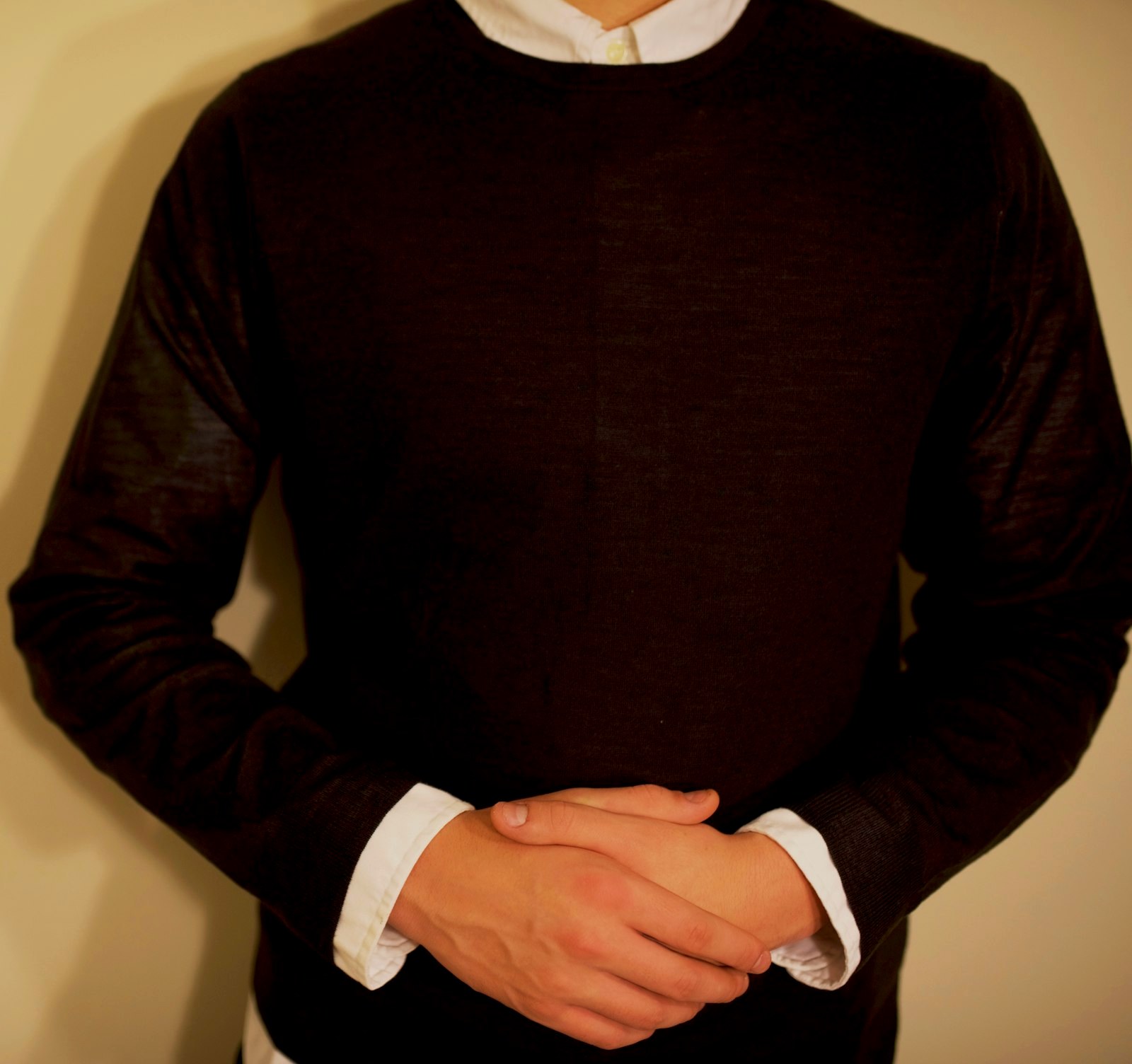
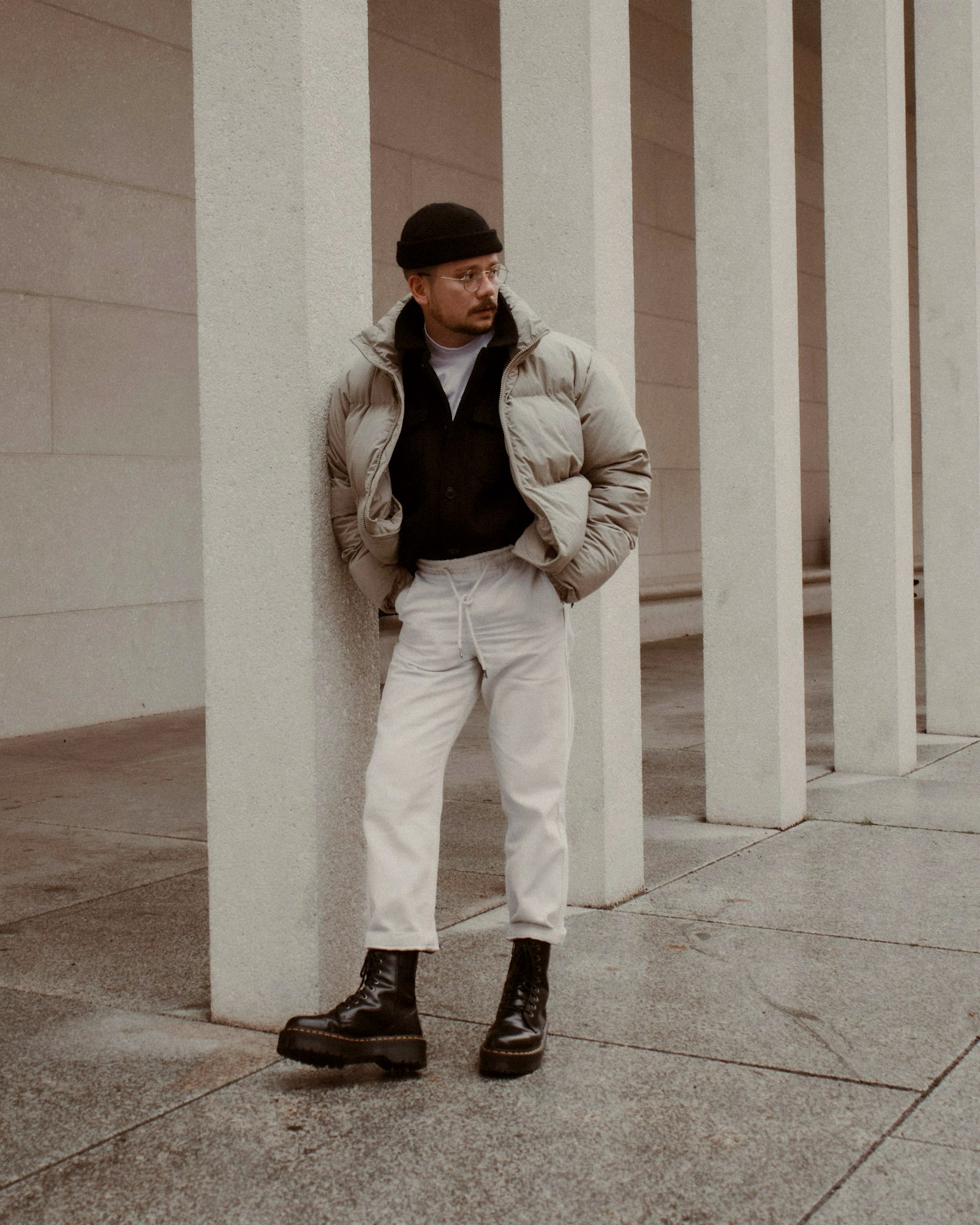
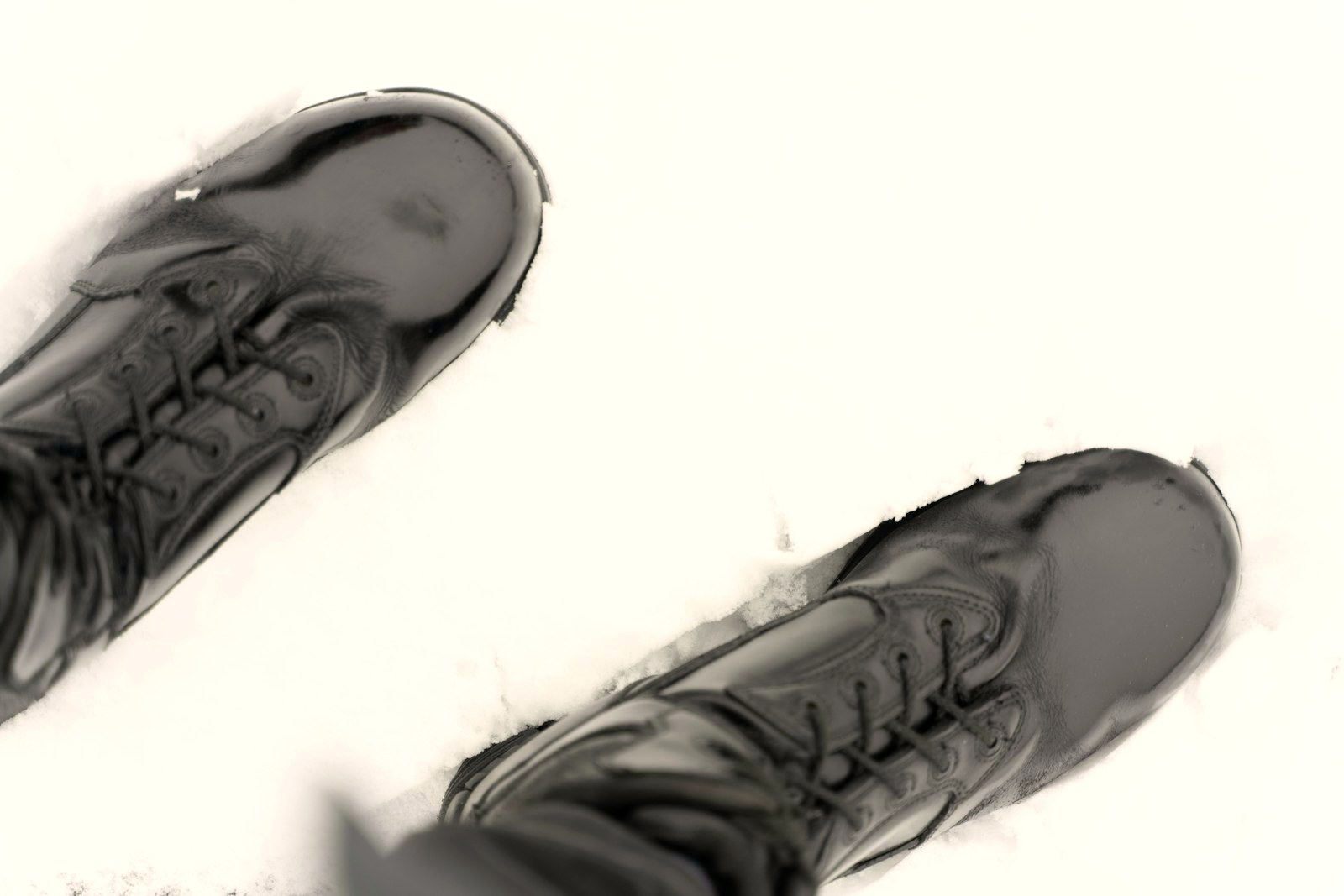
A note on our own photography: our photo bank holds exactly two puffer frames, the coast frame at this page's head and the pale columns frame in the shine section, both banked for the Card that ranks this field and both captioned here for what they show. No photograph of any ranked jacket exists in the bank, no baffle at macro range, no lofted down beside a ruler, no ranked puffer worn over knitwear in street light, a gap Verdict Card No. 46 prints about its own page as well. The frames inside this brief are the knit the layering law is argued from and the boots the volume budget stands on, each captioned as itself and none dressed as a ranked garment. The harvest list names what is missing, a stitch-through baffle at macro range, lofted down beside a scale, and a mid-baffle puffer worn over a knit in real environments at the register this magazine requires, and this page will take those frames the week they exist.
Questions, answered
How should a puffer jacket fit?
Fitted at the shoulder and sealed at the hem, over the knit and not over the blazer. Loft only insulates the air it holds still, and a jacket bought two sizes up for layering room bellows that air out at the hem and the cuffs with every step: it is a sleeping bag with sleeves, warm in the shop and draughty on the street. The ranked field's own fit records print the allowance honestly. The Feathered Friends Eos is cut close in its maker's lightweight pattern, the Arc'teryx Cerium is patterned to stay close through chest, waist and hip for clean layering, and the Patagonia Down Sweater's current trimmer cut carries its maker's own advice to size up for room at the hips, which is the allowance confessed rather than assumed. Buy the size that closes over your heaviest knit with the hem drawcord drawn. If a jacket only fits over a blazer by sizing up, the answer is not the bigger jacket; it is a different winter system.
Can you wear a puffer jacket over a blazer?
As an assembly, no. A puffer is weather equipment with a rounded, lofted silhouette, and a blazer is a shaped garment whose whole value is its line; the puffer over it crushes the line, swallows the lapel and reads as two outfits in a dispute, the same dispute this site rules for the beanie kept on over tailoring. One commuter exception survives, and it holds only when all of its conditions do. The cold is genuine, the kind that makes the walk itself the problem. The jacket is matte and mid or micro baffled, hip length, so it reads as equipment rather than as a second outfit. It is worn in transit only and comes off at the door with the coat, in the same motion, because the blazer underneath is the outfit and the puffer was its transport, never its layering partner. A reader whose winter regularly needs warmth over tailoring needs the tailored answer, a proper overcoat over knitwear, briefed in How to Wear No. 20, not a larger puffer.
Can you wear a coat over a puffer jacket?
An overcoat over a puffer is refused, and the refusal is structural. Both garments are outer silhouettes: the coat is cut to close a tailored line and the puffer is volume with a zip, and worn together the volume wins, the coat's shoulders and chest are spent holding loft instead of holding shape, and the outfit reads as everything the drawer owns worn at once. The puffer is the outer layer of its system. One over-layer is admitted, and it is equipment, not tailoring: a waterproof shell in real rain, because down's loft collapses wet and the winner of Verdict Card No. 46 prints the instruction in its maker's own copy, for sustained rain, bring a waterproof shell. A shell over a puffer is a weather system doing its paperwork. An overcoat over a puffer is a wardrobe giving up.
What do you wear under a puffer jacket?
The system's printed order, and nothing bulkier. At the skin, the base layer ranked in Verdict Card No. 45, whose whole job is moisture and the first still air. Over it, the knit mid-layer, the sweater that carries the outfit's register once the jacket opens or comes off. Last, the puffer itself, sized over that knit and no more, on this brief's fit law. What never goes under it is tailoring: the blazer question is answered in this brief's FAQ and refused, with one commuter exception that treats the blazer as cargo rather than as a layer. Two practical corollaries. A hooded mid-layer under a hooded puffer stacks two hoods into a collar with ambitions, and the stack loses. And a heavy expedition knit under a micro-baffle jacket spends the jacket's close fit from inside, which is the sleeping-bag failure worn in reverse.
Should a puffer jacket be matte or shiny?
Matte, unless the shine is a decision you are making on purpose. A gloss shell reads fashion: the sent-home Moncler Maya's nylon laqué is a lacquered finish whose shine its own ranking calls the garment's loudest specification. A matte shell reads equipment, which is the register of every serious jacket in the ranked field, and matte is the office answer: a matte, dark, fine-baffled puffer over knitwear is the one version of this garment that can arrive at a workplace without announcing itself. Black carries a tax shared with corduroy's ruling in How to Wear No. 24: it shows every fibre of lint the day collects, and a matte black shell displays the collection against its own darkness, so black is bought with a lint brush or bought after navy and charcoal. The bright expedition colours are declarations: they belong to the mountain register that earned them, and worn in the city they are a statement the wearer should be making knowingly.
What length puffer jacket should you buy?
Hip length for the city, thigh length for real cold, and the cropped fashion length never, if warmth is any part of the purchase. The ranked field is a hip-length field, jackets cut to close at the hip over knitwear, and that length is the city's contract: it seals the torso, sits down without negotiation and layers under a shell. The thigh length is the parka contract, bought when the cold is the point, when the seat and the top of the leg are part of what is being insulated, standing in queues and on platforms rather than crossing heated lobbies. The cropped length, ending at or above the waist, is convicted here as weather theatre: it abandons the hem seal this brief's fit law depends on, leaves the kidneys to the wind it claims to answer, and exists to photograph. The field's exhibit is the skip itself, a short hip-length fashion cut at about $1,900 whose maker publishes no warmth figure of any kind. A short puffer is a top, not a coat, and it should be bought and priced as one.
How do you store a puffer jacket so it stays warm?
Loose, because loft dies compressed. Down insulates by holding still air in a cluster's structure, and a cluster held crushed for a season takes a set: the jacket that lives in its stuff sack between trips comes out a little flatter every year, and the flatness is warmth leaving on a schedule. The ranked record prints the same physics from the care side: what retires a puffer is compression first, and the fix is the makers' own care line, storage loose and a low tumble dry with balls to re-loft the clusters. Hang the jacket on a wide hanger or keep it in the large cotton storage bag the better makers ship, never balled in a duffel, never under a pile of other coats, and give it the tumble re-loft at the season's start rather than after the first cold morning exposes it. The stuff sack is a travel tool measured in days. As furniture, it is a slow press.
Has Young Cotton ranked puffer jackets?
Yes. Verdict Card No. 46 ranks seven and sends one home, scored out of 100 on the down record itself: fill power and fill weight, published or withheld. The Feathered Friends Eos wins at 88, the fullest published record in the field, 900-plus fill and a weighed fill, at $429. The Rab Microlight Alpine follows at 84, the Patagonia Down Sweater at 82, the Arc'teryx Cerium Hoody at 80, the Patagonia Nano Puff at 76 as the synthetic ranked on its own record, the Uniqlo Seamless Down Parka at 74 as the cheapest checkable warmth in the field, and the Canada Goose Crofton Hoody at 68. Sent home at 52 is the Moncler Maya, about $1,900 with no fill power and no fill weight published at any price. This brief styles that ranked field; it does not re-score it, and every styling ruling here is written against the garments the Card graded.
Next
The ranked field this brief styles is Verdict Card No. 46, every fill power, fill weight, certificate and silence printed. The layer beneath it is ranked in Verdict Card No. 45, and the shell admitted over it in the rain jackets ranking. The tailored winter this brief keeps refusing to stack is briefed in How to Wear No. 20, the head above the collar in No. 26, and black's lint physics in full in No. 24. Every layer in the wardrobe, mapped by the body it covers, is the Body Map.