

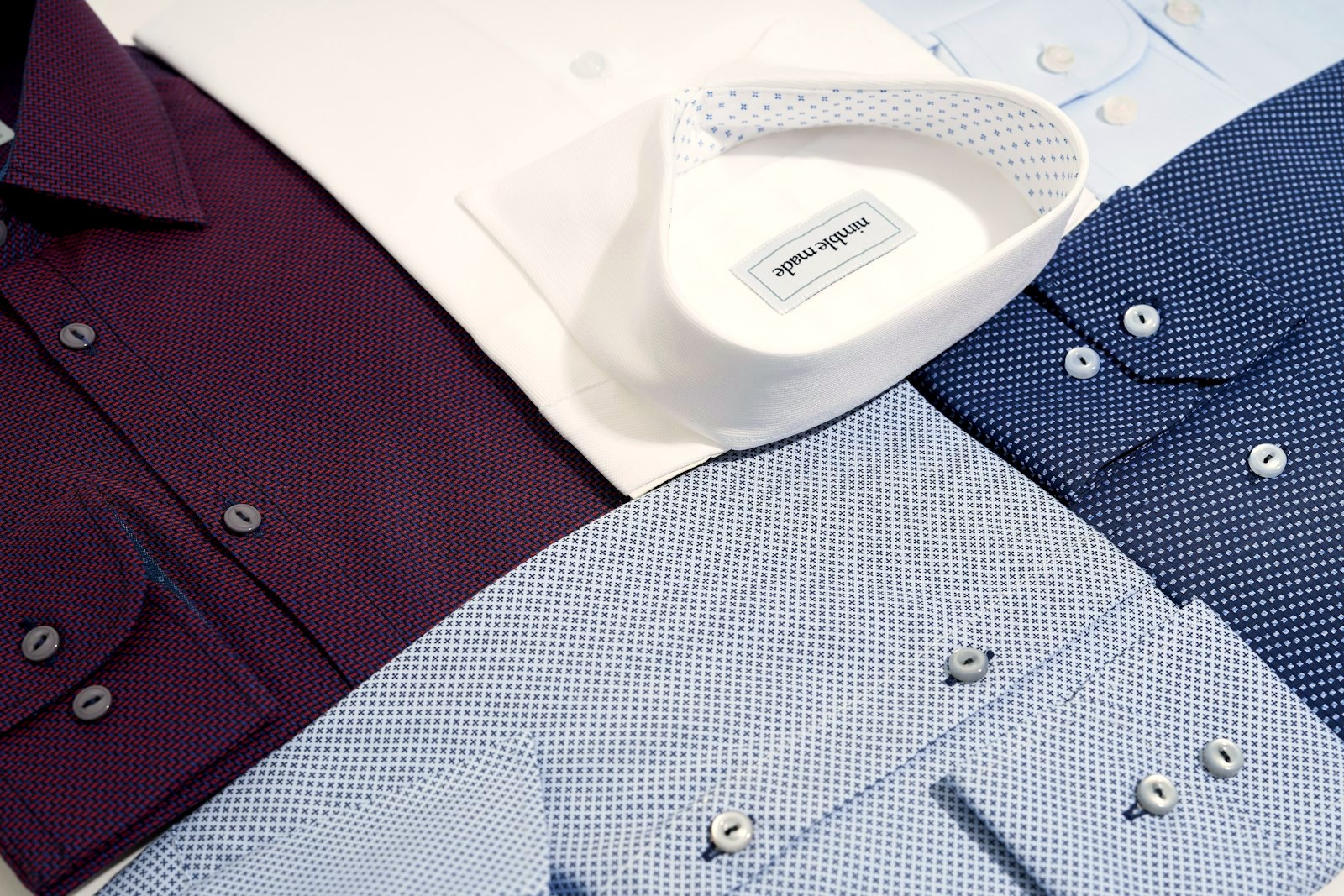
Flannel worn on the street, the cloth this page’s anchor is lined with and the register it sells in. Our bank holds no photograph of the anchor’s garments, so no frame on this page is captioned as one.
The short answer: Flint and Tinder is a retailer’s house label that publishes like a maker, and its 74 was derived on our Barbour page from the record of one jacket. This page audits the anchor against the house’s current published record and the number moves to 75: two rows move in opposite directions and do not cancel. Value falls one point, because the maker’s price is now $328 where the derivation costed $298; longevity rises two, because the derivation priced a returns policy and missed the house’s founding instrument, a decade of free mending published on the maker’s own support pages. Above it: Taylor Stitch at 85, Carhartt at 77 and Peregrine at 76. Below it: Tom Beckbe at 72 and Duluth Trading at 68. Zara, at 48, standing from its own page, is the skip: the workwear register sold as an effect, the word printed in its own product copy.
What people actually want from Flint and Tinder
The want under this search is the heritage specification without the heritage price or the heritage wait: a waxed jacket, a heavy hoodie, a work pant, built to a published standard and sold by a shop that stocks the famous names beside its own. Flint and Tinder is that shop’s own label, and the arrangement deserves stating plainly, because two of this page’s five rows turn on it: the label belongs to Huckberry, the retailer, which acquired it in 2016 on the maker’s own account, and the garments are designed and sold inside a store. The label was founded in 2012 and made its name the following year with a single promise, a hoodie guaranteed for ten years, mended free of charge, funded on Kickstarter and sewn in Los Angeles. The derivation this page audits was set on another house’s brief, the Barbour page, and it graded the label the way that page graded everything, through its waxed trucker: a 7-ounce Martexin sailcloth with its New Jersey mill named, cut and sewn in Los Angeles, $298, behind a retailer’s returns policy. The audit owed the record a reading on its own terms: what does the house publish now, about the cloth, the price and the promise, and which of the derivation’s five reasons survive?
The answer is a house whose cloth record is exactly as published as the derivation said, whose price has risen in its maker’s own store, and whose afterlife is considerably better than the derivation knew, because the derivation never read the support pages where the founding promise lives. The audit treats those facts in the rows they belong to.
How the scores work
Same ruler as every page in this series: fabric and specification record out of 30, construction 20, fit and size range 20, value 15, longevity and repair 15. Two rows on this page move, the anchor’s value and longevity, in opposite directions, and the moves are argued row by row below; every other number already stands in this series, and each card names its home. The skip’s 48 was set as the anchor of its own page and is restated here, not re-derived.
The standing record, in full. The Barbour page of this series derived the anchor’s score in the open, from the published record: fabric 21, construction 15, fit 17, value 13, longevity 8. Add them: the brand score was 74, and the Filson, Taylor Stitch, Alex Mill and Peregrine pages reproduced it exactly, rows and all. This page audits each row against the maker’s current record.
Fabric, 21, stands. The derivation rested on a cloth published entire: a 7-ounce Martexin Original Wax sailcloth from Fairfield Textile of Bridgeton, New Jersey, a mill weaving weather cloth since 1930, named in the product copy with the finish named beside it, waxed on both sides and re-waxable. At this check that record is unchanged on the graded garment, and the line around it has deepened in the same habit: a 10-ounce Army Duck ripstop edition from the same Fairfield mill, and a quilted edition in British Millerain cloth, both published with their cloths named, and the founding hoodie’s fleece printed at 13.45 ounces. A house that publishes its weights as a habit keeps the row it earned on them. Against it stands what stood before: 7 ounces of trucker sailcloth is a lighter garment class than the field coats this series grades the label beside, and the lining is a polyester blanket cloth where the founding houses line in cotton or wool. The 21 stands, better surrounded and no better in kind.
Construction, 15, stands. The derivation graded one Los Angeles factory’s account of the jacket since its launch, and the making record at this check is the same record in the same words: cut and sewn in Los Angeles from American cloth, custom metal hardware, the donut-riveted buttons and adjustable waist tabs of the pattern unchanged across its editions. Nothing published moves the grade in either direction, and the row stands on the derivation’s evidence, verified.
Fit, 17, stands. The derivation credited the widest library on its page, extra small to 3XL with tall sizes published, and the library is still published at this check, the trucker offered across that range with tall sizes beside it. In this field the welcome remains the widest on the page: the founding houses above the anchor size in chest numbers or alpha ranges a step narrower, and the retailer below it stops earlier. The evidence is the derivation’s evidence, verified in the current listings, and the 17 stands on it.
Value, 13 to 12, moves. The row was argued on a price and a superlative: $298 is the lowest price here for a wax claim that survives audit in full. The price half of that sentence has been superseded by the maker itself. The trucker’s current price is $328, printed at this check on the retail door our waxed ranking pinned for the garment, the same figure our ranking recorded when the price moved, and the figure current reporting of the maker’s own store prints for the standard jacket and its heavier ripstop edition alike. Thirty dollars on $298 is a tenth, and the row records it the way this series records a maker’s own price wherever one supersedes a derivation’s figure: the row falls to 12. It falls one point and no further, because the superlative half of the derivation’s sentence survives the rise: at $328 the trucker remains the cheapest garment in this field whose wax claim survives audit in full, below the Bexley’s £275 at the desk’s standing conversion and well below the Bedale’s $425. The retailer’s sale record is printed as context, in both directions, because this row grades a retailer’s label: the same jacket was sold at $253 in a 48-hour sale in November 2025, below the derivation’s list, and the house’s editions surface in the store’s recurring sales at deeper cuts. A reader who waits pays less than the derivation’s reader did; a reader who does not pays more. The row grades the list the maker prints now.
Longevity, 8 to 10, moves. The derivation priced the afterlife in one sentence: a retailer’s house label, barely a decade into its story, with no bench and no service ledger behind the cloth. The sentence was true about the bench and wrong about the ledger, because the ledger was never on the product pages the derivation read. It is on the maker’s support pages, updated this month and read at this check, and the audit prints it in the maker’s terms: the 10-Year Guarantee. The house will mend its 10-Year sweatshirts free of charge for ten years from purchase, rips, tears, holes and split seams, the owner sending a photograph and the order information to the support team, return postage on the house, a 90-day turnaround aim printed beside the promise. The retailer that acquired the label in 2016 states on the same page that it honours the guarantee back to the original Kickstarter of 2013, which makes the instrument thirteen years old and one ownership old, the two facts this row exists to weigh. The caps are printed at the same size as the credit, because they are the row’s ceiling. The guarantee covers one product family, the founding sweatshirt line; the waxed trucker this cluster grades carries no guarantee term at all beyond the retailer’s returns and exchange policy, and its renewable finish is maintained by its owner. Abrasion, burns, corrosion and stains are excluded in print; the owner pays to ship the garment in, and it must arrive washed. There is still no bench, no service department and no fleet of thirty-year-old jackets. What there is, and what the derivation missed, is a decade-long published repair covenant on the founding line, kept through an acquisition: the row rises to 10, one point above the other retailer’s one-year term on this page and one below the Manchester house’s rewaxing ritual, and the total with it to 75, derived on the Barbour page, reproduced on the Filson, Taylor Stitch, Alex Mill and Peregrine pages, audited here.
The bookkeeping, printed: Taylor Stitch’s 85, Carhartt’s 77, Peregrine’s 76, Tom Beckbe’s 72, Duluth Trading’s 68 and Zara’s 48 are standing scores from their pages in this series, reproduced with their rows; nothing here re-derives them. One garment-level fact is cited on this page as evidence, the waxed trucker garment’s 72 on our waxed ranking, where the garment was graded on its own rows and where the $328 figure was first recorded by this desk; it belongs to its garment and moves no brand number by itself. Two corrections to the derivation’s record are printed in the open in the audit above rather than carried silently: the costed price, corrected to the maker’s current $328, and the afterlife, corrected from a returns policy to the published decade guarantee, with its caps. The audit has one consequence the page prints rather than leaves to implication: the Barbour, Filson, Taylor Stitch, Alex Mill and Peregrine pages carry the derivation’s rows and its $298 costing, and the audited rows are the ones recorded here, 21, 15, 17, 12, 10, on this page, which is the ruling’s home. The total they reconcile to is 75.
Rested, with their standing numbers: Buck Mason at 90, the iterated American standard, graded on its own page and the Taylor Stitch page, and Filson at 85, the cloth king of the waxed trilogy, audited on its own page; both stand above this page’s ceiling, and this page grades the field the anchor actually trades in, the houses a Flint and Tinder shopper cross-shops at and below its price gravity. Private White V.C. is not rested here because it was never in this argument: its cloth is Ventile, its register is tailoring, and this site holds no brand score for the house.
One more house belongs in prose. H&M sells the workwear silhouette at prices that undercut every card on this page, and this series derives its brand score from its ranked garments on its own page rather than borrowing one; nothing here restates or re-derives that number, and no H&M garment is scored on this page. The Peregrine page answered that house the same way, and the reader cross-shopping the anchor against the high street should read those pages. The derivations there are untouched by this one.
The disclosure ledger
What each house publishes, in its own words where words exist. The audit reads this table before it reads any marketing.
| House | The fabric record, as published | The afterlife, as published |
|---|---|---|
| Taylor Stitch | Organic cloth under a published responsibility standard, garment measurements printed beside the prices; the fullest specification habit in the American rebuild | Permanent Essentials restocked rather than replaced, and the Workshop mechanism, the one discount in American menswear that is a mechanism instead of a mirage |
| Carhartt | 12-ounce ringspun duck published to the ounce across the work line, the cloth the register is named for | A workwear institution since 1889 selling the same garments to the next shift; no repair bench, and a record that has never needed one printed |
| Peregrine | 8 ounces of waxed cotton on this desk’s standing record, the product page printing 100 percent wax cotton and no weight; the cloth house, Halley Stevensons, named in the maker’s own words on its care and sustainability pages | A step-by-step rewaxing guide published and the cloth maker’s care products sold, with professional rewaxing routed to a named specialist, Mallin & Son; no repair department, no published interval, no guarantee term |
| Flint and Tinder | 7-ounce Martexin Original Wax sailcloth from Fairfield Textile, named in the product copy with the finish named beside it; the founding fleece printed at 13.45 ounces | The 10-Year Guarantee on the founding sweatshirt line: free mending of rips, tears, holes and split seams for a decade, return postage on the house, honoured through the 2016 acquisition; the rest of the line behind a retailer’s returns policy, and the wax renewed by its owner |
| Tom Beckbe | 8-ounce waxed shelter cloth with its mill, Halley Stevensons, named on the product page itself | Reproofing wax sold by the maker and the full care ritual printed on the product page; no bench, and a house a decade old |
| Duluth Trading | 8-ounce Fire Hose canvas with its split printed on the product page, 97 percent cotton and 3 percent spandex in the flex version | A guarantee that acquired a calendar in 2019: one year and an exclusion list, grandfathered in the house’s own text for earlier purchases |
| Zara | “Made of cotton fabric,” under product names that sell a vintage effect and a washed effect: the whole cloth story, printed by the maker | A longevity row of 3: nothing is published behind the returns window, and an effect has no renewal mechanism |
Seven brands like Flint and Tinder, ranked
Taylor Stitch
US price at last check: The Jack in Washed Indigo Oxford $132 at the maker's store.
Keeps its standing 85 and its rows, audited on its own page of this series: the uniform rebuilt in organic cloth under a published standard, with its fullest specification printed on the shirt that built the house.
Taylor Stitch wins this page the way it won its own: on the completeness of the record. The San Francisco house began in 2008 making custom shirts and grew into the clearest statement of what American heritage became after the workwear boom: the chore coat, the Oxford, the selvedge jean, rebuilt with organic cotton and hemp blends under a published responsibility standard, with garment measurements printed beside the prices and the icons held as permanent Essentials, restocked rather than replaced. Its Workshop mechanism remains the one honest discount in American menswear, a crowdfunding price for a garment that then sells at list for years. Its garments hold two crowns in this magazine, the Moto jacket at 88 in our leather Card and the Long Haul trucker at 85 in our trucker Card, the anchor of this page’s own pattern graded there as a garment; both are garment scores, cited as evidence and never blended into this number. Fabric 25, construction 17, fit 16, value 13, longevity 14: 85, audited on its own page of this series.
What the win means for the anchor is the comparison the page turns on. The anchor is a retailer’s label that learned the specification habit from houses like this one and runs it at two-thirds of the price altitude; the winner is the habit’s source, an independent maker whose whole catalogue is the argument. Ten points is that distance measured: the standard, the measurements, the mechanism and the decade and a half of keeping all three.

Carhartt
US price at last check: the Iconic J01 Duck Detroit Jacket $129.99 to $139.99 at the maker's store.
Keeps its standing 77 and its rows from its own page of this series: the register's founding institution, duck cloth and a work library priced as equipment.
Every house on this page is, in some part, an answer to Carhartt. Hamilton Carhartt founded the house in Dearborn in 1889 to sell overalls to railroad workers, and the garments the register is named for are still its centre: the 12-ounce ringspun cotton duck, published to the ounce, triple-stitched at the seams that fail, cut for bodies that work in them, sized for the same. The Detroit jacket and the double-front pant are not heritage products; they are current equipment that fashion adopted, and the house prices them as equipment, which is why a jacket essentially unchanged in fifty years costs what a fashion label charges for a season’s interpretation of it. The fashion line that shares the name is a separate argument, graded where it stands; this card grades the work house. Fabric 22, construction 16, fit 15, value 13, longevity 11: 77, set as the anchor of its own page of this series.
Buy the duck if the garment is equipment. The anchor below beats the institution on publication at the attainable end and on the fit library, and loses to it on the only row that cannot be hurried, the hundred and thirty-seven years of the same garments being bought by the next shift. Two points is that distance, and it is the smallest distance on this page between a retailer’s label and a founding house.

Peregrine
Price at last check: the Bexley £275 at the maker's store.
Audited at 76 on its own page in this series: the mill corrected to Halley Stevensons in the maker's own words, the making corrected to a Smethwick partner's bench, and the maker's own £275 raising the value row, two reasons replaced and the number standing.
The imported bench is here because the anchor’s shopper meets it on the same rail: the waxed jacket bought once and re-waxed for decades. The firm behind Peregrine, J.G. Glover of Manchester, was founded in 1796 and is run by the eighth generation of the family; its Bexley is 8 ounces of waxed cotton made in England, its cloth house, Halley Stevensons, now named in the maker’s own words on its care and sustainability pages, its rewaxing guide published step by step and professional rewaxing routed to a named specialist. Its own audit, a page ago in this series, corrected its derivation’s mill and its making and held the number: construction fell on the corrected premise, a specialist partner in Smethwick rather than the firm’s own floor, and value rose on the maker’s own £275. Fabric 23, construction 16, fit 13, value 13, longevity 11: 76, derived on the Barbour page and audited on its own page.
Read the one point between this card and the anchor’s, because it is the page’s neatest measurement. The Manchester house wins on cloth weight and on two centuries; the retailer’s label wins on the fit library and, after this page’s audit, stands within a point on the afterlife, its decade of free mending against the rewaxing ritual. A year ago, on the derivation’s reading, the gap was two and the afterlife was not close. Publication closed most of it.

Flint and Tinder
US price at last check: the Flannel-Lined Waxed Trucker $328 at Nordstrom.
Audited at 75 on this page: the price corrected to the maker's current $328, the afterlife corrected from a returns policy to a published decade of free mending on the founding line, two reasons replaced and the number moving one point.
The house first, stated plainly, because the audit’s two moves both live inside it. Flint and Tinder is the house label of Huckberry, the retailer, which acquired it in 2016; the label was founded in 2012 and made its name in 2013 with a Kickstarter for a hoodie guaranteed for ten years. Its flagship garment, the one this series derived its score from, is the Flannel-Lined Waxed Trucker: a 7-ounce Martexin Original Wax sailcloth from Fairfield Textile of Bridgeton, New Jersey, the mill named in the product copy with the finish named beside it, waxed on both sides and re-waxable, cut and sewn in Los Angeles, lined in a polyester blanket flannel. The audit’s credits are the derivation’s: the cloth record stands entire, and the line around it has deepened in the same habit, a 10-ounce Army Duck ripstop edition from the same mill and the founding fleece printed at 13.45 ounces. Fabric 21, construction 15, fit 17: the widest library on this page, XS to 3XL with tall sizes published.
The charges and the correction are the audit’s, printed at the same size. The derivation costed value on $298; the maker’s price is now $328, and value falls to 12, one point for a tenth’s rise that leaves the jacket the cheapest full specification in the field. And the derivation priced the afterlife as a retailer’s returns policy, having never read the support pages where the founding promise is kept: the 10-Year Guarantee, free mending of rips, tears, holes and split seams for a decade on the founding sweatshirt line, a working intake, return postage on the house, honoured by the acquiring retailer back to 2013. Its caps are this row’s ceiling and they are printed wherever the row is argued: one product family, no term behind the trucker, abrasion and wear excluded, the owner shipping the garment in washed. Longevity rises to 10. The brand score is 75, derived on the Barbour page, reproduced on the Filson, Taylor Stitch, Alex Mill and Peregrine pages, audited and moved here.
Buy the trucker if the waxed jacket is the garment and the specification is the requirement: at $328 it is the fullest published record at the attainable end of its category, from the only house on this page that has been mending its founding garment free of charge since 2013. Buy the hoodie if the covenant is the point. What the label cannot sell you is a bench, a century or a service department, and its rows say so; what it sells, it publishes.

Tom Beckbe
US price at last check: the Tensaw $495 at the maker's store.
Derived in the open at 72 on the Barbour page: the founding recipe rebuilt in Alabama, heavier cloth and a modern pattern, from a house a decade old.
Tom Beckbe is what the founding recipe becomes when an American sporting house rebuilds it without nostalgia. The Tensaw, its flagship, is specified the way this page wishes every jacket were specified, on the maker’s own product page: a weatherproof 8-ounce waxed shelter cloth with its mill named in the description, Halley Stevensons of Scotland. Around the cloth, a pattern drawn for the field rather than the high street: set-in sleeves, gusseted underarms, a bi-swing back, a stand collar lined with Bedford corduroy, bellows pockets and a hidden Napoleon pocket, made in the U.S.A. with imported materials, in the maker’s own words. Fabric 22, construction 16, fit 15, value 10, longevity 9: 72, derived on the Barbour page.
The buy is the pattern, and the ask is faith: the house is barely a decade old, founded in Birmingham, Alabama, it sells reproofing wax and prints the full care ritual on the product page, and there is no repair bench and no fleet of thirty-year-old jackets yet. Set it three points below the anchor and the comparison instructs: the anchor is the younger idea with the older covenant, a retailer’s label whose founding garment has been mended free since 2013, against a maker’s label whose afterlife is still a ritual and a tin of wax. The rows prefer the covenant, narrowly, and print why.
Duluth Trading
US prices at last check: the DuluthFlex Fire Hose cargo pants $84.95 at the maker's store, with clearance colourways printed at $40.99 on the same product page.
Derived in the open on the L.L.Bean page of this series: real published specifications under the jokes, and a guarantee that quietly became a calendar.
The other retailer on the page, and the comparison the anchor’s audit was quietly running all along. Duluth Trading was founded in 1989 in Duluth, Minnesota, selling organisers to tradesmen before it sold them clothes, and it is famous for cartoon beavers and garments named like punchlines. Under the jokes sits the most spec-sheet behaviour at this end of the ladder: the Fire Hose canvas published at 8 ounces with its split printed on the product page, 97 percent cotton and 3 percent spandex in the flex version, triple-stitched seams and riveted stress points published in the open, waists from 28 to 48 with three inseams. Fabric 19, construction 15, fit 14, value 11, longevity 9: 68, derived on the L.L.Bean page of this series.
The seven points between this card and the anchor’s are the audit’s argument in miniature, because the two houses are the same species, retailers selling workwear under their own names, and their paperwork points in opposite directions. Duluth’s guarantee acquired a calendar in 2019, one year and an exclusion list, grandfathered in its own text; the anchor’s founding covenant has run a decade since 2013 and survived its house being sold. One retailer’s promise shrank as it grew; the other’s was honoured by its buyer. Buy the Fire Hose pants for the 8-ounce canvas and the printed seams, at the clearance figure especially. Read both houses’ guarantees the way this page reads them: in the small print, where one keeps a decade and the other keeps a year.
Zara
US prices at last check: the vintage-effect carpenter pants $79.90 and the carpenter pocket pants $99.90 at the maker's store. This card ships without a buy link, and the honesty section prints why.
Standing at 48 from its own page in this series, and the skip here, its conviction restated from the AllSaints page: the register copied at speed over thin cloth, with nothing behind the returns window.
The charge is read off the maker’s own record, on this cluster’s own rail, re-verified at this check rather than trusted from the file: the maker’s American store sells the workwear register as carpenter pants at $79.90 and $99.90 and utility jackets beside them, under the names and descriptions of the vintage effect and the washed effect, and the whole cloth story in each case is one phrase, made of cotton fabric. No mill is named, because there is no mill story. No weight is published, because the cloth is not the product. The utility straps and multi-pockets are printed as details, which is what they are: the carpenter’s tools drawn on a trouser that was never specced to carry them. The rows are the house’s standing rows, reproduced exactly as this series prints them: fabric 13, construction 8, fit 15, value 9, longevity 3: 48, set as the anchor of its own page. The test this page set for a fresh conviction is printed in the questions below: a thinner workwear record than a resemblance sold under the word effect, and no candidate on the fashion rail published one; Gap, the standing skip of the American uniform pages at 57, was considered and stands higher on its own derivation, its fabric lines naming their blends.
Set it beside the anchor three places above it. The anchor is a retailer’s house label with no bench and no century, the easiest target on this page, and it publishes its mill, its ounces, its making and a decade of free mending on its founding line. The skip publishes a photograph of work and an effect where the cloth should be. Buy the shape if the shape is what you want, eyes open, as a fashion trouser with a season in it. Do not buy it as workwear. The maker, to its credit, never quite said it was.

The pattern under the ranking
Read the ladder as one argument about what a workwear brand is. The top answers with records: a specification printed beside every price, and an institution that has sold the same duck garments since 1889. The middle answers with publication at two altitudes, a Manchester mill house and a retailer’s label standing a point apart, each printing its cloth and its afterlife in its own words. The second retailer answers with a voice, jokes over real specifications and a promise that shrank. And the bottom answers with a word, effect, printed in its own product names. The scores are that argument measured seven times: in this category the product is a cloth and a covenant, and everything else is a photograph of them.
The second pattern is the audit’s own, and this page is its mirror image of the page before it. The Peregrine audit held its number while everything underneath it moved; this audit moves its number by one point while its two corrections pull in opposite directions, a price up a tenth and a covenant discovered a decade deep. Read together, the two pages are the series’ method stated twice: a standing score is not a claim that nothing has changed, and it is not a claim that everything the desk first wrote was right. The derivation graded this label through one jacket and priced its afterlife from a returns page, because that is what a neighbouring house’s brief asked for. The audit read the house whole, and the house turned out to be better than its derivation in the row that matters most to the people who buy it, and worse in the row that matters most at the till. What would move the number further is printed so the maker can act on it. Extend the guarantee’s terms beyond the founding line, to the jacket this page grades, and the longevity row rises toward the covenant’s real weight; hold the trucker’s price where the maker has put it, or bring the sale price into the open as the price, and the value row steadies. Until then, the label sits fourth, at an audited 75, the honest floor of its category with a founding promise its derivation never read.
The ranking at a glance
| Brand | Score | The piece to buy | Price |
|---|---|---|---|
| Taylor Stitch | 85 | The Jack | $132 |
| Carhartt | 77 | The Detroit Jacket | $129.99 |
| Peregrine | 76 | The Bexley | £275 |
| Flint and Tinder | 75 | The Flannel-Lined Waxed Trucker | $328 |
| Tom Beckbe | 72 | The Tensaw | $495 |
| Duluth Trading | 68 | The DuluthFlex Fire Hose Cargo | $84.95 |
| Zara | 48 | None | $79.90 not spent |
The verdict: skip Zara
Zara is this page’s named loser, and the charge is the shape of its record, set on its own page in this series, argued on the AllSaints page and re-verified at this check on the workwear rail itself. It sells the founding silhouettes of this category, the carpenter trouser and the utility jacket, under product copy that confesses the finish is an effect; its cloth story is one phrase long; its prices are honest only about being low; and behind the garment there is no repair, no resale and no published guarantee, only a returns window and next season’s version of the same photograph. Every house above it publishes more, and the anchor of this page, a retailer’s own label with no bench and no century behind it, still publishes its mill, its ounces and a decade of free mending on its founding line. Buy the register with the truth printed on it.
Which one to buy
For the record entire: Taylor Stitch, 85. The Jack at $132, its whole specification printed beside the price.
For the institution: Carhartt, 77. The Detroit jacket, priced as equipment and built as it.
For the recipe at the price: Peregrine, 76. The Bexley at £275, 8 ounces of named cloth made in England, re-waxed at home.
For the honest floor: Flint and Tinder, 75. The waxed trucker at $328, the full specification, and a founding line its maker has mended free since 2013.
For the field pattern: Tom Beckbe, 72. The Tensaw at $495, for the shoulders and the movement built into it.
For the working trouser: Duluth Trading, 68. The Fire Hose cargo at $84.95, cheaper at clearance, its guarantee read in the small print.
To skip: Zara, 48. The photograph of work, over cloth that will not hold it, with nothing behind it.
Questions, answered
What brand is most like Flint and Tinder?
On the basis this series grades, the head-to-head is Carhartt, at 77: the institution the anchor’s register descends from, duck cloth and a work library at equipment prices, two points above the anchor on the strength of a century and a third of the same garments. Above both, Taylor Stitch at 85 is the specification standard, the same uniform rebuilt with its fullest record printed beside the price. Peregrine, audited at 76 on its own page, is the imported bench: the anchor’s own recipe, a named waxed cloth made in England, at £275. Below the anchor, Tom Beckbe at 72 is the field pattern and Duluth Trading at 68 is the other retailer’s workwear, real specifications under a louder voice. The honest summary: nobody here beats Flint and Tinder at being Flint and Tinder, the full published specification at the attainable price; the argument is about what you want more of around it, the institution, the record or the saving.
Why did Flint and Tinder’s score move from 74 to 75?
Because the audit found the derivation wrong in both directions, and the corrections do not cancel. Value falls one point, 13 to 12: the derivation argued the row on $298, the lowest price in its field for a wax claim that survives audit in full, and the maker’s price is now $328, verified at this check; the jacket remains the cheapest full-specification waxed garment on this page, so the fall is one point and no further. Longevity rises two points, 8 to 10: the derivation priced the label’s afterlife as a retailer’s returns policy, and the maker’s own support pages publish the house’s founding instrument, the 10-Year Guarantee, free mending of rips, tears, holes and split seams for a decade on the founding sweatshirt line, honoured by the retailer that acquired the house in 2016 back to the 2013 Kickstarter. The caps are printed on the page: one product family only, the waxed trucker itself carries no term, and wear and abrasion are excluded. Fabric, construction and fit verify as scored. The number’s status changes with the audit: derived on the Barbour page, audited here, at 75.
Flint and Tinder or Carhartt?
On the rows, Carhartt, 77 to 75, and the distance is institutional: the duck cloth record since 1889, the wider work library, the prices held as equipment rather than as fashion. Flint and Tinder wins the arguments a buyer can read: the fuller publication at its price, a 7-ounce cloth with its mill named where the Detroit jacket’s page is plainer about its duck, the widest fit library on this page, XS to 3XL with tall sizes, and the one service instrument in the anchor’s half of the ladder, the decade mending guarantee on its founding line. Buy the Carhartt if the garment is equipment and the next decade is a worksite. Buy the Flint and Tinder trucker if the garment is the waxed jacket itself and the specification is the requirement; at $328 it is the cheapest full record in the field, and its maker, uniquely here, has been mending its founding garment free of charge since 2013.
Does Flint and Tinder repair its clothes?
One line of them, on published terms, and the terms are the honest answer. The 10-Year Guarantee, printed on the maker’s own support pages, promises free mending for ten years from purchase on the 10-Year sweatshirt line, the label’s founding product: rips, tears, holes and split seams, with a photograph and the order information sent to the support team, return postage on the house and a 90-day turnaround aim. It does not cover stains, discolouration or damage from burns, abrasion or corrosion; the owner pays to ship the garment in, and it must arrive washed. Nothing in the maker’s published record extends a guarantee term to the rest of the line: the waxed trucker this page grades stands behind the retailer’s returns and exchange policy, and its renewable finish is maintained by its owner, with the wax, not by a bench. That shape, a real covenant one line deep and a retail policy behind the rest, is the anchor’s longevity row of 10, printed exactly.
Why is Zara the skip on a page about American workwear?
Because the skip’s conviction is this cluster’s own charge, set on the skip’s own page in this series, restated on the AllSaints page and re-verified at this check on the workwear rail itself. The test is printed on this page: a fresh conviction must publish a thinner workwear record than the standing skip’s, and none did. The maker’s American store sells carpenter pants at $79.90 to $99.90 under the names and descriptions of the vintage effect and the washed effect, and the whole cloth story in each case is one phrase, made of cotton fabric: no weight, no mill, no composition a buyer can weigh, the utility straps and multi-pockets printed as details of the photograph. Every house above it publishes a cloth, a weight or a covenant. The anchor, a retailer’s own label with no bench and no century, publishes its mill, its ounces and a decade of free mending on its founding line. The skip publishes a resemblance and an effect.
The honesty section
Six scores on this page already stand in this series, and each card names its home: Taylor Stitch set at 85 in our American ranking and audited on its own page; Carhartt set at 77 as the anchor of its own page; Peregrine derived at 76 on the Barbour page and audited on its own page; Tom Beckbe derived at 72 on the Barbour page; Duluth Trading derived at 68 on the L.L.Bean page; and Zara set at 48 as the anchor of its own page. The anchor’s 74 was derived in the open on the Barbour page and reproduced exactly, rows and all, on the Filson, Taylor Stitch, Alex Mill and Peregrine pages; this page audits it against the maker’s current published record, its product listings and its support pages read at this check, and moves the total one point while moving two rows, value down one on the maker’s own price and longevity up two on the guarantee the derivation missed. The pages printed earlier in this series carry the derivation’s rows and its $298 costing; the audited rows are 21, 15, 17, 12, 10, recorded here, and this page is the ruling’s home. The audit records two corrections to standing descriptions, printed in the audit rather than carried silently: the costed price, corrected from $298 to the maker’s current $328, and the afterlife, corrected from a retailer’s returns policy to the published 10-Year Guarantee, with its caps stated wherever the correction is argued. Prices and programmes were checked in October 2026 against the makers’ own published pages and current retail listings, following the method on our methodology page.
Buy links follow the deep-link rule: each card keeps the door its scoring page established, the maker’s own product page where that page used one and its established retail door where it did not. Two doors are printed as the exceptions they are. The anchor’s card goes to the exact product page our waxed ranking pinned at the national department retailer, at the price this audit costs, replacing the sporting retailer’s listing the Barbour page established, because the current price record lives at the waxed ranking’s door and the desk does not carry a superseded price silently. The Duluth card keeps the storefront door its derivation established, the one homepage door on this page, because the derivation’s record was set against the maker’s store as a whole. The skip ships without a buy link because the desk does not link what it sentences. Photographs come from the bank credited in CREDITS.md; the bank holds no photograph of a waxed jacket and no frame of any ranked house’s garment, the same gap our Barbour, Belstaff and Peregrine pages admitted, and the cards run on the bank’s street, stack and profile frames rather than on borrowed product photography. The anchor’s card frame is the one its derivation used, a man in a sherpa-lined denim jacket; no frame on this page is captioned as a garment it does not show.