
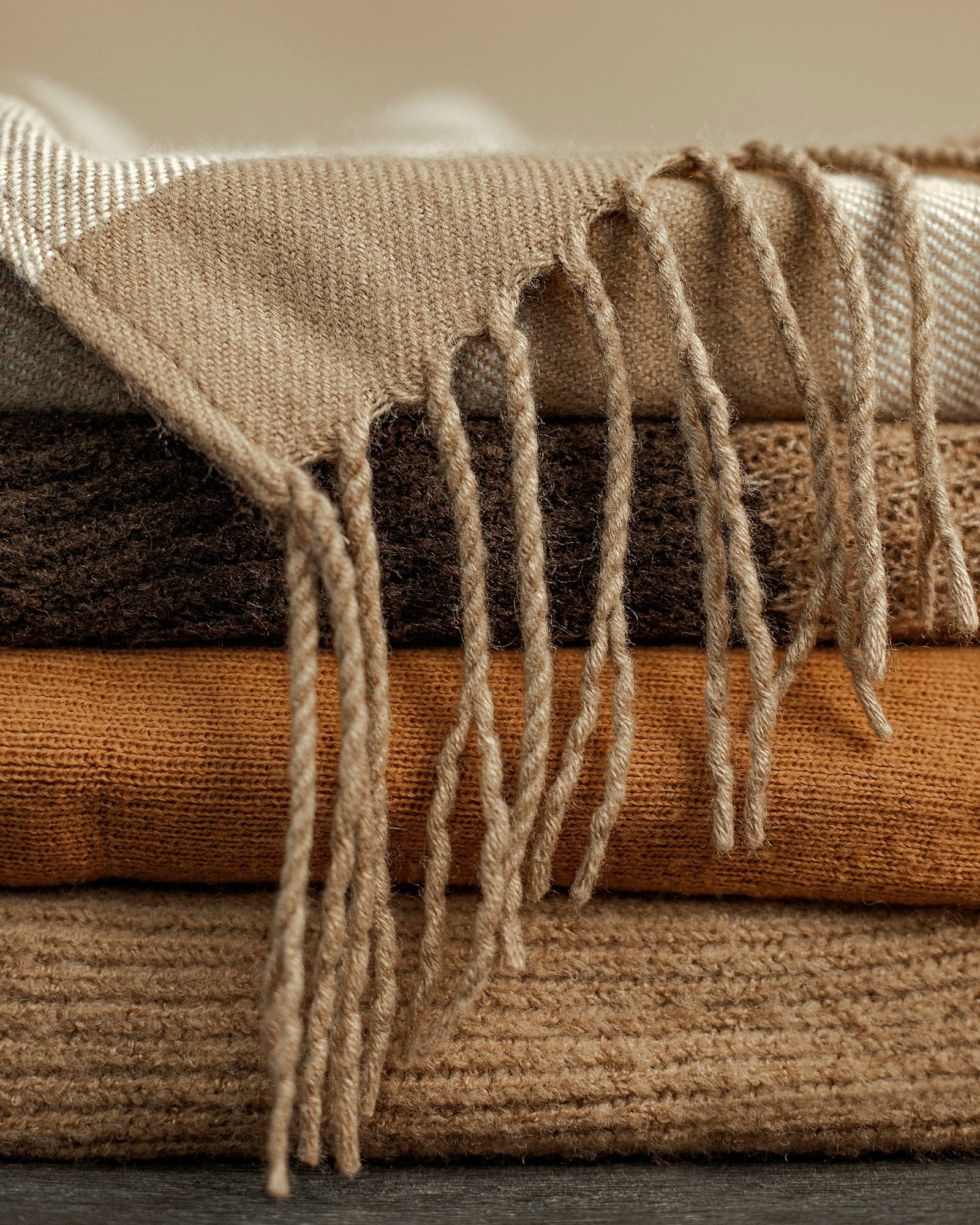
The folded stack is the register this house was founded on: wool, folded, in the open. Our bank holds no photograph of a Woolrich garment, so no frame on this page is captioned as one.
The short answer: Woolrich stood at 53, derived in the open on the Filson page, where it was that page’s skip: fabric 18, construction 12, fit 12, value 5, longevity 6. This page audits the anchor against the house’s current published record and the number holds entire, with one finding the derivation could not have printed because it had not happened yet: the name has been sold in two pieces. Its American business belongs to a Chinese apparel group, Baoxiniao, since February 2025; its European business and brand rights belong to BasicNet of Turin, a licensing house, since December 1, 2025. Neither owner weaves anything. The mill closed in 2018 stays closed; the flagship’s own product page, re-read entire at this check, still prints no composition, no fill and no cloth weight; and no guarantee or repair service has appeared under either new owner. Above the anchor: L.L.Bean at 87, Filson at 85, Pendleton audited at 82 and Barbour at 81. Below it: Eddie Bauer audited at 54 stands one rung above the anchor, and Zara, at 48, is the skip.
What people actually want from Woolrich
The want under this search is the original American wool house: the name that dressed lumberjacks, railroad men and Union soldiers, invented the red and black Buffalo Check in 1850, wove its own cloth in its own Pennsylvania mill for 173 years, and built the Arctic Parka in 1972 for the crews laying the Alaska pipeline. John Rich founded the firm in 1830 at Plum Run, Pennsylvania, selling wool to the lumber camps; the mill at the village that took the company’s name rose in 1845 and ran, at the end, as the oldest continuously operating vertical woolen mill in the United States. The reader typing this search wants that house, or the nearest living thing to it. The Filson page graded what is left and derived the anchor’s 53 in the open, as its skip, on the maker’s published record. This page is the audit that derivation was always owed: what does the house publish now, under owners the derivation predates, about its cloth, its flagship, its ownership and its promises, and which of the five rows survive the reading?
The answer is the inverse of the last three audits in this series. There, garments stood and houses fell, or a house stood and its warrant fell. Here nothing has fallen since the derivation, because there was nothing left standing to fall: the audit’s work is to read a closed mill’s successor record, two changes of ownership deep, and report that the record has not improved by one published line.
How the scores work
Same ruler as every page in this series: fabric and specification record out of 30, construction 20, fit and size range 20, value 15, longevity and repair 15. One score on this page is audited, the anchor’s; every other number already stands in this series, and each card names its home. The skip’s 48 was set as the anchor of its own page and is restated here, not re-derived.
The standing record, in full. Our Filson page derived the anchor’s score in the open and printed its rows on its card: fabric 18, construction 12, fit 12, value 5, longevity 6. Add them: the brand score is 53. The derivation rested on three published charges, each read off the maker’s own record at the time: the flagship parka’s copy names no cloth weight and no mill; no product guarantee and no repair service is published on the maker’s store; and the house charges about $955 at American retail for the silhouette of a garment whose substance was a working mill. The Pendleton page carded the 53 sixth in its ladder, with the same rows and the same door, and printed that it did not re-open the derivation. This page re-opens it, audits it, and becomes the score’s family home.
Fabric, 18, stands, verified live. The derivation charged that the wool is no longer the house’s own, and the charge has only hardened. The mill that wove the house’s cloth from 1845 closed in December 2018 and weaves nothing; all textile production moved overseas, on the company’s own closure statement. What the house sells as wool today is bought-in cloth, and the audit’s plainest evidence is the house’s founding product: the wool blanket. In 2015 the mill still wove heirloom throws, 95 percent wool at $185, on its own jacquard looms. The blanket bearing the name at American mass retail today is a licensed home line of cotton and synthetic throws at $25 to $58. And the flagship’s own page, re-read entire at this check, still names no cloth at all: no composition percentages, no fill, no weight, on the garment the house leads with. A house that publishes no fabric record gets a fabric row priced on the absence. The 18 stands.
Construction, 12, stands, verified live. Nothing published since the derivation improves the making. Production left Pennsylvania in stages from 2016 and entirely in 2018; the garments are sewn offshore by whichever owner’s supply chain the territory belongs to, and neither owner publishes a factory, a bench or a making standard on the maker’s store. What the row credits stands as the derivation printed it: the patterns are real, the Arctic architecture of 1972 is genuinely well drawn, and the Buffalo Check is a design achievement of the first order. Design is not construction, and the row prices the making. The 12 stands.
Fit, 12, stands, verified live. The flagship sells in a fashion size run to a fashion customer; the maker publishes no fit library, no tall or big range, no working size record of the kind Bean prints to a 19 on this ladder. The house that once sized for men who worked outdoors in January now sizes for the rail it hangs on. The derivation’s figure was set on that absence, and the absence is unchanged. The 12 stands.
Value, 5, stands, verified to the pound. The maker’s own British store prices the current Cloud Arctic Parka at £785 at this check, in stock, and American retail for the parka class stands at about $955, the figure the Filson and Pendleton pages printed. Set the price against what the price buys on the maker’s own page: a lightweight capsule reimagining of the 1972 parka whose copy specifies no cloth, no fill and no weight. Where audits in this series moved a value row, they moved it on a maker’s new price or a costing that no longer held; here the price verifies and the specification is still nowhere, under owners who bought the name precisely for what the name alone could charge. The 5 stands.
Longevity, 6, stands, verified live, and the audit prints the ownership record at full size. The derivation charged that nothing is published behind the clothes: no product guarantee, no repair service. The audit re-read the maker’s store under its new owners and prints the whole of what stands there now: the American store’s published window is 30 days from purchase, the item unworn, return shipping on the customer; the European store trades on its statutory terms; and behind the windows, under Baoxiniao and under BasicNet alike, there is no guarantee with a term and no bench that takes a garment back. Then the audit prints what the derivation could not, because it happened after: the house itself has been divided. L-GAM, the Luxembourg fund that closed the mill in 2018, sold the Woolrich intellectual property for every territory outside Europe to Baoxiniao Holding, a Chinese apparel group, in a deal that closed in February 2025; and it sold Woolrich Europe and the European brand rights to BasicNet of Turin, at an enterprise value of about 90 million euros, in a transaction that closed on December 1, 2025. BasicNet’s business, printed in its own filings, is the licensing of famous names: K-Way, Kappa, Superga, Sebago. A longevity row prices what stands behind a garment across time. What stands behind this one is a name licensed in pieces on two continents, by owners whose trade is the name itself. The old garments will outlive us; they were woven by a mill. The row grades the current house, and on the current house the 6 stands, with the split printed as the row’s permanent exposure and its most likely future: a licensed name does not acquire a repair bench.
The bookkeeping, printed: L.L.Bean’s 87, Filson’s 85, Pendleton’s 82, Barbour’s 81, Eddie Bauer’s 54 and Zara’s 48 are standing scores from their pages in this series, reproduced with their rows; nothing here re-derives them. The consequence of this audit for the two pages that carry the anchor’s old status is printed as plainly as the Pendleton audit printed its none: the number and the rows are unchanged, 53, fabric 18, construction 12, fit 12, value 5, longevity 6, and what changes is the word above them, derived to audited, on the Filson page where the score was derived and the Pendleton page where it was rested. This page is the ruling’s home.
Rested, with their standing numbers: Patagonia at 83, the technical register’s repair covenant, rested because its centre of gravity is recycled technical cloth rather than the woven wool this page grades, its number untouched and its covenant graded in full on its own page. The waxed register rests as a field: Peregrine at 76, Flint and Tinder at 75 and Tom Beckbe at 75, the last two audited on their own pages. The technical cluster rests with its pages: REI Co-op at 73, Arc’teryx at 73, Montbell at 73, Norrøna at 69, Duluth Trading at 68, Cotopaxi at 66, Marmot at 65 and The North Face at 63, each audited or standing where it stands. The American ranking’s remaining specialists rest as specialists, at that ranking’s numbers: Red Wing at 84, 3sixteen at 82, Schott at 81, Battenwear at 80 and Danner at 80.
One more house belongs in prose. H&M sells the plaid shirt and the wool-look coat at prices that undercut every card on this page, and this series derives its brand score from its ranked garments on its own page rather than borrowing one; nothing here restates or re-derives that number, and no H&M garment is scored on this page. The Bean, Filson and Pendleton pages answered that house the same way, and the reader cross-shopping the anchor against the high street should read those pages. The derivations there are untouched by this one.
The disclosure ledger
What each house publishes, in its own words where words exist. The audit reads this table before it reads any marketing.
| House | The fabric record, as published | The afterlife, as published |
|---|---|---|
| L.L.Bean | The deepest garment record on this site: the boot sewn in Maine, the tote’s 24-ounce canvas and 500-pound handle test printed by the maker | One year for a refund since February 2018, defective items considered after that: the famous retreat, printed by the house that made it |
| Filson | 24-ounce Mackinaw wool, 14-ounce tin cloth, a luggage twill the maker rates above 1,400 pounds of tear strength: the heaviest published record in American clothing | A lifetime guarantee against failure of materials and workmanship, backed by a repair department that darns, rebinds and resets hardware on garments decades out of production |
| Pendleton | 100 percent virgin wool, its ranchers named to the county on the product page, woven in the house’s own two American mills; the flagship sewn offshore of that fabric, printed on its own listing | Sixty days and a $9.25 label; blanket re-binding and button replacement; no warranty term published behind the warranted label |
| Barbour | A published waxed cloth, 6-ounce Sylkoil, printed on the product page of the jacket it covers | The jacket may be returned at any time to be re-waxed, repaired or altered; the work is quoted after inspection and paid by the owner |
| Eddie Bauer | A century of down knowledge in the core line, a published 650 fill at $149; commodity fleece and tees with nothing published around it | Thirty days to return it unworn for a fee, sixty days for a defect, and no claim of any kind on an order placed before February 1, 2026, regardless of the policy in place when it was bought |
| Woolrich | No fabric record on the flagship’s own page: no composition, no fill, no cloth weight. The wool is bought in, the mill closed in 2018, and the blanket the house was founded on is a licensed home line of cotton and synthetic throws | Nothing is published: no product guarantee, no repair service, under either of the name’s two new owners. The published window is 30 days, unworn, return shipping on the customer |
| Zara | The blend percentage printed on the wool rail, 71 percent wool at $390; no cloth weight, no mill of its own, and a wool coat whose main fabric is 12 percent wool | A longevity row of 3: nothing is published behind the returns window, and a percentage has no renewal mechanism |
Seven brands like Woolrich, ranked
L.L.Bean
US prices at last check: Bean Boots from $140 at the maker's store, the 8 inch at $150; the Scotch Plaid flannel $59.95; the Boat and Tote $59.95.
Keeps its standing 87 and its rows, set in the American ranking and audited on its own page of this series: the deepest garment record on this site, and prices that charge almost nothing for the story.
Bean wins the closed mill’s page the way it wins its own: on the file. Ten ranked garments on this site, three of them category winners, the Scotch Plaid flannel at 85, the Chamois overshirt at 83, the Wicked Good slippers at 88, a tote whose canvas weight and handle test are printed by the maker, and a boot still sewn in Maine by the company that designed it. Against the anchor the rows print the whole argument of this ladder in one line: Bean still makes things in the state it is named for, grades a fit library to 19 that runs to big and tall, and charges a value row of a clean 15 because almost nothing in the store charges for the story. Its covenant was cut in 2018, the same winter the anchor’s mill closed, and the cut is charged on its own card; what replaced it still runs to a year, from a house that is still there at the end of it. Fabric 23, construction 16, fit 19, value 15, longevity 14: 87, set in the American ranking and audited on its own page of this series.
Buy the icons first and the catalogue carefully: the boot, the flannel, the chamois, the tote. The reader who came here for the Buffalo Check should take this card’s advice, which is also the Filson page’s: buy the plaid from Bean, at $59.95, in cotton flannel, from a house that still answers for it. The wool argument belongs to the two cards below; the wardrobe argument is Bean’s, and it is not close.
Filson
US price at last check: the Wool Jac-Shirt $349 at the maker's store; the Mackinaw Wool Cruiser about $550.
Keeps its standing 85 and its rows, audited on its own page of this series: fabric 27, the ceiling of this series, and a lifetime guarantee with the repair department behind it.
This is the page’s home card in one sense: the anchor’s 53 was derived on Filson’s own page, as its skip, and the distance between the two cards is the derivation’s whole arithmetic, still standing after the audit. Filson’s cloth record is the heaviest in American clothing and it is published like equipment: Mackinaw wool woven at 24 ounces for the Cruiser, tin cloth at 14, a luggage twill rated by the maker above 1,400 pounds of tear strength. Six of its garments are ranked on this site and none embarrasses the brand number: the briefcase a winner at 86, the waffle henley a winner at 84, the Wool Jac-Shirt at 82, the flannel work shirt at 81, the dopp kit at 78, the Tin Cloth Cruiser at 75 with its one printed charge. Behind the garments, the instrument the anchor has never published under any owner: a lifetime guarantee against failure of materials and workmanship, staffed by a repair department at the Seattle factory. Fabric 27, construction 19, fit 15, value 9, longevity 15: 85, set on the Carhartt page of this series and audited on its own page.
The comparison with the anchor is the ladder’s cleanest lesson in what a number is made of. Both houses were founded to clothe men working outdoors in the cold; both sell a heavy wool overshirt and an expedition parka. One publishes its cloth by the ounce and staffs a bench to repair it forever, and stands at 85. The other closed its mill, publishes no specification on its flagship’s page, and licenses its name in two pieces, and stands at 53. Thirty-two points is what the difference between a record and a reputation costs, measured.

Pendleton
US price at last check: the Plaid Board Shirt from $198 at the maker's store, the maker's own page pricing the range to $219 by fit, verified at this check; 100 percent virgin Umatilla wool, woven in the maker's American mills.
Audited at 82 on its own page in this series and held entire: the other great American wool name, whose two mills still weave and whose wool is named to the county.
This card is the answer to the search that brought the reader here, and the audit above is its proof. Pendleton is the house Woolrich was: founded on Oregon wool in 1863 by Thomas Kay, weaving at Pendleton since 1909, the trade blankets first and then the plaid virgin-wool shirts of 1924 and the Board Shirt of 1949. The difference is a single published fact, re-verified on its own page of this series at its audit: the mills still weave. Two of them, owned and operated by the house, the jacquard cloth and blankets at Pendleton and the signature plaids at the second mill; the Board Shirt still 100 percent virgin Umatilla wool, sourced in the maker’s words from local ranchers in Umatilla County, the ranching family named at five generations; the shirt itself scored 83 on our flannel ranking, the ceiling cloth of that field at a published 6.2 ounces. Fabric 25, construction 17, fit 14, value 11, longevity 15: 82, set in the American ranking and audited on its own page.
Its own audit printed its exposure at full size, and this card repeats it so the number travels with its warning: the flagship is sewn offshore of the house’s own cloth, and behind the famous warranted label there is no warranty instrument, no repair service beyond blanket re-binding and buttons, and a 60-day window. The 82 holds on the cloth and the garment’s demonstrated life, and the reader who buys on paperwork should read the Pendleton page’s ruling before paying. Buy the Board Shirt at its $198 floor and the blankets, where the mills still speak. This is what the anchor’s name would be worth if its mill had lived.
Barbour
US prices at last check: the Bedale $425 and the Beaufort $450 at the maker's store.
Keeps its standing 81 and its rows, derived in the open on its own page of this series: a published 6-ounce waxed cloth and a bench that takes the jacket back at any time, at a quoted price.
The European witness, seated here because it grades the same question this page asks of the anchor: what stands behind a cloth with a name? Barbour’s answer is a service ledger. The cloth is published, 6 ounces of Sylkoil printed on the Bedale’s own product page, and the jacket may be returned to the maker at any time to be re-waxed, repaired or altered, the work quoted after inspection and paid by the owner, with turnaround targets published beside the offer. It is not a guarantee, and its own page never calls it one; it is a bench with a price list, which this series grades one point below a lifetime promise and eight points of longevity above the anchor’s published nothing. Against the anchor the rows are the lesson in miniature: Barbour’s fabric 24 sits six above Woolrich’s 18, a waxed shell fully specified against a flagship that specifies nothing, and its longevity 14 sits eight above the anchor’s 6, a bench against a returns window. Fabric 24, construction 16, fit 15, value 12, longevity 14: 81, derived in the open on its own page of this series.
Buy the Bedale for the three-season jacket and send it home for wax when the year asks. The reader choosing between this card and the anchor’s parka is choosing between a house that publishes its cloth and its bench, and a name that publishes neither. In this category, that is the whole choice.

Eddie Bauer
US prices at last check: the CirrusLite down hooded jacket, 650 fill, $149 at list on the maker's own page, $89.40 at the standing promotion at its audit, and $75 under an October promo code.
Audited at 54 on its own page in this series: the jacket, the library and the list price stand entire, and in 2026 the stores closed, the brand passed to a licensee, and the successor refused every claim made under the old sentence.
The ladder’s other divided house, and the audit this page’s method learned from. The credits stand as its own page printed them: real down knowledge in the core line, the CirrusLite publishing its 650 fill at a $149 list that has not moved a dollar, offered at $89.40 under the standing promotion and recorded at $75 under a promo code; a fit library whose tall and extended ranges still publish entire. Fabric 17, construction 12, fit 14, value 8.
The move is its audit’s, repeated at the size it was printed. The house trademarked the strongest sentence in American retail, every item we sell will give you complete satisfaction or you may return it for a full refund, and the sentence’s afterlife is now a matter of record: the store operator filed the brand’s third Chapter 11 on February 9, 2026, found no buyer, and wound the fleet of about 175 stores down under a plan effective May 6, 2026; the brand had already passed its website, wholesale, design and product development to a licensee at the end of January; and the successor’s own warranty page allows sixty days for a defect and refuses any return or warranty claim on an order placed before February 1, 2026, regardless of any lifetime policy in place at the time of purchase. Longevity 3. The brand score is 54, derived on the L.L.Bean page, carded on the Lands’ End page, audited and moved on its own page of this series.
It stands one rung above the anchor, and the rung is the page’s smallest lesson. Both names passed to new hands; both old sentences died in the transfer. Bauer’s successor at least published the refusal, a dated line a buyer can read. The anchor’s owners have published nothing at all where the guarantee should be, and the one point is the price of the printed refusal. Buy this card’s down jacket on promotion if you want the jacket. Buy nothing on either sentence.

Woolrich
US price at last check: the Arctic Parka about $955 at US retail. The maker's own store lists the current Cloud Arctic Parka at £785 in the UK.
Audited at 53 on this page and held entire: the derivation's charges re-verified live, and the name now owned in two pieces by houses that weave nothing.
The house first, stated plainly, because the audit grades what is left of a great name and the greatness is part of the record. John Rich founded the firm in 1830 and built the mill at Woolrich, Pennsylvania in 1845; the house invented the Buffalo Check in 1850, supplied the Union Army, outfitted Byrd’s Antarctic expeditions and built the Arctic Parka in 1972 for the Alaska pipeline crews. The mill operated for 173 years and was, at the end, the oldest continuously operating vertical woolen mill in the United States. Its owners closed it in December 2018, the company’s president calling the future, in the published statement, the globalization of the brand. The derivation on the Filson page graded what stood there afterward, and this page’s audit, printed above, re-read the record entire: the flagship’s own current page, the Cloud Arctic Parka at £785 on the maker’s British store, still prints no composition, no fill and no cloth weight; no guarantee and no repair service stands on the maker’s store; and the blanket the house was founded on is a licensed home line of cotton and synthetic throws. Fabric 18, construction 12, fit 12, value 5, longevity 6: 53, derived in the open on the Filson page, audited and held here.
And the finding the derivation predates, printed at the size it deserves. The name has since been sold in two pieces. Baoxiniao Holding, a Chinese apparel group, holds the Woolrich intellectual property for every territory outside Europe, closed in February 2025, the brand’s American business included. BasicNet of Turin holds Woolrich Europe and the European brand rights, closed on December 1, 2025 at about 90 million euros, and BasicNet’s trade, in its own filings, is licensing famous names. The store behind this card’s button is BasicNet’s. Neither owner owns a mill, a factory or a repair bench; what each bought was the right to charge for the word Woolrich, and the flagship’s silent specification page is what that right currently buys the reader. The brand score is 53, and this page is its family home.
So the desk’s advice on its own anchor is the advice the Filson page gave, now with an audit behind it. Buy Woolrich from the years when it was a mill: the Buffalo Check wool shirts, the blankets, the Mackinaw coats, in the vintage market, where the cloth is the house’s own and the garments have already proved the only longevity claim this name ever made good on. Buy the current label only as fashion, at fashion’s discount, eyes open. A name can be bought in a transaction, twice in one year, in two pieces. A mill, once closed, cannot.
Zara
US prices at last check: the melange wool blend coat $390, the wool blend Manteco coat $65.90 and a short wool blend coat at $49.90 whose main fabric is 12 percent wool, at the maker's store. This card ships without a buy link, and the honesty section prints why.
Standing at 48 from its own page in this series, and the skip here, its conviction restated on the record the Pendleton page re-verified on the wool rail itself: the blend percentage printed, the cloth's weight, its mill and its wool's origin nowhere.
The charge is read off the maker’s own record, re-verified live on the Pendleton page at its audit and restated here on that record, with the credit printed first because the record earns it: the wool rail now publishes its percentages, a melange wool blend coat at $390 composed of 71 percent wool and 29 percent polyester in the maker’s own listing. What the rail does not publish is the rest of a wool record. No cloth weight in ounces or grams on any listing read. No mill named, except a borrowed one: Manteco, a real recycled-wool mill, hung as a name on a coat at $65.90. No word of where any of the wool grew. And the category name stretched past its own record, a short wool blend coat at $49.90 whose main fabric, in the maker’s own words, contains 12 percent wool. Against an anchor whose sin is silence after substance, the skip’s is ratio in place of substance from the start. The rows are the house’s standing rows, reproduced exactly as this series prints them: fabric 13, construction 8, fit 15, value 9, longevity 3: 48, set as the anchor of its own page.
Set it beside the house one rung above it, because the ladder’s last two rungs are the same failure at two speeds. Woolrich had a mill and closed it, and publishes nothing where it stood. The skip never had a mill to close, and publishes a ratio where the record should be. Between them they mark the floor of a category the third card on this page still works at the standard of 1909: the wool named, the weight printed, the maker answerable. Buy the shape if the shape is what you want, eyes open. Do not buy it as wool clothing. On the maker’s own numbers, in the rail’s cheapest coat, the wool is 12 percent of the garment that bears its name.
The pattern under the ranking
Read the ladder as one argument about who still makes the thing. The top answers with working plant: a boot sewn in Maine, a twill rated by tear strength, a mill in Oregon weaving its own shirting from wool it can name to the county. The middle answers with paperwork in three states of repair: a service bench with a price list, a label whose warrant was never an instrument, and a refusal printed with a date on it. The bottom answers with ownership: a name divided between two licensing houses on two continents, and below it a blend ratio where a wool record should be. The scores are that argument measured seven times: in this category the product is a cloth and the standing of the house that wove it, and everything else is a photograph of them.
The second pattern is new to this page, and the audit exists to record it. This series has now watched a heritage name pass through every state a name can pass through: a policy trimmed (Bean), a sentence disowned by date (Bauer), a warrant that was always a label (Pendleton). Woolrich completes the set with the final state: division. The name no longer has an owner; it has territories. Europe belongs to a group whose filings describe a licensing platform; the rest of the world, the brand’s own home included, belongs to an apparel group an ocean from the valley the name is taken from. Neither transaction mentioned a mill, a factory or a repair bench, because none was in the sale. What was in the sale is what is on the flagship’s page: a famous word, priced at £785, with no specification printed under it. Grade the fortune, not the sentence, this series has said three times. The fourth printing is shorter: grade what was actually bought.
The ranking at a glance
| Brand | Score | The piece to buy | Price |
|---|---|---|---|
| L.L.Bean | 87 | Bean Boots, the 6 inch | $140 |
| Filson | 85 | The Mackinaw Wool Cruiser | About $550 |
| Pendleton | 82 | The Board Shirt | $198 |
| Barbour | 81 | The Bedale | $425 |
| Eddie Bauer | 54 | The CirrusLite down jacket, on promotion only | $149 |
| Woolrich | 53 | None new; the mill years, used | About $955 |
| Zara | 48 | None | $390 not spent |
The verdict: skip Zara
Zara is this page’s named loser, and the charge is the shape of its record on the wool rail itself, re-verified on the Pendleton page at its audit and restated here. Credit stands in the open: the rail now prints its blend percentages. What it has never printed is the rest of the record this category runs on: no cloth weight on any listing read, no mill named except a borrowed one hung on the rail’s cheapest named coat, no origin for the wool, and the wool name itself stretched over a coat whose main fabric is 12 percent wool. Every house above it publishes more, including the anchor of this page, whose silence is at least the silence of a house that once published everything and whose founding garments still prove it in the vintage market. A percentage is a recipe, not a record. Buy wool from a house that publishes where its wool comes from and what it weighs.
Which one to buy
For the institution: L.L.Bean, 87. The boot, the flannel and the tote, icons bought once and handed down, from a house still standing behind them.
For the cloth and the covenant: Filson, 85. The heaviest published cloth in the business, behind the strongest instrument on the page.
For the wool shirt itself: Pendleton, 82. The Board Shirt at its $198 floor, woven in the maker’s own mills from wool named to the county, bought for its cloth and not its label.
For the waxed jacket: Barbour, 81. The Bedale, and the bench that will re-wax it when the year asks.
For the down jacket, on promotion only: Eddie Bauer, 54. Six hundred and fifty fill at $75 to $89.40, and nothing else on the card at list, or on faith.
For Woolrich: buy the mill years, used. The Buffalo Check wool shirts, the blankets and the Mackinaw coats woven at Woolrich, Pennsylvania before December 2018, at vintage prices, from the only Woolrich that ever published a record.
To skip: Zara, 48. Wool as a percentage of itself, at $390 for the ratio and $49.90 for 12 percent of it.
Questions, answered
What brand is most like Woolrich?
It depends which Woolrich you mean, because the name now covers two different things and this page seats the honest version of each above the anchor. For the wool house Woolrich was, Pendleton at 82: the other great American wool name, except that its two mills still weave, its Board Shirt is still 100 percent virgin wool sourced from ranchers the maker names to the county, and its score was audited on its own page of this series and held entire. For the working wardrobe the old Woolrich clothed, L.L.Bean at 87: ten ranked garments on this site, three category winners, a fit library that runs to big and tall, and a value row of a clean 15. For the expedition parka, Filson at 85, whose Mackinaw cloth is published at 24 ounces and whose lifetime guarantee is staffed by a repair department. Woolrich itself, audited here at 53, remains the answer to one narrow want: the Buffalo Check as a piece of design history. Buy that from Bean’s flannel rail at $59.95, or buy the genuine article used, from the years when the mill at Woolrich, Pennsylvania still wove it.
Who owns Woolrich now?
Two owners, neither of them American, and neither of them a maker, which is the finding this page’s audit exists to print. The name was sold in two pieces by its previous owner, the Luxembourg fund L-GAM. The Chinese apparel group Baoxiniao Holding acquired the Woolrich intellectual property for every territory outside Europe, in a deal that closed in February 2025, so the brand’s American business belongs to Baoxiniao. BasicNet of Turin, the group behind K-Way, Kappa and Superga, whose business is licensing famous names, acquired Woolrich Europe and the European brand rights at an enterprise value of about 90 million euros, in a transaction that closed on December 1, 2025. The store this page links, the maker’s British storefront, is BasicNet’s operation. Before both sales, the house’s substance had already gone: the mill at Woolrich, Pennsylvania, the oldest continuously operating vertical woolen mill in the United States, was closed by the previous owners in December 2018, and all textile production moved overseas. A reader buying the label today is buying a licensed name on two continents, and this page grades it as exactly that.
Is the Woolrich Arctic Parka worth the money?
On the maker’s own current record, read entire at this check, the honest answer is that you cannot tell from anything the maker publishes, and that is the charge. The parka in the maker’s own flagship slot is the Cloud Arctic Parka, priced at 785 pounds on the British store and in stock, reimagined as a lightweight technical capsule piece, and its product copy prints no composition percentages, no insulation specification and no cloth weight: the three numbers the 1972 original was famous for are nowhere on its successor’s page. The classic Arctic Parka in Ramar cloth, 60 percent cotton and 40 percent polyamide with an 80/20 duck down fill, persists elsewhere in the line at European retail from about 840 euros, and American retail for the parka class stands at about 955 dollars. The old garment earned its reputation on a published record and a working mill. The current flagship asks Filson money, and then some, on adjectives. Buy the silhouette if the silhouette is what you want, eyes open. Do not buy it as the heir of the pipeline parka, because on the maker’s own page, nothing connects the two but the name.
Is Woolrich still made in America?
No, and the date is a matter of the company’s own published record. Woolrich wove at Woolrich, Pennsylvania from 1845, in what became the oldest continuously operating vertical woolen mill in the United States. Its owners closed the mill in December 2018, about forty jobs, the company’s president calling the future the globalization of the brand in the published statement, and the closure notice printing that all textile production would be done overseas, a move begun in 2016. Nothing has reopened it, and no Woolrich production remains in Pennsylvania: the town keeps the company’s store and the name on the map, and the mill weaves nothing. The garments the mill made, the Buffalo Check wool shirts, the blankets, the Mackinaw cloth, survive in the vintage market, where they are honestly the best Woolrich a reader can still buy. Everything under the current label, under either of its two new owners, is made elsewhere, and the maker’s own flagship page does not say where.
Why is Zara the skip on a page about Woolrich?
Because it is the standing skip of this wool cluster and its conviction is the anchor’s conviction at one remove, restated here on the record our Pendleton page re-verified live at its audit. The maker’s American store now publishes its blend split, credited on its card, a melange wool blend coat at 390 dollars composed 71 percent wool and 29 percent polyester. What no listing read publishes is the rest of a wool record: no cloth weight in ounces or grams, no mill named except a borrowed one, the recycled-wool house Manteco hung on a 65 dollar and 90 cent coat, no word of where any of the wool grew, and a short wool blend coat at 49 dollars and 90 cents whose main fabric, in the maker’s own words, contains 12 percent wool. The anchor of this page closed its mill and publishes nothing where it stood; the skip never had a mill to close and publishes a ratio where the record should be. Between them they mark the floor of the category. Its standing rows, set on its own page of this series, are fabric 13, construction 8, fit 15, value 9, longevity 3: 48.
The honesty section
Six scores on this page already stand in this series, and each card names its home: L.L.Bean set at 87 in our American ranking and audited on its own page; Filson set at 85 on the Carhartt page and audited on its own page; Pendleton set in the American ranking and audited at 82 on its own page; Barbour derived at 81 in the open on its own page; Eddie Bauer derived at 56 on the L.L.Bean page and audited at 54 on its own page; and Zara set at 48 as the anchor of its own page. The anchor’s 53 was derived in the open, with all five rows printed, on our Filson page, where it stood as that page’s skip, rested on our Pendleton page, and is audited here against the maker’s current published record and held entire, rows 18, 12, 12, 5, 6, recorded here, and this page is the ruling’s home and the score’s family home. The audit’s sourcing is printed rather than smoothed over: the flagship finding rests on the maker’s own current product page for the Cloud Arctic Parka, read entire at this check, which prints its price, 785 pounds, and no composition, insulation or cloth weight; the ownership findings rest on the transaction record, the seller’s adviser’s own announcement that the sale of Woolrich Europe and the European brand rights to BasicNet closed on December 1, 2025, at an enterprise value of about 90 million euros, and the reporting of Baoxiniao Holding’s acquisition of the brand’s intellectual property for all territories outside Europe, closed in February 2025; the mill findings rest on the contemporaneous reporting of the December 2018 closure, including the company’s own published statement, and the returns findings on the maker’s store as published at this check, with the absence of a guarantee or repair service stated as what it is, an absence found by reading the maker’s store entire rather than a claim about what either owner might do unasked. One correction stands in the open, against this desk’s own brief for the page: the brief said BasicNet acquired Woolrich in 2025, and the record is that BasicNet acquired the European half of it, the American half having gone to Baoxiniao the same year; the page prints the record, not the brief. Prices and programmes were checked in October 2026 against the makers’ own published pages and current retail listings, following the method on our methodology page.
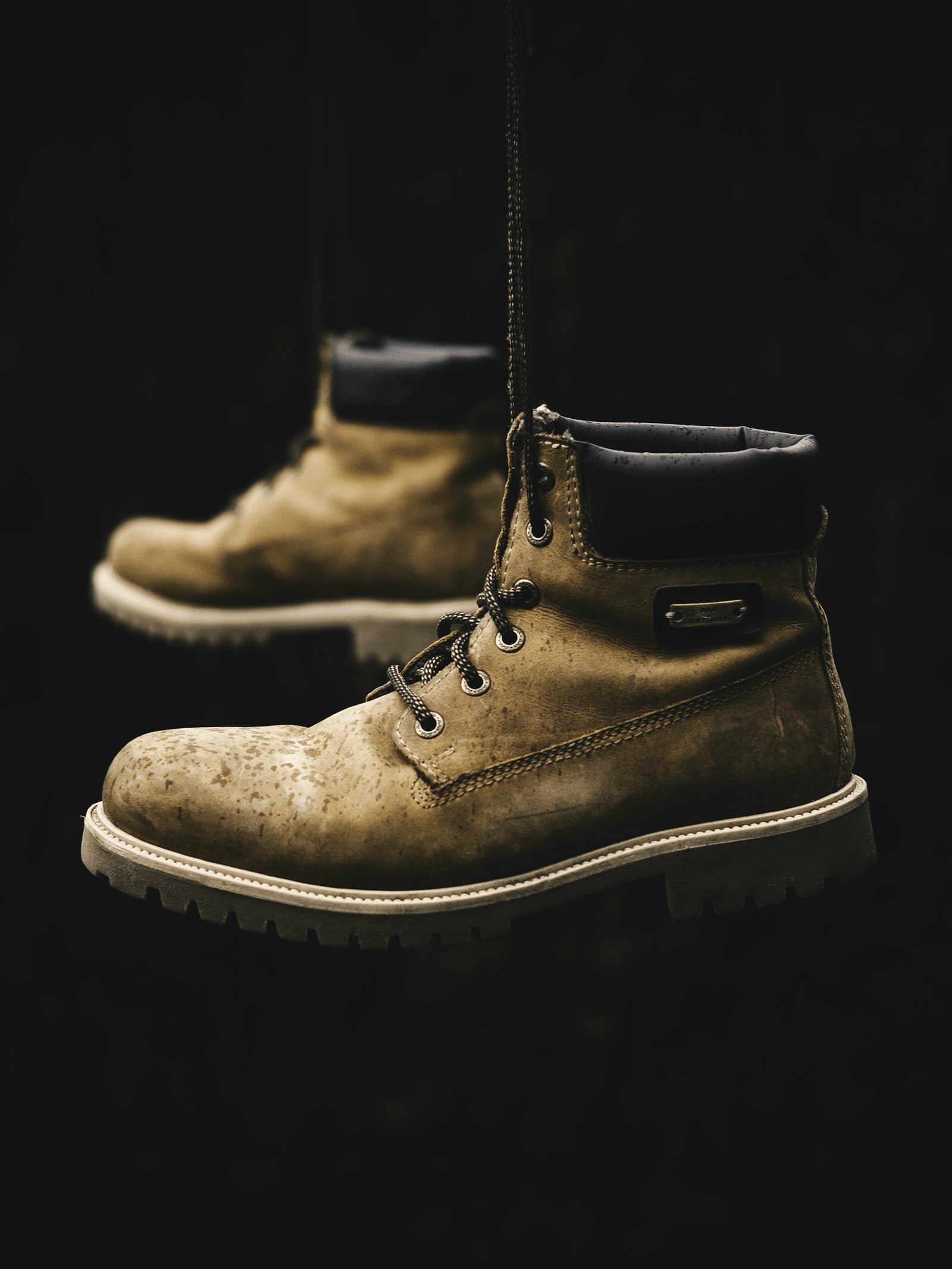
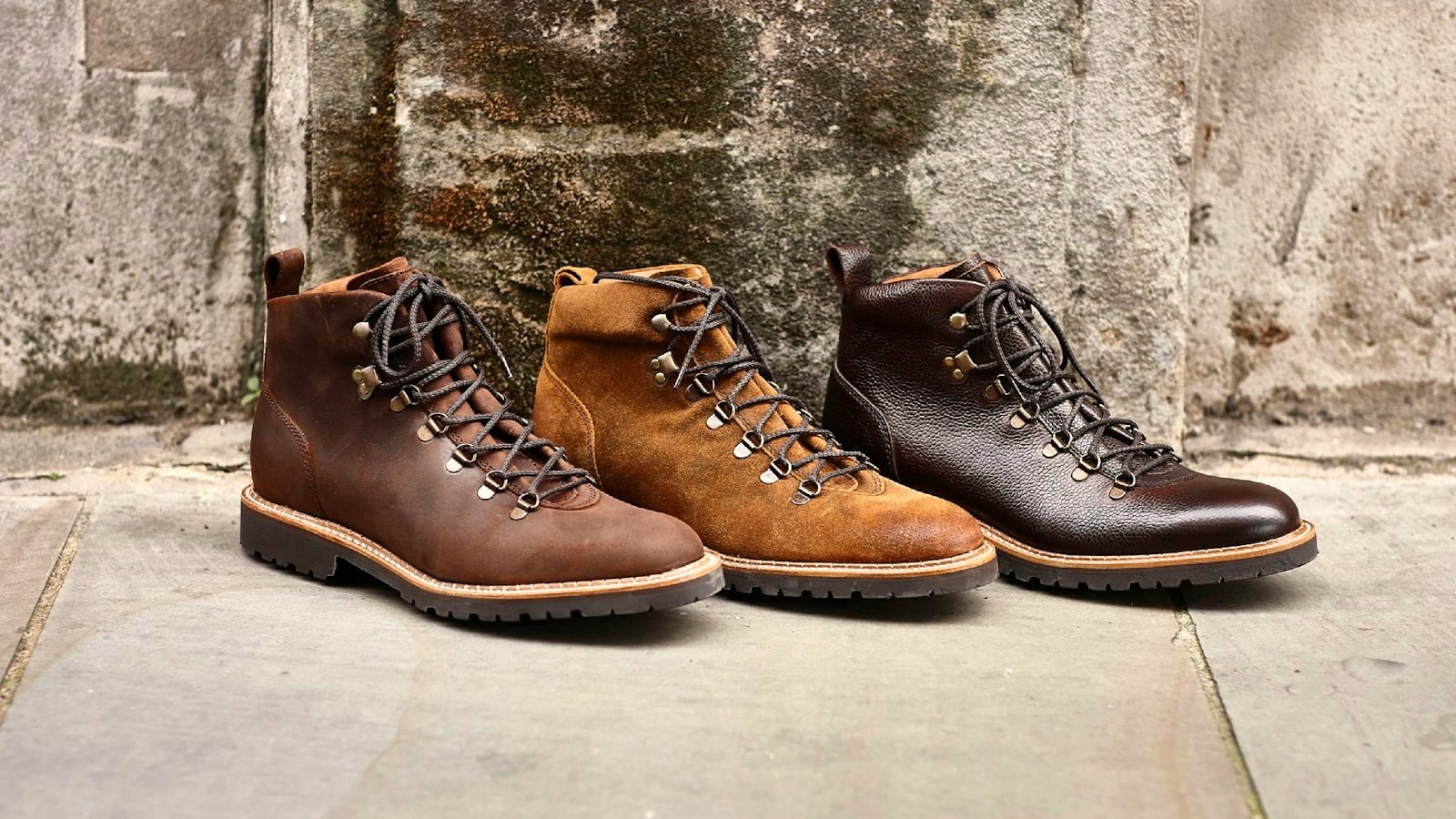
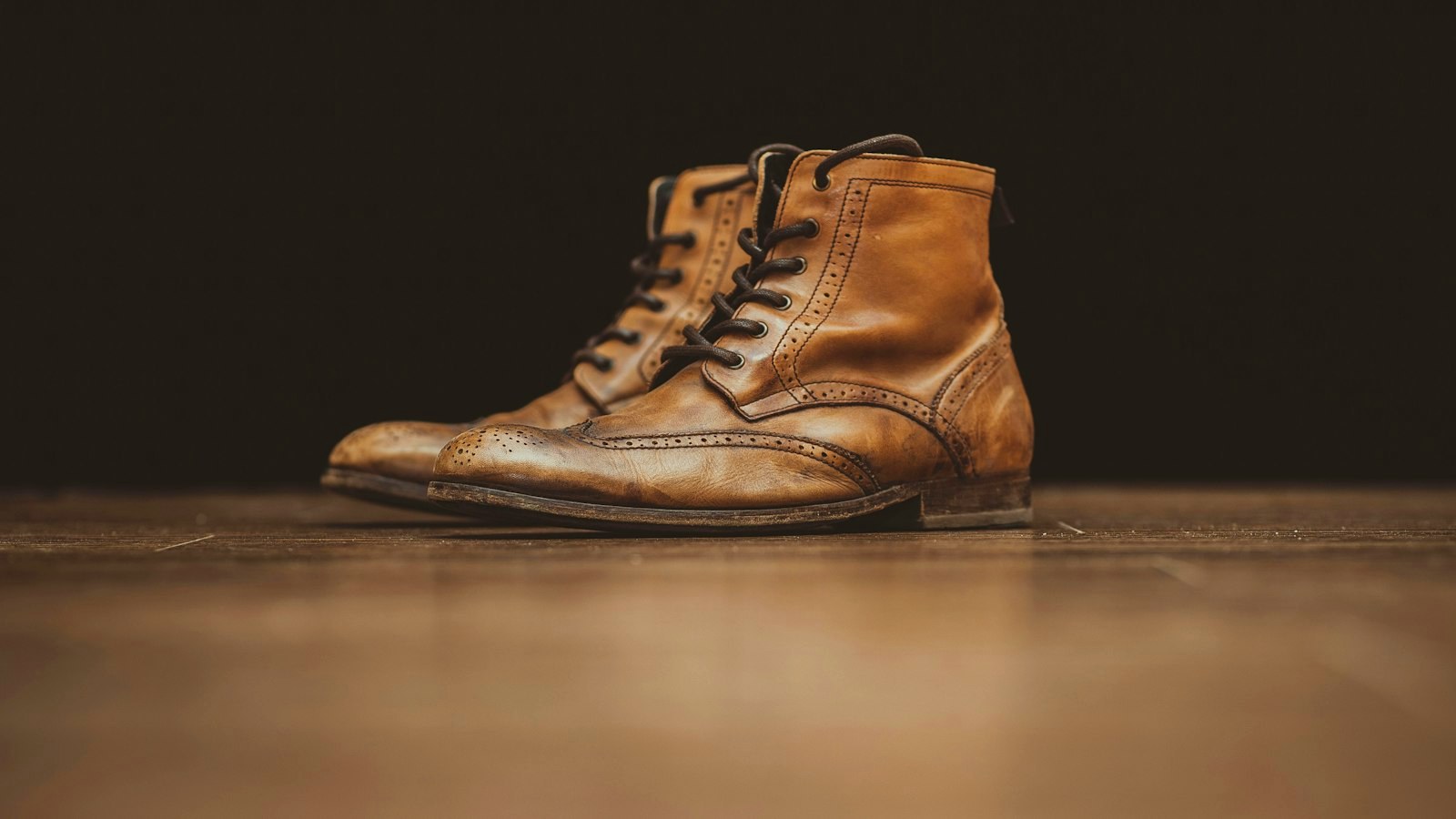
Buy links follow the deep-link rule: each card keeps the door its scoring page established, the maker’s own product page where that page used one and its established retail or category door where it did not. The anchor’s door is the maker’s own United Kingdom product page for the current Cloud Arctic Parka, the door the Filson page established, re-verified live at this check, with the price in pounds disclosed in its price line and the United States retail figure printed beside it. The skip ships without a buy link because the desk does not link what it sentences. Photographs come from the bank credited in CREDITS.md; the bank holds no photograph of a Woolrich garment and no frame of any ranked house’s garment, the same gap our L.L.Bean, Filson, Pendleton and Eddie Bauer pages admitted, and the cards run on the bank’s street, stack and profile frames rather than on borrowed product photography. The anchor’s card frame is the one the Filson page gave it, a red flannel worn outdoors, captioned as exactly that; no frame on this page is captioned as a garment it does not show.