
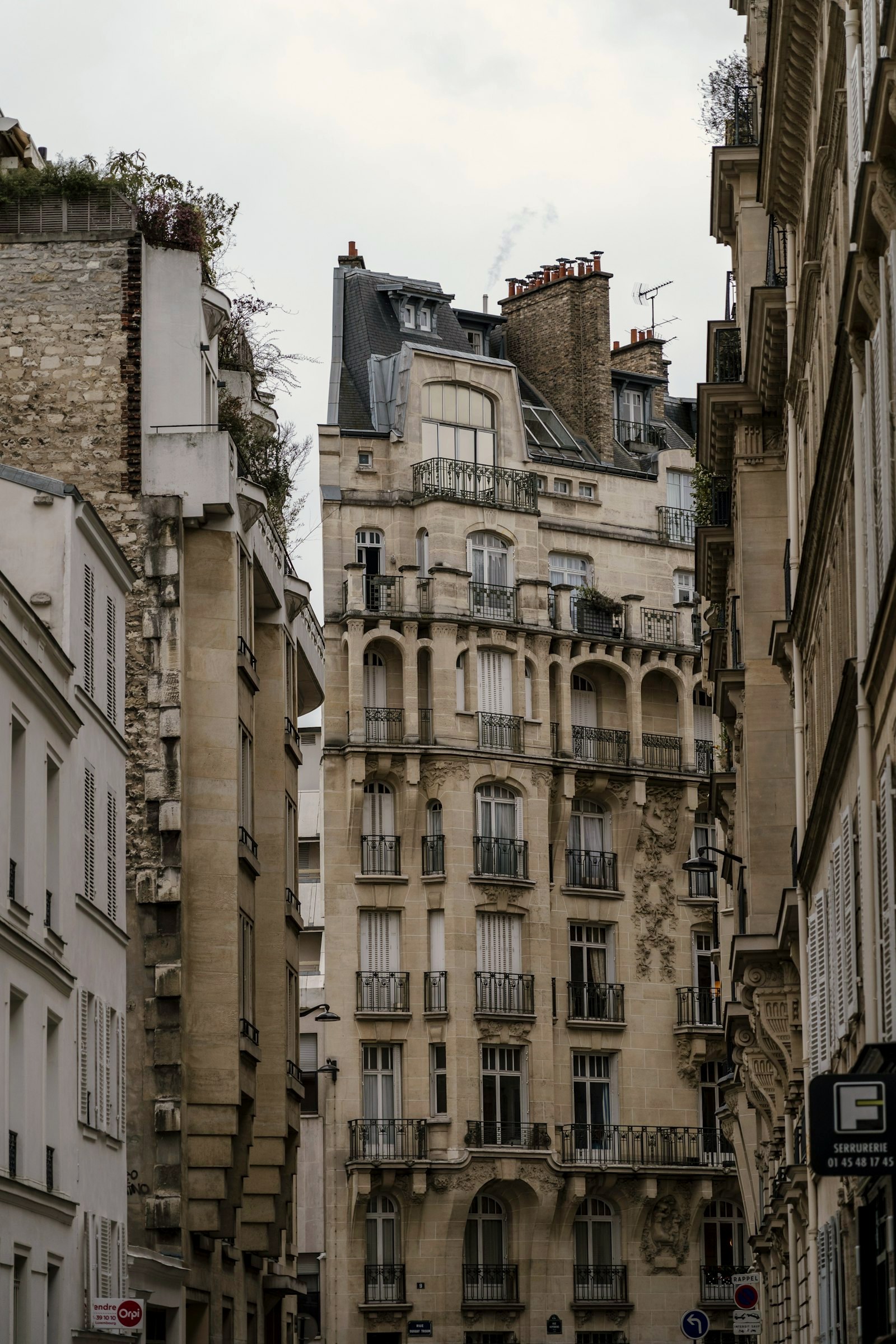
The mac's workplace, captioned as exactly that: a city street in the wet shoulder season. Our bank holds no photograph of a mac coat on a body, the gap Verdict Card No. 80 prints about its own page, so this brief opens on the street the coat works on rather than covering the gap with a borrowed shot. No ranked coat is pictured anywhere on this page.
Checked and updated October 2026
The ruling, up front: a mac coat is a proofing record wearing a silhouette, and it is worn in that order. Verdict Card No. 80 has ranked the species entire: the Private White V.C. Jack's Mac winning at 89, the Mackintosh Dunkeld at 85, the Community Clothing Raincoat at 80, and a coat sent home at 33 for being sold as a rain coat whose record never claims it keeps rain out. So this brief begins where the Card ends: buy the construction printed behind the word waterproof, because an adjective is not a construction, and wear the coat as the clean front it is, closed or open, flat, with nothing belted around it, because the fly front is the whole silhouette. Under it goes whatever the day already required; the mac is warmth 2, a shield and not a source of heat. This page prints the species and its seats, the proofing test that separates a construction from a claim, the fit as the Card's field actually publishes it, the outfit matrix, and the five ways the garment is ruined.
This brief: the decisive rule · know which mac you are holding · the proofing test · the fit rules · what goes under the shield · the front discipline · the season line · the looks · the mistakes · care and our photography
The decisive rule: buy the construction, wear the front
Every brief in this family has a rule that decides the garment, and the mac's has two halves that are one rule read at two tills, the shop's and the mirror's. The mac is the third rain species in this magazine's outerwear run: the single-breasted rain coat that closes behind a fly front, a concealed button placket, with a plain collar, no belt, at knee length or near it, cut to go over tailoring. Its silhouette is the simplest in the long-coat drawer, and its claim is the largest: this coat exists to keep rain off the clothes under it. A garment whose whole job is a claim is bought on the evidence for the claim, and worn on the silhouette the claim's construction makes. That is this brief's decisive rule, printed as new: a mac is bought on its proofing, the construction printed behind the word waterproof, and worn on its front, the clean column the fly front makes, with nothing added to either.
The buying half is the Card's arithmetic. Of the eight coats No. 80 graded, seam proofing is published by three, taped seams on the two heritage constructions and welded seams on the one coat that prints a measured water column. Three coats are carried by an adjective alone, water-repellent, shower-resistant or water resistant, and two publish no proofing statement of any kind. The proofing test below is those counts in shopping form: three checks at the rail, each one a line the Card has already counted across its field, and a coat that fails them is not a bad mac. It is a car coat in the rain, graded as exactly that.
The wearing half is the silhouette's own logic. The trench, the mac's sibling species, wears its fastening outside: double-breasted, belted, its furniture published part by part. The mac hides its fastening, and the hidden fastening is not a detail, it is the design: one unbroken surface from the collar to the hem, nothing at the waist, nothing to tie, buckle or arrange. Every styling error in the mistakes section below is an attempt to give the mac the trench's theatre, a belt added, a waist cinched, a collar staged. The mac's elegance is subtraction already performed by its maker. The wearer's whole job is to not add it back.
Know which mac you are holding: the species and its seats
The rail sells several garments under the mac's name, and No. 80 separates them in print before it grades any of them. The wearing rules differ by seat, so the seats come first.
| Form | Build | Its seat on the Card |
|---|---|---|
| The true mac | Fly front over a proofed cotton: bonded, weave-shed or named and treated | The species entire: the Jack's Mac at 89, the Dunkeld at 85, the Community Clothing Raincoat at 80 |
| The gabardine tradition | The fly front over the trench's own cloth, its proofing resting on the weave's name | The Grenfell Campbell at 71, its form complete and its proofing record a tradition rather than a statement |
| The finish mac | The form entire over a treated cotton, the treatment named and nothing claimed beyond it | The Marks & Spencer Pure Cotton Mac at 65, the field's only stated vent, its proofing limit printed on its own page |
| The designer reading | The form at a luxury register, composition printed entire | The Burberry car coat at 58, graded on a proofing claim of one adjective at the field's dearest list price |
| The shell in the mac's length | A welded, measured construction in a hooded, snap-front form | The Stutterheim Stockholm Long at 69, the rain jacket's architecture at the long coat's length, ranked inside the field on its cloth's descent |
| The name only | The long coat's outline with no proofing claim anywhere in its record | The skip at 33, sold under the words rain coat, its full composition printing a nylon base under a polyurethane coating |
Two neighbours stand outside the table because they are other species with their own briefs. The trench coat, belted and double-breasted, is ranked in Verdict Card No. 49 and briefed in How to Wear No. 02; one house stands on the boundary in both forms, its bonded cotton graded at 81 in the trench form as the Fetlar and at 85 in the mac form as the Dunkeld, each form graded once, on its own Card. And the technical rain jacket, the membrane shell, is ranked in Verdict Card No. 44: the jackets index files it at formality 1 against the mac's cloth class at formality 4, and the season line below rules on which rain belongs to which.
The proofing test: three checks at the rail
The Card grades the proofing as a record; the wearer meets it as a word on a product page. These are the same facts in shopping form, and each check is a count No. 80 has already run across its field of eight.
The construction check. Find the sentence that says what keeps the rain out, and grade its grammar. A construction is a noun with a mechanism: bonded cotton, two layers over a rubber core; a Ventile-class weave, fibres that swell shut when wet; welded seams over a rubberised cloth. A treatment is a verb with a lifespan: a fluorocarbon-free waterproof coating named by the £192 coat's house account, a water-repellent finish on the high-street mac. An adjective is neither: water-repellent, shower-resistant and water resistant carry the whole claim on three of the eight graded coats, and on two more there is no sentence to find at all. The rule is the rain family's standing law, printed on the rain jackets Card: waterproof is a structure, and a finish is a treatment on a clock. Buy the structure where the rain is the point; buy the finish knowingly, at a finish's price, with its renewal planned.
The seam check. A proofed cloth over open seams is a claim with holes in it, and the winning coat's maker says so by its construction, taping its seams in copper on top of a weave that already sheds. Seam proofing is published by three of the eight makers on the Card, taped twice and welded once. The other five are silent, and the silence is the datum: seams are where rain enters a worn coat first, at the shoulder line above the tailoring the coat exists to protect. A maker who has sealed the seams prints it, because it costs money to do. A maker who has not prints the silhouette instead.
The number check. A maker who measures prints a number, and the field's numbers are countable: a fabric weight is published by three of eight, the Ventile at 200 grams per square metre, the Blackburn cotton at 8 ounces, the welded cloth at 380 grams; a weave density by one, 81 threads per centimetre in the warp and 30 in the weft; a weaver is named by one; and a measured water column is printed by exactly one coat in the field, 20,000 millimetres, on the hooded outrider at No. 5. Set beside the trench field, where No. 49 found not one cloth weight in eight coats, this field prints three, and the brief's rule follows the Card's: the number is not a fetish, it is a checkable claim, and a coat with one can be caught being wrong, which is precisely why most makers decline to print one.
Worn, the test's results become the wardrobe's weather map. The bonded and weave-shed constructions are the coats for the city's real rain, worn closed, the front flat, the seams doing the work they were published doing. The finish coats are the coats for the showery day and the short exposure, their treatment renewed as it fades, the Community Clothing record printing the home re-proofing path on its own house account. And the coat with no claim at all is not a rain coat in any weather: it is a long coat, and it is worn as one, on dry days, which is the wearing its record actually supports.
The fit rules: over tailoring, flat at the front, by height
How to Wear No. 02 prints the rain coat class's fit laws, and two of them carry across to the species unchanged: the length by height, the hem between mid-thigh and just above the knee below about five foot eight, at the knee or just below it through the middle heights, below the knee on tall frames, with leg showing beneath the hem at every height, because once the coat takes the leg's whole line the wearer reads shorter and the coat reads borrowed; and the sleeve covering the shirt cuff completely, the reverse of the tailoring rule, because the coat is the outer skin and rain should run off it rather than down into a cuff. One line of No. 02's law does not carry, and the species section has already named it: the belt. It belongs to the trench entire.
Through the body: room for the day, and a front that lies flat. The mac is cut to go over tailoring, and it is sized on that promise: room through the chest and shoulder for the blazer or suit beneath, checked in the shop with the blazer actually on. The species adds its own fit fact to the family's, and it is a consequence of the fly front: the concealed placket reads as a clean column only when it lies closed without strain and without being held. A mac that pulls at its hidden buttons has failed at the joint the garment exists around, the front itself, and no styling downstream of a straining placket recovers the line. Size for the front lying flat over the fullest layer the coat will honestly cover.
Buy on published measurements where they exist. The Dunkeld publishes a complete garment measurement table, chest, length, sleeve and shoulder across eight sizes, the fullest size library in the Card's field; the Stutterheim publishes its garment measurements on a straight, unisex cut; the winner runs seven sizes in a regular fit with inset sleeves. Where a maker publishes nothing, and two ranked coats publish no measurements at all, the rail test is the under-layer you actually wear: the coat tried over a blazer, the front checked flat, the stride checked against the vent, because a mac that splits open at every step is a length and vent failure worn in public. The vent itself is stated by exactly one maker in the field, the £76 coat, a fact the Card prints and this brief repeats because it decides whether the coat walks like a coat or a tube.
What goes under the shield: the day, dressed whole
The mac's warmth filing settles its layering law before any taste is consulted. The jackets index carries the mac's cloth at warmth 2, the rain instruments' rung, which means the coat insulates almost nothing: it sheds, it shields, it does not warm. The layering rule follows, and it is the trench brief's rule carried across and sharpened: dress the day underneath as though the coat were not there, because thermally, it is not. The outfit under a mac is the whole outfit, chosen for the rooms it will be in once the coat comes off, and the coat's only contribution to it is that it arrives dry.
Tailoring is the design case. The species definition prints it: cut to go over tailoring. The suit or the blazer under the mac is the assembly the garment was built around, the office row of the matrix below, and its shirt is the rain coat family's oldest partner, the Oxford, whose ranking's reference is the Kamakura at 93. The coat's room, its flat front and its covered cuff all exist so that this layer arrives unwrinkled and unwetted; wearing the mac over tailoring is not one option among many, it is the pattern's home address.
The fine knit is the evening and cold form. Where the day is knitwear rather than tailoring, the layer follows the family's cleaner logic: a fine crew or a roll neck under the mac's plain collar, the knit carrying all of the outfit's warmth because the coat carries none. In the cold snaps inside the mac's shoulder seasons, the stack grows underneath, a knit over the shirt, the base layer in real cold, and the coat stays the same shield over a warmer day. What never works is the reverse arrangement, the mac asked to be the warmth: a warmth 2 coat worn as a winter coat over a shirt alone is the season error the season line rules on below, and its wearer is cold in a garment performing perfectly.
Over it goes nothing. The weather layer is last on and first off, the stack the waxed brief prints for its own garment in How to Wear No. 28, carried across to the rain family whole: the mac is the outfit's outer skin, and a coat dragged over it spends both garments' lines at once and cancels the front this brief exists to keep clean. At the feet, No. 02's shoe rule carries across unchanged: structure answers structure, leather shoes and boots with a real sole in the rain, a clean minimal trainer at the weekend worn knowingly, and the running shoe refused, because a tailored rain coat over gym trainers is two outfits arguing, and the argument is the only thing anyone notices.
The front discipline: closed, open, and nothing at the waist
The trench brief gives its garment's signature a section of law, the belt's three legal states. The mac's signature is the front, and its law is shorter because there is less of it, which is the point. Closed is the working state: the placket fastened behind its fly, the coat reading as one column of cloth from the plain collar to the hem, the state the proofing record was graded in and the state real rain is worn in. Open is the mild-weather state: the front falling in two clean panels over the day's clothes, the coat carried as a frame rather than a seal, worn the way the trench brief's open rows wear theirs, knowingly and in weather that allows it. There is no third state. A mac is not half-fastened against a waist that is not there, not held shut by a hand at the placket, not arranged. The two states are the wardrobe's simplest discipline, and every violation of it is a trench habit looking for its garment.
The collar keeps the same discipline. The mac's collar is plain by pattern, no hood, no latch theatre of the trench's kind; the one ranked coat with a neck closure, the Dunkeld, carries a removable neck latch as a weather seal, which is what it is worn as, fastened in weather and otherwise left alone. The collar stands up when the rain earns it, the trench brief's rain-row rule carried across, and it lies down the rest of the time. A collar staged upright in dry weather is the costume read in miniature, the rain coat performing rain that is not falling.
The pockets and the vent are furniture, not styling. The ranked field's fronts carry welt pockets, the Community Clothing pair printed in its first lines, and the hands-in-passing rule of the knit family applies in spirit: the mac's pockets are for hands and a pair of gloves, not for carrying the day against the cloth the proofing lives in. The vent, stated by one maker in eight, does its work unseen at the back, letting the coat stride; its absence on a record is a Card matter, and its presence on the £76 coat is that coat's quiet distinction, worn every time its owner walks at pace in it.
The season line: the wet shoulder seasons, warmth 2
The index files the mac's cloth class in the wet shoulder seasons, and the season follows the filing: the mac is a spring and autumn garment, the coat of the months when rain is the day's main weather event and cold is not. The Card's costing runs on the same line, its field priced at thirty wears a year across those seasons. In winter the mac does not fail, it is simply out of its filing: warmth 2 over a shirt is a cold man in a dry coat, and the season's honest answers are the knit stack underneath in the shoulder months' cold snaps, and the overcoat in winter proper, whose brief and ranking stand in the family beside this one.
The line's wet end needs the same ruling the waxed brief gives its garment, translated into this species' terms. The mac's constructions shed the city's rain, the showers and the steady wet of a commuting day, and the bonded and taped coats shed more of it for longer. The rain that belongs to another species is the standing rain, the hours-long weather of the platform and the site, where the membrane shell of No. 44, taped seams and a named membrane, is the instrument built for it, at formality 1, in a different register entirely. The index prints the choice in one sentence and this brief adopts it: choose by the room at the end of the rain. The mac is bought for the rain that ends at an office, a restaurant, a home; the shell is bought for the rain that is the destination. A wardrobe that owns both owns the whole sky at both formalities, and the failure this section exists to prevent is the category error in either direction, the mac worn as a shell in standing rain, or the shell worn to the office because it was the coat by the door.
The looks: the Card's field, worn in its order
Six assemblies from this brief's rulings, each built on the published records around the garment. The coats are No. 80's, in the Card's order and at the Card's scores; the layers under them are the family's ranked partners; nothing in the judgments is scored here.
| Setting | The coat | With | The judgment |
|---|---|---|---|
| The office standard | The Jack's Mac, 89, closed over the day | A suit or blazer, an Oxford shirt of the Kamakura class at 93, leather shoes, the sleeve covering the cuff | The species at its design case entire: a weave-shed cloth with its seams taped, worn over the tailoring it was cut to protect, by the maker whose factory repairs it for life. The £850 ticket is the row's known price, and the Card's £1.42 a wear across twenty years is its defence |
| The original | The Mackintosh Dunkeld, 85, closed, the wool liner in or out by the month | A fine knit or tailoring under it, dark trousers, boots with a real sole in the wet | The bonded construction itself, handmade in Scotland, worn with its care law accepted as the price of the seal: spot clean only, because the solvent that cleans the cotton dissolves the rubber core. The detachable liner makes it the field's one all-season mac, and its published measurement table makes it the one bought entirely by number |
| The attainable mac | The Community Clothing Raincoat, 80, at £192 | A crew knit or a shirt under it, chinos or denim below, the front worn flat | The row the brief recommends first: a weighed cloth from a named weaver, a fly front and a half lining, made in Blackburn, at a fifth of the premium field's money, its cost per wear the Card's second cheapest at £0.64. Bought with its own tension known, the product page's word is water resistant where the house account claims more, and the home re-proofing path is part of the ownership |
| The honest finish | The Marks & Spencer Pure Cotton Mac, 65, at £76 | A shirt and knit under it, worn on the showery days it was finished for | The high street's honest attempt, worn inside its published limit: a water-repellent finish, stated as a finish, renewed as it fades, and the field's only stated vent walking at pace beneath it. The Card's cheapest wear at £0.42, and the proof that the adjective is not the sin. The silence about what stands behind it is |
| The measured outrider | The Stutterheim Stockholm Long, 69, the hood up only in weather | Casual layers under it, denim below, boots at the ground | The field's only measured proofing, 20,000 millimetres over welded seams, bought knowing the form is the shell's, hooded and snap-front, one species over from the tailored mac. Worn where the rain is real and the register is casual, it is the correct instrument; worn as a tailored mac it is the category error with a number on it |
| The designer reading | The Burberry car coat, 58, worn open in the city's light rain | Tailoring under it, the check lining doing the register work the cloth record does not | The form at its most polished and its record at its thinnest relative to price: a composition printed entire and a proofing claim of one adjective at a $2,450 list, dearer per wear on the Card than every coat above it. Bought for the eye with the paperwork known, or not bought. The matrix prints it last because it is the seat the record supports least, at the price the field asks most |
The ruling
Buy the mac on the proofing test: a construction behind the word, bonded, weave-shed or welded, with its seams published, which in the Card's field means the Community Clothing at £192 for the working wardrobe and the Jack's Mac at £850 for the complete record, with the Dunkeld at 85 waiting for the buyer who wants the original and accepts its care law. Wear it as the clean front it is: closed in rain, open in the mild, flat over the day's clothes, the collar down until the weather earns it up, and nothing belted, tied or cinched at a waist the pattern does not have. Keep it in its season, the wet shoulder months, dress the warmth underneath it, and give the standing rain to the shell. The mac is the rain coat reduced to its two honesties, a cloth that sheds and a front that hides its fastening. Worn on its record, it is the quietest argument in the wet wardrobe, and it wins it every wet morning it is put on.
The mistakes
Buying the adjective. The buying error the Card exists to catch: water-repellent read as waterproof, shower-resistant read as sealed. Three of the eight graded coats are carried by an adjective alone, and the dearest coat in the field is one of them, its whole proofing claim a single word at a $2,450 list. A finish is a treatment on a clock, strongest when new, fading with wear and washing, renewable at home; a construction is a structure that does not wash off. The proofing test takes a minute on a product page: find the construction sentence, the seam sentence and a number. A coat whose record offers none of the three is priced by its silhouette, and should be paid for as one.
The fashion coat in real rain. The wearing form of the same error, and the Card's skip is its portrait: a coat sold under the words rain coat whose own record never once claims it keeps rain out, a nylon base under a polyurethane coating, a borg liner doing the warmth work a proofed cloth does on the ranked coats. Worn in real rain it does what its record says, which is nothing, and its cost per wear on the Card is dearer than the honest £76 mac it undercuts at the till. The name is not a specification. A coat that will not claim its function in print will not perform it in weather.
The belted-trench styling on a fly-front garment. The species error: the mac worn with a belt added over it, a sash tied at the waist, the front cinched by hand for shape. The belt is the trench's signature and its law lives in No. 02, three legal states for a garment that was patterned with a waist. The mac was patterned without one, deliberately: the concealed placket exists to make one unbroken column, and belting it breaks the column at exactly the point the design spent itself hiding. The result reads as neither garment, a trench that lost its belt over a mac that never had one. If the waist is the point, buy the trench. The species are siblings, not substitutes.
The wrong length. The fit error that cannot be styled around, in both its forms. The cropped mac, cut to a fashion length, deletes the weather coverage the garment's length exists for, an umbrella with the canopy trimmed. The mid-calf mac, bought off a taller frame's photograph, swallows the leg's whole line and reads borrowed at every belt state and shoe. No. 02's length law exists because the hem is a proportion decision, and it carries across whole: knee or near it, matched to height, leg showing beneath. The Card's field is graded on that line, and a coat off it is off the species.
The care error. The ownership error, and the costliest, because it is irreversible. The bonded coat machine-washed or dry cleaned by a helpful household, its rubber core dissolved by the very solvent the maker's care line names, returned with its seal gone. The finish coat never re-proofed, its treatment fading unwatched until the first soaking announces it. The weave-shed coat stored damp and forgotten. Each proofing class on the Card keeps its promise a different way, and the maker's care record is part of its specification: bonded cotton is spot cleaned only, finishes are renewed at home, and the winner's own care line reads specialist dry clean only. A mac is maintained the way its construction says, or it becomes the adjective its owner mistook it for.
Care, and a note on our photography
A mac's care follows from its construction, and the records print the terms class by class. Bonded cotton carries the strictest law on the Card, printed by the Dunkeld's maker with the coat: spot clean only, do not machine wash, do not dry clean, because the solvent that cleans the cotton dissolves the rubber core that makes it waterproof; the coat is the most sealed in the field and the least washable, and both halves of that sentence are the same fact. Weave-shed cottons, the Ventile and gabardine class, shed by structure, and structures do not wash off; the winning coat's own care line is specialist dry clean only, and the class repays a brush after rain and an airing rather than a wash after every wearing. Finish coats run on their clock: the treatment fades with wear and washing and is renewed at home, the Blackburn house's account printing the wash-in re-proofing path as part of its record, which is what a published maintenance path buys a buyer, a denominator that renews. And across all three classes the storage rule is the rain family's: hung dry, aired, never folded wet into a dark wardrobe, because a proofed cloth put away damp keeps the damp as a keepsake.
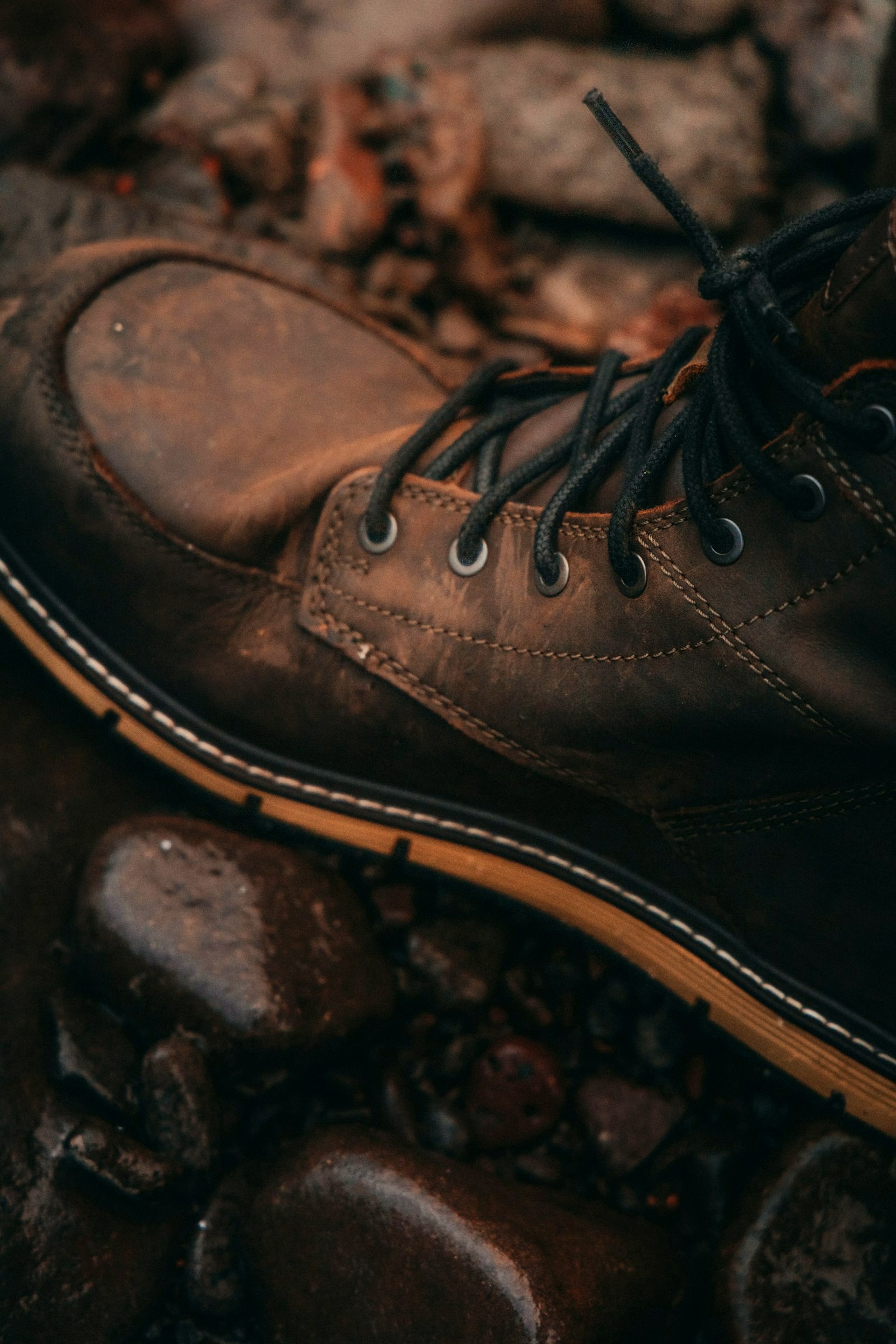
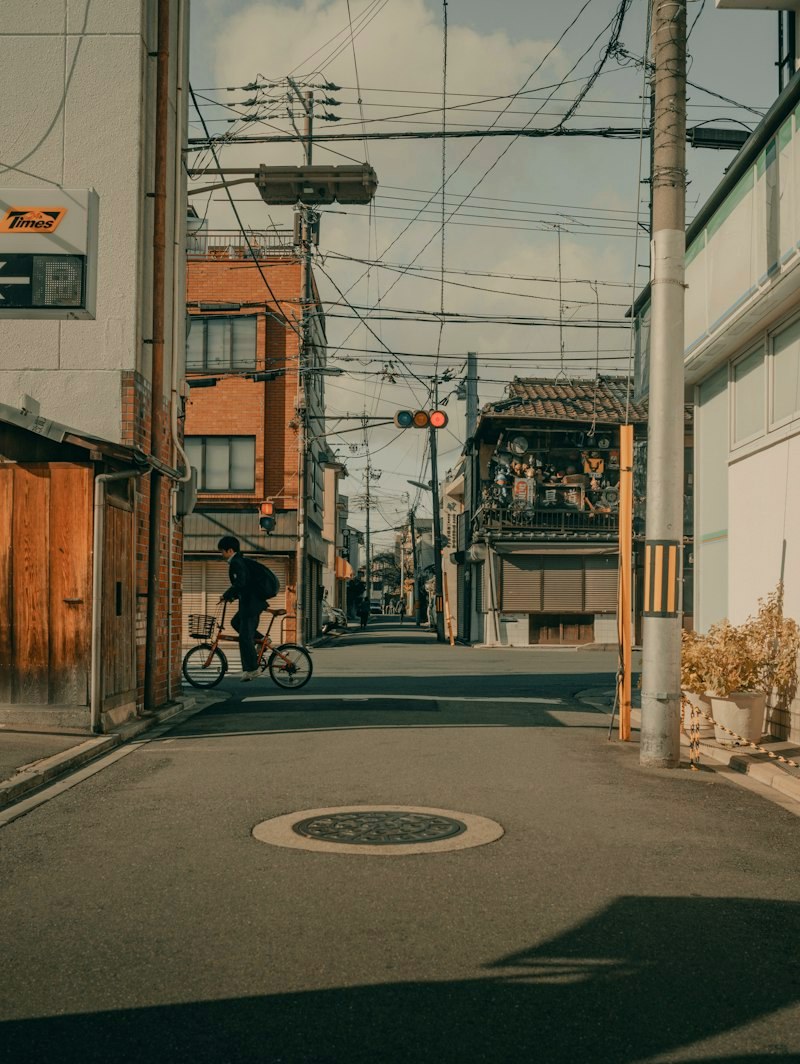
A note on our own photography: our photo bank holds no frame of a mac coat worn on a body, in any of its constructions, the gap Verdict Card No. 80 prints about its own page as well. There is no photograph of a ranked coat, no bonded-cotton seam at close range, and no fly front at street level, the exact frames this brief's proofing test and front discipline describe. The harvest list names what is missing, in the Card's order: a mac coat worn on a body in rain, a bonded cotton seam in close-up, a fly front at street level. Until those frames exist, the bank's wet street, its ground-level rain frame and its tailoring register carry the page, captioned for exactly what they show, and no frame on it is captioned as a coat it does not picture.
Questions, answered
How do you wear a mac coat?
As the clean front it is: closed or open, flat against the body, over whatever the day already required, with nothing belted, cinched or tied around it. The mac is the single-breasted rain coat that closes behind a fly front, and the fly front is the silhouette entire, one unbroken column from collar to hem. Our jackets index carries the mac's cloth inside its trench row, formality 4 and warmth 2, a rain instrument for the wet shoulder seasons, cut to go over tailoring. It is weather, not warmth, and not theatre: the coat is the shield of the outfit, never its costume.
Mac coat or trench coat: what is the difference, and which laws carry over?
The fastening and the furniture decide. The trench coat of Verdict Card No. 49 is double-breasted and belted, with the military furniture of its pattern; the mac is its unbelted, single-breasted sibling in the same cloths, closing behind a fly front with a plain collar and no belt. The wearing laws that carry across from How to Wear No. 02 are the ones that belong to the rain coat as a class: length matched to height with leg showing beneath the hem, the sleeve covering the shirt cuff so rain runs off the coat, and shoes with structure. The belt law does not carry. It is the trench's law, for the trench's garment, and applying it to a mac is styling one species with another species' rules.
Is a mac coat actually waterproof?
It depends which construction the word is standing on, and Verdict Card No. 80 grades the record behind the word. Bonded cotton is waterproof by construction, two cotton layers over a rubber core with its seams taped. A Ventile-class weave sheds by density, its fibres swelling shut when wet, and the winning coat tapes its seams on top of the weave. A welded rubberised coat can print a number, and one coat in the field prints 20,000 millimetres. Below that class the word softens: a water-repellent finish is a treatment on a clock, strongest when new and renewable at home, graded on the Card as a finish and not a construction. Of the eight coats the Card graded, three publish what seals their seams, three are carried by an adjective alone, and two publish no proofing statement at all, one of them sold under the words rain coat.
What do you wear under a mac coat?
Whatever the day already required, dressed as though the coat were not there. The mac is filed at warmth 2, which means it insulates almost nothing: it is a shield against rain, not a source of heat, so the outfit underneath is the outfit, and the coat goes over it. Tailoring is the design case, the garment is cut to close over a blazer or a suit, and the Oxford shirt is its oldest partner. A fine knit is the evening form. In cold snaps the warmth is added underneath, a knit over the shirt, never by asking the mac to be a winter coat. Over the mac goes nothing: it is the weather layer, last on and first off, the rain family's standing stack.
How should a mac coat fit?
Sized over tailoring, flat at the front, and bought on published measurements where a maker prints them. The body needs room for the blazer or knit it was cut to cover, with no strain at the placket: the fly front only reads as the clean column it is when it lies closed without being held. The length follows How to Wear No. 02's rules by height, carried across, the hem between mid-thigh and the knee at shorter heights, at the knee through the middle heights, below it on tall frames, with leg showing beneath the hem at every height. The sleeve covers the shirt cuff completely. Two makers in Verdict Card No. 80's field publish full garment measurements, the Mackintosh across eight sizes and the Stutterheim on its page; where a maker publishes nothing, the shop test is the blazer you actually wear, worn under the coat, the front checked lying flat.
Can you belt a mac coat?
No. The mac has no belt, no belt loops and no waist to cinch, and that absence is the garment's definition, not a missing accessory. The belt belongs to the trench coat, where How to Wear No. 02 gives it three legal states, buckled, tied once, or buckled behind. A mac styled with a belt added, a sash tied over it, or its front cinched by hand is a fly-front garment being worn against its own pattern: the clean column the concealed placket exists to make is broken at the waist, and the coat reads as a trench that lost its belt rather than as the mac it is. If the waist is wanted, the trench is the species that sells it, ranked in Verdict Card No. 49.
How long should a mac coat be?
Knee length or near it, matched to height by the rules How to Wear No. 02 prints for the rain coat class and this brief carries across: below about five foot eight, the hem belongs between mid-thigh and just above the knee; through the middle heights, at the knee or just below it; above six foot, below the knee reads deliberate. Leg shows beneath the hem at every height, or the length is wrong. The two failures sit at the ends: the cropped fashion mac, which deletes the weather coverage the length exists for, and the mid-calf coat bought off a taller frame's photograph, which swallows the leg's whole line and reads borrowed. Verdict Card No. 80's definition files the species at knee length or near it, and its field is graded on that line.
Has Young Cotton ranked mac coats?
Yes. Verdict Card No. 80 ranked seven mac coats on their published records and sent one home: the Private White V.C. Jack's Mac winning at 89 on a Ventile cotton published entire, weight, thread counts and copper taped seams, at £850; the Mackintosh Dunkeld second at 85, the bonded-cotton original; the Community Clothing Raincoat third at 80 at £192; and the coat sent home at 33, sold as a rain coat whose published record never once claims it keeps rain out. This brief is the wearing system that ranking implies: it styles the Card's field in the Card's order, carries the trench brief's class laws across where they govern, and scores nothing of its own.
Next
The family this brief belongs to: the ranking it styles is Verdict Card No. 80, and its sibling species are ranked in Verdict Card No. 49, briefed in How to Wear No. 02, and ranked for real rain in Verdict Card No. 44. The family's other proofed-cotton species is ranked in Verdict Card No. 74 and briefed in How to Wear No. 28, where the weather-layer stack this brief carries across is printed whole. The class's place among all twelve is filed in the jackets index, the season's assemblies are scored in the Fall Edit, and where the coat lands on the body is drawn in the Body Map.