
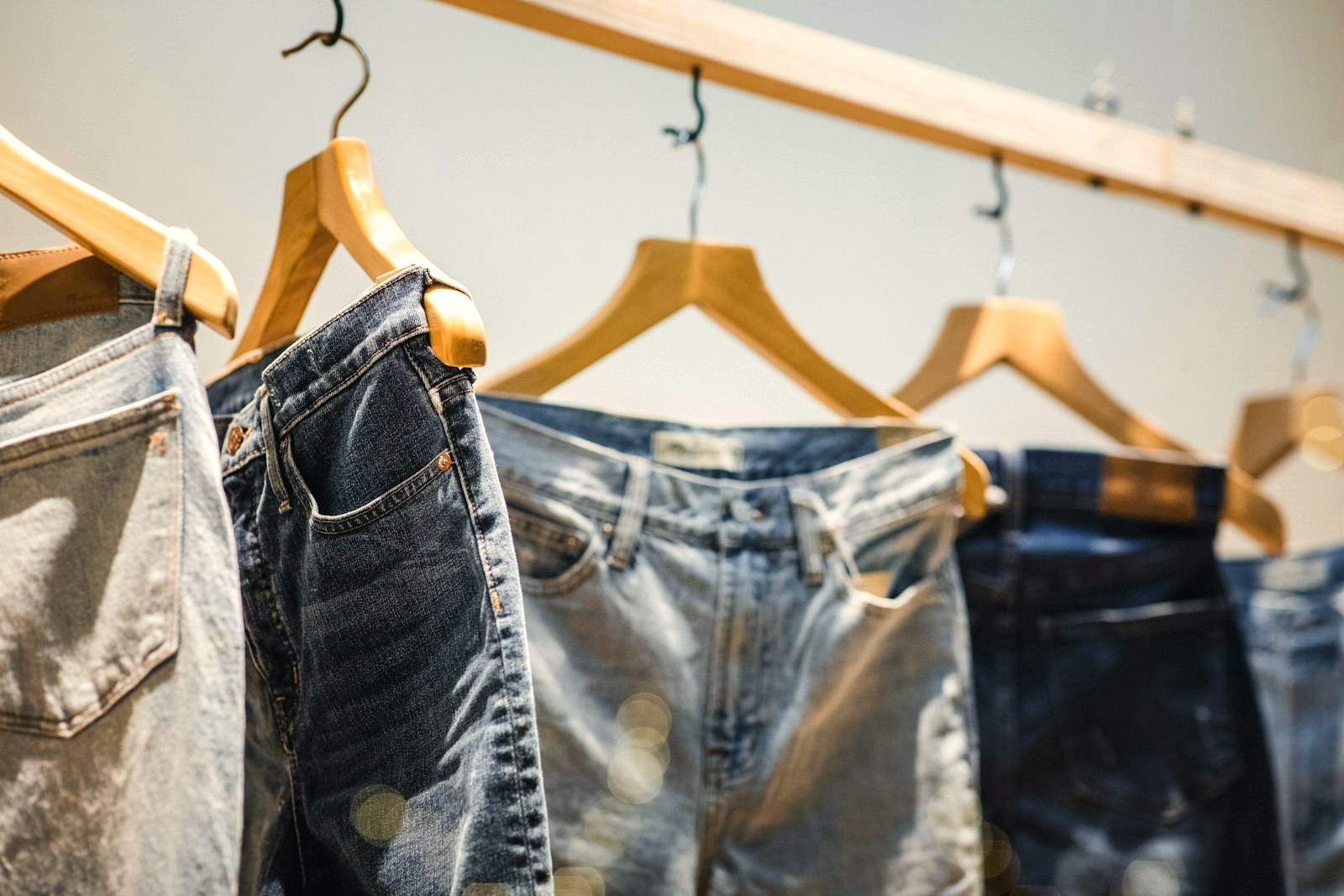
The ranking's denim species on its rail. Our bank holds no photograph of an ecru or white trouser, on a body or off one, so this page opens on the honest neighbour frame and admits the gap in the open, the way its sibling brief does.
Checked and updated October 2026
The verdict, up front: eight pale trousers scored out of 100 on the house trouser basis: cloth, colour and weight honesty 30, waistband and construction 20, fit range 20, value 15, longevity 15. The Drake's ecru fatigue trouser wins at 83: 100 percent cotton at a published 9.2 ounces, side adjusters, made in Portugal. The Carhartt WIP Single Knee Pant in natural canvas ties it at 83 on the field's heaviest published cloth and places second on the cloth row, 26 to 24, by the tiebreak printed below. The Nudie Jeans Rad Rufus in Everivory is third at 81, the one garment that states in its fabric's own name that its ivory is dyed. And the pair sent home, at 41, costs $730 and publishes no composition at all. The colour family's own question runs through every card: of eight garments, three publish a cloth weight, none publishes a lining statement, and none publishes a sheerness rating.
First, know which garment you are in
The pale end of the trouser rail sells three colour names as if they were one idea, and this ranking separates them in print and grades each as itself. Ecru and its work names, natural and ivory: the undyed-look colour, warm and greyed at the edge, the colour of the cloth before the dye pot or dyed to look that way, and the difference between those two is this Card's own question, answered maker by maker below. True white: dyed, bright and absolute, the brightest and least forgiving colour a leg can wear on the ruling of our linen brief, and the colour whose records are summer records. Stone, the rail's third pale name, is a wash name that lives on chino rails rather than a cloth with a record of its own: no stone-named trouser is ranked here, because the garments that publish real records name themselves ecru, natural, ivory, off-white or white, and this page grades the names makers actually print. Our denim index files the colour class whole, undyed ecru or denim dyed white, at formality 2, and our pants index files the types these garments belong to: fatigues and five-pockets at 2, chinos, wide-leg trousers and linen at 3.
The cloth species separate the same way. The work cloths, cotton twill, canvas, herringbone and drill, are the colour's home ground: weighted cloths on work patterns, bought to collect the day and wear it as patina. Denim is graded as denim, on the jean's own terms of weight and weave, whether the pair is an organic ivory at $195 or the white original at $84.95. Linen is graded in the species of Verdict Card No. 41, where the share is the argument and the sheerness risk is the species' own: the one linen garment here is the tailored form of the colour, and it is scored by that Card's discipline, not excused by it.
How the scores work
Every pair is scored out of 100 on the same five rows. Cloth, colour and weight honesty (30) reads the fibre line first, then the colour's own account of itself: whether the maker states what the cloth is, what the shade is made of, and what the cloth weighs. A published weight scores, because in a pale cloth weight is the opacity fact a buyer can check. Waistband and construction (20) reads what holds the trouser up and how the seams are made: side adjusters and a button fly score, triple stitching and flat-felled seams score, an elastic waist is scored as the honest hybrid it is. Fit range (20) is scored against this site's published rise and leg bands: the sizes, lengths and shapes a maker actually sells. Value (15) is the score divided by the bill. Longevity (15) is how long the cloth holds its line, costed in the table below. One discipline governs the whole page, printed here so no card can be misread: opacity is graded as a published-record question, never as a worn verdict. This desk did not hold any of these cloths to a window. It read what the makers publish, a weight, a lining statement, a sheerness rating, and charged every silence in the cloth row where the silence belongs. The window test itself is the buyer's, ten seconds in the shop, and How to Wear No. 40 rules on it in full. Ties are broken on the cloth row, the family's standing ruling, and both ties on this page are printed where they happen.
The ranking
Drake's Ecru Cotton Twill Fatigue Trouser
Price at last check: £295 at the maker's store, about $375.
Buy it as the pale leg's tailored work trouser: the fullest honest record in the field, a published weight, and side adjusters doing the belt's work. It ties the canvas below it on points and takes the card on the cloth row, 26 to 24, by the ruling this page prints.
The cloth: 100 percent cotton, woven from 9.2 ounce Japanese cotton twill, and the weight is published in the maker's own product copy, one of only three published weights in this field. That single number does more work on a pale trouser than any other fact on this page: it is the opacity answer a buyer can check without trusting a photograph, and it is why this garment wins the cloth row. The debits are printed with the credit. The maker publishes no lining statement and no sheerness rating, and on the colour itself the record is the work ecru's standard one: no dye statement at all, the shade presented as the cloth's own, neither claimed undyed nor admitted dyed. The house's other trouser on this site, its Field Games corduroy, scored 79 on Verdict Card No. 38 on a published 15.4 ounces: publishing weights is this maker's habit, and the habit is what the row rewards.
The build and the fit: a button fastening and fly, reinforced pockets, patch and flap rear pockets, belt loops and side adjusters together, which is the fatigue pattern given a tailored waist: the adjusters do the belt's work and the loops are there when a belt is wanted. A high rise, a flat front and a full leg, the mid-century silhouette the maker describes, in ten waist sizes from 28 to 40, made in Portugal. The value row charges the bill in full: £295 is the dearest honest ticket in the field, and the cost-per-wear table below prices it at $1.17, the dearest honest wear here. What the money buys is the record: every fact a buyer needs is on the page, printed by the maker, before the card is charged.
Carhartt WIP Single Knee Pant, Dearborn Canvas (Natural)
US price at last check: $148 to $186 by door. The maker's regional store lists S$209 and showed the garment sold out at this check, so this card ships without a buy link.
Buy it for the grams: 12 ounces of organic canvas is the opacity argument made in weight, at the field's working price. It ties the winner at 83 and places second on the cloth row, 26 to 24, and that row is the whole difference between them.
The cloth: 100 percent organic cotton Dearborn canvas at a published 12 ounces, the heaviest cloth in the field by nearly three ounces over the winner. On a pale trouser that number is the garment's whole defence and the maker prints it in the first line of the specification, beside a full measurement table, waist by waist, with the inseam stated at a fixed 80 centimetres. The colour is the line's natural, the undyed-look work shade, with no dye statement, the standard work-ecru record. No lining statement and no sheerness rating are published, the field's common silence, charged here as everywhere. The cloth row places it second to the winner on the honesty of the whole record: the Drake's publishes its weight inside a tailored garment's full account, while this spec sheet, for all its grams, is a workwear sheet, complete on cloth and construction and silent on everything else.
The build and the fit: triple stitched, with bartack stitching at the stress points, tool pockets and a hammer loop, a zip fly, a relaxed straight leg on a regular waist. This is the work pattern unsoftened, and the construction row scores it as such: nothing here is decorative, and the canvas is expected to outlast the stitching's warranty by years. The garment is graded on its own published record, as every card on this page is: the house behind it, Carhartt, stands at 77 in Brands Like No. 02, and the WIP line's spec discipline is its own evidence. The door note is printed on the card: the maker's regional store showed the garment sold out at this check and no US listing could be pinned at a stable price, $148 to $186 across the doors found, so the card ships without a buy link rather than with a dead one.
Nudie Jeans Rad Rufus Everivory
US price at last check: $195 at the maker's store, which showed the Everivory out of stock at this check, so this card ships without a buy link.
Buy it as the denim form of the colour, from the one maker who states in the fabric's own name that the ivory is dyed and built to hold. Dyed to look natural, and honest about it: that is the record this colour family should be sold on.
The cloth: 11 ounces of rigid Everivory denim, organic cotton, high waist, and the colour record is the field's pole of honesty. Ever is the maker's name for its piece-dyed, colourfast cloth, and the product page says of this pair that the ivory is rich, rigid and made to retain its colour. Read that against the three undyed-look work garments here that make no dye statement at all: this ivory is dyed to look natural, the maker says so in the fabric's name and in the copy, and the cloth row pays for the admission. A pale denim that states its dye and promises to hold it is a different purchase from a pale denim that lets the buyer assume the colour grew there. The weight is published, the second of the field's three. No lining and no rating, the common silence, charged at the common rate.
The build and the fit: a regular straight leg on a high waist, a button fly and copper trims, the five-pocket pattern built the way this maker builds its dry denim, to be broken in rather than worn out. The fit library is a waist and length matrix, the widest fit granularity in the field beside the winner's ten waist sizes, and the fit row credits it. The longevity row argues from the cloth: rigid 11 ounce denim is a break-in garment whose life is measured in years of fading, and an ivory that fades honestly is the one pale jean whose marks are priced in from the first wear. The door note is on the card: the maker's US store showed the garment out of stock at this check, so it ships without a buy link, and the desk will restore the link when the colourway is back on the rail.
Suitsupply Off-White Wide Leg Straight Pants
US price at last check: $219 at the maker's store.
Buy it as the tailored summer form: a named mill, a printed fabric code, and a wide leg on an elastic waist you are accepting with your eyes open. The linen species of the colour, graded as linen, sheerness risk and all.
The cloth: 100 percent linen, woven by Di Sondrio in Italy, with the fabric code WYOMING.T/5366 printed on the product page: the fullest cloth citation in the field, a named mill and a code a buyer can quote back to the maker. Then the debit, and it is this species' own. The weight is given as medium-weight in words, with no figure behind the adjective, on the one cloth where the figure matters most, because linen in a pale shade is where Verdict Card No. 41 prints the risk lives. The cloth row pays for the citation and charges the adjective in the same breath, which is how this garment ties the painter below it at 78 and takes the place on the cloth row, 24 to 19. Dry clean only, printed on the page and charged in the longevity row.
The build and the fit: a high rise, a flat front and a wide straight leg, jetted back pockets, and an elastic waistband, which is a comfort decision inside a tailored trouser and is scored as the hybrid it is: pleasant, easy, and a ceiling on the garment's formality and on the waistband's own life. The trousers arrive with additional length, with alterations offered in the maker's stores, a tailored house's service printed on the garment's own page. One continuity note belongs here, in the open: Verdict Card No. 41 rested this house because its US store then sold no ready-to-wear linen trouser, a dated check rather than a verdict, and this garment, a pure linen trouser on the US store at $219, is the record that has changed since. The brand stands at 75, audited in Brands Like No. 48.
Stan Ray OG Painter Pant (Natural)
Price at last check: £100 at the maker's UK store, about $130; the maker's US store lists the model at $90.
Buy it as the attainable work original: triple chain stitching and a Texas factory at the field's friendliest price. It ties the linen above it at 78 and places second on the cloth row, because its maker publishes no weight, and the row is the row.
The cloth: 100 percent cotton drill in the maker's natural colourway, the undyed-look work shade, with no dye statement, the standard record for its class. The charge is the silence beside it: the maker publishes no cloth weight for the painter pant, the only ranked work garment here that withholds the number its species is judged by, and the cloth row prices the silence at 19 while the drill itself, the painter's cloth for a century, is credited for what it is. No lining statement and no sheerness rating are published either. A buyer who wants the weight can weigh the garment; a buyer reading the page cannot, and this ranking grades pages.
The build and the fit: the fullest seam record in the field. Triple chain-stitched flat-felled seams, bar-tacked stress points, a hammer loop and leg utility pockets, a coin pocket, a published 17 inch leg opening, a relaxed straight leg, made in the maker's own factory in Crockett, Texas, where the model has been in production since 1972. The construction row pays for all of it, and the value row pays for the ticket: £100 at the maker's UK store, $90 at its US store, for the only American-made garment in the field. The fit row is the honest middle: a wide waist range on a single work pattern, no lengths to speak of, the painter's library rather than a tailor's. Bought at this price and worn as the work trouser it is, it is the cost-per-wear winner below, at 41 cents.
orSlow French Work Pants (Ecru)
US retail at last check: $225 to $270 by stockist. The ecru colourway rotates through stockists and no single live US listing could be pinned at this check, so this card ships without a buy link.
Buy it if the Japanese work pattern is the point: herringbone twill, a button fly and an elasticated back waist in five sizes. The record around it is the thinnest of the ranked field, and the score says so before the prose does.
The cloth: a cotton herringbone twill, 100 percent cotton on the listings the model's stockists publish, in the ecru the maker's own collection record lists among the model's colours. The herringbone is the right cloth for the pattern, a work weave with a broken twill line that hides the day better than a plain weave does, and the cloth row credits it. The charges are the record's thinness. No weight is published for the cloth anywhere this desk could read, the maker's own US-facing product record is the sparsest of the ranked field, and the ecru carries no dye statement, the standard work silence. What is known about this garment is known from its stockists and its maker's collection notes rather than from a single full product page, and a ranking that grades published records has to price that.
The build and the fit: a button fly with a partial elastic waistband, the French work pattern's own compromise, a straight, slightly thick leg, made in Japan, the model in continuous production as the house's basic collection staple. The construction row pays for the make, which the garment's reputation and its stockists' listings agree on. The fit row is the ceiling: unisex sizes 1 to 5 are the whole library, five sizes against the winner's ten waists and the Nudie's matrix, and on a trouser the fit library is not a detail. The value row charges the import arithmetic in full: $225 to $270 at US retail for a cloth whose weight nobody publishes is a bill the pattern's charm, which is real, does not fully answer.
Levi's 501 Original Jeans (White)
US list price at last check: $84.95 on the maker's 501 page; the white colourway rotates through the line by season.
Buy it as the true white at street price, knowing the record: the colourway rotates, the composition splits by version under one name, and no weight is published to argue opacity from. The jean is the template. The paperwork is not.
The cloth: the true-white species, graded as itself, and its record is the muddiest in the field. Under the one 501 name the maker's own pages print two cloths: a non-stretch denim at 100 percent cotton for some colourways, and a stretch denim at 99 percent cotton and 1 percent elastane, which is the split the white colourway's own listings carry. A buyer cannot tell from the style name which cloth he is buying, and the cloth row charges the confusion rather than either fibre. No weight is published for any version, so the opacity question on the brightest garment in the field has no published fact behind it at all: no grams, no lining, no rating. The denim index files this colour class at formality 2 with its terms printed plainly, every mark it collects is part of the deal, and at this brightness the deal is enforced daily.
The build and the fit: the original five-pocket pattern, a button fly and a straight leg sitting at the waist, the template every other jean on this page is descended from, in a waist and length matrix as wide as the Nudie's. The construction row credits the pattern and charges the page: the maker's 501 copy is heritage prose, and the construction facts a buyer can check are thinner here than on a $90 painter's spec sheet. The longevity row is the honest cost of the species at this price: a white jean is bought knowing its brightness is a wasting asset, greyed by washing and marked by wear, and no published record from its maker argues otherwise. At $84.95 the value row still pays, because the template at street price is a real offer. It is simply the only ranked garment here whose paperwork a buyer has to finish himself.
Brunello Cucinelli Comfort Gabardine Trousers, Off-White
US price at last check: $730 at the maker's store.
Leave it. Seven hundred and thirty dollars for a trouser whose own product page prints no composition, no weight and no lining statement: the photograph is the whole specification, and a photograph is not a cloth record.
The cloth: there is, on the published record, barely a cloth to grade. The maker's own US product page for these trousers, at $730, prints no composition, no cloth weight and no lining statement. The only cloth words attached to the garment anywhere sit in the listing's metadata: garment-dyed American Pima comfort cotton gabardine. Comfort, in a trouser's name, is the trade's word for a stretch share, and no share is itemised anywhere. Set that against the field: every ranked garment on this page publishes its fibre line, three publish a weight, one prints a mill and a fabric code. The dearest garment in the field is the one that publishes nothing, and the cloth row's 7 is what nothing scores. This house has stood here before: its corduroy was the skip of Verdict Card No. 38 at 50, convicted on a split its seller would not state, and its cashmere crew was a garment skip on No. 42. The pattern is the house's, not this page's invention.
The build and the fit: an Italian make is claimed in the prose around the garment and nothing is itemised: no seam, no waistband construction, no lining, no closure a buyer can check. The construction row's 12 credits the house's general standard and charges the page's silence in the same number, which is generous, and the value row is not: $730 against an empty record is $3.65 a wear on the most generous life in the table below. It ships without a buy link, the way this desk sends home the pairs it convicts. A four-figure-adjacent trouser owes the buyer a fibre line with nothing to hide. This one hides everything, beautifully photographed.
The cloth table
Every figure below is the maker's own published record for the garment, checked against the maker's page or its stockists' listings in October 2026. Where the record is silent, the table prints the silence: in this colour family the silence is the datum, because the missing numbers are the opacity numbers.
| Trouser | Colour, as published | Fibre line, as published | Weight, as published |
|---|---|---|---|
| Drake's Ecru Fatigue | Ecru; no dye statement | 100% cotton, Japanese twill | 9.2 oz, published |
| Carhartt WIP Single Knee | Natural; no dye statement | 100% organic cotton Dearborn canvas | 12 oz, published |
| Nudie Rad Rufus | Everivory; piece-dyed and colourfast, stated in the fabric's name | Organic cotton, rigid denim | 11 oz, published |
| Suitsupply Duca | Off-White, a shade name over a printed cloth | 100% linen, Di Sondrio mill, fabric code WYOMING.T/5366 printed | Medium-weight, the maker's words; no figure |
| Stan Ray OG Painter | Natural; no dye statement | 100% cotton drill | Not published |
| orSlow French Work Pants | Ecru; no dye statement | 100% cotton herringbone twill (stockists' listings of the model) | Not published |
| Levi's 501 Original | White; the colourway rotates by season | 99% cotton, 1% elastane (the white colourway's listings); 100% cotton for the non-stretch colourways under the same name | Not published |
| Brunello Cucinelli Gabardine | Off-White, a shade name over no published cloth | Not published on the maker's product page | Not published |
Read the table as the ranking does. The fibre column: a full composition is published by seven of the eight; the skip publishes none. The opacity column, this class's own: a cloth weight is published by three of eight, a lining statement by none of eight, and a sheerness rating by none of eight, so the only rating this desk has ever recorded remains Uniqlo's Not Sheer from Verdict Card No. 41, on a garment that is not in this field. The colour column: three garments sell an undyed-look shade with no dye statement at all, one states in its fabric's name that the ivory is dyed and built to hold, one prints a shade name over a fully published cloth, and one prints a shade name over nothing.
Cost per wear, printed in the open
The assumption, printed before the numbers: a pale trouser in rotation is worn about 40 times a year, rested between wears and washed on the colour's own economy, the regime How to Wear No. 40 prints. The life column is the service life our longevity row scores for, counted in years for the year-round work cloths and summers for the linen. The Drake's and Stan Ray prices are the conversions printed on their cards; the Carhartt WIP figure is computed at the $148 floor of the range on its card; the orSlow at the $270 top of its retail band.
| Trouser | Price | Scored life | Cost per wear |
|---|---|---|---|
| Stan Ray OG Painter | About $130 | 8 years | $0.41 |
| Carhartt WIP Single Knee | $148 | 8 years | $0.46 |
| Levi's 501 Original, White | $84.95 | 4 years | $0.53 |
| Nudie Rad Rufus Everivory | $195 | 7 years | $0.70 |
| orSlow French Work Pants | $270 | 7 years | $0.96 |
| Suitsupply Duca Linen | $219 | 5 summers | $1.10 |
| Drake's Ecru Fatigue | About $375 | 8 years | $1.17 |
| Brunello Cucinelli Gabardine | $730 | 5 years, generous | $3.65 |
The table's shape is the category in miniature. The two cheapest wears in the field are the two work originals, the Texas painter and the organic canvas, because eight years is a long denominator and an honest ticket is a short numerator. The winner is the dearest honest wear here and this page prints that in the winner's hearing: its premium buys the record, not the arithmetic. And the skip, at $3.65 a wear on a life this page had to be generous to print, costs more per day than every ranked garment in the field while publishing less than any of them.
Which pair to buy
If you buy one: the Drake's fatigue, in ecru. It is the only pair here that is tailored like a dress trouser, weighted like a work trouser, and published like a spec sheet. If the grams are the argument: the Carhartt WIP canvas, the same score at a third of the money, accepting the work pattern whole. If you want the colour in denim: the Nudie Everivory, the dyed-and-admits-it ivory, or the 501 as the true white at street price with its paperwork unfinished. If you want the tailored summer form: the Suitsupply linen, after the window test its own species demands. If the budget is hard: the Stan Ray painter, the field's best value and its cost-per-wear winner. Wearing any of them well is briefed in How to Wear Ecru and White Trousers, this Card's sibling brief: dark above the pale leg, the sheerness settled at the rail, and ecru bought for the rotation while white is bought for the season. The neighbouring legs are ranked in Verdict Card No. 04, No. 41, No. 38 and No. 15, and where a trouser sits on the body is mapped in the Body Map.
Questions, answered
What are the best ecru and white trousers for men?
The Drake's Ecru Cotton Twill Fatigue Trouser, scored 83 out of 100: 100 percent cotton at a published 9.2 ounces, button fly, side adjusters, made in Portugal, at £295. The Carhartt WIP Single Knee Pant in natural Dearborn canvas ties it at 83 on the field's heaviest published cloth, 12 ounces, and places second on the cloth row, 26 to 24, by the tiebreak this page prints. The Nudie Jeans Rad Rufus in Everivory follows at 81, and the pair sent home, at 41, is a $730 trouser whose maker's own page prints no composition at all.
What is ecru, and is it dyed?
As the makers publish it, two different things wear the one word. Three of the eight garments on this page, the Drake's fatigue, the orSlow work pant and the Stan Ray painter, sell an undyed-look ecru or natural and make no dye statement at all: the colour is presented as the cloth's own and the record stops there. One maker states the opposite in the fabric's own name: Nudie Jeans calls its ivory Everivory, a piece-dyed, colourfast denim, dyed to look natural and built to stay that way, and prints the claim on the product page. Our denim index files the class with the distinction inside it, undyed ecru or denim dyed white. Neither record is a lie. Only one of them tells you which garment you bought.
Are white and ecru trousers see-through?
On the published record, the honest answer is that most makers will not say. Of the eight garments ranked here, three publish a cloth weight, the Drake's at 9.2 ounces, the Nudie at 11 and the Carhartt WIP at 12, and weight is the opacity fact a buyer can check. None of the eight publishes a lining statement, and none publishes a sheerness rating: the only such rating this desk has ever recorded is Uniqlo's Not Sheer, printed on a linen blend in Verdict Card No. 41, and Uniqlo is not in this field. This page grades opacity as a published-record question, not a worn verdict: hold the cloth to a window before you buy, as our linen brief instructs, and treat a maker who publishes a weight as a maker who has answered.
Should I buy ecru or white trousers first?
Ecru, as a trouser rather than as a colour, which is the ruling of How to Wear No. 40, the styling brief that shares this page's subject. Ecru is the undyed-look colour: warm, forgiving of marks, and published across the year-round cloths, the twills on this page and the corduroy of Verdict Card No. 38. White is dyed, bright and absolute, the least forgiving colour a leg can wear, and its records are summer records. Buy ecru for the rotation. Buy white for the season, at weight, and after the window test.
Why was the Brunello Cucinelli trouser sent home?
Because the record is empty where it matters. The maker's own US product page for the Comfort Gabardine Trousers, at $730, prints no composition, no cloth weight and no lining statement: the only cloth words attached to the garment sit in the listing's metadata, American Pima comfort cotton gabardine, and comfort in a trouser's name is the trade's word for a stretch share the page never itemises. Every ranked garment on this page publishes its fibre line. The dearest garment in the field is the one that publishes nothing, and it is sold on the photograph alone.
How much should a good ecru trouser cost?
The ranked field runs from $84.95 for the Levi's 501 to about $375 for the winning Drake's fatigue, and the cost per wear rearranges them: at forty wears a year, the Stan Ray painter costs about 41 cents a wear across eight years and the Carhartt WIP canvas about 46 cents, while the winner costs $1.17, the dearest honest wear in the field. The skip costs $3.65 a wear on the most generous life this page will print for it. In this colour family the honest middle, $148 to $219, is where the published records are fullest.
How this ranking stays honest
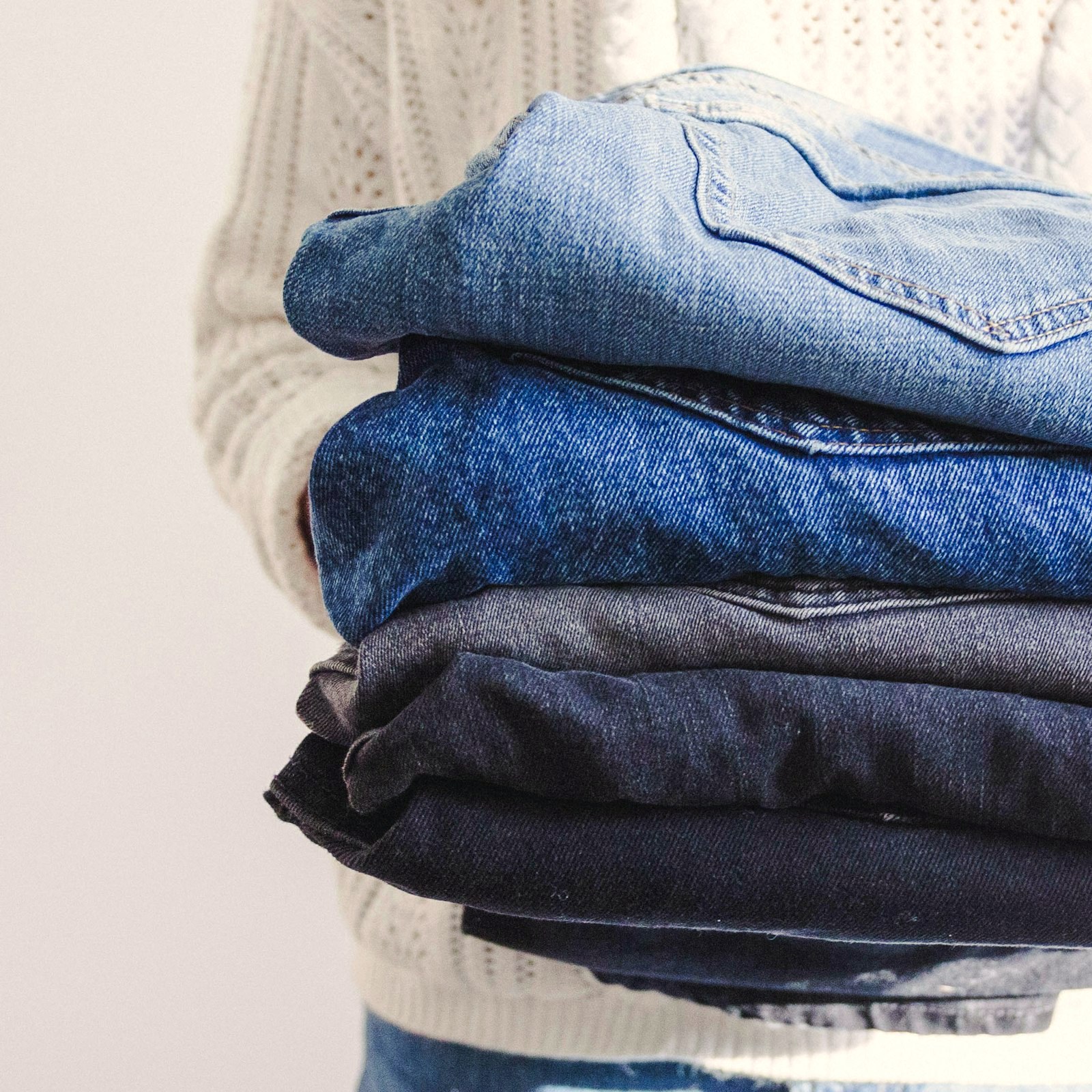
Three rests and one changed record, printed. Asket was checked first, because its loose twill chino scored 82 on Verdict Card No. 04: that chino is sold in an off-white colourway, and it was not carded here, because grading one garment twice under two colour names is not a ranking. The Spier & MacKay Sondrio, the linen winner of Verdict Card No. 41 at 85, was not re-carded either: its own call on that page already reads buy in cream, and a colourway does not earn a second score. Suitsupply is the changed record, and it is printed on its card: rested on No. 41 on a dated check, ranked here on the garment that now exists. H&M was rested deliberately: no H&M garment is engaged or scored on this page, and the running H&M derivation printed on Brands Like H&M is untouched by it. On photography: this page uses scenes, rails and stacks from the magazine's own bank, no product photography, and the bank holds no ecru or white trouser frame, on a body or off one, a gap the desk admits here rather than covering with a mislabelled picture; the sibling brief prints the same admission. Prices and splits were checked against the makers' own listings in October 2026; where a figure could not be verified from the maker's page, the card says so at the figure's elbow, and three cards ship without buy links for stated reasons rather than with dead ones. The full method is written out on the methodology page.