
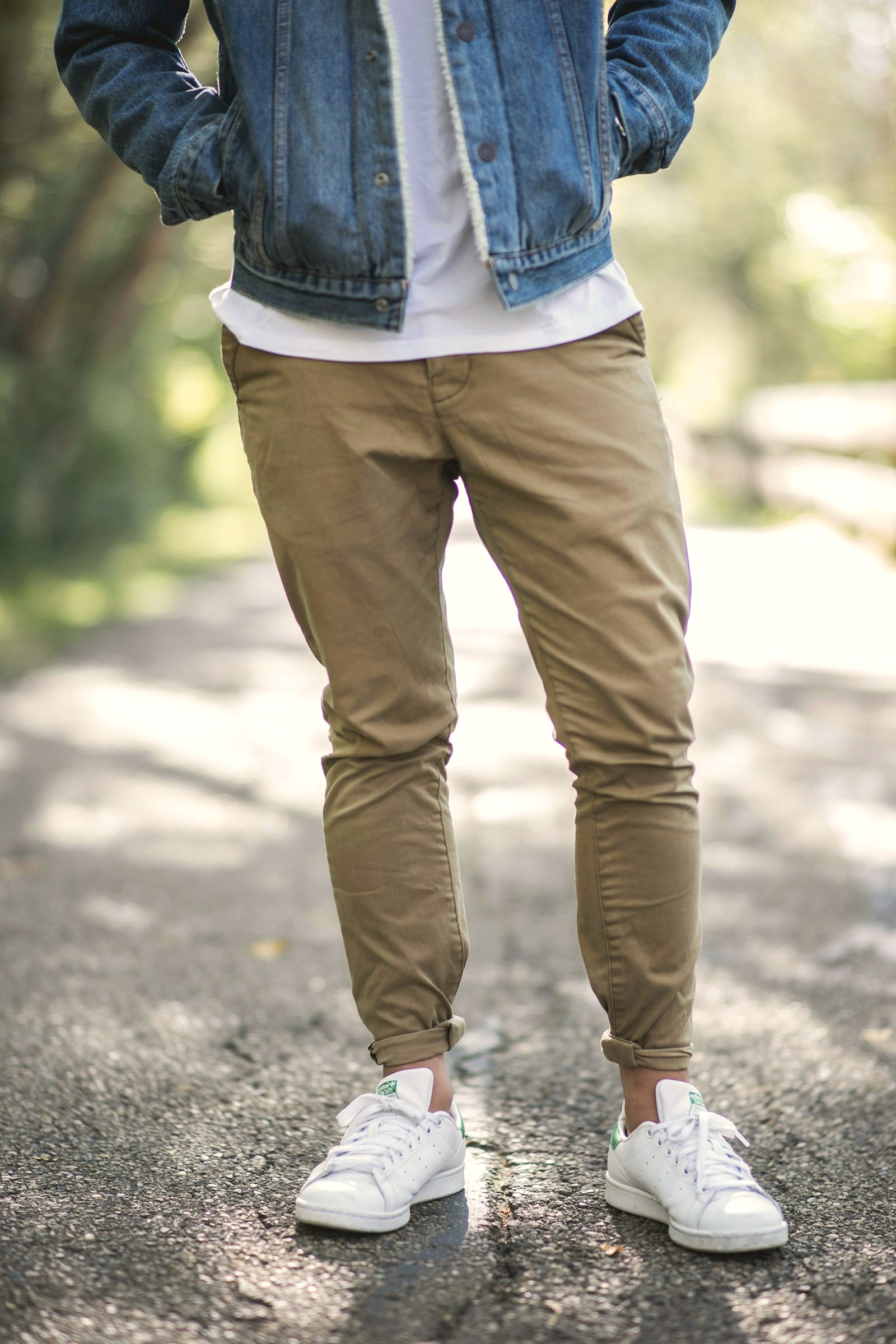
The pale leg worn on a body, captioned as exactly that: khaki chinos, ecru's nearest neighbour on the rail, with the turn-up this brief licenses at the work end. Our bank holds no photograph of an ecru or white trouser worn on a body in any cloth, so this page opens on the closest honest frame rather than dye one in the caption. The care section prints the gap and the harvest list.
Checked and updated October 2026
The ruling, up front: a pale trouser is not a colour choice, it is a light source. Every other trouser in the wardrobe is read against the outfit; the ecru or white trouser is the thing the outfit is read against, the brightest fact in it, the surface that sets the contrast every other piece is judged by. So this brief begins by separating what the rail sells as one idea into the two garments it actually is. Ecru is the undyed colour, warm, greyed at the edge, named among the forgiving shades in our linen brief, and it lives across the whole trouser record: the twills of Verdict Card No. 04, the blends of No. 41, the corduroy of No. 38. White is dyed, bright and absolute, the least forgiving colour a leg can wear, and its records are summer records. One honesty stands over the whole page: this brief was written before the colour had a ranking of its own. When it was drafted, no garment of either colour was scored anywhere on this site, and the colour's Card stood on the desk's bench where the Fall Edit had named it, so the brief styles the trouser records the desk did hold, the chinos, linen, corduroy and wool rankings and the pants index that files them. The ranking has since shipped: Verdict Card No. 73 scores eight ecru and white trousers on their published records, the Drake's fatigue trouser winning at 83 on the cloth row, and this brief now sits beside it, the wearing system to the Card's buying record.
This brief: the decisive rule · the three fits · the pairings: dark above it · the shoe question · the transparency test · the season line · the looks · the mistakes · care and our photography
The decisive rule: the pale trouser is the light, and ecru and white are two garments
Every brief in this family has a rule that decides the garment, and the pale trouser's is a law of light. A navy trouser absorbs the outfit's decisions; a stone chino shares them. A trouser at the pale end of the rail decides them, because the eye lands on the brightest surface first and measures everything else against it: the knit above it reads darker than it is, the shoe below it reads dirtier than it is, and the man's whole silhouette is drawn by the leg's outline, which a pale cloth prints at full contrast, every crease, every pocket line, every failure of fit in brighter ink. That is this brief's decisive rule, printed as new: ecru and white are not a colour choice, they are a light source, so the pale trouser is bought and worn as the outfit's fixed point, and everything else in the outfit is chosen in its light.
The rule's first corollary is the separation the title prints. Ecru and white sit side by side on the rail and in the search box, and they are not two shades of one garment. Ecru is the colour of the cloth before the dye pot, the undyed-look warmth that the denim index files inside its white and ecru class with the distinction kept: undyed ecru, or denim dyed white. Its warmth is functional. A mark on ecru reads as the cloth's own life, which is why the linen brief names it among the forgiving shades and posts it on the traveller, and why ecru survives on trousers that work: the work fit below, the corduroy of the cold months, the twill of the whole year. White is a dye and a decision. It is the brightest and the least forgiving of the pale colours on the linen brief's own ruling, it shows the crease map most honestly, it collects every mark the day offers at full contrast, and the denim index prints the terms of its class without romance: every mark it collects is part of the deal. A man buys ecru as a trouser. He buys white as a commitment, and the brief prices both honestly.
The second corollary is about formality, and the pants index sets it. The pale trouser's types stand where the index files them: chinos, wide-leg trousers, corduroys and linen at formality 3, the five-pocket and the fatigue pattern at 2, and the index's engine printed beside the ladder, cloth moves a type a rung in either direction. The pale colour is not itself a rung. A tailored ecru trouser in a weighted cloth stands at the top of its type's class; a featherweight white jean stands at the bottom of its own. What the colour does to formality is narrower and stricter: it removes the benefit of the doubt. A mid trouser in navy reads as a decision; the same trouser in white reads as an event, and events are judged. Which is why this brief's disciplines, the fit, the cloth weight, the hem, are enforced more strictly here than in any trouser brief before it: on a pale leg, there is nowhere for a slack decision to hide.
The three fits: tailored, straight work, relaxed, and which record judges each
The tailored fit is the pale trouser at its highest. A high rise at the natural waist, in the pants index's high band at 11.5 inches and up, because a pleat needs the high band to live in and a pale leg needs the long line the rise draws. A pleat or a clean flat front, side adjusters or a belt, a straight leg easing to a taper at the index's 6 to 7 inch opening. This is the pattern of the records at the tailored end of the trouser family: the Sondrio cotton-linen trouser that wins Verdict Card No. 41 at 85, a tailored high rise with side adjusters in slim and contemporary fits; the high-rise chino that wins No. 04 at 84, the only tailored pattern in its field; and above them the wool trouser at 87 in No. 15, the ceiling this fit borders. In ecru this fit is the office and evening form of the colour, the pale trouser that enters the blazer brief's summer rows without apology. In white it is the colour at its most deliberate, and the transparency section's weight discipline applies to it at full force: a tailored white trouser in a featherweight cloth is a contradiction the window test exists to catch. The hem is the slight break, the chinos brief's default, adopted whole: on a pale leg a pooled hem is not drape, it is a grey shadow pooling at the shoe, and the full break is refused here as it is refused on cotton everywhere on this site.
The straight work fit is the colour's home ground, and the ranking's own name describes it. The Fall Edit named an ecru work-trouser ranking as the Card this colour was owed, Verdict Card No. 73 has since shipped it, and the work trouser is a real pattern in the records: a mid rise in the index's 10 to 11.5 inch band, a straight leg at a 7 to 8 inch opening, the chino's middle rail and the fatigue's straight room translated into a pale cloth. The chinos ranking's middle field is the fit's evidence, the Bonobos at 78 on its fit range, the J.Crew at 76 on a published 7.9-ounce twill, the pairs a rotation actually lives in; the pants index files the fatigue at formality 2 with its patch pockets flat and its leg straight and roomy, kept honest. In ecru, this fit is the garment the whole colour story started from: undyed-look cloth, a work pattern, a leg built to collect the day and wear it as patina, the denim index's marks-are-part-of-the-deal clause written for exactly this trouser. The turn-up is legal here, on the chinos brief's ruling: at the field end the fold is the honest finish, a register signal declaring the pair off duty, and on a pale work trouser it has the further virtue of keeping the hem, the part of a pale trouser that meets the ground, turned up out of the worst of it. In white, the work fit is the summer five-pocket and the white jean of the denim index's class, worn by jeans rules, as the index judges its five-pocket kin: honestly, casually, and never asked to be more.
The relaxed fit is the attainable end, bought by its condition. An easy or drawstring waist over a relaxed thigh and a tapered or wide leg: the pattern of No. 41's lower field, the Uniqlo linen blend at 67 with its drawstring waist behind a clean front and the widest fit library in its ranking, the Banana Republic pull-on at 62 wearing a dress pant's name over a hidden elastic waist. The pants index files the drawstring type at formality 2 with the condition printed beside it, and this brief adopts the condition as the fit's law: the waistband is the only casual element allowed, and everything below it has to dress like a trouser, a clean leg, a real cloth, a proper shoe. In a pale colour the condition tightens, because the relaxed white trouser is one jersey cloth away from the sweatpant that left the house, the index's own verdict on the type's failure form. The relaxed fit in ecru, in a twill or a linen blend with body, is the weekend's easiest good trouser. The relaxed fit in white is a summer-only garment, bought knowing its sheerness and its marks are priced into the ticket, the way No. 41 prices its field.
Across the three fits, the buying order is the index's and it is not negotiable in a pale cloth: the rise first, the cloth second, the taper last, the order of what can be changed, because a taper can be tailored, a cloth is chosen, and a rise is forever. The pale colour adds one shop test to the order, and it belongs to the transparency section: the cloth held to the light before the card is charged.
The pairings: dark above it, and the one tonal exception
The denim index prints the pairing law for this colour class in five words, written for the jeans and adopted here for every cloth a pale trouser is cut from: dark above it. The law is structural, not decorative. The pale trouser is the outfit's light source, and a light source needs a field to shine against: a dark top gives the leg its contrast, draws the outfit's line at the waist, and lets the trouser be bright on purpose. A pale top over a pale trouser removes the field, and the outfit becomes the thing the linen brief convicts in its own mistake list, one flat field of cloth from collar to hem, unless the tonal exception below is deliberately met. So the combinations run dark to light, top to bottom, and the scored records supply the tops.
The shirt above it. The first partner is navy, in every form the records rank: the navy linen shirt of the linen brief's office row, dark, tucked, mapped not rumpled; the navy Oxford under the tailored fit, where the pairing's reference is the Oxford Card's winner, the Kamakura button-down at 93, its basket weave reading smooth beside a pale twill. The camp collar is the summer form of the same law, the camp collar Card's Todd Snyder garment at 84 worn open over a straight white trouser, the assembly the denim brief's summer table already posts for the colour class, a camp-collar or linen shirt above it and loafers below. The white tee is the bright exception that proves the law's shape: the white tee Card's Asket at 88 over ecru is a tone decision, ruled below; over white it is the one-tone failure unless the tones are broken by cloth, a slubbed tee against a smooth trouser, and even then it is the brief's most advanced assembly, not its default. The tuck obeys the chinos brief's rule, extended across the pale family: the rise is the mechanism, the tailored fit tucks because its natural waist holds the shirt, the low and easy waists leave it out, and the belt at the tucked end is Verdict Card No. 17's territory, its Tanner Goods Standard the winner at 86, in brown against the pale leg, because black leather at the waist of a white trouser is a stripe the outfit did not need.
The knit above it. The knit follows No. 09's gauge bands with the pairing inverted from the dark trouser's rule: above a pale leg, the knit's job is weight of colour, not weight of cloth. Navy and charcoal crews are the first buys here as they are in the chinos brief's colour logic, and the crew ranking's references stand, the Smedley Lundy at 87 at the fine pole, the Lockie Leven at 82 at the heavy end of its family. Fine and mid gauges, roughly 24 to 30 and 12 to 20, are the pale trouser's standard partners, because a heavy gauge above a light summer leg builds the outfit upside down, winter on top of summer. The chunky knit over ecru corduroy is the cold-season exception, and it is the season section's assembly, two winter cloths in one register. Cream knit over ecru trouser is the tonal exception in knit form, and it is ruled by the same tone law: a full tone apart, or not at all.
The tonal exception, ruled narrow. Pale on pale is legal in exactly one form, and the linen brief prints both halves of the rule. Its evening row wears a white or black linen shirt above cream linen trousers in a different tone: the trousers are cream, the shirt is white or ecru, and the difference of tone is the outfit's structure, a deliberate step rather than a match. Its mistakes convict the other form: linen head to toe in one tone, bought as a set from the same dye lot, one flat field of cloth. So the exception's terms are: two pale pieces, a clear tone apart, in different cloths where possible, with the shoe or the belt supplying a third value, dark enough to anchor the leg. Ecru trouser, white shirt, brown suede shoe is the exception executed. White trouser, white shirt, white shoe is the conviction, and it is named again in the mistakes, because it is the assembly this colour family is bought wrong for most often.
The shoe question, answered from the styling records
Nothing in this section is scored, and the page says why in the open: there is no footwear Verdict Card on this site, and footwear beside a trouser is register, argued the way No. 29 argues it beside the chino and No. 31 beside the short. The pale trouser's shoe question has one term the dark trouser's does not: the ground is bright, so the shoe is read at maximum contrast, and a shoe chosen carelessly under a pale leg is the loudest mistake in the outfit.
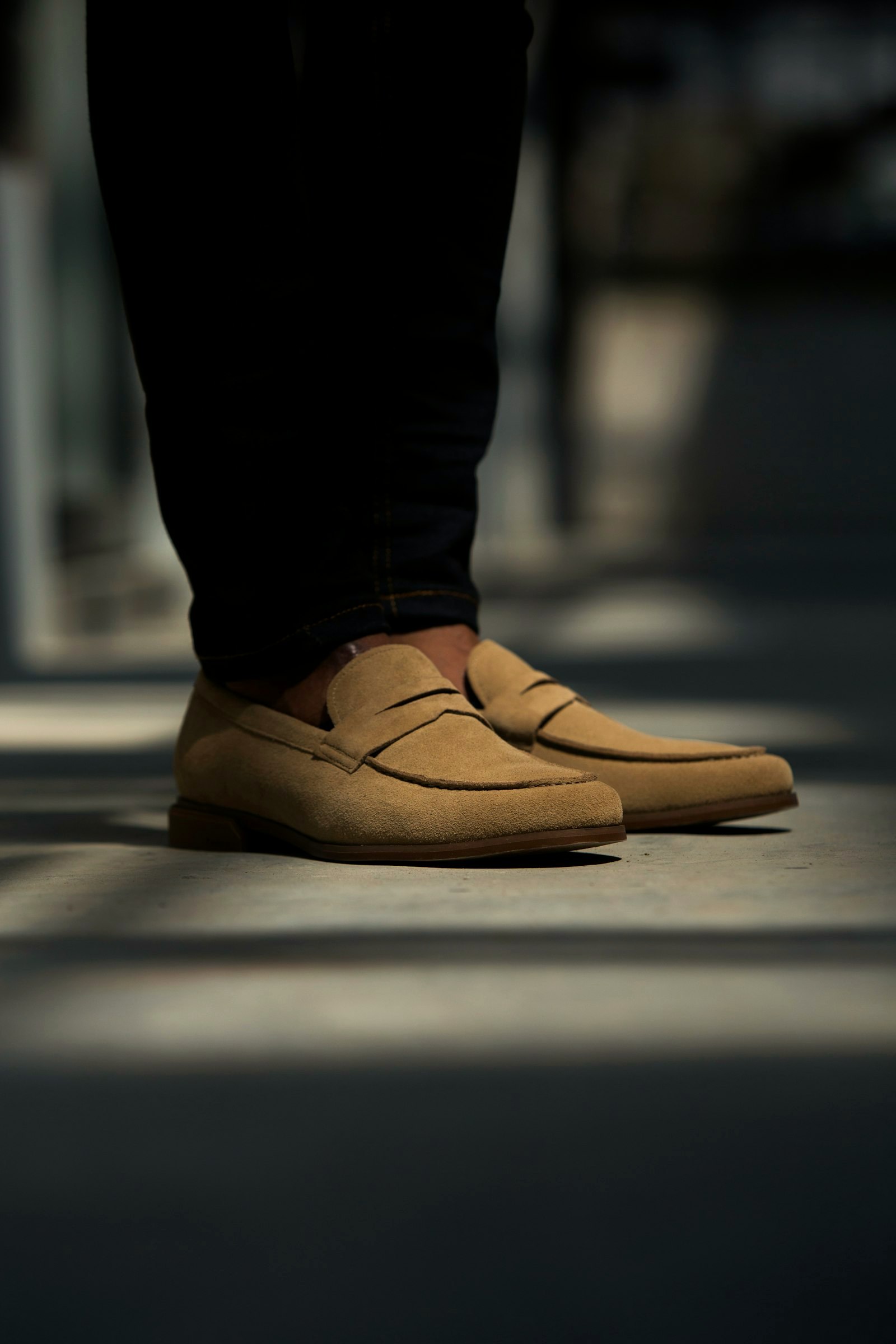
The loafer is the ceiling and the best partner. How to Wear No. 11's one-notch rule moves an outfit exactly one notch, and over a pale trouser the notch is upward, the penny in polished calf at 3.5 on that brief's scale carrying the tailored fit into its dressed rows, the suede penny half a rung lower as the soft answer. Suede is the pale leg's first shoe for a reason the records support from two directions: its matte nap answers a matte cloth without the sheen argument, and its colour, snuff, chocolate, sand kept a clear tone away from the trouser's own, grounds the leg without a black stripe at the ankle. The summer form is the loafer without socks or with the no-show sock No. 11 rules for tailoring, the assembly the denim brief's summer table posts for this colour class entire.
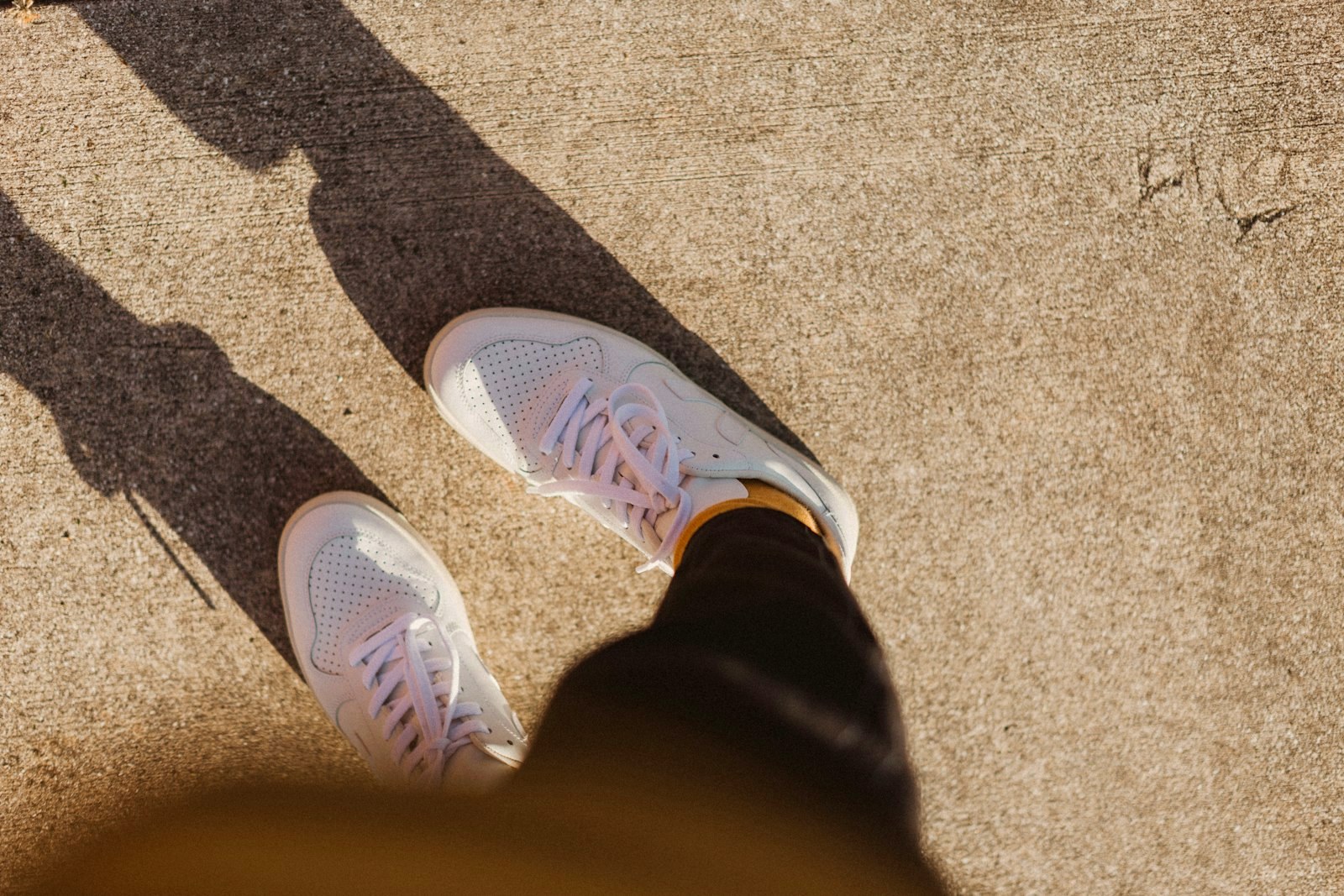
The minimal sneaker is legal as contrast, refused as camouflage. No. 12's solvent rule dissolves one level of formality and adds none, and its clean minimal leather shoe stands at formality 3: under the work and relaxed fits it lands the outfit at deliberate casual, the pairing the summer records keep printing. The pale trouser adds the prohibition, and it is this brief's own ruling: a white sneaker under a white trouser at the same tone is the one-tone failure rebuilt at the ankle, two bright surfaces with no step between them, the leg and the shoe reading as one long white column. The sneaker under white is therefore suede, canvas in an off-white kept visibly apart from the trouser's tone, or leather in a colour; canvas is filed in No. 12's scale as summer's shoe for light cloth, and it is the relaxed fit's honest floor. The white sneaker under ecru is the softer case and the common one: ecru's warmth gives the step the tones need, and the pairing stands, provided the sneaker is clean, because a dirty white shoe under a clean pale trouser is the contrast running the wrong way.
The boot takes the cold and work forms, and the Oxford stays home. The boot is the field end's shoe in the chinos brief's matrix, and it inherits the pale family's cold register whole: ecru corduroy over a service boot or a lug-soled Chelsea is the country stack the corduroy record implies, weight answering weight at the ground. The polished dress Oxford is refused here as No. 29 refuses it beside the chino, and for the same reason stated in the same words: the ladder's 5 against a trouser at 2 or 3 is the sheen error at ground level, the mirror finish accusing the matte cloth of slovenliness and the cloth accusing the shine of costume. The pale trouser's dressed rows top out at the loafer and the soft derby. The Oxford belongs to the wool trouser above it on the ladder, in a darker register, where its shine has a cloth that can answer it.
The transparency test: a cloth fact, settled at purchase
The question every pale trouser gets asked, answered the way the records answer it, because this desk grades published cloth facts and does not print worn claims it has not made. Verdict Card No. 41's sheerness answer is the whole doctrine in one paragraph, and this brief adopts it entire: the light ones can be see-through, and it is a cloth fact, not a taste failure; hold the cloth to a window before you buy, as the linen brief instructs for the shirt; a heavier cloth blocks more light; a lining to the knee blocks it structurally; and white and ecru in a featherweight weave are where the risk lives. That last clause is the one the pale buyer has to sit with: the risk is not distributed evenly across the rail. It is concentrated in exactly the colour family this page is about, in exactly the cloth weight summer sells hardest.
The published facts a buyer can actually check, in the order the records print them. Weight first: No. 41's basis is buy weight or a blend, written for the knee and true for the light as well, because the same cloth body that resists bagging resists show-through; a featherweight pure linen in white is the risk's purest form, and No. 41's field proves the shape of the answer, its winner a cotton-linen blend with a named mill's cloth behind it, its pure linen entries carrying the debits in the open. The lining second: a lining to the knee is a decision some makers make and print, and on a pale tailored trouser it is the structural fix, the one that does not depend on the wearer's judgement under shop lighting. The printed rating third: one maker in No. 41's ranking, Uniqlo, publishes a sheerness rating for its garment and prints Not Sheer, the only entry in the field that answers the test in print, and the card credits it in the cloth row. A maker who prints the rating has done the window test so the buyer does not have to guess at it, and the pale family's buyers should learn to ask why the rest of the rail does not.
This brief's ruling, printed as new: sheerness is settled at purchase and never styled around. The failure form is familiar: the featherweight white trouser bought in a dim shop, worn into bright sun, and managed all day as if the cloth were a surprise. The cloth was the cloth at the rail. The window test costs ten seconds in the shop, against the light the garment will actually be worn in, and the three defences, weight, lining, a printed rating, are all purchase decisions, none of them available at the mirror afterwards. What goes under a pale trouser is the wearer's own business and this page prints no ruling on it beyond the cloth facts: a trouser that needs a strategy underneath it was bought a weight too light, and the honest fix is the heavier cloth, not the strategy.
The season line: white follows summer cloth, ecru crosses
The calendar rule the colour is usually sold with, white after a date and never after another, is not a rule this site can find in any record, so this brief replaces it with the line the records do draw: the colour follows the cloth. Read the pale family's published record by cloth and the seasons sort themselves. The linen trouser is the heat's answer in the pants index, filed at formality 3 with its buying rule about weight, and No. 41 costs its field in summers, the winner at eight, the Italian ceiling at ten. The denim index files white and ecru denim as a summer class outright, worn as a colour, its season named in its filing. The white tee and camp collar records above the leg are summer records. White's entire published existence on this site is in cloths that breathe, and a white trouser in January fails before any calendar is consulted: the cloths white is sold in are too light for the weather, too sheer against winter light, and too bright against a grey street, three cloth facts wearing a date's clothing.
Ecru crosses because ecru is in the other cloths. Corduroy is the chino's winter counterpart on the pants index, and Verdict Card No. 38 ranks the cold season's trouser entire: the Drake's at 79 on a published 15.4 ounces of cotton, the Fort Belvedere 8-wale at 76, the Bean 11-wale at 75, the wale bands running needlecord 14 to 16, standard 8 to 11, wide under 8. A pale corduroy in a standard wale is the colour's winter form, its pile giving the light tone a texture that reads as cloth rather than as brightness, its weight answering the transparency test by construction. The twills cross too: the chinos ranking's field is a year-round field, and an ecru chino in a weighted twill under a mid-gauge knit and a boot is the rotation's pale leg in the cold half, the colour warmed by the company it keeps. And the Fall Edit, the site's own seasonal assembly, is where the ranking was first called for: the ecru work trouser was wanted by an autumn edit before its Card shipped, which is the desk's own placement of the garment, in the season of work cloth and layers, not in high summer.
So the season line, printed as this brief's ruling: white is a summer colour because white is a summer cloth; ecru is a colour for any month its cloth is honest in. The buyer working the line in a shop reads fibre lines, not dates: linen and light twill in white for the heat, ecru in twill for the whole year, ecru in corduroy for the cold, and no pale trouser of any colour in a featherweight cloth outside the weeks that cloth was built for. The man who follows the cloth will never be caught by the calendar, because the calendar was only ever the cloth, described badly.
The looks: the pale leg, worn
Four assemblies from this brief's rulings, each built on the records around the garment. No ecru or white trouser is scored in this brief; the numbers in the judgments are the neighbours' records, reproduced from their own pages, and the colour's own ranking, Verdict Card No. 73, is cited in the first row's judgment rather than borrowed from.
| Setting | The trouser | With | The judgment |
|---|---|---|---|
| The work standard | An ecru straight work trouser in a weighted twill, mid rise, the turn-up worn | A navy mid-gauge crew above it, nothing at the waist showing, suede boots or a clean minimal sneaker below | The colour's home ground, the assembly the Fall Edit's bench named: undyed-look cloth on a work pattern, dark above it on the denim index's law, the marks it collects part of the deal by the same filing. The trouser pattern is judged against the chinos ranking's middle rail, the Bonobos at 78 and the J.Crew at 76, the rail this brief was written against; the colour's own ranking has since shipped as Verdict Card No. 73, whose winner is a work trouser of this same pattern, and this look cites it rather than borrow its number |
| The tailored summer | A white or cream tailored trouser, high rise, weighted cloth or lined to the knee | The Kamakura Oxford at 93 in navy, tucked, the Tanner Goods belt at 86 in brown, a calf penny loafer | The pale leg at its highest: the pattern of No. 41's winner at 85 translated to the bright colour, the rise holding the tuck on the chinos brief's mechanism, the shoe at the loafer scale's dressed setting. The transparency discipline is this look's entry fee: bought at weight, tested at the window, or not worn in this company |
| The tonal exception | Ecru linen-blend trousers, relaxed fit, the waistband the only casual element | A white linen shirt a full tone brighter, sleeves rolled, suede loafers in sand kept clear of the trouser's tone | The linen brief's evening row executed in daylight: two pale pieces a tone apart in two cloths, the step between them doing the work a colour contrast does elsewhere. This is the advanced assembly of the colour family, and its failure form, the matched set, is one dye lot away at all times, which is why it is third and not first |
| The cold crossing | Ecru corduroy trousers, standard wale, straight leg | A charcoal chunky crew above them, service boots below, an open coat over the lot in real cold | The season line demonstrated: the colour in its winter cloth, judged against Verdict Card No. 38's field, where the wale is the formality dial and the weight is published by the honest makers. The pile gives the pale tone its texture, the knit gives the outfit its dark field, and no summer cloth is asked to do a winter's work |
The ruling
Buy ecru first, as a trouser rather than as a colour: the straight work fit in a weighted twill for the whole year, or the tailored fit in a linen blend for the warm half, and let white wait until the wardrobe can fund it properly, weighted, lined or honestly rated, because a cheap white trouser fails on cloth facts that no styling survives. Wear the pale leg as the outfit's light source: dark above it, navy first, the tonal exception taken only a full tone apart and in a different cloth, the shoe at the loafer's ceiling or the sneaker's deliberate floor, the polished Oxford left to the dark trousers it belongs to. Settle the transparency at the rail, with the window test, the weight and the lining, and never at the mirror afterwards. Follow the cloth for the season: white in the summer cloths it is published in, ecru across the year and into corduroy for the cold. And hold the page's honesty as the buyer's own: this brief was written when the colour family had no ranking on this site, against the trouser records that existed, the chinos at 84, the linen at 85, the corduroy at 79, the index that files them; the ranking has since shipped as Verdict Card No. 73, the Drake's fatigue at 83 at its head, and every judgment above now sits beside it, the wearing to the Card's buying. The man who buys the pale trouser on those records, in its light, will wear the brightest leg in the room as a decision. The man who bought it as a shade of beige will spend the season discovering the difference, in public, at full contrast.
The mistakes
The matched pale set. The buying error the linen brief convicts in its own cloth and this brief extends to the family: shirt and trouser bought in one tone, often in one shop visit, worn as a single flat field of cloth from collar to hem. On the rail it reads as coordination. On the body it reads as a suit that missed, or a uniform for a job involving ice cream. The fix is the tonal law, a full tone apart and a different cloth, with a dark third value at the belt or the shoe to anchor the leg. A set that cannot be broken into tones should not be bought as a set.
The featherweight white, discovered in sunlight. The purchase error the transparency section exists to prevent: the lightest white trouser on the rail, bought under shop lighting for its summer hand, worn into the bright day it was bought for, and found out by the light itself. The records print the defences in advance, the weight, the lining, the one maker's printed Not Sheer, and the window test costs ten seconds. This mistake is never the cloth's fault and never the sun's. It is a test not taken, and on a pale leg it is taken in public.
The white column. White trouser, white shirt at the same tone, white shoe at the same tone again: the one-tone failure rebuilt full-length, three bright surfaces with no step between any of them, the wearer reading as a single overexposed column. Each piece is legal in this brief somewhere; the assembly is legal nowhere, because it deletes the contrast the pale trouser exists to create. One of the three changes value, the shirt to ecru or a colour, the shoe to suede or canvas, and the column becomes an outfit.
The pale leg in the wrong cloth month. The season error: the summer white linen sent out in the cold months because the colour photographed well, or the winter street's salt and slush met in a trouser whose every record is a summer record. The cloth fails first, too light, too sheer, too bright against the street, and the marks the denim index prices as part of the deal in summer become, in winter grit, the whole garment by noon. Ecru in corduroy or twill is the pale leg's cold form, ranked and recorded. White's months are its cloth's months, and the calendar argument ends there.
Care, and the mark economy
The pale trouser's care regime follows from the colour's own terms, which the records print plainly: every mark it collects is part of the deal. That clause is a care doctrine in miniature. Ecru is bought knowing its marks become patina, the work fit's honesty, and its care is the work garment's: wash when the day is in it past brushing out, cold, and let the colour's warmth absorb the record of wear the way the denim index's class intends. White is the opposite economy: its marks are not patina, they are the garment failing at its one job, brightness, so its care is vigilance, worn once or twice between washes, washed apart from anything with a colour to give, and read honestly at the hem and the seat, where the day collects first. A white trouser washed back to grey is not a white trouser with a history. It is an ecru trouser now, and the honest wardrobe re-files it as one and wears it by ecru's rules, which is the colour family's one act of mercy.
The cloths' own care stands where their briefs print it: linen's crease discipline and rest days in the linen brief and No. 41, the creases that map the joints worn as texture and the knee defended by weight and rest; corduroy's pile care in No. 38, rest a day between wears, brush the pile one way, never press the seat; the chino's rented crease and fade order in No. 29. The pale colour adds one law across all three cloths, and it is this brief's own: the hem is the pale trouser's front line, the part that meets the ground and the weather, so the turn-up's second virtue, registered in the fits section, and the slight break's discipline are care decisions as much as style ones. A pale hem dragged through a wet street is a season's brightness spent in an afternoon.
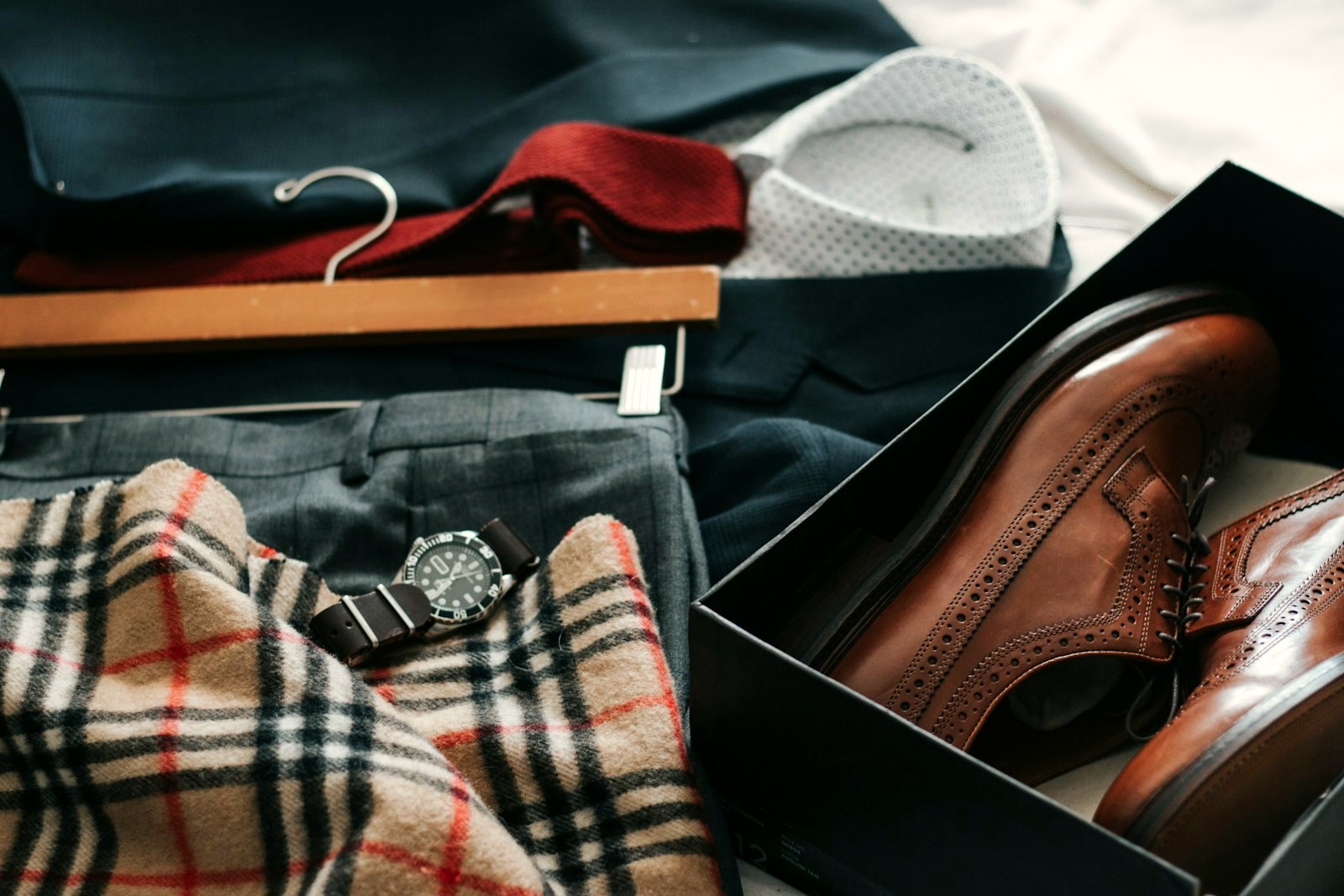
A note on our own photography: our photo bank holds no ecru or white trouser worn on a body in any cloth, no pale corduroy, and no frame of the window test, the cloth held to the light that the transparency section rules on. The hero is the bank's khaki chino frame captioned as khaki, the tailored figure is a grey flat-lay captioned as grey, and this page will not caption either as the garment it is about. This page will take the harvest frames the week they exist: an ecru work trouser worn in real light with its marks honest, a white tailored trouser against backlight with the test visible, and ecru corduroy beside the navy it crosses the season with.
Questions, answered
What is the difference between ecru and white trousers?
They are two garments, not two shades of one. Ecru is the undyed colour, the cloth before the dye pot: warm, greyed at the edge, and forgiving, because a mark on ecru reads as the cloth's own life. Our linen brief names ecru among the forgiving shades for exactly that reason. White is dyed, bright and absolute: it is the brightest fact in any outfit it enters, it shows every mark and crease at full contrast, and our linen brief prints it the brightest and the least forgiving of the pale colours. The denim index files the two as one class with the distinction inside it, undyed ecru or denim dyed white, and the practical consequence is seasonal as much as visual: ecru exists in the winter cloths and the year-round twills, while white's published records on this site are summer cloths. Buy ecru for the rotation. Buy white for the season.
What colours go with ecru and white trousers?
Dark above them, which is the denim index's own line for this colour class, printed for the jeans and adopted here for every cloth. Navy is the first partner and the one the records keep returning to: the navy knit, the navy blazer of the blazer brief's summer rows, the dark Oxford. Charcoal, olive, brown and black all stand over a pale trouser because the contrast is the outfit's structure. The pale-on-pale assembly is the narrow exception, and it is ruled by tone, not by colour name: our linen brief wears cream trousers in the evening in a different tone from the shirt, and convicts the matched one-tone set in the same breath, one flat field of cloth from collar to hem. Two pale pieces at the same tone read as a suit that missed. Two pale pieces a tone apart read as a decision.
Are white and ecru trousers see-through?
The light ones can be, and it is a cloth fact, not a taste failure. Our linen trousers ranking prints the answer whole: hold the cloth to a window before you buy, a heavier cloth blocks more light, a lining to the knee blocks it structurally, and white and ecru in a featherweight weave are where the risk lives. One maker in that ranking, Uniqlo, publishes a sheerness rating for its garment and prints Not Sheer, which is the test answered in print. This brief's ruling follows from those facts: sheerness is settled at purchase, on the cloth's weight, its lining and its published rating, and it is never styled around afterwards. A pale trouser bought featherweight and worn against the light has not been betrayed by the cloth. It has been bought as the cloth it is.
What shoes go with ecru and white trousers?
Ruled as styling, the way this site rules footwear beside every trouser, and no shoe here is scored, because no footwear ranking exists on this site. The loafer is the ceiling: How to Wear No. 11's one-notch rule lifts the outfit one notch, the penny in polished calf at 3.5 on that brief's scale, the suede penny half a rung lower and the soft answer for a pale leg, its colour kept clear of the trouser's tone. The minimal white sneaker is legal only as a contrast decision, never as a match: No. 12's solvent rule puts the clean leather sneaker at formality 3, and a white shoe under a white trouser at the same tone is the one-tone failure at ground level, so the sneaker under white is suede, canvas in an off-white, or leather in a colour. The boot takes the ecru work fit and the corduroy form, on the chinos brief's field ruling. The polished dress Oxford is refused, the ladder's 5 against a trouser at 2 or 3, the sheen error the chinos brief names: each finish makes the other look mistaken.
Can you wear white trousers in winter?
Follow the cloth, not the calendar. Every white record on this site is a summer cloth: the linen trouser is the heat's answer in our pants index, and the denim index files white and ecru denim as a summer class. No published record here puts a white trouser in a winter cloth, so this brief does not invent one: white in a featherweight cloth in January fails on the cloth's own terms, weight and sheerness, before any calendar rule is consulted. Ecru is the colour's winter form, and its record is printed: ecru exists in corduroy, the chino's winter counterpart on the index, ranked in Verdict Card No. 38, and in the year-round twills of the chinos ranking. The man who wants the pale leg in cold months buys it in ecru, in a cloth with weight, and the season is answered by the fibre line rather than by a date.
Can you wear ecru or white trousers to the office?
At the tailored end, in a smart-casual office, yes, and our linen ranking prints the specification: a darker or deeper shade of the pale family, a tailored cut with a belt or side adjusters, creases mapped rather than rumpled, the type filed at formality three in our pants index. Ecru is the office form of the colour, because its warmth reads as cloth rather than as brightness, and the tailored chino pattern of Verdict Card No. 04, a rise at the natural waist and a plain hem, carries it into the blazer brief's rows. White at full brightness is a summer and social garment in the records: it enters the office only at the top of its class, tailored, weighted and pressed, and in a room that runs on pressed cloth the answer remains the wool trouser, ranked at 87 in Verdict Card No. 15. A pale trouser does not become a dress trouser by being clean.
How should ecru and white trousers fit?
By the fit family the pair belongs to, because this brief rules three. The tailored fit: a high rise at the natural waist, in our pants index's high band at 11.5 inches and up, a pleat or a clean flat front, a straight leg easing to a taper, hemmed to the slight break the chinos brief rules the default, because a pale leg shows a pooled hem at full contrast. The straight work fit: a mid rise, a straight leg at the index's 7 to 8 inch opening, the chino and fatigue pattern, worn with the turn-up legal as the chinos brief licenses it at the field end. The relaxed fit: an easy or drawstring waist over a relaxed or wide leg, bought by the index's condition for the type, the waistband the only casual element allowed. Across all three, the index's buying order governs: the rise first, the cloth second, the taper last, and the pale colour forgives none of them, because every fit failure on a light trouser is printed in brighter ink.
Has Young Cotton ranked ecru or white trousers?
Yes, since Verdict Card No. 73 ranked seven ecru and white trousers on their published records, the Drake's Ecru Cotton Twill Fatigue Trouser winning at 83, first on the cloth row, 26 to 24, over the Carhartt WIP canvas that tied it. This brief was written against the record that existed before the Card; what that record held is: the denim index's white and ecru class, filed at formality 2 as a summer class worn as a colour; the linen brief's colour rules for white and ecru; and the trouser record the desk did hold, named so it can be checked: the chinos ranking, Verdict Card No. 04, the linen trousers ranking, No. 41, the corduroy ranking, No. 38, the wool trousers ranking, No. 15, and the pants index that files them all. This brief is the wearing system those records imply for the pale leg, printed so any ecru or white trouser can be judged on the wearing, with the Card now judging the buying.
Next
The trouser records this brief styles are ranked in Verdict Card No. 04, No. 41 and No. 38, filed in the types of pants index, and bounded above by Verdict Card No. 15. The colour's other published home is the denim index, where the white and ecru class is filed, and the linen brief's colour rules are printed whole in How to Wear No. 07. The systems this brief borrows live in No. 29, the span, the hem and the shoe matrix; in No. 11, the shoe's scale; and in No. 12, the solvent rule. The colour's own ranking is Verdict Card No. 73, and this page's questions cite it the way its siblings cite theirs; the bench it was named on is printed in the Fall Edit. Where the trouser lands on the body is drawn in the Body Map.