

The garment itself, the one frame of it worn that our bank holds: a patterned camp collar lying flat and open against the chest, the leaf cut in one piece with the front, no stand, no structure, the neckline finished by the collar itself. The frame serves the camp collar ranking as its hero; our bank holds no frame of the shirt worn in the wild, at a table or on a street, and the page repeats the admission rather than covering it with a borrowed shot; the shirt's native room is figured below.
Checked and updated October 2026
The ruling, up front: the camp collar is a finished neckline, not an unfinished one. The shirt is the outfit’s top layer and its final surface: it is worn open and untucked on its straight hem, over nothing but the plain tee its own ranking licenses at the open front, and under nothing but the one unlined summer blazer the blazer law seats it beneath. The law underneath is already published on this site: the shirt index files the type at formality two with its one rule printed, Verdict Card No. 14 ranks it and prints its construction entire, How to Wear No. 03 prints the one jacket row it stands in, and No. 45 prints its season against the neighbouring open-collar species. This brief styles the shirt itself, across its whole wardrobe: it prints the decisive rule, the construction, the species, the shirt test, the open front, the summer blazer, the summer rail, the tuck settled by the hem, the outfit matrix, and the five ways the shirt is ruined.
This brief: the decisive rule · the construction · the species · the shirt test · worn open · the one summer blazer · the summer rail · the tuck, settled · the season line · the looks · the mistakes · care and our photography
The decisive rule: a finished neckline, not an open one
Every brief in this family has a rule that decides its garment, and this garment is usually introduced by what it lacks: no collar stand, no interlining, no tie space, no cuff. The lack is real, and it is the wrong place to start, because a camp collar shirt is not a dress shirt with the architecture removed and the holes left open. It is a shirt whose architecture was spent in a different place: the collar is finished at the cutting table, cut in one piece with the front so that its lie is sewn into the garment rather than pressed into it, and the hem is finished at the same table, cut straight so the shirt is complete worn out. What the garment asks of its wearer is not improvisation around its gaps. It is to be worn as the finished thing it is.
That is this brief’s decisive rule: the camp collar is a finished neckline, not an open one. The collar completes the outfit’s top half by itself, so the shirt is the top layer: nothing is layered over it to finish it, and nothing is worn beneath it that competes with it. It is worn open, on the loop and the single button when it is closed at all, and untucked, on the straight hem its construction specifies. Beneath it, at the open front, stands only the plain tee its own ranking licenses. Above it stands only the one jacket the blazer law names, the unlined summer blazer of No. 03’s matrix, in the one row that prints it. Every other assembly, the camp collar under tailoring, over a collared shirt, tucked into a waistband, is not a styling choice to be weighed. It is the garment worn against its construction, and the construction is already in print.
Two clarifications belong to the rule itself, because this commission arrived with a version of it that the record corrected in both directions, and the corrections are printed here rather than absorbed. The first runs against the rule’s strictness: nothing goes over it is too wide. How to Wear No. 03 prints a summer matrix whose shirt column reads, in full, camp collar or linen shirt, under an unlined linen or cotton jacket, over linen trousers or chinos, with loafers. One jacket, in one cloth, in one row: that is a licence with its terms printed, and this brief carries it across entire, terms and all, in the blazer section below. The second correction runs the other way, against the rule’s neatness: nothing under it shows is also too wide. Verdict Card No. 14 closes its buying ruling with the sentence that worn open over a tee, any of the top five answers to the logic of our shirt index. The open front over a plain tee is not a loophole in the finished neckline; it is one of the garment’s two published builds, and the tee beneath it is a foundation garment, judged as one. What the record licenses in neither direction is competition at the neck: no second collar beneath the leaf, and no structured layer above it. The neckline is finished. The rule is that it be treated as finished.
The construction: what the collar is, and what it settles
The Card and the index print the build in one paragraph between them, and this brief prints it as a table because every styling ruling below is one of these facts wearing clothes. The camp collar shirt is what is left when a shirt gives up its architecture, and what remains is specified, not improvised.
| Part | The build, as the record prints it | What it settles |
|---|---|---|
| The collar | One piece, with no stand: the leaf is cut in one piece with the shirt’s front and lies flat and open against the chest, with no interlining to hold a fold | The neckline is finished by the cut, not by anything worn over or under it; a collar that stands up or folds under is a construction failure, graded on the Card’s collar row |
| The closure | A loop and a single button at the neck, when the shirt is closed at all; a placket of buttons below an open leaf | The shirt’s two builds, closed at the loop or open down the front, are both published forms; neither needs a layer to complete it |
| The hem | Straight, because the shirt is made to be worn untucked; split side seams on the winner’s build | The tuck question entire: a straight hem is a specification for wearing out, and tucking it contradicts the cut rather than styling it |
| The sleeve | Short, ending around the mid-bicep on the Card’s fit record | The garment’s season and its ceiling: no cuff exists for a jacket to show, which is one of the two reasons tailoring above it is rationed to a single summer row |
| The cloth | The heat’s cloths: rayon, linen and seersucker in the index’s filing; rayon drape cloth and cotton-linen across the Card’s field | The fit law: cloth chosen to move air rather than hold a crease, worn skimmed and never clung, because cloth against skin is the thing the wearer is dressing to avoid |
Read the table once and the brief is mostly arithmetic. A collar finished by its cut cannot be finished again by a jacket. A hem cut straight cannot be tucked without arguing with the scissors. A shirt with no cuff and no stand has deleted, by design, the two parts of a shirt that tailoring knows how to read, which is why the blazer law below is one row long and why the index files the garment where it files it: formality two, summer evenings, a summer shirt and not a dress shirt on holiday. The construction is not the garment’s limitation. It is the garment’s whole claim, and the styling is the claim kept.
The species: the print, the plain cloth and the silk
Card No. 14’s field sorts into three species, and the sorting row is the Card’s own: print discipline, fifteen of its hundred points, the row this category is actually bought on. The species are bought as one garment and worn as three, and the brief prints them in the Card’s order of finish.
| Species | The record, as the Card prints it | Its seat |
|---|---|---|
| The edited print | The winner’s species: the Todd Snyder at 84, prints edited down to tonal botanicals and geometrics, mid scale, two to three colours, on rayon drape cloth and cotton-linen; the Portuguese Flannel at 78 beside it, small florals and embroidery in a garden register | The evening species: the print as a decision, drawn for cloth rather than shrunk from a poster, worn closed or open over the plain tee, the shirt the rest of the outfit is built quietly around |
| The plain cloth | Print declined, and scored as the discipline it is: the Buck Mason Wornwell at 79, a published 4-ounce mercerized cotton in solids and quiet stripes at $138; the Uniqlo Open Collar at 71, solids and small prints at $29.90 with the value row at full marks | The working species: the shirt that never argues with the rest of the outfit, the first camp collar a wardrobe should own, in a clean colour over the whole summer rail |
| The silk | The benchmark and the warning in one card: the Tommy Bahama at 64, real silk with the category’s benchmark drape, deducted for prints at poster scale, a relaxed-only cut and embroidered panelbacks at up to $195; the brand stands at 76 on its own page | The resort species: the plain silk on sale earns its place, in the Card’s own ruling; the novelty embroidery at full price pays for the panel, not the shirt |
Below the species stands the mechanism the Card sends home, and it belongs in this section because it is a species claim that fails: the novelty print, the H&M patterned resort shirt at 35, its print chosen at thumbnail scale, fruit, landmarks and slogans sized to read in a product grid, over a collar with no body in it. On a body it reads as a costume, and the Card’s maths is the whole review: at its $44.99 list, replaced every summer, it costs about $1.50 a wear, the highest figure on its page, against thirty-three cents for the honest budget shirt ranked above it. The species line this brief draws is the Card’s: a pattern drawn for cloth is a garment; a pattern drawn for a thumbnail is a photograph of one. And at the family’s border stands the neighbouring open-collar species, the knit polo, whose collar is a knitted band that stands where the camp leaf lies: No. 45 prints the rotation between them, and the season section below carries it.
The shirt test: three checks before the mirror
The Card grades the shirts as records; the wearer meets the shirt as one garment on a hanger. These checks are the decisive rule in shopping form, run in under a minute, each one a fact the published record already grades.
The collar check. Lay the shirt flat and look at the leaf. It must lie open on its own, flat against the chest line, neither standing up nor folding under, because there is no stand and no interlining to correct it later: the lie is sewn in at the cutting table or it is not there at all. This is the Card’s collar and construction row, twenty points, in one glance, and it is why the Gitman Vintage at 82, flat-felled seams and a collar built like its dress shirts’, is the category’s ceiling. A camp collar that needs arranging has failed before it has been worn.
The hem check. Read the hemline. Straight, level, with the side seams split or clean: the shirt is complete as it hangs, and its length is a finished length, ending where an untucked shirt should, not a dress shirt’s tail borrowed for the weekend. A curved hem on a camp collar is a category error in cloth, the dress shirt’s tucking architecture on a garment whose filing is untucked, and it will read wrong worn out and bunch wrong tucked in. The hem is the tuck question asked at the rail, and it answers itself.
The print check. Hold the shirt at arm’s length, then at a room’s length. A print drawn for cloth survives both distances: mid scale, two to three colours, a motif that repeats as a pattern rather than posing as a picture. A print drawn for a thumbnail fails the second distance first: poster scale, palms the size of the chest that wears them, slogans, landmarks, fruit. This is the Card’s print row at the rail, and its numbers are the check’s calibration: thirteen of fifteen for the winner’s edited botanicals, three of fifteen for the skip’s postcard motifs. If the shirt is funnier than it is handsome at ten feet, it is the second kind.
Worn open: the shirt as the top layer
The shirt’s second build is the open front: the loop undone, the placket open down the chest, the shirt worn as the outfit’s outer layer in the heat that made it. The assembly is licensed by the Card itself, in the sentence this brief has already printed twice because it is the garment’s charter: worn open over a tee, any of the top five on Card No. 14 answers to the logic of our shirt index. The tee at that front is judged as the white tee brief judges it, cloth in the opaque band of 180 to 220 grams with a collar that holds its ring, the Asket at 88 in Verdict Card No. 02 the reference, because an open front is a frame and the garment inside the frame is on full display, collar to hem. A sheer tee, a stretched tee, a graphic tee under an open camp collar spends the shirt’s finish on a foundation that has none.
The open front is also where the finished neckline does its clearest work. Two necklines meet at the throat: the camp leaf, lying flat and open, and the tee’s crew ring beneath it, and they agree because neither is pretending to be a collar with a stand. What the front refuses is the middle term: the polo beneath, the henley’s buttons, another shirt’s collar, each a second neckline filing a competing claim in the same inch of throat, against a leaf that has no structure to win the argument with. And closed, the shirt’s logic inverts entire: buttoned to the loop, the camp collar is a complete garment over skin, and anything beneath it is insulation the season has already refused. The two builds are the wardrobe: open over the plain tee for the day, closed on its own for the evening, and in neither build is a third garment invited to the neck.

The one summer blazer: the licence and its terms
The camp collar’s dressed seat exists, and it is exactly one row long. How to Wear No. 03’s matrix prints its summer row entire: the jacket unlined linen or cotton, the shirt the camp collar or the linen shirt, the trouser linen trousers or chinos, the shoe loafers, without socks or with invisible ones. This brief prints the row’s terms rather than leaving them to improvisation, because a licence read loosely is how a formality-two shirt ends up under a suit jacket. The jacket is born alone, unlined and unstructured, in a cloth of the same summer family as the shirt’s; it is never a smooth worsted, never a suit jacket separated from its trousers, never structured enough to press a claim the shirt’s crease map and short sleeve cannot answer. The trouser is the row’s trouser, the linen trouser of Verdict Card No. 41 or the chino. The shoe is the loafer, the row’s own. And the tie is absent, as it is absent from every summer row on this site: the camp collar has no stand and no tie space, and a knot over its leaf fails the way it fails on a polo, a knot with nothing built to hold it.
Why the licence stops at one row is the construction table’s arithmetic. Tailoring reads a shirt by two parts, the collar at the throat and the cuff at the wrist, and the camp collar has filed both away: the collar lies flat where a jacket expects a stand to sit against its lapel, and the short sleeve ends at the mid-bicep, so no cuff ever shows at the jacket’s sleeve. The unlined summer blazer survives the meeting because it makes the same concessions from its own side: no structure, no lining, a cloth that creases, a formality the index would file near the shirt’s own. Two summer garments at ease together is an assembly; a summer shirt under a structured jacket is a disagreement, and the room reads it at the throat, where the argument is. No. 03 prints the same law from the other direction in its shorts ruling: heat already has its answers, and the blazer stays out of the ones that are not its row. This brief adds nothing to the licence. It prints its borders.
The summer rail: linen trousers, chinos and shorts
Below the shirt, the wardrobe is the summer rail, and both halves of it are ranked. The linen trousers are the first seat: the Spier & MacKay Sondrio cotton-linen high rise at 85 in Verdict Card No. 41, the trouser No. 03’s summer row names and the assembly this brief’s matrix builds its dressed row on, two of the heat’s cloths in one outfit, the shirt’s drape above the trouser’s crease, each the other’s texture answered. The chinos are the same row’s second trouser and the rail’s working seat, the Spier & MacKay at 84 in Verdict Card No. 04: the plain-cloth camp shirt over a chino is the summer week’s uniform on this site’s capsules, the shirt doing the collar’s work a polo does in spring, at the filing both garments share. The shorts are the rail’s far end, and the tree is explicit that the camp collar is one of their three licensed tops: No. 03 prints that shorts take the camp collar shirt, the knit polo and the overshirt, and the blazer stays out of it. The ranked short is the Spier & MacKay Linen Short at 86 in Verdict Card No. 07, the only pair in its field cut like a trouser, and the shorts brief prints the assembly as a system: the Riviera read, high rise, crease, loafer, and the shirt tucked or the camp collar open above it. Every element the same decision, a trouser worn in summer, with the camp collar as that system’s open alternative to the tuck.
The rail’s borders are the filing’s borders. The shirt does not take the dress trouser of a suit, worsted and creased for a jacket’s company, which belongs to the rows above its formality and reads as a shirt borrowed for an outfit that was planned around another one. It does not take denim as a habit: a camp collar over jeans is not convicted anywhere in this tree, and this brief does not invent a conviction, but the pairing spends the shirt’s summer cloth against the ladder’s year-round leg and answers no question the rail above does not answer better, and the denim briefs’ own summer rows reach for the tee and the chambray instead. And it does not take the gym short at dinner, No. 07’s standing sentence, however the shirt above it is priced. The rail is short because the season is short: two trousers and a short, all ranked, all in the heat’s cloths, and the shirt is at home on every rung of it.
The tuck, settled by the hem
The tuck question is the one this garment is asked most often, and it is the one its construction answers most completely, so it is printed once, entire, in one place. A tuck is not a mood applied to a shirt; it is a hem specification. The types index prints the principle in its dress shirt ruling: untucked is a hem specification, not a mood, and the dress shirt’s curved hem, cut long to be tucked and to stay tucked, reads as a tail worn out. The camp collar is the same principle’s other pole. Its hem is cut straight and level, at a finished length, with split side seams on the winner’s build, because the shirt is made to be worn untucked: the Card prints the specification in its definition of the type, and the index prints it as the type’s one rule, hem straight. Tucked, the straight hem has nowhere to go: the cloth that was cut to fall level around the body is gathered into a waistband it was never shaped to enter, the side splits ride up inside the trouser, and the shirt reads as neither garment, a summer shirt worn wrong in the direction of formality.
The one apparent exception in this tree is a sentence about another shirt, and this brief prints the distinction rather than borrowing the rule. How to Wear No. 07 rules that under a blazer, the linen shirt tucks, because the jacket is a claim of structure and the untucked hem contradicts it in the one place the eye lands. That ruling belongs to the linen shirt: a long-sleeved shirt in a soft, unfused build whose hem is a shirt’s hem, worn inside an assembly that claims tailoring. The camp collar under No. 03’s one summer blazer keeps its own specification, because the row that licenses the jacket is a summer row printed for this shirt as it is built, and the blazer in it is the unstructured, unlined kind that claims ease rather than structure. And the shorts brief’s Riviera sentence draws the same line from below: the system’s shirt is tucked, or the camp collar is open above it. In the tree’s own grammar the camp collar is the alternative the tuck is weighed against. A wearer who wants the tucked summer read owns its garments already: the linen shirt, the Oxford, the knit polo at its dressed end. The camp collar’s read is the open one, and its hem has already voted.
The season line: formality two, and the rotation at the border
The index files the type at formality two, summer evenings, and the calendar is the filing unfolded. The warm third is the garment’s whole term: the months when cloth against skin is the thing being dressed to avoid, when the heat’s cloths, rayon, linen and seersucker, are answers rather than compromises, and when the skim fit law is in force. Inside the term, the species rotate by hour: the plain cloth works the day, the edited print takes the evening, the silk takes the resort rows it was filed for. The season’s edges belong to the neighbouring species: No. 45 prints that the knit polo, a three-season garment at fine gauge, yields its rows in high summer to the piqué and the camp collar and takes them back in September with its collar standing, and the two garments share the index’s formality-two rung while they trade the calendar between them. A wardrobe that owns both owns the whole warm half with no gap at either end: the knit polo’s standing collar for the months a woven leaf reads bare, the camp collar’s finished flatness for the months a standing collar reads warm. The cold half retires the type entire, and the retirement is printed without apology: a short sleeve, an open leaf and a cloth chosen to move air have no honest work under a coat, and the flannel camp the winner’s maker sells in the cold months is a different garment wearing this one’s collar, judged by the flannel brief’s law rather than this one. Bought in order, the type is one plain-cloth shirt first, for the rail entire, then the edited print for the evenings, then the silk when the resort rows ask for it, each bought on the Card’s records and none bought twice in the same species.
The looks: the shirt styled on the published records
Six assemblies from this brief’s rulings. The garments in them are the Cards’, in the Cards’ order and at the Cards’ scores; nothing in the judgments is scored here, and no shirt is re-graded by being styled.
| Setting | The assembly | With | The judgment |
|---|---|---|---|
| The winner, closed | The Todd Snyder camp collar at 84, closed at the loop, over the Spier & MacKay Sondrio linen trousers at 85 | Loafers, no socks or invisible ones | The type’s reference assembly, built from the two rankings’ winners: the edited print, tonal botanicals at mid scale, above the cotton-linen trouser, at $158 to $178 for the shirt on Card No. 14’s record against the trouser ranking’s winning record in Verdict Card No. 41. Two summer cloths, two finished garments, nothing layered and nothing tucked: the decisive rule at full dress, and the assembly the summer row of No. 03’s matrix assumes when it names this shirt |
| The open front | The Buck Mason Wornwell at 79, worn open over the Asket tee at 88 | The Spier & MacKay chinos at 84, clean trainers or suede shoes | The Card’s own licensed build in its plainest form: the 4-ounce mercerized cotton, print declined, open over the white tee ranking’s reference garment, above the chinos ranking’s winner. The shirt is the top layer and the tee is the foundation, each judged on its own Card’s terms, and the assembly is the summer week’s working uniform: the collar the tee does not have, over the trouser the season works in |
| The ceiling | The Gitman Vintage camp at 82, closed, over the Spier & MacKay Sondrio linen trousers at 85 | Leather loafers | The best made row in the matrix: US-sewn from Japanese cloth, flat-felled seams and chalk buttons, at $249 to $290 on the Card’s record, worn in the assembly its construction assumes, the best trouser on the summer rail and nothing else invited. The Card calls this shirt the last camp shirt argument a fitting body will have; styled closed and untucked on its straight hem, it is also this brief’s proof that the type’s ceiling is a construction, not a price |
| The one summer blazer | The Portuguese Flannel camp at 78 under an unlined linen blazer, over the Spier & MacKay Sondrio linen trousers at 85 | Loafers, no tie | No. 03’s summer row assembled entire, on the print species whose premium the Card rules the cloth supports: small florals in a garden register under the one jacket the blazer law licenses, unlined, unstructured, in the shirt’s own cloth family. The row’s borders are printed with it: a structured blazer over this shirt is two outfits arguing, a tie over its leaf is a knot with nothing built to hold it, and the shirt keeps its straight hem out, because the row was printed for the shirt as it is built |
| The Riviera system | The Uniqlo Open Collar at 71, open, over the Spier & MacKay Linen Short at 86 | Loafers, a belt at the waist | The shorts brief’s system with its open alternative taken: high rise, crease, loafer, and the camp collar open above it, the honest budget shirt at $29.90 over the only pair in the shorts ranking cut like a trouser. The Card’s value row at full marks earns this row its place: the assembly is the resort read at its attainable end, every element the same decision, a trouser worn in summer with its shirt worn open |
| The poster, printed as a ruling | The H&M Patterned Resort at 35 over any trouser on the rail | Nothing can save it | The matrix’s cautionary row: a print chosen at thumbnail scale, fruit and landmarks sized for a product grid, over a collar with no body in it, at a $44.99 list that returns about $1.50 a wear across its one summer, the highest cost per wear on Card No. 14’s page. The trousers beneath it are acquitted; the shirt is convicted, and the conviction is this brief’s species line in one row: a pattern drawn for a thumbnail is a photograph of a shirt, and a photograph is not a top layer |
The attainable wardrobe the matrix implies is small: one plain-cloth camp collar, one edited print, and the rail already ranked beneath them. The silk is styled nowhere as a first purchase: the Card’s own ruling buys the plain silk on sale and declines the embroidered panelback at full price, and this brief’s matrix follows it, the Tommy Bahama at 64 standing in the species table as the benchmark its drape sets and the warning its panels print. And the novelty print is assembled nowhere as a garment: it appears in the matrix once, as the ruling, because a styling brief that quietly omitted the type’s commonest form in the wild would be leaving its readers to meet it unbriefed at the rail.
The ruling
Wear the camp collar as the finished thing it is. Open, on the loop and the single button or open down the front over the plain tee its ranking licenses; untucked, on the straight hem its construction specifies; skimmed, in the heat’s cloths, rayon for drape, cotton for the working rows, linen for the fullest heat. Layer nothing over it but the one unlined summer blazer the blazer law names, in that row’s terms entire, and stand it on the summer rail the Cards have ranked: the Sondrio linen trouser at 85, the chinos at 84, the linen short at 86 in its Riviera system. Keep its ceiling in view, formality two, summer evenings, and let the neighbouring species take the season’s edges, the knit polo in September, the piqué beside it. Bought on the records, the shirt’s wardrobe is the Todd Snyder at 84 for the print done properly, the Buck Mason at 79 for the plain cloth that never argues, the Gitman at 82 when the ceiling is the point, and the Uniqlo at 71 when the budget is the whole story. The camp collar is not a dress shirt with its structure missing. It is the summer shirt with its structure spent where summer needs it, in a collar that lies finished and a hem that falls finished, and worn as the top layer it was cut to be, it is the most complete garment in the heat’s whole wardrobe.
The mistakes
The tuck. The hem’s specification contradicted at the waistband: the camp collar gathered into a trouser it was never cut to enter, its straight hem bunching, its side splits riding up inside, its finished length converted into a tail. It is the commonest form of the shirt in the wild after the novelty print, because tucking is the gesture formality teaches, and it fails for the index’s reason entire: untucked is a hem specification, not a mood, and this shirt’s specification is printed in its definition. The wearer who wants the tucked summer read is not wrong about the read; he is wrong about the shirt. The linen shirt, the Oxford and the knit polo hold that row, ranked and briefed, and the camp collar holds this one.
The structured blazer. The licence read past its borders: the camp collar under a smooth worsted, a suit jacket, a structured shoulder, on the theory that No. 03 prints a blazer row for this shirt. It prints one row, and the row’s jacket is unlined, unstructured and in a summer cloth, a garment that has made the shirt’s own concessions from the other side. The structured jacket makes none of them, and the meeting is read at the throat, where the jacket’s lapel looks for a collar stand and finds a leaf lying flat, and at the wrist, where it looks for a cuff and finds a mid-bicep hem. Two outfits arguing is No. 03’s sentence for the structured blazer over jeans; over this shirt it is the same argument at half the distance.
The second collar. The competition at the throat: the camp collar worn over a polo, a henley’s placket, another shirt’s collar, or closed over a turtleneck in the cold months, each a second neckline filing its claim in the inch the camp leaf occupies. The leaf loses every one of these arguments, because it was built with nothing to win them with, no stand, no interlining, no structure, only a lie sewn into the cut. The open front’s licensed foundation is the tee precisely because a crew ring is not a collar: it frames the shirt without contesting it. Everything with a collar of its own contests it, and the finished neckline, contested, reads unfinished, which is the one thing this garment is not.
The novelty print. The species failure, bought at thumbnail scale: the print chosen in a product grid, where a pineapple at postcard scale reads as fun among forty shirts, and worn at a room’s distance, where it reads as a costume. Card No. 14’s record is the whole file: print discipline three of fifteen, a collar with no body in it, seams finished to a price, one summer of presentable life, and a cost per wear of about $1.50 at list, the highest figure on the ranking’s page, from the shirt that looked cheapest in the grid. The print check at the rail exists because this mistake is made standing in front of the shirt, where it is hardest to see: the motif drawn for cloth survives a room’s distance, and the motif drawn for a screen does not survive a room.
The cling. The fit law broken in the heat it was written for: the camp collar bought tight, sized like a dress shirt, cloth held against the skin at the chest and the back, the skim traded for a silhouette. The summer shirts’ shared law, printed in the index, is that a hot-weather shirt must skim, because cloth against skin is the thing the wearer is dressing to avoid; a tight camp collar is therefore not a fit preference but a refusal of the garment’s purpose, and it fails visibly in its own terms by noon, the drape cloths clinging where they were cut to fall. Size for air is the Card’s sentence. The shirt that skims at nine in the morning is the shirt that is still a garment at nine in the evening.
Care, and a note on our photography
A camp collar is cared for by cloth, and the Card prints the cloths’ terms: rayon drapes the best and asks for a gentle wash in return; Tencel, the lyocell fibre, is the same drape family made stronger and easier to wash; cotton is the durable middle and takes the working rotation’s washing without ceremony; linen breathes the most and creases immediately and completely, which is the texture rather than a defect, and is pressed, if it is pressed at all, at the seams and never at the collar, whose lie is a curve sewn into the cut and not a crease to be sharpened. The collar is the care point entire: dried flat or hung by the hem, never clipped by the leaf, never starched, because the one-piece collar’s whole construction is a fall of cloth, and a fall of cloth is kept by keeping it out of the press. The Gitman’s flat-felled seams and Japanese cotton are costed by the Card at twelve summers; the budget builds at three; the care above is the difference between the estimate and the fact, spent weekly.
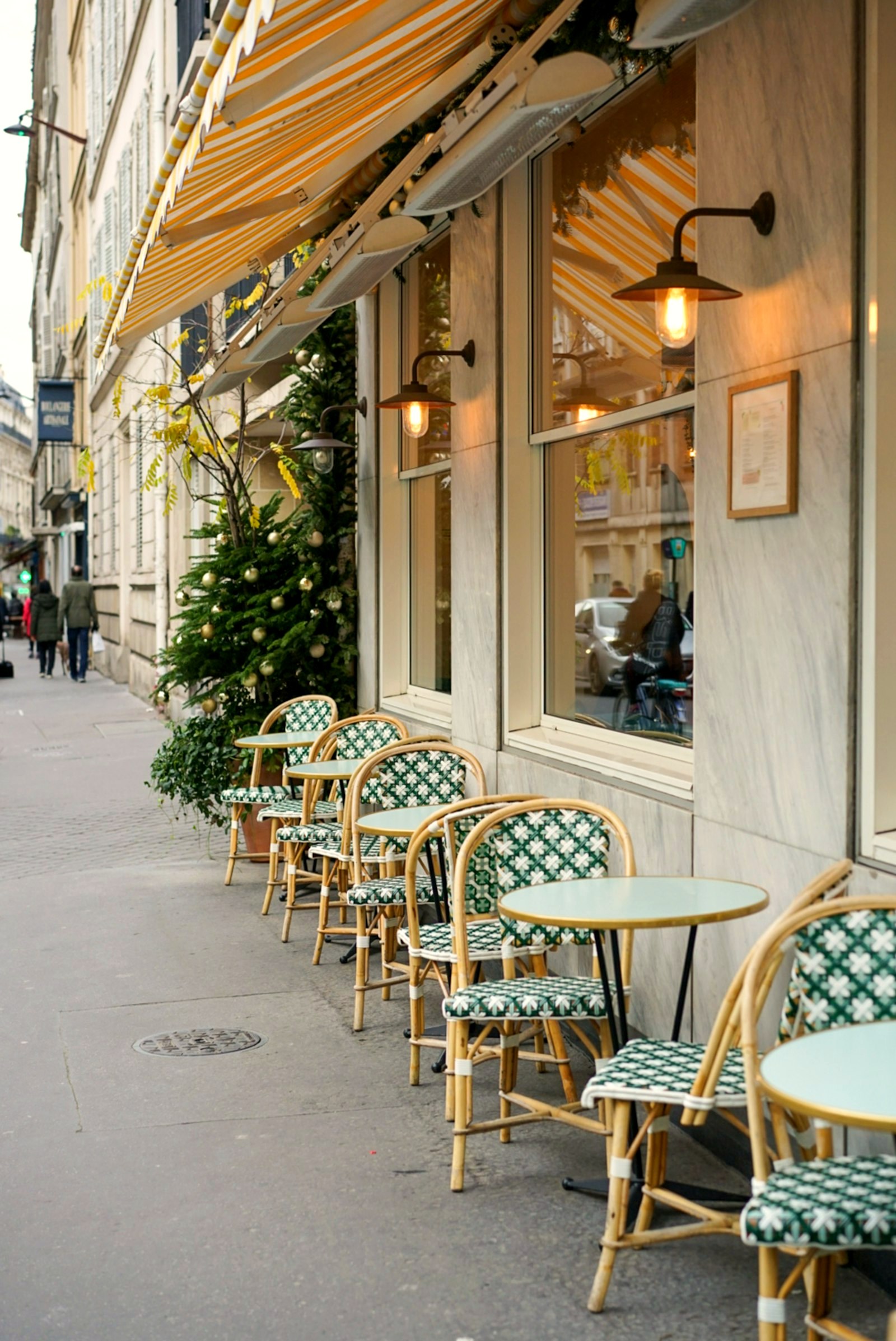
A note on our own photography: our photo bank holds exactly one frame of this page’s subject worn, the hero, a patterned camp collar in studio light, which serves the camp collar ranking as its hero and is captioned here for exactly what it shows. It holds the shirt’s native room, the rattan terrace in warm light, and the foundation the open front shows, the plain tee in a market corridor, and they carry this page’s figures. What it does not hold is the shirt in the wild: no camp collar at a café table, none on a street in the evening the index files it for, none open over a tee in a single frame, no close study of the one-piece collar’s lie or the loop and button at the neck. This page will take those frames the week they exist, in the summer family’s own harvest order: the collar macro first, the open front over the tee second, the edited print on the terrace third. Until then, no frame here is labelled as an assembly it does not show, and the hero is captioned as the ranking’s hero borrowed for the brief, because that is the frame it is.
Questions, answered
What is a camp collar shirt?
A short-sleeved summer shirt built around a one-piece collar with no stand: the leaf is cut in one piece with the shirt's front and lies flat and open against the chest, closed at the neck by a loop and a single button when it is closed at all. The hem is straight because the shirt is made to be worn untucked. Our shirt index files the type at formality two, in rayon, linen and seersucker, with one rule: open, untucked, hem straight. A summer shirt, not a dress shirt on holiday. Verdict Card No. 14 ranks the type, and the Todd Snyder camp collar wins it at 84.
Can you tuck in a camp collar shirt?
The hem answers, not taste. The camp collar's hem is straight because the shirt is built to be worn untucked; that is the construction printed on Verdict Card No. 14 and the whole of the type's filing in our shirt index. A straight hem tucked is a specification contradicted: the cloth bunches at the waistband it was never cut to enter, and the shirt reads as a dress shirt worn wrong rather than a summer shirt worn right. The one system that prints a tucked summer top is the Riviera read in our shorts brief, and it names its shirt precisely: the shirt tucked, or the camp collar open above it. The camp collar is the alternative to the tuck in that sentence, not a candidate for it.
Can you wear a camp collar shirt under a blazer?
In exactly one form, the one our blazer brief prints. How to Wear No. 03's summer matrix row seats the camp collar shirt under an unlined linen or cotton blazer, over linen trousers or chinos, with loafers. That is the whole licence: the jacket unlined and in a summer cloth, the trouser a summer trouser, the shoe a loafer. A structured blazer, a smooth worsted, a suit jacket born with trousers: none of them is that row, and over a shirt filed at formality two they are two outfits arguing. The camp collar is the top layer by construction everywhere else; the summer blazer is the exception the tree prints, not a door this brief opens wider.
What do you wear under a camp collar shirt?
At the open front, a plain tee, and nothing with a collar of its own. Verdict Card No. 14 licenses the assembly in its own buying ruling: worn open over a tee, any of the top five answers to the logic of our shirt index. The tee at that front is judged as our white tee brief judges it, cloth in the opaque band with a collar that holds its ring, the Asket at 88 in Verdict Card No. 02 the reference, because an open front shows the garment beneath it full length. Closed, the shirt wants nothing beneath it but skin: a second collar, a polo's placket, a henley's buttons under the camp leaf are two necklines filing competing claims at the same throat, and the camp collar, a finished neckline with no stand and no structure, loses the argument it was never built to have.
What trousers and shorts go with a camp collar shirt?
The summer rail, both halves of it ranked. Linen trousers first: the Spier & MacKay Sondrio cotton-linen high rise at 85 in Verdict Card No. 41, the assembly our blazer brief's summer row also names. Chinos beside them, the same row's other trouser. Shorts below: the Spier & MacKay Linen Short at 86 in Verdict Card No. 07, the only pair in its ranking cut like a trouser, in the Riviera system our shorts brief prints, high rise, crease, loafer and the camp collar open above it. What the shirt does not take is the dress trouser of a suit or the gym short at dinner: the index files it at formality two, and the rail it keeps is the rail built at that filing.
Camp collar or knit polo: which is the summer shirt?
They share a rung and split the season. Our shirt index files the polo at formality two and the camp collar at formality two, and our knit polo brief prints the rotation: the knit polo is a three-season garment at fine gauge, and in high summer it yields its rows to the piqué and the camp collar, taking them back in September with its collar standing. The difference is construction: the polo's collar is a knitted band that stands, the camp collar is a woven leaf that lies, cut in one piece with the front, and the camp shirt is a woven shirt with a placket and buttons where the polo is a knit with a placket worked in yarn. In the heat's own months the camp collar is the answer; at the season's edges the knit polo is, and a wardrobe that owns both owns the whole summer between them. The camp collar ranking is Verdict Card No. 14, the Todd Snyder winning at 84; the knit polo's is Verdict Card No. 86, the Faloni Amalfi winning at 88.
How should a camp collar shirt fit?
It should skim, not cling. Our shirt index prints the shared law of the summer shirts: a hot-weather shirt must skim the body, because cloth against skin is the thing you are dressing to avoid. Verdict Card No. 14 prints the type's fit entire: the hem straight and worn untucked, the sleeve ending around the mid-bicep, and the collar lying open without standing up or folding under. Size for air. A camp shirt bought tight is a dress shirt's mistake in a summer cloth, and a collar that collapses or stands is a construction failure the Card's collar row grades, which is why the Gitman Vintage's build finishes its card at 82 with the collar row near full marks.
Has Young Cotton ranked camp collar shirts?
Yes: Verdict Card No. 14, on the summer-shirt basis this site publishes, cloth and fibre 30, print discipline 15, collar and construction 20, fit range 15, value 10, longevity 10. The Todd Snyder camp collar wins at 84, on balance: honest drape cloth with the fibre line printed, prints edited down to tonal botanicals and geometrics, the widest useful size run in the quality tier, at typically $158 to $178. The Gitman Vintage is second at 82 and the ceiling, US-sewn from Japanese cloth. The Buck Mason Wornwell is third at 79, the plain-cloth answer. And the novelty print is sent home at 35: the H&M patterned resort shirt, which at its $44.99 list costs more per wear than everything ranked above it. This brief styles the type on that Card's records and scores nothing of its own.
Next
The family this brief belongs to: the garment’s ranking stands in Verdict Card No. 14, its filing in the shirt index beside the linen shirt, the polo and the Oxford, and its one jacket row in How to Wear No. 03. The neighbouring species is briefed in No. 45, the knit polo that takes the season’s edges back in September, and in No. 06; the foundation at its open front in No. 48; the other summer shirt in No. 07, whose tuck rule belongs to that shirt and is distinguished in this brief’s tuck section. The rail below it is ranked in Verdict Card No. 41, the chinos ranking and Verdict Card No. 07, and briefed in the shorts brief; the shirt’s cloth cousins are ranked in the linen shirt ranking; and where the shirt hangs among this site’s winners is mapped in the Body Map.