

The drawer the henley lives in, folded: plain knits in window light. Our bank holds no true henley frame, no placket on a body in any button state, and this page admits that gap here and again in its care section rather than dress a crew neck as its placketed sibling.
Checked and updated October 2026
The ruling, up front: the henley is underwear that escaped. It began as a base layer, the collarless working shirt railroad crews wore because it vented at the throat, and its family's ranked record on this site is the undershirt Verdict Card. Everything difficult about wearing one follows from that birth: the garment's whole styling problem is staying dressed, presenting a finished neckline in rooms where its ancestor was never seen. The instrument is the placket, and Verdict Card No. 34 prints the arithmetic this brief is built on: all closed is a crew neck with decoration, one open is the working state, all open is the undershirt confession. One open is the ruling here, with two exceptions named and argued below. Cloth decides the room: waffle is a thermal and belongs to cold layers, loopwheel jersey is a tee with a past and is the only cloth that travels, slub is weekend cloth at any price. The layering chain runs under the overshirt and the chore coat, and the undershirt question is answered with a collision law: one neckline per stack. The ranked field is the Card's and it is not re-scored here: the Filson waffle at 84, the Merz 206 loopwheel at 82, the Uniqlo waffle at 75 the attainable pick, Bean's mini-waffle at 74, the Industry of All Nations at 73, The Great. at 66, the Origin CORE sent home at 42. This brief is the wearing system for the garment those numbers describe.
This brief: the button states · cloth decides the room · the layering chain · the fit rulings · the colour order · what it never survives · the looks · the mistakes · care and the repairs
The decisive rule: the placket is a neckline instrument
Every collarless garment in the drawer has a fixed neckline except this one. A crew neck tee is closed by construction and a tank is open by construction, and neither asks its wearer anything after breakfast. The henley's neckline is a row of working buttons, which makes it a decision remade every time the garment goes on, and the decision is legible from across the room: the same henley reads as a dressed base layer or as underwear that has wandered out of the house depending on where the buttons stop. This is the same instrument logic How to Wear No. 21 prints for the quarter-zip's zip, one garment over in the drawer: a neckline that moves is a register that moves, and the states have to be ruled, because the unruled state is always the worst one.
The working state: one open. Rule it plainly, as the Card's arithmetic rules it: one button open is the state the garment was invented for. It is the vent the railroad crews used, the throat opened by exactly the amount work and weather ask for, and it is the only state that justifies the placket's existence, the single visible difference between a henley and the tee it shares its cloth with. Worn one open, the placket does its one formal trick: it gives a collarless garment a finished, intentional neckline, a vertical line with hardware on it, which is why a henley one open under an open overshirt still presents as dressed when the overshirt comes off and a tee in the same position presents as a base layer. Buy the henley for this state. Fit it in this state. Judge every photograph of yourself in it in this state. The other two states are exceptions with conditions attached, and they are argued next so the exceptions cannot swallow the rule.
All closed: a crew neck with jewellery. Buttoned to the top, the henley spends its one piece of engineering on nothing. The placket becomes decoration, buttons as trim on a closed neckline, and the garment is a crew neck tee carrying hardware it never uses, at a henley's price, with a henley's failure modes thrown in free: a closed placket can still curl, and a curled closed placket is strictly worse than the crew it imitates. The state is not banned outright, because it has one honest job, named here as the first exception: closed is correct as pure insulation, under a closed overshirt, a chore coat or a coat in real cold, where the neckline is not on display at all and the buttons are shut against the weather rather than for an audience. In that mode the henley is a thermal doing thermal work and nobody is reading its throat. The failure is wearing the closed state as a look, in a room, on display: jewellery where an opening was bought.
All open: the beach. At the other end, the placket run fully open is the undershirt confession in the Card's phrase, the layer admitting it was never dressed, chest open in the silhouette of a vest worn as a shirt. Two open on a three-button placket is this state by another count, and a deep placket like The Great.'s wears it by design, which is part of why that garment's register is graded as one state of three. The second exception lives here and it is narrow: all open is legal where the room is honestly leisure, at the beach, by the water, in the hammock economy of a summer afternoon, where undress is the dress code and the confession is simply accuracy. What the state cannot survive is translation. The all-open henley that was correct at the lake at four is not correct at the restaurant at eight, because the room changed its promise and the garment did not change its state. States are judged against rooms. That sentence is the whole of this section, and the rest of the brief is its corollaries.
The states, against the field:
| The state | The buttons | What it reads as | Where it is legal |
|---|---|---|---|
| One open | Top button undone, the rest closed | The working state: a finished neckline on a collarless garment, the vent the garment was invented for | Everywhere the henley is on display: under an open overshirt, under a chore coat, worn alone as the shirt layer. The default, and the ruling |
| All closed | Buttoned to the top | A crew neck with jewellery: the placket spent on decoration, with a curl risk a crew never runs | One exception only: as pure insulation under a closed outer layer in real cold, where no neckline is on display |
| All open | Every button undone; two open on a three-button placket counts as this state | The undershirt confession: a base layer admitting it was never dressed | One exception only: rooms that are honestly leisure, the beach and its true equivalents, where the confession is the dress code |
Cloth decides the room: waffle, loopwheel, slub
The Card grades three cloth classes and this brief assigns each its rooms, because a henley is its knit before it is its buttons: the placket sets the state, but the cloth sets the ceiling on where any state can go. A perfect one-open in the wrong cloth is still the wrong garment in the room, the same species law No. 21 prints for knit against fleece against jersey, drawn here on the base layer's own lines.
| Cloth | What it is | Its rooms | The ranked record |
|---|---|---|---|
| Waffle | A thermal knit, a grid that holds air against the skin. Not a texture photograph: a structure for warmth, the cloth the garment was born in | Cold layers and workwear registers: under overshirts and chore coats, under coats, on cold mornings worn alone. It never reads dressed, and asking it to is the category error this section exists to prevent | Filson 84, the winner, 100% Peruvian cotton with a warranty behind the placket; Uniqlo 75, pre-washed, the attainable thermal; Bean 74, the mini-waffle catalogue version |
| Loopwheel jersey | The tee's cloth at its highest form: two-thread cotton knitted seamless and tubular on vintage loopwheelers, no side seams to twist, a weight the maker publishes | The traveller: worn alone as the shirt layer, under every outer layer in the wardrobe, and the only cloth admitted to the blazer exception argued below. Jersey with a past, and the past is construction, not story | Merz 206 82, cut from the identical cloth as the 215 loopwheel tee our tee ranking scored at 82; Industry of All Nations 73, a medium-weight organic jersey with the fullest provenance in the field |
| Slub and fashion jersey | Uneven-yarn slub with a deliberately irregular surface, and the smooth fashion jerseys cut on silhouette rather than cloth | The weekend: open over nothing, under nothing structured, in rooms where texture is the whole proposition. Slub reads casual at any price, which is a property, not an insult | The Great. 66, the boxy fashion register, honest as one state of three; the class's ceiling is set by its rooms, not its makers |
The blazer question, answered plainly. Plainly, then: a henley under a blazer is refused, with one exception so narrow it is best understood as the exception that keeps the refusal honest. Waffle is refused outright and first: the grid is insulation architecture, it stands proud of the chest, it catches the lapel's clean line at every crossing, and under tailoring it reads exactly as what it is, a thermal caught in a dressed room. Slub is refused on the same evidence, texture arguing with the jacket's cloth. The single survivor is the loopwheel jersey, and it survives on conditions, all of them checkable. The placket is worn fully closed, the one place in this brief where the closed state is a look, because under a lapel the buttons must read as a seam, a piece of construction, not as an opening being negotiated. The colour is black or charcoal, the Merz 206's deep black being the field's reference. The hem is tucked, the single tuck exception this page allows, ruled in the fit section. And the jacket is unstructured, soft-shouldered, because a structured shoulder and a set lapel turn a collarless neck into a shirt that has gone missing, while a soft jacket and the jersey read as one deliberate, stylist's assembly. Even run perfectly, understand what it is: a move, not a default, the dressed ceiling of the best cloth in the category. And a suit is refused absolutely, no cloth, no state, for reasons the never section prints in full. The reader who wants a knit under tailoring as a habit rather than a move is served by How to Wear No. 03 and the crew and turtleneck briefs, garments whose necklines were built for the room.
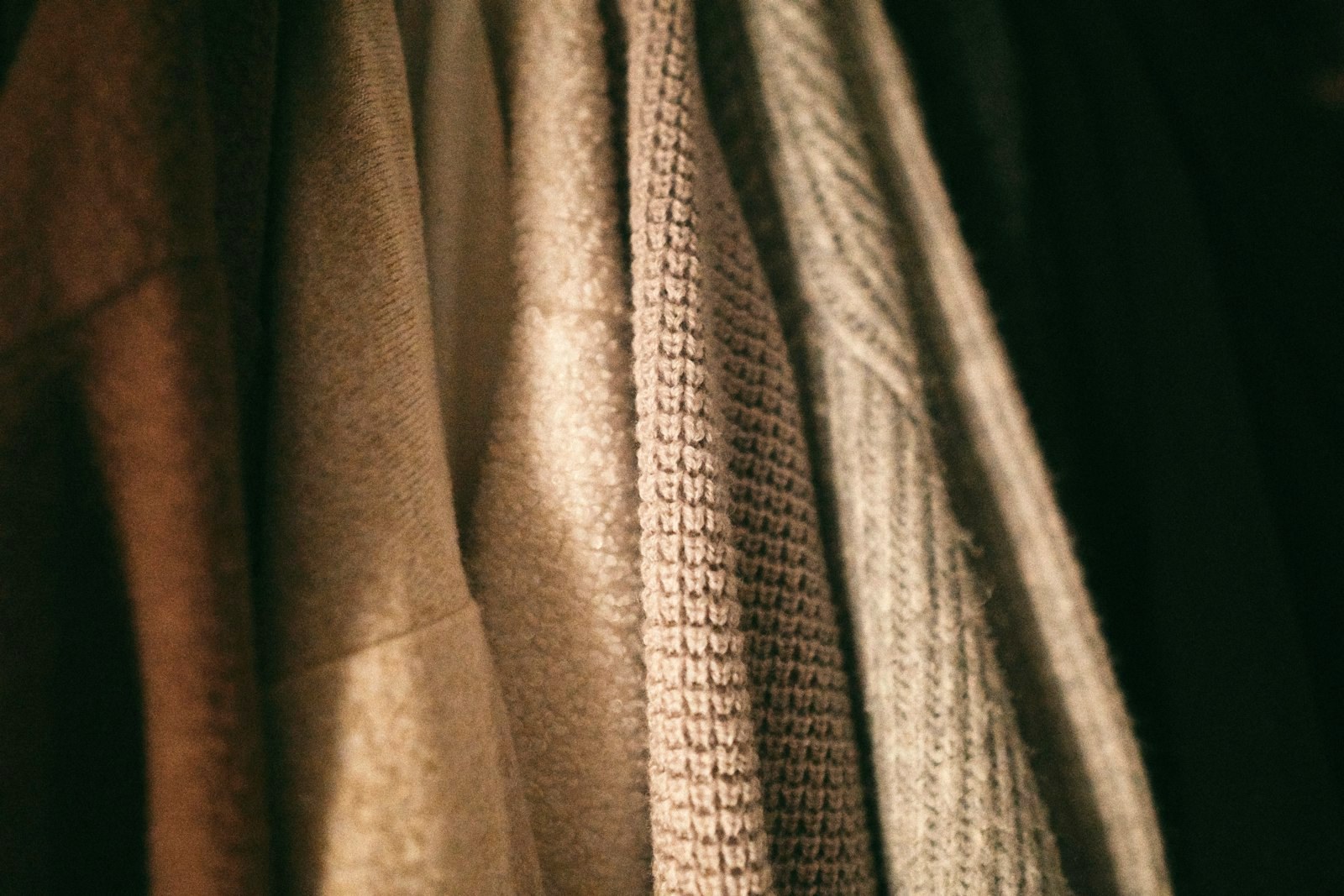
The layering chain: overshirt, chore coat, and the layer beneath
A base layer is defined by its neighbours, and the henley's chain has two links above it that this site has already ranked and briefed, and one question below it that this brief now rules. Take the chain from the outside in.
Under the overshirt: the birth pairing. The henley under an overshirt is the assembly the garment's working life was built on, the soft venting layer under the heavy cloth shirt, and How to Wear No. 10 briefs the outer half of it. The ranked reference for the outer layer is our overshirt Verdict Card: the L.L.Bean Chamois Cloth Shirt at 83, the category's centre of gravity, with the Filson Wool Jac-Shirt at 82 as its ceiling. The states interlock by a simple rule: the henley is worn one open beneath it, always, because the overshirt is worn open often enough that the henley's neckline is on display half the day, and a layer whose state is only correct while covered is a state chosen by luck. With the overshirt closed over it in cold, the henley's closed state becomes legal under the insulation exception, and the wearer may shut the vent for warmth without breaking the law, provided the buttons go back to one open when the overshirt opens. Flannel and chamois over waffle is the deepest version of the stack, two workwear cloths in their native register, the Filson's home ground.
Under the chore coat: the native stack. The chore coat, briefed in How to Wear No. 13, is the henley's other birthplace layer, canvas or twill over the thermal, and it solves the collarless problem by lending the stack a collar of its own: the coat's collar frames the throat, the henley's one-open placket sits inside that frame, and the assembly reads as workwear dressed by intention rather than by accident. This is waffle's best room in the wardrobe. The Filson at 84 one open under a chore coat, sleeves worn long or pushed with the coat's off, is the category's reference outfit, the one the Card's winner was costed living in. What the chore coat will not rescue is the all-open state beneath it: take the coat off indoors and the confession is standing in the room in a thermal, which is the translation failure the states section rules.

Below it: the undershirt collision, ruled. The question arrives from the garment's own family tree: the henley is an undershirt that escaped, so does an undershirt go under it? The default answer is no, and the reason is geometry, not pride. Two collarless knit layers stack two necklines at one throat, and in the one-open state, the state this brief rules as the garment's life, the undershirt's crew band surfaces inside the placket's opening: two necklines arguing in the two inches where an outfit is read closest, and the stack announcing itself as underwear worn twice. The henley was engineered as the layer against the skin; that is what its cloth weights and its vent are for. The exception is narrow and functional: invisible infrastructure. A sweat-management undershirt of the class Verdict Card No. 31 ranks, its winner the Tommy John Second Skin at 85, worn in heat or in exertion, is legal on one condition: its band sits below the placket's lowest open point and never shows, in any state, at any hour of the day. The moment the band is visible the pairing has failed, and the fix is never a different undershirt. It is taking the undershirt off and letting the henley do the job it was born doing. One neckline per stack at the throat: the law binds downward to the undershirt exactly as it binds upward to a second knit, and it is the same law No. 21 prints for knit on knit, one family over.
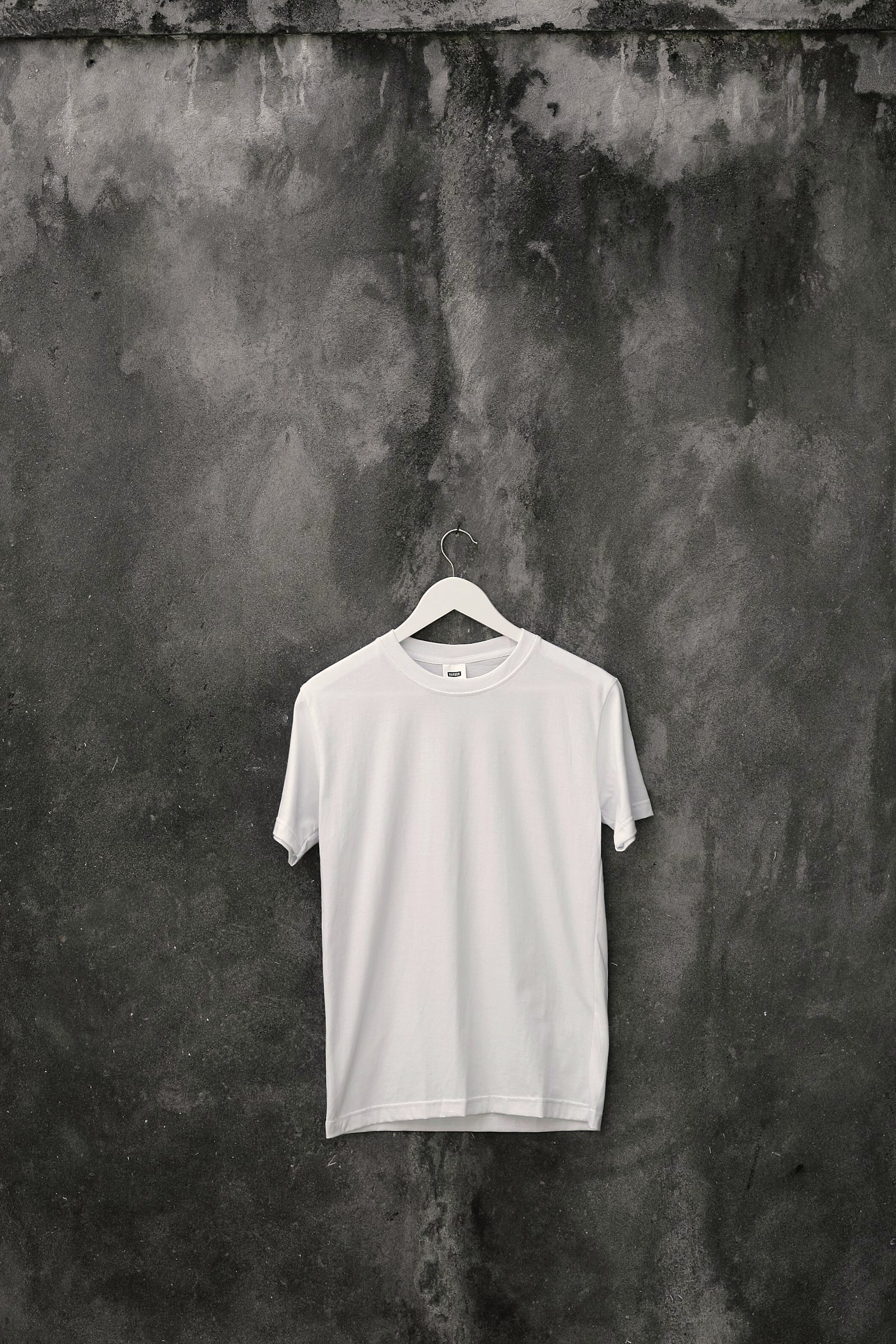
The fit rulings: the gape, the sleeves, the hem
Three rulings, all printed as new, all checkable in a mirror in the one-open state, which is the only state a henley is fitted in. A henley that passes all three reads as a garment that was chosen. One that fails any of them reads as underwear with ambitions, which is the precise failure this brief exists to prevent.
The placket must not gape. Worn one open, the placket's edges lie flat and parallel, the opening a clean vertical slot. A placket that pulls apart at the chest, its edges bowing away from each other and the opening grinning wider than the buttons set it, is reporting one of two facts: the chest is a size too small for the body in it, or the placket facing was built without the reinforcement the Card grades, the construction failure that ends in the curl the Card names as the category's first death. Neither fact is a style. Size for the placket, not for the mirror's preferred silhouette: the chest that the placket closes over without strain is the size, and the body below it will sit close, as the next ruling wants, without the throat confessing the strain. This is also the rail test for the garment the Card hunted and could not find buyable: the decorative placket, buttons sewn over an opening that does not open. Work the buttons before the till. A placket that does not work is not a henley at any price; it is a crew neck with jewellery permanently set to the closed state, the worst state, sold as a feature.
The sleeves have two states, and both are deliberate. Pushed to the forearm is the working state, the thermal's sleeves rolled or shoved up for the task, and it is a graded property rather than an accident: the Card credits the Uniqlo's ribbed cuffs because they push up and stay, and a cuff that slides back down the wrist every four minutes is a sleeve failing at its one athletic job. Worn long to the wrist bone is the layered state, the sleeve disappearing under the overshirt or chore coat with the cuff landing where a shirt's cuff lands. Between the two is the failure: the sleeve at half mast, bunched at the mid-forearm by gravity rather than placed there by intention, neither working nor dressed. Set the sleeve when you set the buttons, once, in the morning, and expect both to hold their state until the garment comes off. A henley whose states will not hold is telling you about its cuffs and its facing in the only language it has.
The hem is untucked, with one exception. Untucked is the default because the henley is a base layer and its hem is a base layer's hem, landing at the hip, designed to be covered by the layer above or to finish the stack cleanly when it is the outermost cloth in a casual room. Tucking it into trousers as a habit promotes it into a shirt's job with a base layer's credentials, and the waistband becomes the loudest part of the outfit: a placket entering a belt line is two instruments arguing at two ends of the torso. The single exception is the blazer exception from the cloth section, where the loopwheel jersey works as a tee substitute under an unstructured jacket and the waist is genuinely read; there the hem is tucked, because that assembly is a tee assembly and a tee's rules apply to it. Everywhere else, if the outfit wants a tucked neckline, the outfit wants a shirt, and the shirt index maps that family. How to Wear No. 09 rules the henley's knitted cousins; the henley's own hem law is this paragraph, and it has exactly one door in it.
The colour order: first buy, second buy
First buy: natural. Undyed-look ecru, off-white, the colour of the cloth before the dye pot, in whichever cloth your climate files first: waffle for the cold drawer, loopwheel jersey for the travelling one. Natural is the workwear original, the colour the garment wore for its first century, and it is the most useful first colour for mechanical reasons: it sits under every overshirt colour in the wardrobe without a negotiation, flannel reds and chore coat blues and canvas naturals alike; it shows the placket honestly, buttons and shadow legible at conversational distance, so the one-open state reads as a decision; and it layers over nothing and under everything in the neutral system the rest of the base-layer drawer is built on. The Industry of All Nations at 73 makes the point in product form: its undyed version at $90 is the one its Card entry tells you to buy, the version the whole system was built to make. The first henley is natural for the same reason the first tee on this site is white: it is the colour the garment is graded in.
Second buy: charcoal or black. The dark buy is the evening register and the exception's colour: the blazer exception runs only in black or charcoal, the Merz 206's deep black being the ranked reference, and a dark henley one open under a chore coat is the workwear stack after dark, the version that survives a bar without changing a single state. Charcoal if the wardrobe's trousers run grey and stone, black if they run indigo and black denim. Note what is not in the second slot: navy. The henley does not borrow navy's dressed register the way the knits of No. 21 do, because its rooms are workwear rooms and its palette is the workwear palette. Navy is a respectable third buy. It is not the second.
Third buys, and the colour refused. Olive, rust and brown are the third drawer, bought in waffle for the cold months, the colours of the Filson's world, each bought for specific overshirts rather than for the drawer in general. The colour refused as a first buy is heather grey, and the refusal is this page's thesis in one colour: heather grey is the literal colour of the thermal underwear set, the long johns of record, and a heather grey henley worn alone has to argue its way out of the underwear drawer in every room it enters, spending the whole outfit's credibility on the escape the garment already made once. As a third buy under dark overshirts it is unobjectionable. As the first henley a wardrobe owns, it is the escaped ancestor wearing its old uniform. Bright colours are refused on the same evidence as always in this series: the placket is a workwear detail, and dyeing the garment like a polo makes the cloth argue with its own hardware.
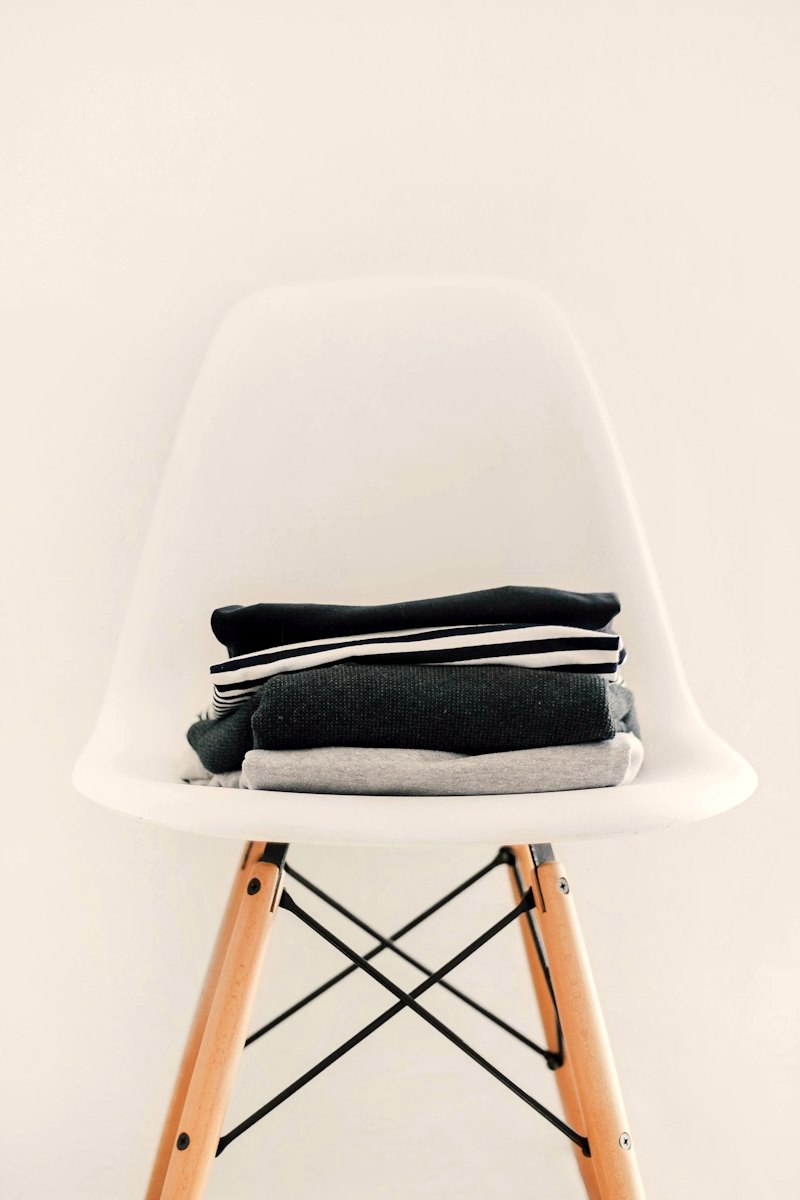
What it never survives: the gym, the suit, the tie
Three refusals, printed as absolutes because each has been attempted often enough to have a record. A henley is a forgiving garment inside its rooms. These are the doors it does not have.
The gym-to-dinner claim. The pitch is made for this garment constantly, by makers and by men: train in it in the morning, throw a chore coat over it at night, one garment across the whole day. Refused, on the garment's own nature. A base layer is the layer against the skin; it takes the day's sweat into its cloth, waffle most honestly of all, since the grid that holds air holds everything else too, and it takes the day's stretch into its placket, the facing worked by every hour of wear. Promoting the morning's training layer into the evening's dressed stack is not efficiency. It is wearing the day's evidence under a clean coat, and the rooms it is attempted in are close enough to read it. The rule costs one change of clothes: base layers are changed, not promoted. The henley that trained is laundry. The henley that dines is a different henley, and a two-henley drawer, natural and charcoal on this page's colour order, is exactly the wardrobe this system builds.
The suit. Refused absolutely, and the refusal is geometry. A suit's jacket is built around a shirt's furniture: the collar stand the lapel rolls against, the tie space the collar frames, the cuff the sleeve is cut to show. The henley brings none of it. Its collarless neck leaves the lapel with nothing to divide the throat against, its placket puts a row of buttons exactly where the suit's own closure line wants silence, and the whole assembly reads, at any distance, as a shirt that has gone missing on the way to a dressed occasion. The unstructured-blazer exception in the cloth section is not a door into this room: it is a soft jacket, worn open, in the jersey cloth, as a deliberate move, and a structured suit is none of those things. How to Wear No. 04 briefs what the suit actually asks of its layers. The henley is not among them, and no score in its field, not even the winner's 84, buys it a hearing there.
The tie, made seriously. The joke version is familiar: a tie knotted over a henley as fancy dress, a stag-party garment, funny exactly once because everyone in the room can see the category error. This brief addresses the serious version, because it exists: the tie worn over a placket as an outfit, on the theory that buttons at the throat make a shirt front. They do not. A tie needs a collar to stand on and a collar's geometry to sit inside; knotted over a placket it sits on the buttons themselves, riding the hardware, sliding off the centre line the placket draws, and announcing to the room that the wearer has mistaken the henley's one formal trick for a formal garment. The placket is a vent with buttons. It is not a shirt front, it has never been a shirt front, and the tie is the one accessory that exists to prove the difference. No tie ever touches a placket. That sentence is complete as it stands.
The looks: the field, worn
Four assemblies, each built from the ranked field and the laws above. The frames on this page are the bank's honest cloth and layer frames, captioned for what they show; the bank holds no henley on a body, and the care section prints that gap rather than let a crew neck stand in for its placketed sibling.
Look one: the native stack. The Filson waffle at 84, natural or olive, one open, under a chore coat with its collar framing the throat, dark denim below, sleeves worn long with the coat on and pushed to the forearm with it off. Waffle in its best room, the winner in its costed life, two workwear cloths in their native register and not a single state out of place. This is the outfit the category was graded imagining.
Look two: the birth pairing. A waffle henley, the Uniqlo at 75 for most drawers, one open under the Chamois overshirt at 83 worn open over it, grey trousers or worn denim below. Two collar decisions handing the throat down the line: the flannel's collar open around the placket's slot, the softest dressed assembly the base-layer drawer can produce, and the one that answers this site's standing audience question, comfortable that does not look sloppy, in its original form.
Look three: the loopwheel alone. The Merz 206 at 82, sized up on its maker's own guidance, one open, worn as the top layer over tailored trousers, nothing above it. The jersey cloth carries the room by itself because its construction is the tee's at its highest form, and the placket does the one trick that separates it from the tee it shares its cloth with. This is the henley as a shirt, the closest the garment comes to travelling alone, and it only works in this cloth: run it in slub and the room drops a register, run it in waffle and it is a thermal at lunch.
Look four: the exception, run once. The 206 again, in deep black, placket fully closed, hem tucked, under an unstructured charcoal blazer, black denim or charcoal trousers below. Every condition from the cloth section in force at once: the survivor cloth, the closed state reading as a seam, the tuck exception spent, the soft shoulder. It is in this list to prove the refusal around it is a ruling and not a reflex, and it is the only look of the four that should be worn rarely enough to stay a move.
The ruling
Buy the cloth your rooms ask for, natural first and charcoal or black second, and wear the garment in its working state. One open, under an overshirt or a chore coat or alone in the loopwheel's case, the placket flat and never gaping, the sleeves set where the day puts them, the hem untucked outside the one exception, and no undershirt showing its band at your throat. Closed is for insulation, all open is for the beach, and neither state is a look. Keep it out of the gym-to-dinner rotation, out of the suit, and away from ties entirely, and the garment does the thing it has done for a century and a half: it is the base layer that can be seen in public without apologising, the undershirt that escaped and stayed escaped. The field is ranked and this brief has not touched a number: the Filson at 84 is the cold drawer's reference, the Merz at 82 is the cloth argument made wearable, the Uniqlo at 75 and twenty cents a wear is where most drawers should start, and the Origin at 42 is the standing proof that the fibre line, not the story, is the garment. The distance between a henley worn well and a henley worn as underwear is not money or taste. It is one button, the right cloth, and the discipline to know which room the garment is in.
The mistakes
The gaping placket, worn anyway. The opening bowing apart at the chest, the slot grinning wider than its buttons set it, worn all day as if it were a fit rather than a report. It is a report: a size too small or a facing built without reinforcement, the first symptom of the curl the Card names as the category's first death. The wearer reads it as openness. The room reads it as strain, at exactly the point of the torso the garment exists to present well. Size for the placket to close flat, or replace the garment whose facing has already given up.
All open in a dressed room. The translation failure: the state that was correct at the water carried into the restaurant, the bar, the evening, unchanged. The garment did not break a law at the beach; it breaks it at the table, because states are judged against rooms and the room changed its promise. The fix is one button, the cheapest correction in this entire series of briefs, and the refusal to make it is the whole mistake.
The undershirt band in the placket. Two necklines at one throat, the crew band surfacing inside the open slot, the stack reading as underwear worn twice by a man who owns both garments and has doubled them out of caution. It fails the collision law in its visible form, and it fails it at the exact two inches the outfit is read closest. If the undershirt is there for sweat, its band sits below the placket's lowest point or the undershirt comes off. There is no third arrangement.
Waffle under a blazer. The thermal grid under tailoring, the base layer's architecture standing proud against the lapel's line, attempted because the henley was clean and the blazer was there. The cloth section refuses it with one narrow exception in a different cloth, and the exception's narrowness is the point: the loopwheel jersey, closed, dark, tucked, unstructured jacket. Waffle meets none of those conditions and borrows the exception's confidence anyway. The rooms are decided by cloth. The grid's room is the cold layer, and in that room it is the best garment on this page.
Care, and the repairs
The Card prints the failure order for this garment and care follows it: the placket dies first, by curling and by shedding its buttons, and the cloth dies a long way second. So care is placket care before it is anything else. Button the placket fully before washing, so the facing travels through the wash in the shape it is worn in and the buttonholes are not worked by the machine; a placket washed open dries in whatever curl it pleases, and a curl set wet is a curl kept. Dry the garment flat or folded over a rail, never hung by the shoulders: a wet knit on a hanger stretches at exactly the points the fit rulings measure, and the collarless neck has no collar to hold the garment's shape for it, so the placket's flatness is the garment's whole face. While it is still damp, run the facing flat with a palm and set the opening straight. Ten seconds, every wash, is the difference between the Filson's six costed years and the three a neglected placket gives at the same price.
Buttons are a maintenance item, not a surprise. The Card grades the button material by name, mother-of-pearl on the Merz, river shell on the Industry of All Nations, silence charged everywhere else, because the button is the part under stress every single wear. Check the stitching at the start of each season and re-sew the first loose button while it is loose rather than after it is lost: a henley's buttons are matched to its placket by the maker, and a replacement from the notions drawer is a visible patch on the garment's only decorated surface. Fold the garment for storage, on the drawer rule this series prints for knits, with the placket lying as it closes. Budget the garment's life the way the Card costs it, on the placket's years: the winner at $0.40 a wear over six, the loopwheel at $0.37 over seven, and both figures assume the facing is kept flat and the buttons are kept on. The cloth will outlast the hardware in every row of the field. Care for the hardware and the arithmetic holds.
A note on our own photography: our photo bank holds no true henley frame. No placket on a body in any of the three states, no button-and-facing close frame, and no waffle grid macro exists in the bank, a gap Verdict Card No. 34 prints about its own page as well. The hero is the base-layer drawer folded; the frames inside are the cloth, the outer layer of the birth pairing, the family the garment escaped from and the drawer's working colours, each captioned for exactly what it shows and none dressed as the subject. The harvest list names what is missing: a waffle henley worn one open under an open overshirt, a placket and button close frame, and a waffle grid macro, and this page will take those frames the week they exist.
Questions, answered
How many buttons should you leave open on a henley?
One, as the ruling, and Verdict Card No. 34 prints the arithmetic this brief styles by: all closed is a crew neck with decoration, the placket spent on nothing; one open is the working state, the vent the garment was invented for, and the only state that separates a henley from a tee; all open is the undershirt confession, the layer admitting it was never dressed, and two open on a three-button placket is the all-open state by another count. Two exceptions are named. Closed is correct when the henley is working as pure insulation under a closed outer layer in real cold, where no neckline is on display and warmth governs. All open is legal only where the room is honestly leisure, the beach and its true equivalents, where the confession is the dress code rather than a failure of it. Everywhere else, buy the henley for the one-open state and wear it there.
Can you wear a henley under a blazer?
Once, in one cloth, under one kind of jacket, and this brief rules it as an exception rather than a pairing. Waffle under a blazer is refused outright: the thermal grid is a texture with a job, it catches against the lapel's line, and it reads as a base layer caught outdoors. Slub and fashion jersey are refused with it. The single survivor is the loopwheel jersey, the Merz 206's cloth class, worn with the placket fully closed so the buttons read as a seam rather than an opening, in black or charcoal, tucked, under an unstructured blazer with no structured shoulder to turn the collarless neck into a missing shirt. Run any other way, the answer is no: a suit is refused absolutely, and the dressed layer for a blazer on this site is a knit with a collar decision of its own or a shirt.
What do you wear over a henley?
The two layers it was born under. First the overshirt: the pairing the garment's whole working life was built on, henley one open beneath an open or closed overshirt, the ranked reference being our overshirt Verdict Card's winner, the L.L.Bean Chamois Cloth Shirt at 83, with the Filson Wool Jac-Shirt at 82 as the ceiling of that category. Second the chore coat, briefed in How to Wear No. 13, whose collar frames the collarless neck and under which the waffle henley is in its native stack. Over both, in real cold, a coat closes the chain and the henley's state stops mattering, because the neckline leaves display. What does not go over it is a second collarless knit: one neckline per stack at the throat is the law the undershirt ruling prints, and it binds in both directions.
Do you wear an undershirt under a henley?
By default, no. The henley began as the layer against the skin, one rung up from the undershirt it shares a family with, and adding the undershirt back underneath it stacks two collarless necklines at the same throat. The failure is visible and specific: the undershirt's crew band surfacing inside the henley's open placket, two necklines arguing in the two inches where the outfit is read closest, and the stack reading as underwear worn twice. The narrow exception is invisible infrastructure: a sweat-management undershirt of the class our undershirt Verdict Card ranks, its winner the Tommy John Second Skin at 85, worn only when its band sits below the placket's lowest open point and never shows. If the band can be seen, the pairing has failed, whatever either garment cost.
Should a henley be tucked in?
No, with one exception. Untucked is the default and the design: the henley's hem is a base layer's hem, cut to land at the hip and be covered or ignored by the layer above it, and tucking it into trousers promotes it to a shirt it is not, waistband theatre around a placket. The single exception is the blazer exception printed on this page: the loopwheel jersey henley worn closed under an unstructured blazer works as a tee substitute, a tee's waist in that assembly is read, and there the hem is tucked so the line stays clean. Everywhere else, if the outfit wants a tucked neckline, the outfit wants a shirt, and this site's shirt index is the map of that garment family.
How should a henley fit?
By three rulings this brief prints. The placket must not gape: worn one open, the opening lies flat with its edges parallel, and a placket that pulls apart at the chest is a size too small or a facing built without reinforcement, the curl and shed failure Verdict Card No. 34 grades as the category's first death. The body sits close without compression: this is underwear's heir, and a henley sprayed onto the torso reads as gym clothing whatever its cloth. And the sleeves have two legal states, pushed to the forearm as the working state, which is why the Card credits cuffs that push up and stay, or worn long to the wrist as the layered state under an overshirt or chore coat. A sleeve at half mast, neither pushed nor worn, is a fit reporting itself.
Has Young Cotton ranked henleys?
Yes. Verdict Card No. 34 ranks seven, scored on cloth and knit, the placket and its buttons as construction, fit and button-state register, value and longevity. The Filson Waffle Knit Henley wins at 84, 100% Peruvian cotton in a true waffle knit at $119. The Merz b. Schwanen 206 loopwheel henley is second at 82, the Uniqlo waffle henley is the attainable pick at 75 and $29.90, and the Origin CORE is sent home at 42, a 69% polyester waffle sold under cotton-heritage copy. This brief styles that ranked field; it does not re-score it, and every styling ruling here is written against the garments the Card graded.
Next
The ranked field this brief styles is Verdict Card No. 34, every score and fibre line printed. The family it escaped from is ranked in Verdict Card No. 31; the outer layers are briefed in How to Wear No. 10 and No. 13, with the outer layer's own ranking in the overshirt Verdict Card. The neckline instrument's other form is briefed in No. 21, and the closed-neck sibling the henley is forever being mistaken for is briefed in No. 09. The garment family's full map is the shirt index.