
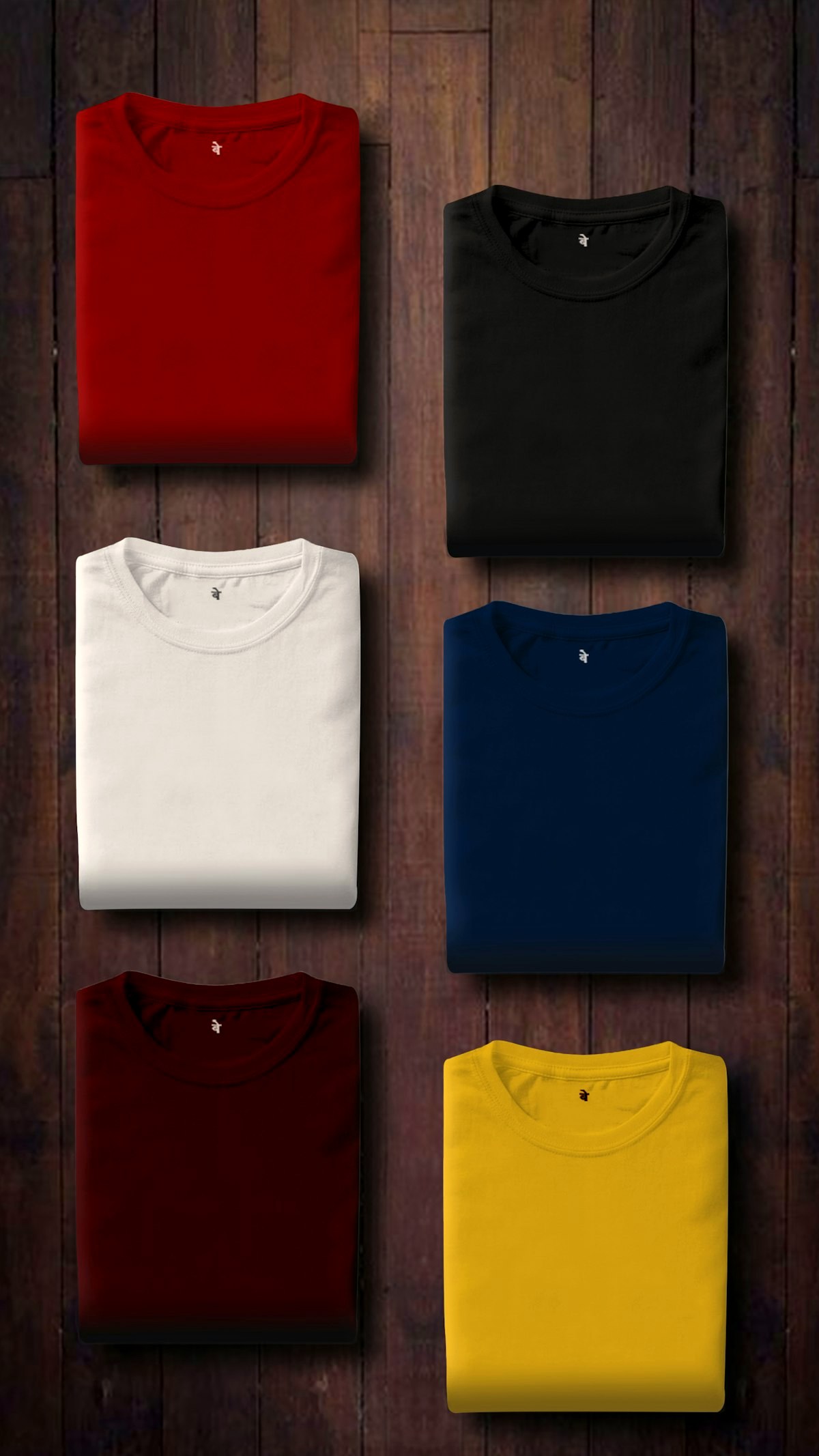
Cotton garments, folded: the class this pillar counts. A note on photography, printed because this page believes in saying so: none of the three counted garments is pictured anywhere on it. The bank holds no product photography of them, the same admission the underwear ranking prints about its own category, so the frames are cotton garments and cloth, captioned as such, rather than borrowed product shots.
Checked and updated October 2026
The short version: on this site, organic cotton is a count, not an adjective. Three garments ranked on our Cards carry GOTS certification verified the way this desk verifies cloth claims: a product-level claim on the garment's own page, and a certifier and licence printed where they can be checked. Two of the three print the same licence, Control Union CU 1067589. Everything else organic in the record is printed below for exactly what it is: fibre graded at the composition line, a claim carried as a maker's account, or a search that came back empty and is printed as one.
In this guide
The standard: a word versus a licence
Organic is the hardest-working adjective in menswear and the least examined. It appears on labels, in product names and across whole brand programmes, and in almost every case it asks to be believed rather than checked. This site's Cards met the word early, at the layer where cotton sits against skin all day, and the underwear ranking answered it with the sentence this programme has run on since: "Organic cotton as a phrase on a label, with no certifier and no licence number behind it, is worth nothing, and this page scores it that way." That sentence is the Cotton Standard in embryo. This page is the Standard at full length: the rule, the count it produces, and the record on both sides of the line.
The rule has two halves, and both must hold before a garment is counted as certified here. First, the claim must be made at product level, on the garment's own page, for this garment: a brand's general programme, however sincere, certifies a programme, and this desk grades garments. Second, the certification must name its certifier and carry a licence a reader can check, printed on the ranking where the score stands, so the check takes a minute and the number can fail in public if it ever fails. A claim meeting both halves is counted. A claim meeting one is recorded for the half it meets. A claim meeting neither is graded as what it is: a fibre statement at the composition line, or a maker's account of itself.
The Standard began as a promise before it became a count. On the pajama ranking, the desk wrote that no GOTS-certified set was ranked there because none could be verified to the standard it applies to cloth claims and prices alike, and committed to scoring one when both could be verified. The underwear ranking is that commitment coming due, in its own words. Every Card since has kept the same bookkeeping in the open: the boxer ranking printed a search that found nothing and left the count where it stood, the undershirt ranking counted the second garment, and the socks ranking counted the third and printed the arithmetic of the count itself. A standard that only ever adds is marketing. This one has printed a zero, twice, on the record.
The count: three garments
Here is the whole of it, in one table, every cell a Card's printed record and nothing else's. Three garments, across three rankings, in the order they were counted.
| Garment | Ranking | Score | Composition, as printed | Certification, as printed | Price, as printed |
|---|---|---|---|---|---|
| Organic Basics Core Boxer Brief | Underwear, Verdict Card No. 24 | 87 | 95% organic cotton, 5% elastane | GOTS-certified at product level; certifier Control Union; licence CU 1067589 | $15.87 a pair, in the six-pack at $95.20 |
| Pact Organic Cotton Stretch-Fit Crew Neck Undershirt | Undershirts, Verdict Card No. 31 | 72 | 95% GOTS-certified organic cotton, 5% elastane | GOTS-certified on the maker's published line; sewn in a Fair Trade Certified factory; no licence number printed on the Card | $15.00 a shirt, in the two-pack |
| Organic Basics Core Crew Socks 2-Pack | Socks, Verdict Card No. 36 | 82 | 71% organic cotton, 19% recycled polyamide, 7% polyamide, 3% elastane | GOTS-certified at product level; certifier Control Union; licence CU 1067589 | $9.00 a pair, in the two-pack at $18 |
Read the table the way the desk reads it. The count is small because the test is narrow, and the narrowness is the finding: across every ranking this site has published, in fields full of organic claims, exactly three garments have carried a certification that verifies both ways. Two houses appear, and one of them appears twice under a single licence, which is itself a datum about how concentrated verified certification is at the attainable end of the market. The third row deserves a second look for a different reason: the sock prints the fullest split in the count, down to the unglamorous 7 percent of virgin polyamide a less honest house would have folded into the recycled figure and hidden, and its Card grades that candour as part of the record.
And the count is not a crown. The boxer brief won its ranking on cloth and price, ninety-seven cents a pair above the synthetic in third, and its Card prints the sentence this pillar repeats without embarrassment: the certification is the least interesting thing about why it wins. The sock ranks second on its own page, behind a merino sock with an unconditional lifetime guarantee at 88, and the desk ranked them in that order without a flicker. Certification that verifies earns its row on a Card. It does not earn the Card.
What the certification certifies
What follows is the standard describing itself, quoted and paraphrased from Global Standard's published key features of the Global Organic Textile Standard, the organisation that owns it. This page is not a certification body, audits no supply chain of its own, and issues no verdict on any chain: the desk's competence is composition lines and prices, and where certification is concerned its whole method consists of printing the paperwork and letting the paperwork be checked. The standard's text is at global-standard.org.
The published terms, in the standard's own framework. GOTS-certified products must contain a minimum of 70 percent certified organic fibres. The standard runs two label grades: "organic", at least 95 percent certified organic fibres, and "made with organic materials", at least 70 percent. The fibres entering the chain must themselves be certified organic to a standard in the IFOAM family, produced without synthetic pesticides, herbicides or genetically modified organisms. And the certification is a chain certification, not a fibre test: in the standard's words, it covers the entire textile processing and manufacturing supply chain, from fibre processing to finished product, with every processing stage certified. Its environmental criteria run at every stage, wastewater treatment and chemical input restrictions among them, and its social criteria are set against international norms: safe and hygienic working conditions, the prohibition of child labour and forced labour, freedom of association and collective bargaining. Certification is conducted by accredited certification bodies through regular on-site audits, with transaction verification and a chain of custody built on physical segregation and volume reconciliation, explicitly not on mass balance.
One piece of arithmetic the desk is entitled to print, because it runs on published numbers only. Read against the standard's own grades, the boxer brief and the undershirt, both at 95 percent certified organic fibre, print at the threshold of the standard's higher published grade. The sock, at 71 percent organic cotton inside its four-fibre split, prints inside the lower grade, one point above the standard's floor. The three counted garments are therefore not the same shape of certified object, and this page prints them as they are rather than rounding the count into a slogan. Whether any given garment's certification is current at the moment of reading is the certifier's record to state, which is exactly why the licence numbers stand in the table above.
The verified absences
A counted standard earns its credibility at the places where the count refuses to move. Twice in the run, the desk went looking for a certified garment in a category, printed the search, and scored nothing.
The woven boxer. On the boxer ranking, no GOTS-certified woven boxer short could be verified. The certified boxers on the market are knits: Organic Basics' own certified Easy Boxer Short is a jersey knit with a fitted pouch and no fly, a boxer brief in a boxer silhouette, and it was at final sale besides; the other certified candidate on that page is likewise a knit. The woven pair the ranking did score, Industry of All Nations at 69, publishes the fullest provenance in the field and no certifier at all, and appears below among the accounts. The ranking's FAQ keeps the bookkeeping plain: the pillar's ranked GOTS count therefore stayed at one, as of that page's check, and the category was won by a conventional cotton Oxford boxer at 83.
The pajama set. On the pajama ranking, no GOTS-certified set was ranked, because none could be verified to the standard the desk applies to cloth claims and prices alike, and the page printed the absence rather than papering over it, alongside the commitment the underwear ranking later kept. A mid priced tier turned out to be the emptiest band on that page as well: a market can be crowded and unverifiable at once. The desk's position, printed then and standing now, is that a gap on the record with the search shown is worth more than a certified-looking name carried on trust.
Claims carried as accounts
Between the counted three and the plain fibre claims sits the record's most instructive shelf: garments whose organic story is real, published and in one case exemplary, and whose certification this desk does not score, each for a reason its Card prints.
Industry of All Nations is the shelf's centre. Its woven boxers, 69 on the boxer ranking, and its Super Henley, 73 on the henley ranking, are both 100 percent organic cotton, grown and made in Tamil Nadu, undyed and unbleached, washed with enzymes, finished with river shell buttons and an organic cotton drawcord: the fullest provenance either field published. And no certifier, no licence, no standard is named anywhere in it. The henley Card states the disposition in one line: graded as a maker's account, because no certifier is named. The boxer Card adds the sentence the whole programme turns on: on this desk an organic claim without a checkable licence is a maker's account, printed as one. These are good garments, recommended on their evidence. They are not in the count, and the count is more trustworthy for excluding the best story it has.
NADS publishes a GOTS claim for a knit boxer brief with no licence number and no weave published, and the boxer ranking's verdict is the desk's whole method in a clause: the claim could not be verified the way the underwear ranking verified its winner. A claim phrased in the standard's own name, with the one checkable element missing, counts for less here than an honest provenance with no claim at all. Order of credibility on this site runs: licence printed, account printed, slogan.
Taylor Stitch's The Jack stands one shelf up. The maker's own product page publishes the fullest single specification in its family record: 6.5 ounces, 100 percent organic cotton canvas, cut in California, with the organic claim stated as certified to the Global Organic Textile Standard. The family page at Brands Like No. 38 records the claim as the shirt's evidence, and a sibling page cites it as a GOTS certificate on a single shirt. No licence number is printed on either page, and the shirt has never been scored as a certified garment on a ranking. It stands in this pillar exactly where the record puts it: a maker's certified claim, recorded in full, outside the counted three.
The rested name. The sweatpant ranking holds the record's most disciplined non-entry: a Pact sweatpant in 100 percent GOTS-certified organic loop back terry from a Fair Trade factory, described in that page's honesty section and deliberately not scored, because its maker's storefront price could not be verified to the desk's standard that day. A ranking that cannot print a verified price does not print the card. The garment exists, its certification is the maker's published record, and it is in no count on this site: the Standard's discipline costs it a fourth name it would have liked to print, and the cost is the point.
Two programme level records close the shelf. The Colorful Standard rib tank, 80 on the tank ranking, meets this site's organic standard on published fibre evidence, 95 percent organic cotton at a published 190 grams per square metre, with its Card stating plainly that the certification paperwork is the maker's own account, graded as such. And the house of mfpen, audited at 84 on its family page, publishes a materials hierarchy that counts GOTS among the standards its fibres descend to: a programme described by its maker, recorded as one, with no garment of this desk's ever counted from it.
The wider cotton record
Certification is the narrow claim. Underneath it runs the record this site actually grades every week: organic fibre published in composition lines, weighed, priced and scored as fibre, with no certification asserted and none needed. The Asket t-shirt, 88 on the white tee ranking, is a custom 180 gram organic cotton jersey with its maker's cost breakdown published beneath it; the Merz b. Schwanen 215 on the same page is 245 grams of organic cotton, the heaviest cloth in the field. The Asket jean on the jeans ranking publishes a 13 ounce organic cotton denim woven by Candiani in Italy; the Asket chino, 82 on the chino ranking, is a dense Italian organic cotton twill at $230, the best cloth in its ranking on the record. The Patagonia Fjord, 77 on the flannel ranking and tagged there as the organic pick, is a published 6.5 ounce long staple organic cotton from a Fair Trade Certified factory, and it stands under a conventional winner at 85, which is where honest fibre grading leaves it. On the ecru ranking, the Carhartt WIP Single Knee at 83 is 12 ounces of organic canvas and the Nudie Everivory at 81 is organic ivory denim; on the robe ranking, the Quince waffle robe at 79 carries organic in its name and its $52 price in the same breath. Every one of these garments was graded at its composition line, on the same ruler as every conventional cloth beside it. That is the programme working as designed: the fibre claim earns what the fibre earns.
And the site's founding cotton record makes the boundary unmistakable. The Oxford ranking, the flagship this magazine was built around, and its weave explainer beside it, contain no organic garment and no organic claim at all: cotton there is graded on weave and staple, and the winner at 93 is a conventional cloth measured to the thread. The Cotton Standard never annexed the flagship. It grew where certification could be verified, at the skin layer, and it stays inside its evidence. A programme that knows its own borders is the only kind worth printing.
The Cotton Standard
A fibre claim is a composition-line claim, and it is graded where composition lines are graded. Print the fibre, print the percentage, and where certification is claimed, print the certifier and the licence, or the claim is carried as an account and scores as one. The count on this page is three, and it will move in the open or not at all.
What this page does not claim
This page scores nothing. Every score, price, composition and count above reproduces a Card's printed record exactly, and any disagreement between this page and a Card resolves in the Card's favour. Where the pillar and a Card would ever part, the Card is the record and this page is the index.
The database check is owed, not done. November's pass carries a manual check of the GOTS public database row for licence CU 1067589, and this page names it as outstanding. The standing caveat from the Cards applies unchanged: the GOTS public database is a search application this desk's checker could not submit a query to, which is why the licence is printed in full wherever the count is stated, so the reader's own check takes a minute. If a future check finds the licence lapsed, the count falls in the open, as the socks ranking already commits in print. A second November item travels with it: the count language across the four counting Cards is due a standardizing sweep, each page's phrasing having been written as of its own check date.
No certification verdict here is the desk's. The certification section quotes and paraphrases the standard's own published text, from its publisher, as of this page's check. The arithmetic on percentages is arithmetic on published numbers. Whether a maker's chain is well run, whether a factory treats its people well, whether a fibre was farmed as claimed: the desk has no instrument for any of it and prints none of it. What it has is a rule about paperwork, and the rule is the whole of the authority claimed.
Prices and records stand at their Cards' check dates. This pillar re-verifies nothing and re-dates nothing; its freshness stamp rolls with the site's, and a Card's record governs until that Card is re-checked. Two of the counted three share a house and a licence; if either garment's published record changes, the table above waits for its Card to move first.
The photography is the bank's, captioned honestly. Three frames: folded cotton tees, a stack of folded jeans, a stack of folded Oxford shirts. None of the counted garments is pictured as itself anywhere on this page, and no frame is dressed as one.
FAQ
What is the Cotton Standard?
This site's rule for organic cotton claims, set in print on the underwear ranking and kept on every Card since: a certification counts here only when it verifies two ways, a product-level claim on the garment's own page, and a certifier and licence a reader can check. Organic cotton as a phrase on a label, with no certifier and no licence number behind it, is worth nothing, and our Cards score it that way. Everything short of that test is still graded, as fibre at the composition line or as a maker's account, and this page prints which is which.
How many GOTS-certified garments has Young Cotton ranked?
Three, counted in the open as they landed. The Organic Basics Core Boxer Brief, 87 on the underwear ranking, GOTS-certified at product level by Control Union, licence CU 1067589. The Pact Organic Cotton Stretch-Fit Crew, 72 on the undershirt ranking, 95 percent GOTS-certified organic cotton, with no licence number printed on its Card. And the Organic Basics Core Crew Sock, 82 on the socks ranking, product-level GOTS under the same licence, CU 1067589. The count stood at one, then two, then three, and each Card printed the number it moved to.
What does GOTS certification actually cover?
In the standard's own published words: a GOTS-certified product must contain a minimum of 70 percent certified organic fibres, and its two label grades are Organic, at least 95 percent certified organic fibres, and Made with Organic Materials, at least 70 percent. The certification covers the entire textile processing and manufacturing chain, from fibre processing to finished product, with environmental criteria at every stage, social criteria that include safe working conditions and a prohibition of child and forced labour, and certification conducted by accredited certification bodies through regular on-site audits. That is the standard describing itself. This desk issues no certification verdict of its own.
Is organic cotton the same as GOTS-certified organic cotton?
No, and the difference is the whole of this page. Organic cotton is a fibre claim: a maker states the fibre was grown organically, and our Cards grade that statement at the composition line like any other fibre line. GOTS certification is a chain claim: an accredited certifier has audited the chain from fibre processing to finished product against the standard's published criteria. The record holds both kinds. Industry of All Nations publishes the fullest organic provenance in two of our fields and names no certifier at all, so its garments are graded on their published evidence with the certification unscored. A claim with no licence behind it is carried as an account, however good the garment.
Why is there no certified boxer short or pajama set in the count?
Because the searches were run and printed, and they came back empty. For the woven boxer, the certified boxers on the market are knits: the one woven organic pair in the ranking publishes its full provenance and no certifier or licence, and a second house publishes a GOTS claim with no licence number to check. For pajamas, no GOTS-certified set could be verified to the standard this desk applies to cloth claims and prices alike, and the pajama ranking printed that absence and the commitment that followed from it, a commitment the underwear ranking later kept. An absence printed is worth more than a claim repeated.
Does an organic or certified garment score higher here?
Not for the word, and not for the certificate alone. The certified boxer brief won its ranking on cloth and price, and its Card says the certification is the least interesting thing about why it wins. The certified sock ranks second on its page, behind a merino sock with a lifetime guarantee at 88. The flannel ranking's organic pick stands at 77 under a conventional winner at 85. What scores is what always scores here: the published fibre line, the construction, the price, and whether the paperwork behind a claim can be checked. Certification that verifies earns its row. Certification that cannot be checked earns a footnote.
Next
The record itself, in the order the count was built: the underwear ranking, where the Standard was set and the first garment counted; the boxer ranking, where the search came back empty and said so; the undershirt ranking, where the second garment landed; and the socks ranking, where the third did, the virgin polyamide line printed in full. For how every score on those pages was earned, the methodology; for where cotton sits on the body that wears it, the Body Map.