
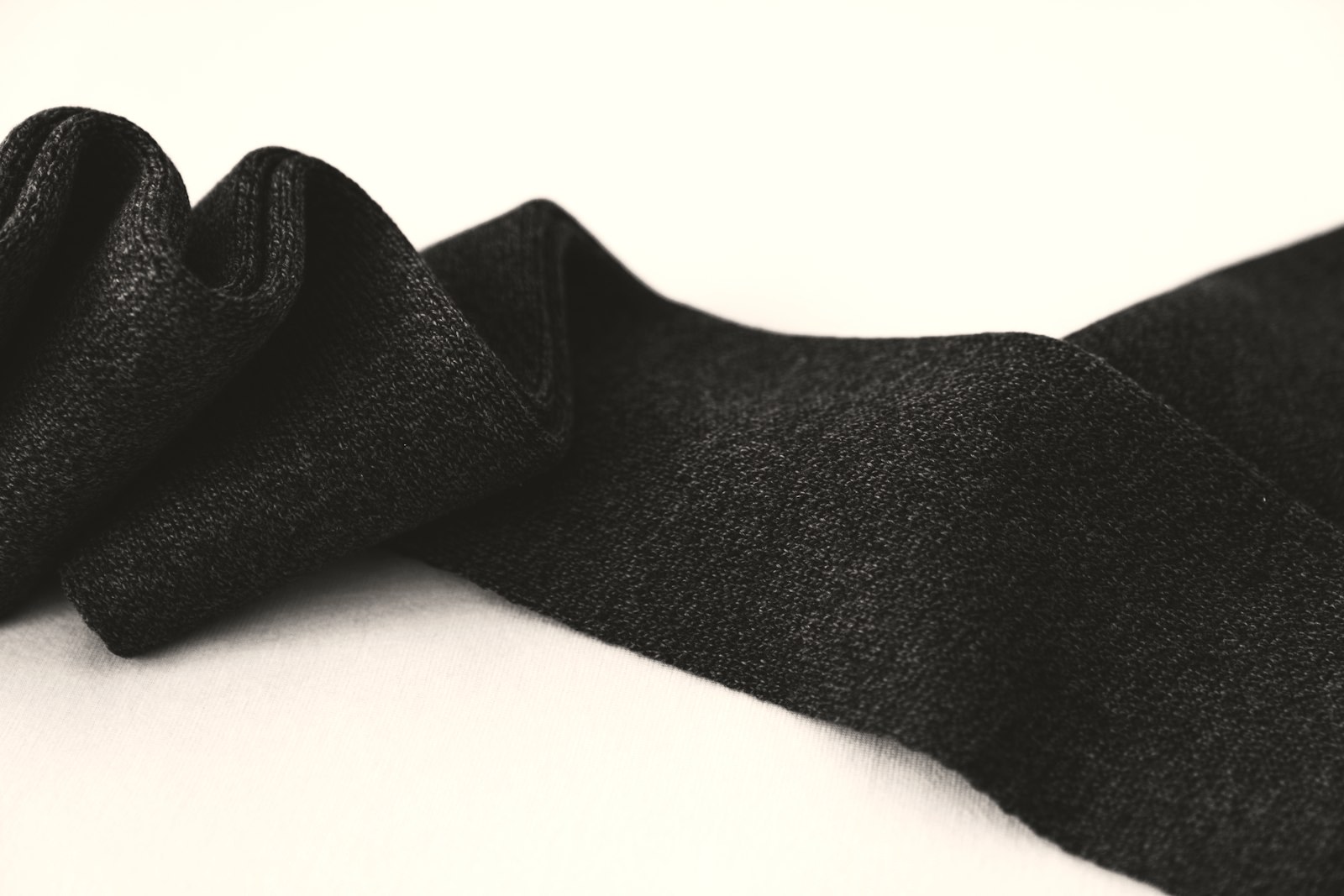
The cloth is the argument on this page, so the cloth is the picture: heavy wool at macro range. The bank holds no photograph of a pea coat in any species, a gap the honesty section below names in full rather than let a stranger's coat stand in for a ranked one.
Checked and updated October 2026
The verdict, up front: seven pea coats scored out of 100 on cloth 30, construction 20, fit 20, value 15, longevity 15, plus the one sent home. The Private White V.C. Melton Peacoat wins at 87, a 30 ounce cloth from a mill the house has used for over a century, sewn in its own Manchester factory, at £895. The Schott 740 follows at 84, the field's heaviest published cloth at 32 ounces and the naval specification filed whole, at $450. And the coat sent home, at 34, is the Moss Navy Peacoat, a tailoring house's wool blend whose own label reads 50 percent wool and 45 percent polyester. The count underneath the ranking is the story: two makers in eight publish the cloth's weight, three name the mill that wove it, and the wartime pocket lining survives at exactly one address.
The finding: two makers file the specification, the rest sell the silhouette
The pea coat is the most specified garment in menswear. It was not designed; it was issued, and the issue pattern is a checklist a buyer can still read off the original: a heavy melton cloth, a double-breasted front closed by anchor buttons, broad lapels that convert and button to the throat, hand-warmer pockets lined against the cold, a vent at the back, and a length cut to the hip so a sailor could climb in it. How to Wear No. 19 has worn this garment on this site from the beginning, files it at formality 3 and warmth 4 in the jackets index, and prints its cloth test in one line: the cloth should nearly stand up on its own, because soft melton is a sweater with buttons. What that page has never had, until now, is a ranking to point at. This is the ranking, and its method is the trench Card's method turned on the trench's naval sibling: grade what the maker publishes, and count how much of the specification survives the publishing. The count is the finding. Two of the eight makers publish a cloth weight, and both print it like a headline: 32 ounces at Schott, 30 ounces at Private White V.C. Four print a full fibre split on their own pages, Schott's 80/20, Suitsupply's 100 percent wool, Todd Snyder's 62/25/13 and the skip's 50/45/5, with a fifth, J.Crew's 80/20, readable in the trade record of its product page. Three name the mill or the weaver: a valley in Lancashire, a mill town in the Italian Alps, and a weaving house in China that a Dutch tailor prints without flinching. The corduroy-lined pocket of the wartime pattern survives, in brushed cotton, at one maker. The anchor button is named as a specification at two, and demoted to an inspiration at a third. Read the pattern and it splits the field cleanly in half: where the coat is still equipment, the maker files numbers; where it is fashion, the maker files adjectives, and the silhouette, which costs nothing to copy, is what is actually for sale.
The species map matters here the way it did on the overcoat Card, because a ranking of seven identical reefer jackets would grade one silhouette's paperwork seven times. The field below runs the specification as issued (Schott), the specification as craft (Private White V.C.), the specification as tailoring (Suitsupply), the specification as cinema (Billy Reid), the specification as catalogue heritage (L.L.Bean), the specification restyled in a suiting cloth at a longer length (Todd Snyder), the specification as a mall classic restored after a public failure (J.Crew), and, as the skip, the silhouette with half its cloth missing (Moss). Every score is a garment score. Where a house holds a brand score elsewhere on this site, the brand number is printed on the card and kept separate, in both directions.
How the scores work
Every coat is scored out of 100 on the same five rows, the basis carried unchanged from the overcoat Card so the two wool-coat rankings can be read against each other. Cloth (30) reads the published record first: a printed split scores, a printed weight scores again, a named mill or weaver a third time, because each is a claim a buyer can check. The split is graded the way the overcoat Card graded fibre splits, with one naval amendment: an 80/20 wool and nylon blend at a published 32 ounces is the specification's own working cloth and is scored as one, while a synthetic share approaching half the cloth ends the conversation. Silence is charged at each step, and it is charged hardest where the price is highest. Construction (20) is the build as published: buttons named by material, seams and stitching where the maker files them, lining and insulation where printed, and the maker's own review rail where it carries a pattern a buyer should know. Fit (20) applies this garment's own law rather than the overcoat's: the stack test and the hip-length rule from How to Wear No. 19, a coat sized to close over the heaviest knit in the wardrobe, its hem at the hip, with length published or the silence charged. A tie is ruled on the cloth row, the house's standing tiebreak; none occurs on this page. Value (15) divides the price by the published record and by the winters the longevity row scores, printed in the cost table below. Longevity (15) is the ownership audit: how the cloth ages, whether the house still sells the model, and whether the maker's guarantee or repair culture stands behind the coat when a button lets go, the pea coat's known consumable. Row scores add to the total, on every card.
The ranking
Private White V.C. The Melton Peacoat
The Specification as Craft · The Winner
UK price at last check: £895 at Private White V.C. (about $1,199 at £1 = $1.34). No buy pill: the maker's product page resisted capture at this check, and this desk does not link what it cannot open. The record below is graded from the maker's own journal and factory writing.
Buy it as the best cloth record in the field: a named mill, a published weight, horn buttons put on by hand, and a factory twenty minutes from the loom.
The cloth: an exclusive 30 ounce melton, woven, in the maker's own words, just twenty minutes from its Manchester factory, so tightly that it is windproof and shower resistant, and finished with the house's ECOSEAM treatment. The mill sits in Delph, in the Saddleworth valley the trade has named for this house before, and the founder's own account prints the relationship in one sentence: the same mill, the same melton, for over a century. The cloth row takes 29 of 30, the field's highest mark, docked the single point for the one figure the record withholds, a printed percentage: the cloth is published as melton wool and graded as wool, and a split in figures is the November pass's first revisit on this page. Against the index's cloth test there is no argument to have: a 30 ounce melton nearly stands up on its own by definition.
The build and the fit: the specification rewritten by craftsmen and printed as a numbered list in the maker's journal: oversized lapels that make a barrier of the collar, twin-welted front pockets lined in brushed cotton, the wartime corduroy lining's direct descendant and the only lined hand-warmer pocket in this field, real horn buttons, British-made and attached by hand, where the issue pattern stamped an anchor, a button-adjustable back belt, twin-needle topstitching, and two deep internal pockets closed by RiRi zippers, the zip maker named the way this desk asks every maker to name its hardware. Construction 19. Fit 16, and the deduction is printed rather than smoothed over: the maker cuts this coat, in its own words, to cover suit jackets and sports coats, which is a longer and roomier intention than the hip-length law How to Wear No. 19 rules for the species, and the coat is graded as the finest cloth in the field wearing a slightly borrowed cut. Value 8 at £895, about $60 a winter across the twenty winters the longevity row scores, and longevity takes the field maximum, 15: a coat sewn in the maker's own factory, in a model the house calls its bestseller, from a mill relationship older than the company town around it. Private White V.C.'s Donegal overcoat won the overcoat Card at 89; that number belongs to the overcoat. This 87 is the pea coat's own.
Schott 740 The Original US Navy Peacoat
The Specification as Issued · The Working Coat
US price at last check: $450 at Schott (long and large sizes $490 to $540).
Buy it as the pattern itself: the heaviest published cloth in the field, the full naval checklist on one product page, and a price the fashion end of this ranking never approaches.
The cloth: 32 ounce melton, the heaviest cloth published anywhere in this field, and the split printed in the maker's own description without a euphemism in sight: style 740 is an 80/20 wool and nylon blend, the wool for warmth, the nylon for the years. That is the specification's own working recipe, the blend a navy buys when a coat has to survive weather and wear rather than impress a rail, and the cloth row, 26, grades it as the honest heavyweight it is: docked for the synthetic fifth and for a mill the maker does not name, credited for a weight nobody else at this price publishes and a split nobody has to dig for. The maker's own range supplies the context and the page prints it fairly: Schott also sells a 100 percent wool melton peacoat, the 764, at $645, so the 740's blend is a price decision made in the open, with the pure-wool answer sitting on the same rail for $195 more.
The build and the fit: the checklist, filed whole on one product page: military anchor buttons, hand-warmer pockets, two inside chest pockets, a vented back, a nylon quilted lining, and a published length, 32 inches, one of only two lengths in this field, with long sizes offered for the tall. Made in the USA. Construction 17, the anchor buttons being stamped to the pattern rather than carved from horn, which is the correct hierarchy for a working coat. Fit 16 on the published length, the full chest-size run and a cut drawn to close over uniform layers, which is the stack test in its original uniform. Value 11 at $450, about $23 a winter across twenty winters, and longevity 14 on a model the house has sold for generations and a maker's own review rail that rates it 4.88 of 5 across 537 reviews, printed here because it is printed there. Schott's Perfecto 618 scored 85 as a garment on the leather jacket Card; that number belongs to a steerhide jacket. This 84 is the wool coat's own, earned on a different record entirely.
Suitsupply Navy Peacoat in Pure Wool
The Specification as Tailoring
US price at last check: $499 at Suitsupply (its European store lists €399; the door below is that store's product page).
Buy it as the tailored answer with the cleanest paperwork at the price: 100 percent wool, the weaver named, and hip length printed in the fit notes.
The cloth: composition, printed in the maker's own specification table in two words this page wishes were commoner: 100% Wool. Under it, a second line almost nobody in this field prints: woven by Longda, China Mainland, the weaver named on the product page the way the same house named it on the overcoat Card, where this desk credited the honesty and charges it the same way here, provenance in the open, graded on the cloth rather than the postcode. The cloth itself is a heavily milled navy wool with a brushed face, dense and close-cropped by the maker's description. What the record withholds is the weight: the house's own peacoat guide states that quality peacoats run 24 to 32 ounces, and then declines to say where this coat sits inside its own band. Cloth 24, the split and the weaver carrying it, the missing ounces charged.
The build and the fit: double-breasted closure, welted pockets, inside pockets, a single vent at the back, a full lining, lightly padded shoulders and buckled sleeve tabs, all printed in the fit notes, with construction at 15 on a tailored build whose seam and button specification the maker does not file. Fit 16, and the reason is one printed phrase: cut to a hip-length, the species' law stated on the product page itself, in a roomier cut through the chest and shoulders that is the stack test answered in tailoring language. Value 11 at $499, about $33 a winter across fifteen winters, and longevity 11 on the pure wool cloth and a house that keeps its coat patterns in the range season after season. Suitsupply the brand stands at 74, derived on Brands Like Spier & MacKay, scored across its whole range; this 77 is the pea coat's own, and the three points between them are what a 100 percent wool label does for a single garment's file.
Billy Reid Bond Peacoat
The Specification as Cinema
US price at last check: $898 at Nordstrom (the door below is the retailer's product page; the maker's own store resisted isolation at this check).
Buy it for the make, with the record understood: the most considered construction argument in the field, attached to the field's least numbered cloth.
The cloth: melton wool with polyamide in it, and the maker's journal does something this page honours even while it charges for the missing numbers: it argues for the synthetic in plain language. The polyamide is there, the house writes, because it gives the jacket structure, so that buttonholes and pockets do not eventually hang loose. That is a maker's reasoning printed where a buyer can read it, and it is worth more than the silence around it on richer pages. What the record never prints is the ratio, or a weight, or a mill: the cloth is described as tightly woven and felted for density, and the cloth row, 22, grades a well-argued cloth whose figures are all missing. In a field where the winner publishes ounces and the runner-up publishes its split, an argument is not a number.
The build and the fit: the construction is the card's argument, and it is a real one. The coat is intentionally unlined, the maker writes, as a mark of craftsmanship, the completely finished seams shown off rather than hidden, bulk removed, movement freed; genuine horn buttons; hand-warmer chest pockets; reinforced stitching at the structure points; a leather detail under the collar; made in Italy. Construction 17. Fit 15 on a tailored cut the house has kept since the coat's 2001 runway debut, with the maker's own name for it printed on the card because it is true: this is the coat a film's wardrobe department reached for, and the silhouette is the most considered in the field. Value 6 at $898, about $50 a winter across eighteen winters, and longevity 13 on a garment that has been the house's bestseller for over two decades, with wearers on the retail record reporting a thousand wears through Chicago winters. Billy Reid holds no brand score on this site and this card creates none: 73 is the coat's own.
L.L.Bean Men's Wool Peacoat
The Specification as Catalogue Heritage
US price at last check: $330 at L.L.Bean. No buy pill: the maker's product page resisted clean capture at this check; the price is verified from the maker's own storefront data, and the record below is graded from the maker's pages, its review rail included.
Buy it as the value in honest wool, with one instruction printed in advance: check the buttons when it arrives, and keep the receipt the house is famous for honouring.
The cloth: the maker names the garment a wool peacoat and its own review rail fills in the specification the product copy leaves short: wearers across years describe a 100 percent wool shell with a Thinsulate lining, anchor buttons, a front that buttons from either side in the old naval manner, and cloth one of them reports as loomed in Italy and crafted in Vietnam. Graded as the record stands, that is a pure wool cloth with named insulation and no published weight, and the cloth row takes 20, charged for the missing ounces and for a finish more than one wearer calls soft and open where the index's test asks melton to nearly stand up on its own. The warmth is not in dispute; the rail is full of cold states praising it. The density is asserted by the name and never numbered by the maker.
The build and the fit: construction takes 11, and the reason is printed on the maker's own pages in the maker's own customers' words, across six years of reviews: buttons arriving loose, buttons coming off in the hand, buttons re-sewn by their owners with upholstery thread. One report is an anecdote; a pattern running from 2020 to 2026 on the maker's own rail is a construction record, and this desk grades what is published. How to Wear No. 19 prints button re-sewing as the pea coat's scheduled repair; on this coat the schedule starts early, and the card says so. The fairness entry is also on the rail: the house swapped a coat without argument when it was asked, which is the guarantee culture Brands Like L.L.Bean scored at 87 as a brand, the strongest paper in this field even after its 2018 narrowing. Fit 15 on tall sizes and a generous cut that passes the stack test by temperament. Value 12 at $330, about $22 a winter across fifteen winters, the cheapest honest wool on this page per winter. Longevity 12: fifteen-year wear reports stand on the same rail as the button complaints, and both are the record. L.L.Bean's 87 is a brand score; this 70 is the coat's own.
Todd Snyder Herringbone Peacoat in Dark Charcoal
The Specification Restyled · The Silk Blend
US price at last check: $1,098 at Todd Snyder.
Buy it as a reefer jacket in a beautiful suiting cloth, knowing the page grades it as a pea coat: the mill is named, the wool share is the lowest among the ranked, and the length has left the species.
The cloth: the split is printed whole, and it is the most interesting cloth record in the field: 62 percent virgin wool, 25 percent nylon, 13 percent silk, a herringbone woven in Italy at Sondrio, and the maker names the mill and its founding in 1895 on the product page, the fullest provenance statement here after the winner's. The cloth row, 21, holds two truths at once. As disclosure, this is exemplary: ratio, mill, country, all filed. As pea coat cloth, it is a suiting: 62 percent wool is the lowest wool share among the seven ranked coats, silk is in the blend for handfeel rather than weather, and no weight is published for a cloth the index's test would ask to stand up on its own, which a wool and silk herringbone was never woven to do. The maker is honest about the garment it set out to make, a luxe upgrade of the reefer in its own words. This page grades the garment against the species it is sold under.
The build and the fit: the naval furniture is present and well made: double-breasted closure, horn buttons, a throat latch at the collar, which is the reefer's own storm fastening and is credited as one, two welted hand-warmer pockets at the chest, cuff tabs, four exterior and two interior pockets, partially lined. Construction 16. Fit takes 13, and the deduction is the length, published by the maker in plain words: hits at mid thigh. How to Wear No. 19 separates that garment by name: past the hip, a pea coat leaves its compression and becomes a bridge coat, judged on the overcoat's terms. This coat is graded here as the field's most elegant bridge coat wearing a pea coat's name, on a relaxed fit the maker itself advises sizing down from. Value 5 at $1,098, about $73 a winter across fifteen winters, the field's steepest per-winter figure among the ranked, and longevity 12 on the Italian cloth and the house's tailoring culture. Todd Snyder the brand stands at 79 on the family split on Brands Like Todd Snyder; this 67 is the garment's own, and the distance between them is the distance between a house's range and one coat's cloth.
J.Crew Dock Peacoat with PrimaLoft
The Specification Restored · The Mall Classic
US list price at last check: $298 at J.Crew (the coat is promoted so often that the list price is the honest one to grade).
Buy it as the attainable classic, in its restored form only: eight buttons, the long cut, the pockets back where the pattern puts them.
The cloth: a wool blend whose split the trade record of the product page reads at 80 percent wool and 20 percent polyamide, the naval ratio, with PrimaLoft insulation doing the warmth work the melton does on the coats above it. No weight is published, no mill is named, and the maker's own review rail carries the cloth's demerit in its customers' words: a fabric that can pick up lint and pill with regular wear, which is what a lighter melton does and why the index's cloth test exists. Cloth 18: an honest ratio at an honest price, in a cloth that asks its insulation for help. The insulation itself is credited rather than mocked: PrimaLoft in a $298 coat is real warmth engineering, and the rail's praise for it is consistent. It is simply a different answer to warmth 4 than density, and this page's basis pays for density.
The build and the fit: the current coat is a restoration, and the record of what it restores is the most instructive file in this field. For two seasons the maker chopped the pattern: shorter body, six buttons instead of eight, the lower flap pockets deleted, and the trade record reports the chopped coats were dumped to final sale and moved slowly even there. The coat now sold is the classic form returned: eight-button front, chest-high hand-warmer pockets and lower flaps, anchor-inspired buttons in the maker's own rail's phrase, an interior tech pocket, a length that covers a sportcoat again. Construction 13, with the rail's note about inside button placement printed as the demerit it is. Fit 15 on the restored length and a straight cut with room to layer. Value 11 at a $298 list, about $30 a winter across ten winters. Longevity 9 prices the pilling reports and a pattern the maker has already shown it will redesign when fashion asks. J.Crew the brand stands at 73 on Brands Like Charles Tyrwhitt; this 66 is the coat's own.
Moss Navy Peacoat
The Skip: Sent Home · Half the Cloth Missing
UK price at last check: £199 at Moss (about $267 at £1 = $1.34). No buy pill: this desk does not link what it sends home.
Send it home: a tailoring house selling a wool blend that is half not wool, with a cuff its own page admits does not function.
The cloth: the maker's complete published composition, quoted from its own product page, reads Outer: 50% Wool, 45% Polyester, 5% Other. Half the cloth is wool. Nearly half of it is polyester, in a garment whose entire claim on a wardrobe is that it is the heavy wool coat, sold by a house whose trade is cloth, under the words wool blend. No weight is published, and at this split a weight would only make it worse: 45 percent polyester does not get warmer by the ounce. The cloth row takes 8. The overcoat Card sent home a coat at 52 percent wool because its own rail sold a pure wool coat for forty dollars more; this coat's conviction is the same shape in a sharper suit, a specialist in wool garments printing a half-synthetic split in the small type of a page that leads with the silhouette.
The build and the fit: the published architecture is the silhouette kept and the function filed off: peak lapels, an authentic double-breasted closure in the maker's phrase, fully lined, a back vent, side-entry pockets, and, listed among the features on the maker's own page, a non-functional cuff. A cuff that does not function is this page's finding in a single detail: the pea coat's furniture reproduced as decoration, on a coat whose cloth has already been halved. Construction 8, fit 9 on a tailored cut that at least keeps the hip-length line. Value 5 and longevity 4 close the card at 34, about $53 a winter across the five winters a cloth of this class serves, more per winter than the Schott, the Bean or the J.Crew above it. The full conviction is written in the skip section below. Moss holds no brand score on this site and none is created here: 34 is the garment's own, and it is the label, not the silhouette, that earned it.
The record table: what each maker actually publishes
| Coat | Weight, as published | Split, as published | Mill or weaver, as published | Specification filed |
|---|---|---|---|---|
| Private White V.C. Melton Peacoat | 30 oz | Melton wool (percentage not printed) | Delph, twenty minutes from the factory | Brushed-cotton-lined pockets, horn buttons, RiRi zips, back belt |
| Schott 740 | 32 oz | 80% wool, 20% nylon | Not named (made in USA) | Anchor buttons, hand warmers, vent, 32 in length |
| Suitsupply Navy Peacoat | Not published | 100% wool | Longda, named on the page | Vent, hip length printed, inside pockets |
| Billy Reid Bond Peacoat | Not published | Polyamide admitted, ratio not printed | Not named (made in Italy) | Horn buttons, hand warmers, unlined by design |
| L.L.Bean Wool Peacoat | Not published | 100% wool (maker's name and review rail) | Not named | Anchor buttons, Thinsulate, buttons either side |
| Todd Snyder Herringbone Peacoat | Not published | 62% virgin wool, 25% nylon, 13% silk | Tessuti di Sondrio, named | Throat latch, horn buttons, mid thigh length |
| J.Crew Dock Peacoat | Not published | 80% wool, 20% polyamide (trade record) | Not named | Eight buttons, hand warmers, lower flaps, PrimaLoft |
| Moss Navy Peacoat (skip) | Not published | 50% wool, 45% polyester, 5% other | Not named | Vent; non-functional cuff, in the maker's words |
Read the table as the category's confession. The weight column holds two numbers, and both belong to the makers who still treat the coat as equipment: the American naval contractor's descendant and the Manchester factory. The split column holds the page's strangest pattern: the bottom of the market prints its split because it must, the specialists print theirs because they can, the tailored middle prints a clean 100 percent and a weaver's name, and the two most expensive coats in the field, at $898 and £895, between them publish one weight, no ratio and one mill. Money is not what buys disclosure. The makers who file numbers are the ones whose customers check them.

The warmth audit: density, insulation, and the coats that will not say
A pea coat's warmth is not a mood; it is a cloth weight with a lining decision behind it, and the makers' own pages print which answer each coat gives. Two coats answer with density, the naval way: 32 ounces of melton at Schott, 30 at Private White V.C., cloths woven so tight the second maker prints windproof as a property of the weave itself. One coat answers with insulation: the J.Crew, whose PrimaLoft fills the gap its lighter melton leaves, a legitimate engineering answer that the maker's own customers praise, scored here as the different mechanism it is. One coat answers with a named lining fibre, the Bean's Thinsulate, standing behind a wool shell whose weight goes unpublished. And three coats, the Suitsupply, the Billy Reid and the Todd Snyder, answer with adjectives: heavily milled, tightly woven, a luxe herringbone, each probably warm, none numbered. The jackets index files the type at warmth 4, the warmest short coat it lists, and the audit's point is that warmth 4 is a claim a maker can either evidence or merely inherit from the silhouette. The coats that publish ounces evidence it. The coats that publish nothing are asking the pattern's reputation to warm you, and reputations, unlike melton, let the wind through.
Cost per winter, printed in the open
| Coat | Price | Score | Life scored | Cost per winter |
|---|---|---|---|---|
| L.L.Bean Wool Peacoat | $330 | 70 | 15 winters | About $22 |
| Schott 740 | $450 | 84 | 20 winters | About $23 |
| J.Crew Dock Peacoat | $298 | 66 | 10 winters | About $30 |
| Suitsupply Navy Peacoat | $499 | 77 | 15 winters | About $33 |
| Billy Reid Bond Peacoat | $898 | 73 | 18 winters | About $50 |
| Moss Navy Peacoat (skip) | £199 (about $267) | 34 | 5 winters | About $53 |
| Private White V.C. Melton Peacoat | £895 (about $1,199) | 87 | 20 winters | About $60 |
| Todd Snyder Herringbone Peacoat | $1,098 | 67 | 15 winters | About $73 |
The table's argument is in its middle rows. The skip, the second cheapest coat here to buy, costs more per winter than five of the seven coats ranked above it: cheap and short-lived is not cheap, in a pea coat any more than in an overcoat. The two honest bargains are the heritage coats, the Bean at about $22 a winter and the Schott at about $23, which is what a published cloth and a pattern that never gets redesigned do to arithmetic. The winner is expensive per winter and says so on its card; what its £895 buys is the field's best record and a twenty-year horizon, not a bargain. And the field's steepest line belongs to its most beautiful cloth: a pea coat graded as a pea coat cannot make a suiting's numbers add up, however fine the suiting is.
The skip: the Moss Navy Peacoat at 34
Every Verdict Card on this site sends one garment home, and the honest ones are convicted out of their makers' own mouths. This one's maker is a tailoring house, a firm whose entire trade is knowing what cloth is, and its page for this coat performs the whole modern manoeuvre in two lines of type. The headline sells a navy wool blend peacoat at £199, peak lapels, an authentic double-breasted closure, the silhouette complete. The composition, printed below in the maker's own figures, reads 50 percent wool, 45 percent polyester, 5 percent other fibres. Half of the heavy wool coat is not wool. Nearly half of it is the fibre the naval specification was invented to avoid, the one that pills, shines and gives up in five winters, in a garment whose warmth, shape and dignity all come from the density of a wool cloth it only half contains. Then the features list completes the record the label began: fully lined, back vent, side-entry pockets, and a non-functional cuff, the maker's own words for a button arrangement that does nothing, furniture reproduced as a photograph of furniture. That is the silhouette sale in its purest form on this page: the shape of the specification, half the cloth, none of the function, at tailored money. Buy the J.Crew and own the naval ratio with real insulation for a hundred pounds more in dollars and a decade of wear. Buy the Bean and own pure wool and a guarantee for less per winter than this coat costs. A pea coat is a cloth with a checklist. This is a checklist with half a cloth.
Which pea coat to buy
If you buy one: the Schott 740, the specification whole at $450 and about $23 a winter, the coat this ranking would hand a first buyer without a footnote. If you buy the best: the Private White V.C., the finest cloth record in the field and a Manchester factory behind it. If the cut must be tailored: the Suitsupply, 100 percent wool with the weaver named, hip length printed on the page. If the make is the argument: the Billy Reid, unlined and finished like a cabinet, bought with its unnumbered cloth understood. If the money is the argument: the L.L.Bean at $330, pure wool and the field's best guarantee culture, with the buttons checked on arrival. If you want the reefer as fashion: the Todd Snyder, a beautiful bridge coat in a suiting cloth, bought under its true species. If the budget is firm: the J.Crew Dock in its restored eight-button form at $298. The wearing system is How to Wear No. 19, the longer sibling is ranked on the overcoat Card and styled in How to Wear No. 20, the rain sibling is ranked on the trench Card, the species map is the jackets index, and every garment in the stack is mapped in the Body Map.
Questions, answered
What are the best pea coats for men?
The Private White V.C. Melton Peacoat, scored 87 out of 100: an exclusive 30 ounce melton woven twenty minutes from the maker's Manchester factory, in a mill the house has used for over a century, with horn buttons attached by hand, pockets lined in brushed cotton, two internal pockets on RiRi zippers and a button-adjustable back belt, at £895. The Schott 740, the Original US Navy Peacoat, follows at 84: the field's heaviest published cloth, 32 ounces, its 80/20 wool and nylon split printed in the maker's own description, made in the USA at $450. The coat sent home, at 34, is the Moss Navy Peacoat, whose own published split reads 50 percent wool and 45 percent polyester.
What should a pea coat be made of?
Melton wool heavy enough to nearly stand up on its own, which is the cloth test our jackets index prints for the type. The honest field on this page runs from 100 percent wool (Suitsupply, and the L.L.Bean coat its maker names a wool peacoat) through the published naval blend, Schott's 80 percent wool and 20 percent nylon at 32 ounces, a blend the specification itself sanctions because nylon is what lets a working coat survive a ship. The split is the grade, the way it was on the overcoat Card: a maker that prints its ratio can be judged, a maker that prints none is asking to be paid for a number it will not state, and a coat that is half polyester under a wool name has left the species. Cloth weight is the second figure: exactly two makers in eight publish one.
Schott 740 or Private White V.C.: which pea coat should you buy?
They are the two coats on this page that still file the naval specification, and they file it from opposite ends. The Schott 740 is the specification as issued: 32 ounce melton, anchor buttons, hand-warmer pockets, a vented back, a published 32 inch length and a quilted lining, in an 80/20 wool and nylon blend the maker prints without embarrassment, made in the USA at $450. The Private White V.C. is the specification as craft: 30 ounce melton from a named mill valley, horn buttons where the spec had anchor-stamped ones, pockets lined in brushed cotton where the wartime spec lined them in corduroy, RiRi zippers inside, at £895. Buy the Schott for the working coat at working money. Buy the Private White for the best cloth record in the field and a Manchester factory behind it. The three points between them are the price of the second answer.
How should a pea coat fit?
Hip length, as our jackets index files the type and How to Wear No. 19 rules it: the hem covers the seat and ends at the hip, the double-breasted front is worn closed, and the coat is sized over the heaviest knit it will close over, because a pea coat that only fits over thin layers is a coat for the shop's weather, not the harbour's. Length past the hip leaves the species: it becomes a bridge coat and is judged on the overcoat's terms, which is why the Todd Snyder coat ranked here, published at mid thigh, is graded as a drift and not as a longer pea coat. Two makers in this field publish a length at all, Schott at 32 inches and Suitsupply, which prints hip length in its fit notes; the rest ask the buyer to guess the one measurement that defines the garment.
How warm is a pea coat?
Warmth 4 on our jackets index, the warmest short coat on it, level with the overcoat and below only the puffer at 5. The mechanism is density rather than loft: a heavy woven melton that wind cannot move through, which is why the naval cloths on this page are published in ounces, 32 at Schott and 30 at Private White V.C., and why a pea coat in an unpublished cloth of unknown weight is a warmth claim with no evidence behind it. What warmth 4 does not cover is the legs: a hip-length coat leaves the thigh to the trouser, and in the coldest week of the year the index sends you to the puffer or the overcoat with the pea coat's blessing printed in advance.
Why is the Moss pea coat the one sent home?
Because its own product page convicts it, in the maker's own figures. Moss is a tailoring house, and it sells this coat as a navy wool blend peacoat at £199; the composition printed on the same page reads 50 percent wool, 45 percent polyester and 5 percent other fibres, which means half the cloth is not wool and nearly half of it is polyester, in a garment whose whole reason to exist is a heavy wool cloth. The same page lists a non-functional cuff among its features, the silhouette kept and the function dropped, which is this page's finding in miniature. On the five winters a cloth of this class serves, it costs about $53 a winter, more per winter than the Schott, the Bean or the J.Crew ranked above it. The name says wool blend. The label says half, and the label is the maker's own.
How this ranking stays honest
The rests, the capture notes and the flags, printed. Spier & MacKay was seeded for this field and failed verification: no pea coat could be pinned to a live record in the house's current range at this check, so the house is rested rather than graded on a ghost, its brand score of 76 untouched, and the tailored slot went to Suitsupply, whose record verified in full. Sterlingwear of Boston, the Navy's own contractor for nearly fifty years on the published record, is rested because its current civilian range could not be pinned to a live maker record at this check; the desk does not grade a coat it cannot open, and the omission is the capture's fault, not the coat's. Filson is rested, no pea coat pinned on the maker's own store at this check; its Mackinaw cloth record stands where the tree already keeps it. Brooks Brothers is rested: its classic pea coat trades at a $598 list on the retail record, and the house's own specification could not be captured at this check; the brand stands at 77, untouched. Gloverall is rested on the same capture terms, its English-made melton noted in the trade record and ungraded here. H&M was rested deliberately, as it has been rested through this run of Cards; its derived brand score stands untouched on its own page, and no garment here triggers its fourteenth derivation entry. Zara is rested, its brand score of 48 untouched. On capture: the Private White V.C. record is graded from the maker's own journal and factory writing, its product page resisting capture at this check, which is why the winning card ships without a buy pill and why its cloth percentage is this page's first November revisit; its £895 price is the current UK figure carried in the trade's price record. The Billy Reid record is graded from the maker's journal, with the price verified on the retailer's product page that carries the card's door. The L.L.Bean record is graded from the maker's storefront data and its own review rail, the product page resisting clean capture, which is why that card also ships without a pill. The J.Crew split is read from the trade record of its product page, Dappered's hands-on account, the maker's details section having resisted verbatim capture; the price is the maker's list. The Suitsupply record was read in full on the maker's European storefront, and its dollar figure is the US list carried in the trade record. On photography: the bank holds no photograph of a pea coat in any species, the same gap How to Wear No. 19 admitted on its own page; this page's frames show heavy cloth and the winter rail, captioned for what they are, the cards run without images, and the harvest list names what is missing, in order: a pea coat on a body in any species, the converted collar closed at the throat, a melton macro at reading distance, and a double front buttoned in frame. One flag for the record: How to Wear No. 19 states in its final FAQ that Young Cotton has not ranked pea coats as a Verdict Card and offers its own buying rule instead; that line is stale from this page's publication. The amendment is the parent desk's to make, and it is flagged in this page's state file rather than made here. Prices and specifications were checked against the makers' own published pages in October 2026; where a figure could not be verified from the maker's page, the page says so at the figure's elbow. The full method is written out on the methodology page.