
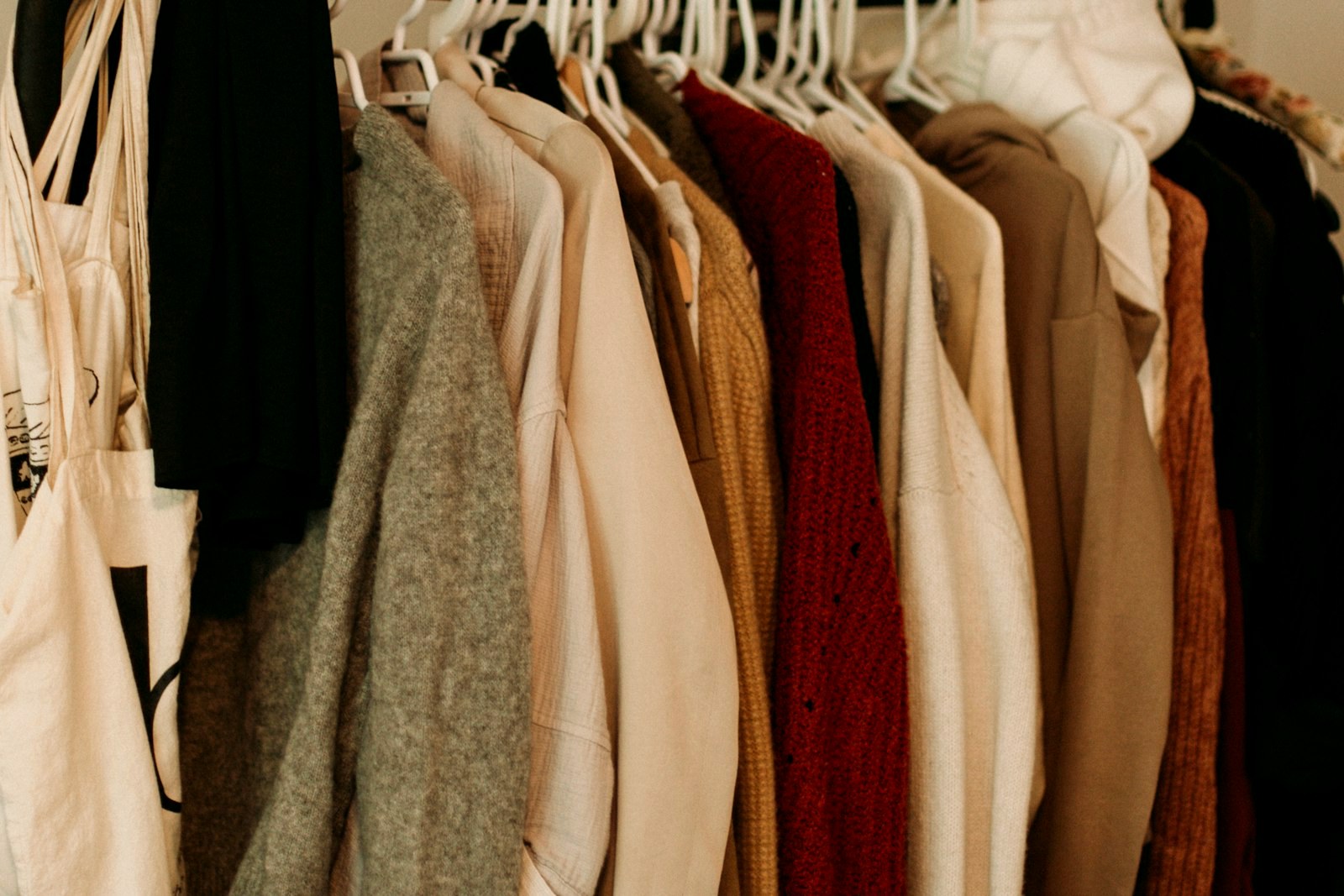
The garment's rail, captioned as exactly that: neutral garments on a rail in soft light, the palette this brief dresses from. No garment on this rail is a ranked hoodie, and our bank holds no hoodie photography at all, on a body or off one, the gap Verdict Card No. 26 admits in its own hero caption; this page repeats the admission rather than covering it with a borrowed shot.
Checked and updated October 2026
The ruling, up front: a hoodie is the least forgiving garment in the casual wardrobe, because there is nothing else in it. No tailoring to hide behind, no lining to rescue it, no collar to frame the face: only the weight of the fleece, the build of the hood and the honesty of the price. So this brief grades it the way Verdict Card No. 26 grades it, as a garment first, cloth, construction and rib, and only then as an outfit, worn under a ceiling the Card prints in arithmetic: a hoodie is a layer, a layer sits one rung below the garment it covers, and a piece moves an outfit one notch, never two. The Card's field is the brief's wardrobe: the American Giant Classic Pullover winning at 87 on the field's heaviest published weight, the Noah Core Classic at 80, the Uniqlo oversized at 76 and $49.90, the Reigning Champ loopback terry at 74, and a $595 logo track hoodie sent home at 49. This page prints the hood test that shops for the garment, the weight line that classes it, the face rule that dresses it up or down, the overcoat conditions and the blazer refusal, the outfit matrix that assembles the whole thing, and the five ways the garment is ruined.
This brief: the decisive rule · know which hoodie you are holding · the hood test · the weight line · the face rule · under tailoring · the bottom half and the monochrome route · the season line · the looks · the mistakes · care and our photography
The decisive rule: the hood is the garment's collar, and it is graded like one
Every brief in this family has a rule that decides the garment, and the hoodie's is a law of substitution. Every other soft garment in this series has a part that does the dressing: the knit polo has its collar, the sweatshirt has its ribbed crew band, the overshirt has its shirt front. The hoodie has the hood, and the hood does all of that work at once: it frames the face, it carries the garment's silhouette at the back, and it is the part whose failure retires the garment. The Card prints the failure list and it is short: a hoodie dies of pilling and of hood collapse, where a single-layer hood loses its stand and lies flat and dead against the back, and the replacement signal is the hood and the cuffs, not a hole. That is this brief's decisive rule, printed as new: a hoodie is bought on its hood's construction and its cloth's record, a hood built in two layers that stands on its own, a weight the maker publishes, a face whose bargain the buyer has chosen on purpose, and rib that grips and recovers; and it is worn as a layer under a one-notch ceiling, over the dressed bottom half and under outerwear, never asked to do a jacket's job in a formal room or a shirt's job under a blazer, because a garment whose collar is a hood has a layer's obligations, not a tailored garment's excuses.
The rule's first corollary is about buying, and it is the Card's own discipline carried to the rail: the evidence is thin on purpose in this category, and the buyer has to read the thinness. Exactly two makers in the ranked field of seven publish a fleece weight at all, the winner at 12.2 ounces per square yard and the terry at 390 grams per square metre. The other five are graded with the absence on the card, because an unpublished weight is data too: it tells you what the house thinks the number would do to the sale. The hood test below is the buying form of the rule, three checks, two of them run by hand on the garment, each one a proxy the Card's record supports.
The second corollary is about wearing, and the Card prints its arithmetic already: the hoodie sits below the overshirt's formality 2, smart casual's floor, because it is a layer, and a layer is always one rung below the garment it covers. Run forward, that arithmetic is generous: over a tee, an Oxford or a flannel, the hoodie is the dressed end of fleece, and under a coat it is legal in every room the coat is. Run one step too far, under a blazer or as the answer to a dressed invitation, it is a two-notch ask, and two-notch asks read as costume. The sections below print each ruling once, with its source: carried across from No. 26 and No. 23 where the law is the family's, ruled here where the hood changes the answer.
Know which hoodie you are holding: the classes and their seats
The rail sells several garments under the hoodie's name, and No. 26 separates them by weight class and face before it grades any of them. The wearing rules differ by seat, so the seats come first.
| Form | Build | Its seat on the Card |
|---|---|---|
| The heavyweight | The published class from around 390 GSM up; worn as the outer layer itself, the jacket on fleece days | The American Giant Classic Pullover at 87, 12.2 osy published, about 414 GSM in the Card's desk conversion, double-lined hood, metal hardware |
| The house heavyweight | Heavyweight fleece as a house cloth, the weight unpublished, the cut classic and regular | The Noah Core Classic at 80, the prep altitude, $168 at the maker's own store |
| The midweight loopback | Loopback terry, loops uncut inside; the layering class, nine months of the year | The Reigning Champ Midweight Terry Standard at 74, 390 GSM published, made in the maker's Vancouver factory |
| The drape class | Dropped shoulders, room in every direction, the silhouette carried by pattern rather than cloth evidence | The Uniqlo Sweat Oversized Pullover at 76 and the Fear of God Essentials Classic at 71, fit row 19 each, the field's joint-highest |
| The silhouette at mainline prices | The drape outline finished to a permanent-collection standard and priced as a fabric | The Fear of God Eternal at 63, $550 at list and $220 in its own channel's markdown, value row 2 |
| The logo class | A track build whose product is the inscription across its chest | The skip at 49, the Palm Angels Curved Logo Track Hoodie, $595, no published weight or cloth evidence |
One boundary causes most of the confusion in this family, and it is drawn plainly here because the two garments share a rail, a cloth and most of a name: the sweatshirt is this garment without the hood. The crew of Verdict Card No. 35, styled in How to Wear No. 23, has no hood, no kangaroo pocket and no drawcord, and every cloth ruling in this brief, loopback against brushed, weight against job, rib against slouch, is shared with it entire. What the hood changes is the trade, not the cloth. The crew is the cleaner layer under tailoring, with nothing at the back of the neck to argue with a coat's collar. The hoodie is the outerwear-leaning garment, the one carried over the office clothes to the door and worn as the top layer on cold streets, because the part it adds is the part that faces the weather and the room. A buyer choosing between them is not choosing a cloth. He is choosing which rooms the garment is for.
The hood test: three checks at the rail
The Card grades the hood as a record; the wearer meets it as a garment on a hanger, in a field where the record is mostly blank. These checks are the same facts in shopping form, and the counts behind them are No. 26's, run across its seven graded records.
The stand check. Stand the hood up on the hanger and let go. A built hood holds its shape empty: two layers of cloth, the Card's winner double-lined, the opening framed the way a collar frames a neck, the silhouette present before a head is in it. A single-layer hood collapses on the hanger exactly the way it will collapse on the back in its second year, and hood collapse is one of the garment's two deaths, printed on the Card as the replacement signal. This check takes seconds and it is decisive, because the hood is the garment's collar and its whole silhouette at the back: a hood that will not stand in the shop is not a hood that will stand in the street.
The rib check. Stretch the hem rib and the cuff rib once, and watch them come back. The rib is the garment's structure made visible: it holds the hem at the hip, holds the boxy cut's room where the pattern says it ends, and it is the second half of the replacement signal, the cuffs. The Card's fit law is read through it: boxy is a cut, room carried with structure, and sloppy is a failure, the same room with the structure gone. The rib is where the difference lives in the hand. A rib that returns slowly, or stays where it was pulled, is a garment already spending its structure, and no styling rule below can spend it twice.
The record check. What the hand cannot settle, the page sometimes can, and No. 26's counts are the shopping list of what to look for. A weight stands on two of the seven records. A fibre line in percentages stands where the blend is sold, the drape line's 80 and 20. The winner's page is the field's spec sheet entire: weight, hood lining, elbow reinforcement, metal at every point where cord meets cloth, double-needle stitching, a size chart in inches to 3X. None of it proves a hood's stand, and the brief does not pretend otherwise. What it proves is the maker's habit, the pattern the Card prints across its field: the garments that publish are the garments that place, and a maker who prints a weight and a build is a maker whose hood was built to be asked about. The silence is also information, priced on the Card: the field's dearest garment publishes nothing about its cloth at all.
Worn, the hood has one job beyond standing: it has to keep lying where it is put. Down, it lies flat at the back of the neck in two neat layers, the garment's collar at rest; bunched, twisted or stuffed inside its own neckline, it spends the whole silhouette on a detail nobody decided. The test at the rail buys the construction; the habit of seating the hood flat keeps it, and the care section's constants keep the rib that the second check reads.
The weight line: the hoodie's three classes
A hoodie is bought in a weight class whether the buyer names it or not, and the line is the Card's, printed as its second argument entire: midweight is the default, heavyweight is outerwear, lightweight is a layer. The classes are wearing instructions before they are specifications. The midweight, the terry class at a published 390 grams per square metre, is the hoodie for nine months of the year, the one that goes under a coat in January and over a tee in April, and it is the class most readers should default to. The heavyweight, the published class that starts around the same 390 and runs up through the winner's 414 in the desk's conversion, is not a thicker version of the same purchase; it is a different garment, worn as the outer layer itself, graded as outerwear and winning as outerwear. The lightweight is a layer to be worn under other things, bought for that job or not at all, and bought as the purchase it disappoints in both directions. A reader who buys one hoodie for every job buys the midweight and accepts the compromise. A reader who buys the best hoodie buys the winner and wears it as the coat it is.
The weight line has one consequence the matrix below is built on: weight decides the seat, not the taste of the wearer. A heavyweight hoodie under an overcoat is outerwear forced into a layer's seat, its bulk breaking the coat's shoulder line, the exact waste the sweatshirt brief names at the same class. A midweight under the same coat is the assembly working as designed, the coat arguing the fleece up. And the reverse holds at the dressed end: the midweight is the only class that takes the tailored rows at all, because the heavyweight's seat is the street and the lightweight's seat is under something else. Read the weight first. The rows follow from it.
The face rule: loopback dresses, brushed warms
The second dial is the inside face of the cloth, and the ruling is shared across two rankings, stated on the sweatshirt Card and applied unchanged to the crew's hooded brother: loopback is the longer-lived and the dressed face; brushed is the warmer buy and the shorter-lived one. A loopback or terry cloth leaves its loops uncut on the inside face. It lies flatter against the body, slides under a coat without grabbing, presents a smooth, matte outside face to the room, and has no raised pile to pill. A brushed fleece raises its inside into pile: warmer and softer on the first touch, and the first surface in the garment to pill and mat, which is why the Card costs it in the longevity row and names pilling one of the garment's two deaths. Neither is a defect. They are two different bargains, and the wearing rules spend them differently.
The rule's wearing form is one line: where the hoodie is asked to dress, it dresses in loopback. Under the overcoat, over the pleated trousers, in the monochrome register, the face against the room is the flat, matte face, and the pile stays home with the sofa rows it was raised for. The field's published loopback is the terry in fourth, and its crew brother holds the same cloth at 81 on No. 35, which is the family's way of saying the face ruling outranks the hood question: a brushed hoodie and a loopback crew are bought for different rooms, and the loopback crew dresses above the brushed hoodie every time. Warmth is the brushed face's honest claim, and this brief does not argue it away; it prices it, in the rows where warmth is the job, and refuses it the rows where the surface is.
Under tailoring: the overcoat conditions and the blazer refusal
The hoodie's tailored life is real, narrow and already ruled on in two places, and this brief adopts both rulings entire and adds only the hood to them. The first is the sweatshirt brief's overcoat answer, printed in How to Wear No. 23 for the crew and carried across to the hoodie with its one part added. A midweight loopback, in grey marl, navy or black, survives under a tailored overcoat: the coat argues the fleece up, and loopback is the cloth that can accept the argument. Brushed fleece never survives it, because the pile grabs the coat's lining and reads as sofa cloth under tailoring. A heavyweight never survives it either, because its bulk at the shoulder breaks the coat's line. And the hood has one legal position under a coat: down, lying flat in its two layers at the back of the neck, inside the coat's collar line, never bunched between the shoulders and never worn up under a coat in a room. The ranked seat for the assembly is the Reigning Champ terry at 74, the field's published loopback, whose crew brother at 81 holds the same cloth for the buyer who wants the row without the hood's negotiation.
The second ruling is the refusal, and it is the Card's own, printed in its office section and carried across whole because the pairing is the one this garment is most often photographed in: a hoodie does not go under a blazer. The arithmetic is the loafer brief's one-notch rule run in reverse. A piece can move an outfit one notch; the hoodie sits below formality 2, and the blazer sits at the tailored end of smart casual, so the pairing asks two notches at once, and a two-notch ask does not split the difference, it reads as a costume. The hood itself files the same objection in cloth: bunched at the back of the neck, it is bulk exactly where a jacket's collar needs a flat lie, and no fit discipline below removes it. This brief prints the refusal as the family's standing law rather than as a missed assembly: the tailored garment that carries a hoodie is the coat, because a coat is outerwear and the hoodie is its layer by trade. Under a blazer, the legal soft layers are the ones with collars or clean necklines of their own: the knit polo, buttoned to the top, the crew neck sweater, and the crew sweatshirt of No. 23, each styled in its own brief.
The office ruling rides with the refusal, and it is the Card's, carried across: the hoodie has exactly two legal office forms. It is the commute layer, worn over the office clothes to the door, doing a light coat's work in the shoulder seasons, and off at the desk. Or it is the top layer in a genuinely casual room, clean, logo-free and midweight, in a workplace where a plain tee would already pass. In any room that measures formality, the answer is a jacket, and the hoodie waits outside it. What the garment genuinely owns is wider than the refusal makes it sound: the whole dressed-casual middle, the tailored trousers rows below, the coat rows, the monochrome route, owned there in the specification this brief prints, its hood standing and its rib recovered.
The bottom half, the loafers and the monochrome route
A hoodie worn at its dressed end is decided below the waist, because the top half has already declared itself casual and the bottom half is where the outfit argues it back. The brief's standing line: the hoodie dresses in proportion to what it is worn over, and its best partners are the tailored pieces it cannot be. Pleated trousers, ranked in the pleated trousers Verdict ranking, are the first seat: a clean front, a held crease, a hem that ends the leg deliberately, against which a midweight loopback in grey marl or navy reads as the soft half of one outfit rather than the whole of a casual one. The drape class takes the same row in its own register, the oversized hoodie over a wide, pleated trouser being the silhouette the field's fit rows were drawn around, provided the rib still ends the hoodie where the pattern says and the trouser's break is clean. Denim keeps its rows entire, dark and straight, the hoodie's home ground since before this site ranked it. What the bottom half refuses is company in kind: sweatpants under a hoodie is fleece answering fleece, a tracksuit by accumulation whatever the pieces cost apart, and shorts under a hoodie is two seasons arguing. The garment's ease is spent once, at the top.
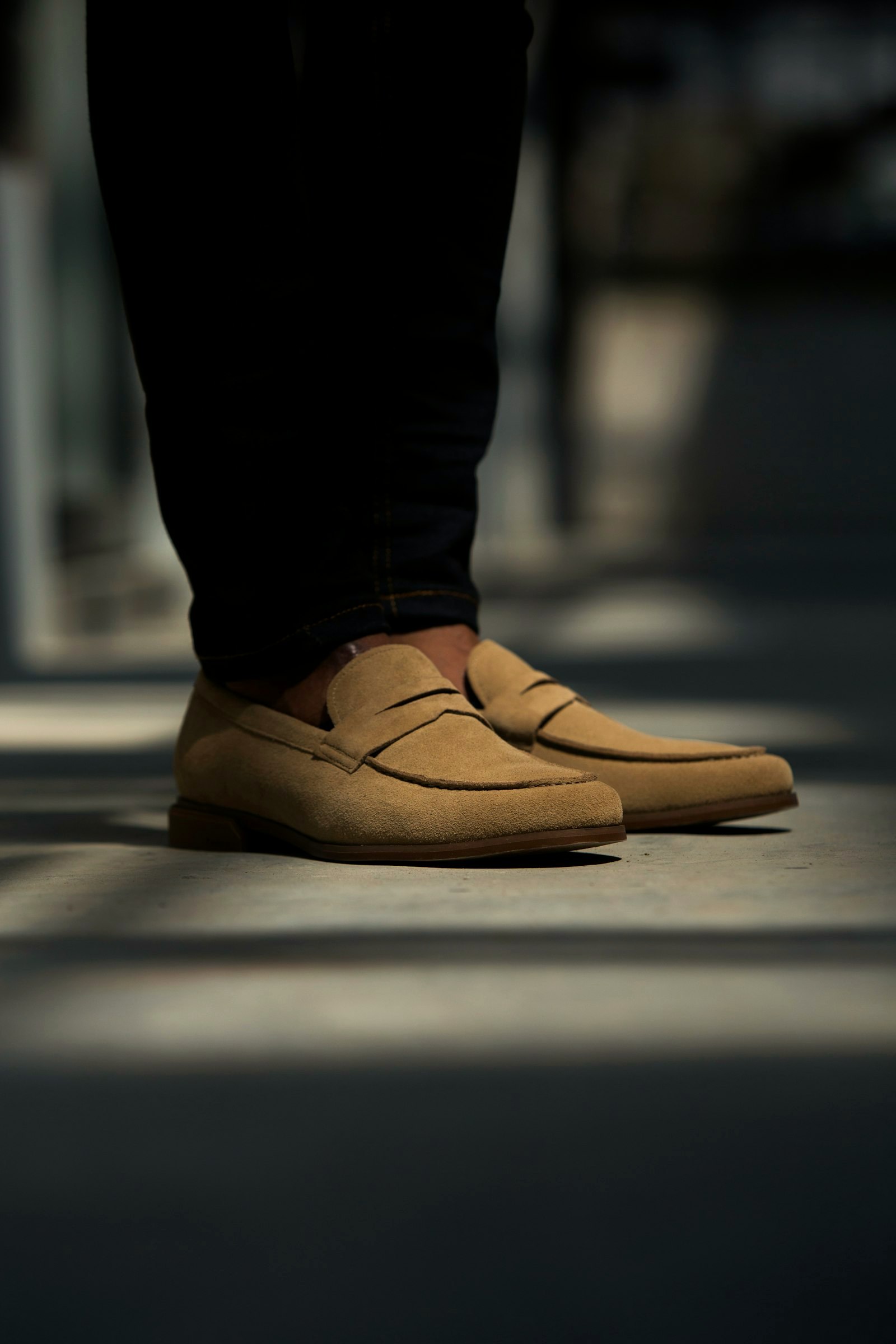
The shoes take the same argument one rung further, and the loafer is the brief's chosen instrument: How to Wear No. 11 prints the loafer as the shoe that moves an outfit one notch, and the hoodie is the garment that spends the notch best, because the notch lands where the eye finishes. A suede loafer under a midweight hoodie and pleated trousers is the dressed assembly entire, soft at every point and deliberate at every point. White sneakers keep the street rows, clean and minimal, and boots take the heavyweight's outerwear rows, where the shoe has to answer the coat the hoodie is being. The refusal list is short: no running shoes with the tailored rows, because the notch arithmetic runs both ways, and no shoe louder than the garment, because a hoodie's whole register is that nothing in the outfit is shouting.
The monochrome route is the garment's formal register, such as it is, and this brief rules it the dressed hoodie's best single move. One colour, head to hem, black on black or the grey scale entire: the hoodie, the trouser, the shoe, the coat where one is worn, each piece a tone of the same colour rather than a contrast. Monochrome does for the hoodie what it does for every soft garment: it deletes the seams between the pieces, lengthens the whole read, and moves the interest to the two things this brief grades, the cloth's surface and the garment's structure, which is why the route demands the loopback face and the standing hood and forgives nothing in either. The field's seats for it are the winner in black, bought as outerwear and worn as the whole top half, and the drape class in its vintage black, whose stockist page is the colour's own name. What breaks the route is a single contrast piece worn as an accent, a white trainer under an all-black read: the route is a discipline, not a palette with exceptions, and the exception is the whole effect spent on a shoe.
The season line: a layer's calendar
The hoodie files below formality 2 and keeps the filing in every month: it is the dressed end of fleece, not a rung on the formality ladder, and the tailoring rulings above are the filing doing its work. Its calendar is the layer's calendar, split by the weight line. The midweight is a nine-month garment, the layer under coats in the cold half and the top over tees in the shoulder seasons, the rotation's default in exactly the months the Fall Edit assembles. The heavyweight is a cold-half garment worn as outerwear, the coat on fleece days, and in July it has no honest work at any score. The lightweight is a summer evening's layer and a traveller's, bought under things or not at all. In high summer the whole family yields its dressed rows to the camp collar and the piqué, and takes them back in September with its hoods standing. That rotation, each class in its season, is why the buying ruling below is one honest hoodie in the right class before two in the wrong one.
The looks: the Card's field, worn in its order
Five assemblies from this brief's rulings, each built on the published records around the garment. The hoodies are No. 26's, in the Card's order and at the Card's scores; the garments around them are the rankings named in the sections above; nothing in the judgments is scored here.
| Setting | The hoodie | With | The judgment |
|---|---|---|---|
| The fleece as coat | The American Giant Classic Pullover, 87, hood up against the weather, down in the room | Dark straight denim or pleated trousers below, boots, nothing over it | The weight line's heavy end at work: the field's heaviest published cloth worn as the outerwear the Card grades it as, double-lined hood standing, metal at the cord, $31.00 a year across five. The judgment carries the Card's fit note entire, that the classic cut is structured where the soft standard drapes, and the maker's own size-up instruction is the row's first line |
| The coat row | The Reigning Champ Midweight Terry Standard, 74, hood down and flat | A tailored overcoat over it, pleated trousers, suede loafers | The tailored assembly the garment genuinely owns, executed on the field's published loopback: 390 grams per square metre sliding under the coat without grabbing, the coat arguing the fleece up, the loafer spending the notch at the feet. The trim Standard fit is the row's condition, bought by the maker's own steering or sized up from it |
| The prep hoodie | The Noah Core Classic, 80, worn as the top layer | An Oxford beneath it in the cold months, chinos or cords below, loafers | The hoodie that behaves like the rest of a tailored wardrobe: heavyweight house fleece at a printed price, in stock at retail, unremarkable in the best sense for a decade. The judgment carries its charge with it, that the house publishes no weight for the cloth, bought for the house record knowingly at $168 |
| The monochrome drape | The Uniqlo Sweat Oversized Pullover, 76, in black | Black pleated trousers, black minimal shoes, one colour head to hem | The drape class in its formal register: dropped shoulders and room in every direction at $49.90, the field's joint-highest fit row, the monochrome discipline moving the read to cloth and structure. The judgment carries the Card's longevity note, that the structure is a two-year proposition at the rib and the hood stand, at the cheapest year in the field, $24.95 |
| The drape at line prices | The Fear of God Essentials Classic, 71, in its vintage black | Wide tailored trousers, clean minimal shoes, nothing else competing | The outline bought from the line that industrialised it, at $140 rather than the mainline's $550: the same dropped, stacked silhouette, graded as a garment, hand wash and final sale printed on its card and carried here. The row is the monochrome route's second seat, and the brief seats it last among the dressed rows because its cloth is a blend where the rows above it are cotton entire |
The Eternal at 63 stands outside the matrix on its maker's own arithmetic: at its channel's $220 markdown it is a defensible drape purchase for the reader whose religion it is, and at its $550 list it is the matrix's most expensive way to buy a silhouette the line below it sells at $140, which is why the brief prints the markdown beside the list wherever the garment is named. And the skip is worn nowhere: a track hoodie at $595 whose name is its logo programme is not the dressed seat in any row here, because at $198.33 a year, six times the winner's year, it is not even the expensive option it poses as. It is the dearest one, for the field's thinnest evidence.
The ruling
Buy the garment on the hood test: a hood standing in two layers on its hanger, rib that stretches and returns, from a maker whose page prints a weight or a build, which in the Card's field means the American Giant at $155 for the complete record worn as outerwear, the Reigning Champ terry at $128 for the layering default and the coat row, the Noah at $168 for the prep wardrobe, and the Uniqlo at $49.90 for the attainable silhouette. Wear it under the ceiling: over tees and Oxfords, under an overcoat on the coat row's conditions, over pleated trousers with loafers at the dressed end, in one colour when the register has to rise. Keep the face rule: loopback where it dresses, brushed where it warms, each bought as the bargain it is. Refuse the blazer, refuse the logo doing the talking, refuse fleece over fleece. The hoodie is the soft wardrobe's hardest-working layer, and worn on its construction it is the garment the whole register is named for: ease with its structure still in it, standing at lights out because it was built to.
The mistakes
The collapsed hood bought anyway. The buying error the Card exists to catch: the species believed from the product name, without the stand check. A single-layer hood lying flat and dead on the hanger is not a style, it is the garment's second death arriving early, and the convicted form is the dearest one in the field, a $595 track hoodie that publishes nothing about its cloth while its name sells the logo. The stand check takes seconds at the rail: the hood up, empty, holding its shape, or it is not this garment at this money. A hood that will not stand in the shop will not stand in the street, and no wearing rule in this brief can spend a structure the garment does not have.
The blazer over it. The class error, and the most photographed one in the garment's life: the two-notch ask worn as a compromise. The hood bunches where the collar should lie, the fleece reads gym against the jacket's tailoring, and the assembly flatters neither garment. The family's law is arithmetic, printed on the Card and carried across in the tailoring section: one notch, never two. The coat is the tailored garment built to carry this layer; the blazer is not, and under it the legal soft layers have collars and clean necklines of their own.
The wrong face for the room. The cloth error in its two halves. Brushed pile under an overcoat, grabbing the lining and reading as sofa cloth against tailoring, spends the coat row on the face that was never built for it. And loopback bought for deep-winter warmth, then judged cold, is the same error reversed: the loopback's bargain is surface and life, not insulation. The face rule is a buying rule before it is a wearing one: name the room first, then the face, then the garment.
Fleece over fleece. The accumulation error: the hoodie over sweatpants, or under a fleece jacket, ease spent at every point until the outfit has no point left. The garment's softness is a contrast instrument; it reads against a tailored trouser, a denim leg, a coat's structure, and it reads as nothing against itself. One soft fact per outfit is the register's whole discipline, and the bottom-half section prints the partners that keep it: pleats, denim, the loafer's notch.
The logo doing the talking. The family's standing mistake, carried across from the polo brief because fleece is not exempt from it: the chest logo scaled from a signature into signage, the mark readable across the room, in its convicted form a garment named for the curve of its own logo at $595. On a garment whose whole argument is a quiet construction, a published weight, a hood that stands, the billboard reverses the polarity the species exists for: the hoodie stops being worn and starts being carried. A small mark at handshake distance is a maker's signature. Anything larger is the wearer paying to display an advertisement, and it demotes the cloth, the hood and the rib work into the logo's supporting cast.
Care, and a note on our photography
A hoodie is retired by its hood and its cuffs, so its care is aimed at exactly those addresses. The rib is washed gentle and never wrung, because the recovery the rail test reads is a property heat and torque spend first. The brushed face is washed inside out and kept away from the dryer heat that mats its pile, because pilling, the first death, is friction with a temperature. The hood is dried shaped, its two layers smoothed flat, rather than left bunched on a line, because the stand is a set the cloth takes while it dries. The field's care column prints the spread honestly: machine wash cool and a warm dryer at the winner's end, no ceremony anywhere; hand wash only on the drape line's card, a contradiction the Card prices without comment; and where a maker publishes nothing, the care label on the garment is the only record and it governs, read before the first wash rather than after it. The watch points are the garment's own: the hood's stand, checked the way the rail test checks it, standing empty after a wash; the cuff's recovery; and the hem rib's grip at the hip, the first place a boxy cut announces it has become the sloppy failure.
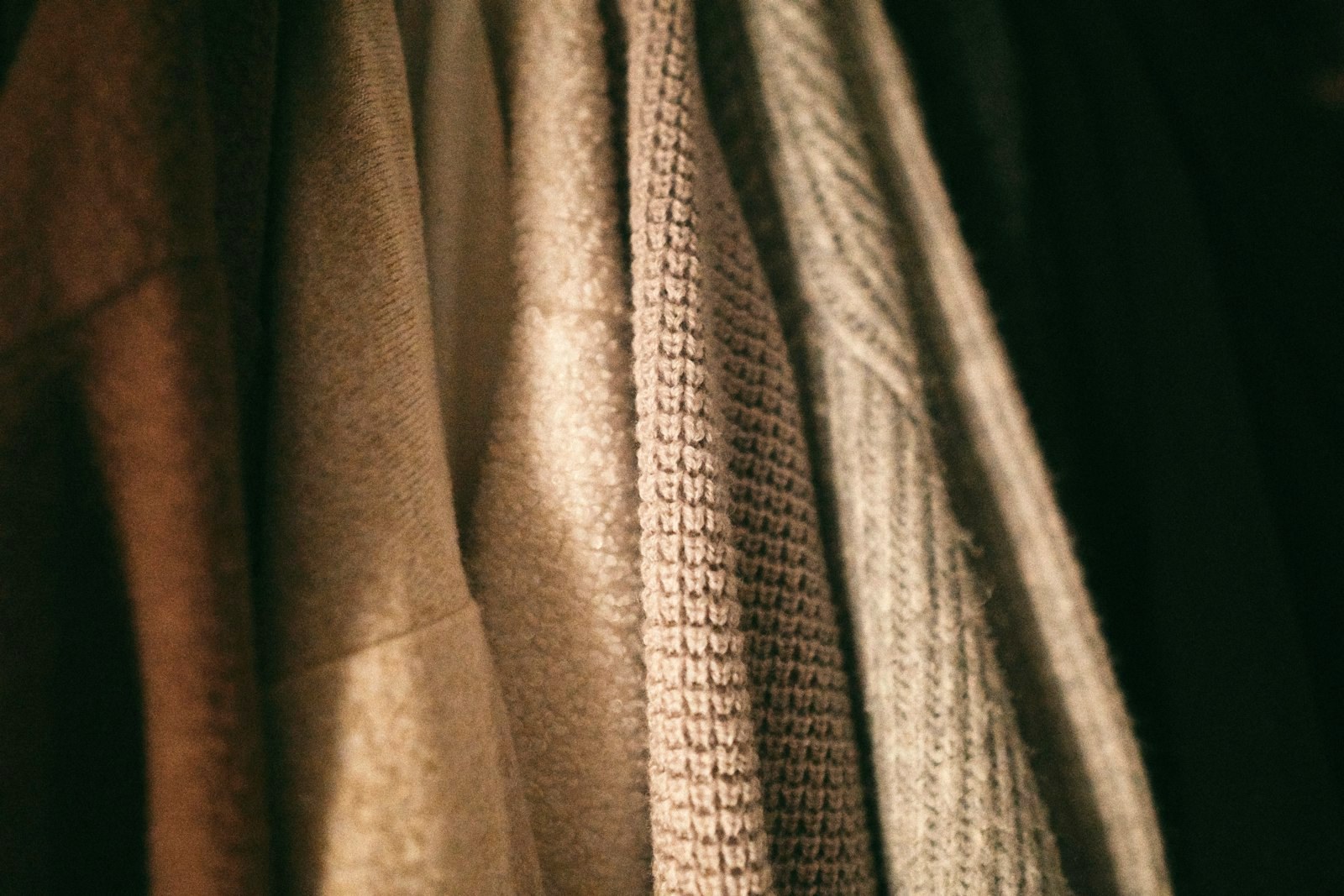
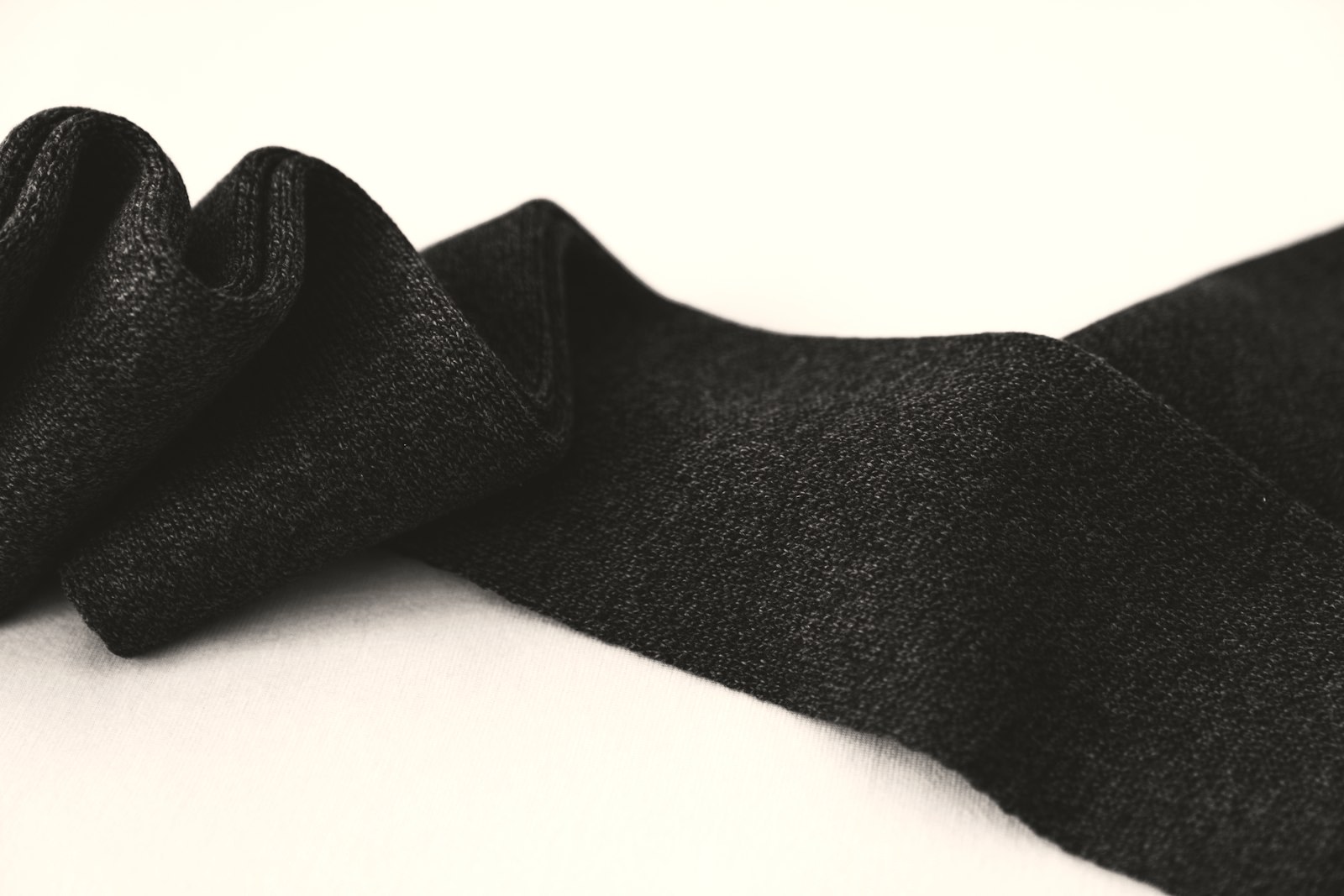
A note on our own photography: our photo bank holds no hoodie photography at all, no fleece on a body in street light, no hood standing in profile and no macro of a loopback face against a brushed one, the gap Verdict Card No. 26 admits in its hero caption and names in its honesty section as this category's harvest list. This page repeats the admission rather than covering it with a mislabelled picture. There is no photograph of a ranked hoodie here, and no frame of the coat row this brief exists to rule on. This page will take those frames the week they exist, in the Card's own harvest order: a heavyweight hoodie worn on a city street, a double-lined hood standing in profile, a cloth macro that shows the loopback face against the brushed one. Until then the bank's garment rail, its cloth at close range, the loafer row and the monochrome cloth carry the page, captioned for exactly what they show.
Questions, answered
How do you wear a hoodie?
As a garment first and an outfit second, in that order. A hoodie is graded on its cloth before its cut, because the cloth is the garment entire: the face of the fleece, loopback or brushed, the weight where the maker publishes one, a hood built in two layers that stands, and rib at the cuff and hem that grips and recovers. Worn, it obeys the layer arithmetic our hoodie ranking prints: a hoodie is a layer, a layer sits one rung below the garment it covers, and a piece moves an outfit one notch, never two. So it goes over a tee or an Oxford and under outerwear, over tailored trousers and loafers at its dressed end, and it is never asked to be a jacket in a formal room or a shirt under a blazer. Verdict Card No. 26 ranked the garment entire, the American Giant Classic Pullover winning at 87, and this brief is the wearing system that ranking implies.
How heavy should a hoodie be?
By the job, on the line our hoodie ranking prints: midweight is the default, heavyweight is outerwear, lightweight is a layer. Midweight, the class of the Reigning Champ terry at a maker-published 390 grams per square metre, layers under a coat and works nine months of the year. Heavyweight, the published class that starts around 390 grams per square metre, is worn as the outer layer itself, and the ranking's winner is graded as exactly that, a 100 percent cotton fleece at a published 12.2 ounces per square yard. Lightweight fleece is bought to be worn under things. Exactly two makers in the ranked field publish a weight at all; a maker who publishes none is graded as unpublished, never estimated from a photograph, and the silence is itself a buying fact.
Loopback or brushed fleece: which should you buy?
Loopback for the longer life and the dressed rows, brushed for warmth bought knowingly, on the ruling our hoodie and sweatshirt rankings share. A loopback or terry cloth leaves its loops uncut on the inside: it breathes better, slides under a coat without grabbing, holds a cleaner surface and has no raised pile to pill. A brushed fleece raises its inside into pile: warmer and softer on the first touch, and the first surface in the garment to pill and mat, which is the failure the rankings cost in the longevity row. The wearing consequence is plain: under tailoring and in the monochrome register, loopback is the only legal face, because brushed pile grabs a coat's lining and reads as sofa cloth. Brushed is the warmer buy and the shorter-lived face; neither is a defect, and the two are different bargains.
Can you wear a hoodie under an overcoat?
Yes, in one cloth, one weight class and the dark neutrals, and it is the tailored assembly this garment genuinely owns. The conditions are the sweatshirt brief's overcoat answer with the hood added: a midweight loopback, the terry class at a published 390 grams per square metre or the layering cloth beneath it, in grey marl, navy or black, the hood down and lying flat at the back of the neck, the coat over it arguing the fleece up. Brushed fleece never survives the coat, because the pile grabs the lining. A heavyweight hoodie never survives it either, because its bulk at the shoulder breaks the coat's line; the heavyweight is worn as the coat, not under one. And no fleece of any weight answers a suit, which is a formality contract no cloth renegotiates. The ranked seat for the assembly is the Reigning Champ Midweight Terry at 74 in Verdict Card No. 26.
Can you wear a hoodie under a blazer?
No, on this site's published ruling, and the ruling is arithmetic rather than taste. A hoodie can move an outfit one notch, the loafer brief's rule run in reverse on our hoodie ranking: it cannot move it two. A blazer asks the layer beneath it to sit one rung below tailoring, and the hoodie sits below the overshirt's formality two, two rungs and a hood away, with the hood itself bunched at the back of the neck where a collar should lie flat. The result reads as a costume, a formal garment and a gym garment photographed together, rather than a compromise between them. The tailored garment that can carry a hoodie is the overcoat, because a coat is outerwear and the hoodie is its layer by trade. Under a blazer, the legal soft layers are the knit polo, the crew neck sweater and the sweatshirt, each styled in its own brief.
Hoodie or sweatshirt: which should you buy?
They are one fleece family divided by a single part, and the part decides. The sweatshirt, ranked on Verdict Card No. 35 and styled in How to Wear No. 23, is the crew: no hood, no kangaroo pocket, no drawcord, the same loopback and brushed cloths under the same rulings, won there by the Reigning Champ Midweight Terry Standard Crewneck at 81. The hoodie adds the hood, and the hood changes the garment's trade: it becomes the outerwear-leaning layer, the one worn as the top on cold streets and carried over the office clothes to the door, while the crew is the cleaner layer under tailoring, with nothing at the back of the neck to argue with a coat's collar. Buy the crew for the dressed rows and the hoodie for the street rows; buy either in loopback first, because the cloth rulings are shared entire.
How should a hoodie fit?
By the distinction our hoodie ranking prints: boxy is a cut, sloppy is a failure, and the difference is structure. A boxy hoodie drops the shoulder on purpose and carries room in every direction, and still ends where its pattern says: the hem at the hip, held there by a rib that grips, the hood standing in two layers instead of lying flat and dead. A sloppy hoodie has the same room with none of the structure, and it can be read at lights out, hood collapsed, cuffs surrendered, hem belled. Buy the cut in your size and the failure in no size. In a trim pattern, follow the maker's own steering: the ranking's winner tells its buyers to size up for a relaxed fit, and the terry in fourth is a trim Standard fit its maker steers broader bodies away from. The published size libraries run from XXS to 3XL at the attainable end, so the chart, not the mirror's optimism, is the instrument.
Has Young Cotton ranked hoodies?
Yes. Verdict Card No. 26 ranked seven hoodies on their published records and sent one home: the American Giant Classic Pullover winning at 87 on a published 12.2 ounces per square yard of 100 percent cotton fleece with a double-lined hood at $155, the Noah Core Classic second at 80, the Uniqlo Sweat Oversized Pullover the attainable answer at 76 and $49.90 with the field's joint-highest fit row, the Reigning Champ Midweight Terry at 74 on the field's other published weight, and the one sent home at 49, a $595 track hoodie whose product is the logo across its chest. This brief is the wearing system that ranking implies: it styles the Card's field in the Card's order, carries the Card's rulings across where they govern, and scores nothing of its own.
Next
The family this brief belongs to: the ranking it styles is Verdict Card No. 26, and the garment's crew brother is ranked in Verdict Card No. 35 and styled in How to Wear No. 23, whose cloth rulings this page shares entire. The tailored half of the coat row stands in How to Wear No. 20; the notch that prices the dressed rows is printed in How to Wear No. 11; the bottom half's ranking is the pleated trousers Card; the soft layer that takes the blazer row instead is styled in How to Wear No. 45; and where the hood lands on the body is drawn in the Body Map.