

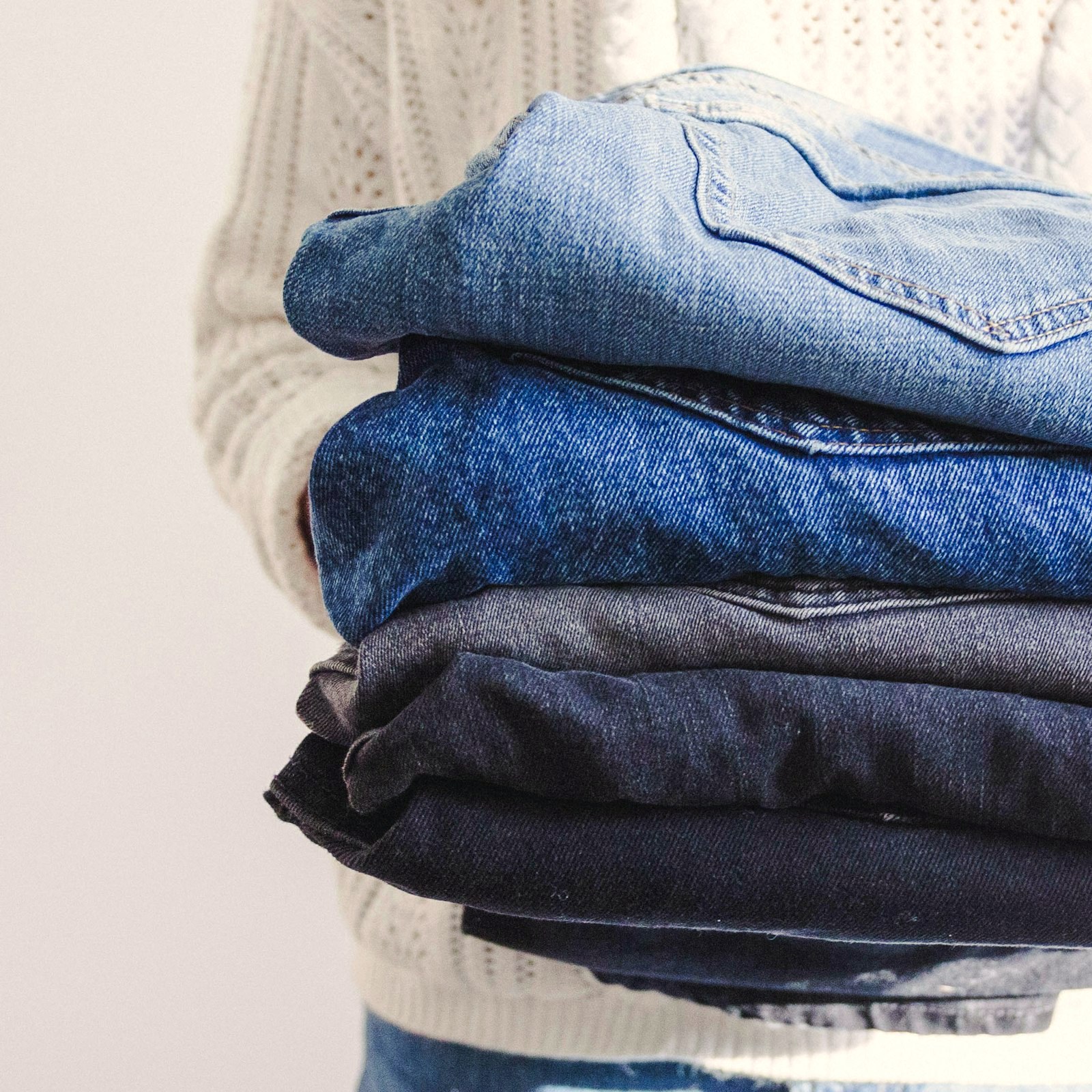
The jacket, captioned as exactly that: the top half of the denim pairing in its classic band, the seat this page's garment takes when it is worn as the top piece. Our bank holds no frame of a denim shirt worn, on this page's subject or any other, and the page repeats the admission rather than covering it with a borrowed shot; the ladder the shirt is judged on is figured folded below.
Checked and updated October 2026
The ruling, up front: the denim shirt is the jacket’s understudy. It takes the trucker’s seat in the outfit, the top piece, the soft half of the denim pairing, and it inherits the trucker’s whole law: nothing denim stands above it, and below it the leg breaks from it by the full ladder, opposite ends or a change of family, or is not denim at all. The law underneath is already published on this site: the shirt index files the garment at formality 2.5 with its one rule printed, How to Wear No. 05 prints the wash break and the tuxedo that limits it, No. 16 prints the two conditions, and No. 49 prints the one-axis rule and the shirt’s seat inside it. This brief styles the shirt itself, across its whole wardrobe: it prints the decisive rule, the three species and the chambray distinction, the ladder read for a top piece, the shirt test, the open front, the blazer contract, the trouser rail, the double-denim boundary, the outfit matrix, and the five ways the shirt is ruined.
This brief: the decisive rule · the species · the ladder, read for a shirt · the shirt test · worn open · under a blazer · the trouser rail · the boundary · the season line · the looks · the mistakes · care and our photography
The decisive rule: the shirt takes the jacket’s seat
Every brief in this family has a rule that decides its garment, and this garment has been waiting at the edge of three of them. The denim shirt appears in this site’s records first as a problem: in No. 05 it is the third surface of the denim tuxedo, the full house of jacket, shirt and jean that collapses the read; in No. 49 it is ruled on again, convicted inside the pairing and licensed in exactly one seat. What neither brief did, because neither brief was its, is style the shirt itself: the garment a man actually owns, in the washes it actually comes in, against the whole rail of what it can be worn with. This is that document, and it begins by stating the boundary in the open, as No. 49 stated its own: the law below is not new. It is the pairing’s law, read from the shirt’s side of the waistband.
That is this brief’s decisive rule, printed as the shirt’s form of the standing law: the denim shirt takes the jacket’s place in the outfit, and is judged exactly as a jacket is judged. Nothing denim stands above it. Below it, the leg must break from it at the ladder’s full distance, opposite ends or a change of family, its surface differing from the shirt’s and its cloth heavier than the shirt’s, or the leg must not be denim at all, in which case the shirt owes the ladder nothing and is simply the outfit’s one denim, worn at its index filing of formality 2.5. A shirt worn any other way, under a denim jacket, over a matched jean, doubled with a second denim shirt, is not a styling choice to be weighed. It is one of the convicted forms, and the convictions are already in print.
Two clarifications belong to the rule itself, because the shirt is not a jacket and the differences are where its wardrobe lives. The first is weight. A jacket pairing holds its cloths in the garment order, the top piece at or above the leg’s class, and No. 49’s agreement check convicts the shirt-weight jacket over the heavyweight jean as an inversion. The shirt runs the same check in the opposite direction, and it is the shirt’s nature, not its failure: the shirt is cut from cloth lighter in weight and weave than the jean, shirt-weight denim and chambray below the jacket’s classic band of 12 to 14 ounces, and worn as the top piece its lightness does visible work, the soft half of the pairing reading as a shirt against the leg’s armour. That is why No. 49’s ruling names the chambray or work-shirt cloth as the form that passes most easily over jeans: the weight axis, which a jacket must hold in agreement, a shirt spends on purpose. The second clarification is the one this commission’s premise got wrong, corrected here rather than absorbed: the shirt Cards on this site are real, the Oxford, flannel, linen and camp collar rankings, but no Verdict Card ranks a denim shirt or a chambray shirt, and this brief invents none. The shirt’s authority here is its index filing and the denim law, and every shirt in the looks below is named as a species and a class, never with a borrowed score.
The species: the work shirt, the western and the chambray
The shirt index files the family in one paragraph, and this brief prints it as a table because the three species are bought as one garment and worn as three. All three stand at formality 2.5 on the index’s ladder, and all three fail the same way, dressed up past their cloth.
| Species | The build, as the index prints it | Its seat |
|---|---|---|
| The denim work shirt | A point collar on midweight denim, buttons where the western has snaps, work-grade construction; judged by the Denim Index’s classes like every denim on this site | The species entire: the shirt the ladder is read for, the top piece over jeans and the one denim over the trouser rail |
| The western shirt | The tailored sibling: the same denim or a lighter twill, cut closer, shaped yokes across the chest and back, snap fastenings. The yokes are reinforcement at the shoulder, worn smooth by a century of use; the snaps give way before the cloth tears | The dressed species: the cut that carries the shirt nearest its ceiling, the one that goes under the blazer and over wool trousers, its snaps and yokes read as the garment’s tailoring |
| The chambray work shirt | Not denim: a plain-weave cloth with a coloured warp and a white weft, which is why it reads as denim softened and weighs a fraction of it; a plain point collar, triple-stitched at the seams that take the strain | The summer species and the easiest pass over jeans: denim’s read without denim’s weight, for the workshop and everywhere denim is too much |
The chambray distinction deserves its own sentence, because it is the one most often spent carelessly. Chambray is not a light denim and it is not a wash; it is a different weave, plain where denim is twill, and it is not on the wash ladder at all. Its index rule is therefore a colour rule, never the same colour as the jeans below it, where the denim shirt’s rule is a wash rule, never the same wash as the jeans. In practice the two rules are kept the same way, by distance, but the distinction governs the shirt’s best trick: a chambray over a dark jean needs no fade, no surface argument and no apology, because its cloth is visibly another cloth, lighter in the hand and softer in the light, and the break the ladder exists to manufacture is woven into it. The denim shirt must earn its distance in wash. The chambray is born with its distance in weave.
The ladder, read for a shirt
The Denim Index defines the ladder for every denim on this site, and the shirt climbs the same three indigo stops the jacket does: dark, raw and one-wash; mid, stonewashed; light, faded and worn pale, with black and white and ecru standing beside the ladder as colour families rather than stops. Read for a top piece, the stops sort by what they can stand over. The dark shirt is the species’ anchor: over a light or faded leg it is No. 16’s ruled head-on pairing with the roles filled by a shirt, and over the trouser rail it is the darkest class the shirt sells, the one that goes under tailoring. The light shirt is the summer stop: over the deep jean it is the classic direction with a shirt in the jacket’s seat, its pale surface lived against the rigid leg, and it is the wash the open front below is built on. The mid shirt is the trap class in a collar: the mid stop fails against indigo altogether, at any shade, from either direction, and a mid-wash denim shirt over jeans is the near match whichever leg it meets, convicted before the mirror. Its partners are the ones the mid jacket’s are: black jeans, ecru jeans, and trousers that are not jeans at all, where it is an easy and honest shirt.
The families beside the ladder do for the shirt what they do for the jacket. Black is a colour system, not a wash: a black denim shirt over an indigo jean breaks by family at full distance, and black over black is licensed only inside the full monochrome, where texture does the separating. Ecru and white are the undyed summer class: an ecru denim shirt over a dark jean is the family break in its lightest form, and the pale shirt over the pale trouser is the matched set in summer cloth, convicted by the same sentence as every other match. The ladder is the whole of the shirt’s arithmetic over jeans. Over trousers there is no ladder, and the shirt’s wash is chosen the way any shirt’s colour is chosen, against the room and the season, which is why the trouser rail below is the bigger half of this garment’s life.
The shirt test: three checks before the mirror
The Cards grade the denims around the shirt as records; the wearer meets the shirt as one garment on a hanger. These checks are the decisive rule in shopping form, run in under a minute, each one a fact the published law already grades.
The above check. Look at what will stand above the shirt today. If the answer is a denim jacket, a denim overshirt or a second denim shirt, the outfit is over before the ladder is consulted: nothing denim stands above the shirt, in either direction of doubling. Tailoring passes, a knit passes, a coat passes, a chore coat in any cloth but denim passes. The check is the tuxedo’s law reduced to one glance at the rail, and it is the check the shirt’s owner runs most often, because the denim jacket hangs beside the denim shirt in every wardrobe that owns both.
The ladder check. If the leg is denim, name each piece’s stop out loud: dark, mid or light, or its family, black or ecru. The same name fails, neighbouring names fail, and a mid shirt against indigo fails at any shade. The check passes in exactly two shapes, opposite ends of the ladder or different families, and the shirt’s surface must differ from the leg’s as the washes do, a lived shirt over a smooth leg or a smooth shirt over a lived one. If the leg is not denim, the check is skipped entire, and the shirt is judged as a shirt: colour against the trouser, cloth against the season, formality against the room.
The cloth check. Weigh the shirt against the leg in the hand. The shirt must read as the soft half: lighter in weight and weave than the jean, a shirt’s cloth and not a jacket’s. A midweight work shirt over a classic-band jean passes; a chambray passes at a walk. The failure is the jacket-weight denim shirt, the heavy overshirt build worn as the top piece over a lightweight summer jean, which reads as a jacket that has lost its outfit and convicts the pairing on the weight axis the way No. 49’s inversion convicts the shirt-weight jacket. When in doubt, the hand knows: if the top piece could be mistaken for the jacket on the rail beside it, it is not the shirt for a denim leg.
Worn open: the shirt as the layer
The shirt’s second build is the open front: buttons undone over a tee, sleeves rolled, the shirt worn the way its jacket sibling is worn, as the outfit’s outer layer in the months when a jacket is too much. The assembly is the pairing’s classic direction with the front opened: a light or dark denim shirt, open, over the plain white tee, over the leg the ladder approves. The tee at that front is judged as the white tee brief judges it, cloth in the opaque band of 180 to 220 grams with a collar that holds its ring, the Asket at 88 in Verdict Card No. 02 the reference, because a foundation garment is what an open front shows. The tee is also the outfit’s third surface, and its law is No. 05’s, carried across entire: a third surface widens a passing break and cannot rescue a failing one. An open shirt over a tee over a matched jean is the matched set with a white stripe down its front, and it fails as the set fails. Over a passing leg, the open front is the shirt at its most useful: the layer a man can take off at noon, the collar the tee does not have, the pockets a tee never carries.
The open front is also where the species divide shows. The work shirt opens honestly, its buttons undone down a placket built for it. The western opens as a performance, its snaps parting one-handed, which is what they were built to do on horseback and is merely convenient at a café table. The chambray is the open front’s summer form entire, light enough to read as a shirt rather than a jacket at the open front, which is the line the whole assembly walks: an open denim shirt is a layer, and the moment its cloth is heavy enough to read as a jacket, it is judged as one, hem, weight and all, under the jacket briefs’ rules rather than this one.

Under a blazer: the contract and the ceiling
The denim shirt’s dressed seat is under tailoring, and the contract is the one How to Wear No. 03 prints for denim beside a blazer, read with the shirt in the denim’s place. The blazer is the soft one: unstructured, textured, hopsack or flannel or cotton twill rather than a smooth worsted, the Spier & MacKay hopsack at 85 in Verdict Card No. 63 the ranked reference. The colour break is kept wide, the dark shirt against the lighter blazer or the pale shirt against the navy, the break doing the work the wash ladder does between denims. And beneath the blazer the shirt stands over trousers, not jeans: this is the assembly in which the shirt is the outfit’s only denim, and its softness is the point, a work cloth’s texture inside a tailored stack, the western’s snaps and yokes reading as the stack’s one deliberate roughness. The structured blazer over the denim shirt is two outfits arguing, exactly as No. 03 rules the structured blazer over jeans, and a tie over a denim shirt is the argument at full volume: the index files the garment at 2.5 and prints its failure mode with the filing, dressed up past its cloth.
The harder assembly, the denim shirt under a blazer over jeans, is legal and narrow, and this brief prints its terms rather than leaving it to improvisation. Two denims now stand in one outfit, the shirt and the leg, and they are a pairing under No. 49’s law whether or not a jacket joins them: the ladder must pass entire, opposite ends or a family break, surfaces differing, the shirt the lighter cloth. The blazer above them counts as the third surface, tailoring standing where the tee stands in the open front, and it widens a passing break exactly as the tee does, with the tee’s limit entire: it cannot rescue a failing one. A dark denim shirt over a dark jean under a navy blazer is the matched set at a dinner party, and the blazer is not an alibi. Worn on its terms, though, the stack is the shirt’s fullest dress: the pairing at formality 2 under a garment at formality 4, dressed by the layer above it and honest about the layer it is.
The trouser rail: the shirt’s bigger half
Below a trouser, the shirt owes the ladder nothing, and the rail is where the garment earns its keep across the week. The ecru and white trousers are the summer seat: the undyed class the Denim Index files beside the ladder as a family, ranked in Verdict Card No. 73, where the Drake’s Fatigue wins at 83, and briefed in How to Wear No. 40, whose first-partner logic this brief adopts: against the pale leg, the indigo shirt is the colour break at full distance with no wash arithmetic at all, navy’s work-cloth cousin doing the standing the Index’s navy rule describes. The chinos are the working seat, the Spier & MacKay at 84 in Verdict Card No. 04: two work cloths of different weaves and different histories, the shirt above the chino in every month the chino is worn, the assembly this site’s capsules build on when they file a chambray among the cold-weather shirts. The wool trousers are the dressed seat, the Spier & MacKay tropical wool at 87, where the shirt tucks, the western’s cut carries the tuck best, and the stack’s formality is set by the trouser and whatever stands above the shirt, never by the shirt itself.
The rail’s one rule is the mirror of the ladder’s: the shirt is the outfit’s only denim, so its wash is free, and freedom is spent on the room. The dark shirt is the rail’s evening form and its tailoring partner; the light shirt is its summer form against the dark chino and the navy trouser; the mid shirt, exiled from indigo legs, is entirely at home here, over khaki, olive, ecru and grey, the trap class with a full life on the other side of the rail. A wardrobe that owns one denim shirt owns it mostly for these rows: the jean rows are the shirt’s examination, sat twice a season; the trouser rows are its employment, worked every week.
The boundary: where the shirt meets the pairing
The shirt’s relation to double denim is the ground this whole brief stands on, so it is printed once, entire, in one place. No. 49 rules the pairing by one axis: two denims agree when one axis carries the contrast between them and the other two are held in agreement. In the legal pairing, the two denims are the jacket and the jean, and the shirt is not a member. It enters the pairing in exactly two ways, both convicted. As the third surface, under the jacket and over the jean, it completes the tuxedo, No. 05’s limiting case: three surfaces of one cloth, the read collapsing not because denim appears twice but because nothing in the outfit is allowed to be anything else. As the break piece that is not a break, worn at a failing pairing’s front in the hope of widening it, it spends the third surface’s one power on a surface of the same cloth, and No. 49’s limit governs: a third surface widens a break, it cannot rescue one, and a denim third surface is not a widening at all. It is a doubling.
The shirt’s one legal seat in denim company is the seat this brief is built on: the top piece, the jacket’s place taken, the pairing reduced to two surfaces with the shirt as one of them. Read that way, the shirt does not complicate the pairing’s law; it inherits it, and No. 49’s own FAQ prints the inheritance in one sentence, that worn as the top piece over jeans, with no jacket above it, the shirt is judged as a jacket is judged, on the wash ladder entire. Everything in this brief is that sentence unfolded: the above check is the tuxedo’s ban read from the rail, the ladder check is the two conditions read for a softer cloth, and the boundary is where the unfolding ends. A man who owns the shirt and the jacket owns two top pieces that take turns. He never owns an outfit that wears both.
The season line: formality 2.5, three species across the year
The index files the family at formality 2.5, off duty and the workshop, and the calendar follows the species. The warm half belongs to the chambray: the plain weave at a fraction of denim’s weight, worn closed over ecru and the summer chino, or open over the tee, the one species whose cloth is a warm-weather answer rather than a compromise. The light denim shirt shares the season at the open front, its pale wash the summer stop of the ladder. The shoulder seasons are the midweight work shirt’s full dress, both legal directions over jeans in rotation and the whole trouser rail in play, the shirt doing the middle layer’s work in the months when the jacket above it is optional, which is precisely when the above check matters most. The cold half demotes the shirt to the middle of the stack, under the knit, the blazer and the coat, where its collar and cuffs carry the denim read at the joints of a layered outfit and its wash is nobody’s business but the laundry’s. The western keeps its own calendar inside the family’s, a year-round species whose dressed rows, the blazer and the wool trouser, are cold-half assemblies, its snaps reading as hardware against winter cloth. Bought in order, the family is a chambray first, for the season no other shirt covers, then the dark work shirt, the wash with the most jobs, then the western when the dressed rows ask for it.
The looks: the shirt styled on the published records
Six assemblies from this brief’s rulings. The garments around the shirt are the Cards’, in the Cards’ order and at the Cards’ scores; the shirts themselves are named as species and classes, never scored, because no Card has graded one and this brief borrows no number for them. Nothing in the judgments is scored here.
| Setting | The assembly | With | The judgment |
|---|---|---|---|
| The classic direction, shirt in the jacket’s seat | A light-wash denim work shirt, worn closed, over the Levi’s 501 Original at 81 | A plain tee beneath at the collar, suede boots | The pairing’s oldest form with the soft half on top: light above, dark below, the shirt’s lived surface against the rigid leg’s smooth one, at USD 79.50 to 84.95 for the leg on Verdict Card No. 11’s record. The shirt carries the jacket’s whole arithmetic at a shirt’s weight, which is the assembly’s point and its ease: two stops of ladder, two surfaces, and no jacket required to earn either |
| The dark anchor | A dark raw denim shirt over the honestly faded light leg | A white tee at the open collar, clean trainers | No. 16’s ruled head-on pairing with the roles filled by a shirt: the dark top piece over the leg a raw jean becomes after years of wear, the class the Denim Index files as the light end. The leg is named as a class deliberately, because Verdict Card No. 11’s field is dark-led and its light seat is a destination, the 501’s own fifth year, not a purchase. The shirt is bought dark for this seat the way the dark jacket is, as the anchor every faded leg eventually asks for |
| The summer species | A chambray work shirt over the Drake’s Fatigue ecru trouser at 83 | Sleeves rolled, suede boots or clean trainers | The easiest pass in this brief: denim’s read without denim’s weight over the undyed leg, the colour break woven into the cloth rather than earned on the ladder, at the ecru ranking’s winning record in Verdict Card No. 73. The chambray’s index rule is kept by the pairing’s nature, a colour far enough from the trouser’s that no rule needs stating at the mirror. This is the row the garment was filed for: everywhere denim is too much |
| Under tailoring | A dark western shirt under the Spier & MacKay hopsack blazer at 85, over the Spier & MacKay tropical wool trousers at 87 | Leather derbies, no tie | The shirt’s fullest dress, built on the two ranked garments around it: the blazer soft and textured under No. 03’s contract, the trouser carrying the stack’s formality, the shirt the outfit’s only denim and its one roughness, the western’s snaps and yokes reading as tailoring at the distance a room reads them. The ceiling is printed with the row: formality 2.5 dressed by its neighbours, in the rooms whose code the neighbours meet, and it does not argue with the rooms above it |
| The working seat | A midweight denim shirt, open, over the Asket tee at 88 and the Spier & MacKay chinos at 84 | Clean trainers or suede boots | The trouser rail’s everyday row: the shirt as the layer over the white tee ranking’s reference garment, above the chinos ranking’s winner, no ladder owed anywhere in the assembly and the open front doing the layering a jacket would do in a colder month. The mid-wash shirt is legal here in full, over the khaki and olive chino, the trap class employed on the side of the rail where it was never trapped |
| The tuxedo, printed as a ruling | A denim shirt under the Iron Heart IH-526PJ at 86, over the Levi’s 501 at 81 | Nothing between the shirt and the jacket; nothing can save it | The matrix’s cautionary row: two of the finest records in the denim fields, the jacket ranking’s winner at USD 455 over the jeans ranking’s winner, and between them a shirt of the same cloth, which spends both records on the one assembly No. 05 names as the wash break’s limiting case. Each garment is acquitted; the outfit is convicted. The shirt takes the jacket’s seat or it takes the day off, and under the IH-526PJ the correct shirt is the Oxford, the knit or the tee |
The attainable wardrobe the matrix implies is small: one chambray, one dark work shirt, and the legs and layers already ranked around them. The skips of the neighbouring Cards are styled nowhere here: the H&M jean at 36 under any shirt in this matrix would spend the shirt’s record on a leg replaced every year, and the boohooMAN puffer convicted on the jacket Card is not a top piece in any wash. And the matched set is assembled nowhere: a shirt bought in its jean’s wash is two garments whose lives must be separated, each worn with other partners until wear itself builds the distance the purchase skipped.
The ruling
Seat the shirt where the jacket sits, and judge it as the jacket is judged. Nothing denim above it: no trucker, no overshirt of its own cloth, no second denim shirt. Below it, the full ladder or another cloth entirely: opposite ends against a denim leg, black and ecru by family, chambray by weave, and the trouser rail, chinos, ecru and wool, where the shirt owes nothing and works every week. Spend its lightness on purpose, the soft half of the pairing reading as a shirt against the leg’s armour, and keep its ceiling in view, formality 2.5, dressed by the blazer and the trouser in its best rows and never dressed past its cloth. Bought on the records, the shirt’s wardrobe is a chambray for the heat, a dark work shirt for the ladder’s anchor seat and the rail, and a western for the rows under tailoring, worn around legs and layers this site has already ranked. The denim shirt is not the pairing’s problem piece. It is the pairing’s second top piece, and worn on the jacket’s law it is the most useful shirt in the work family: the one that can stand over a jean in public and be right.
The mistakes
The matched set with sleeves. The pairing’s founding failure rebuilt at shirt scale: the denim shirt bought in the jean’s wash, worn over it, one garment cut in two at the waist with a collar on the top half. No. 49’s FAQ names it in one line, and the line is this mistake’s whole file: it is the matched set with sleeves, and it fails for the matched set’s reason, no distance on any axis, wash, surface or cloth. It is also the commonest form of the shirt in the wild, because the shirt and the jean are sold on adjacent rails in the same washes by the same brands, and the set assembles itself at the till unless the buyer separates it on purpose. The cure is the pairing’s cure: distance, bought at the ladder’s ends or earned as one piece fades a class away from the other.
The shirt inside the pairing. The tuxedo entire: the denim shirt worn under a denim jacket over jeans, as the pairing’s middle layer, on the theory that a shirt is a small garment and the rule is about jackets. No. 05 prints the assembly as the wash break’s limiting case, and its sentence governs the shirt exactly: the read collapses not when denim appears twice, but when nothing in the outfit is allowed to be anything else. The shirt is not an exception to the third surface’s law because it is soft; softness is its species, not its exemption. Inside a jacket pairing, the shirt positions are the ones No. 16 prints: the Oxford, the knit, the tee. The denim shirt waits for the day the jacket stays home, which is the day it takes the jacket’s seat and this brief becomes its.
Two denim shirts. The doubling above the waist: a denim overshirt thrown over a denim shirt, or the western layered over the work shirt for a photograph, two surfaces of one cloth a rail apart with no ladder distance available between them. It reads as a uniform for a job neither garment does, and it fails the above check in both directions, since each shirt is the other’s illegal top piece. The overshirt is a real garment with legal underlayers, the tee, the knit and every shirt of another cloth. One denim shirt per outfit is the garment’s arithmetic, and the arithmetic has no deluxe edition.
Dressed up past its cloth. The ceiling violation, printed in the index’s own filing: both species fail the same way, dressed up past their cloth. The shirt under a structured worsted blazer, the shirt with a tie, the western’s snaps polished for a room that measures formality: every rung above 2.5 the shirt is dragged up spends the garments around it, because the room reads the outfit at its most casual joint and the shirt is always that joint. The dressed rows in this brief are real, the blazer contract and the wool trouser, and they work because the shirt is dressed by its neighbours rather than dressed up itself. In a room that measures formality, the honest answer is the one No. 05 gives for the leg alone: the shirt that was made for the room, the Oxford and its ranked cousins, and the denim shirt is not diminished by the admission.
The jacket in shirt’s clothing. The cloth check’s failure: the heavyweight denim overshirt build, jacket cloth at jacket weight, worn as the top piece over a lightweight summer jean and called a shirt because it has a collar and buttons. The eye reads cloth before colour at close range, and what it reads is a jacket over trousers too light for it, the garment order inverted, the outfit’s structure draining downward. No. 49 convicts the mirror image, the shirt-weight jacket over the heavyweight jean, and the two failures are one failure: the top piece must be legible as what it is. A shirt over a denim leg is lighter than the leg and reads as a shirt; a jacket over it is heavier and reads as a jacket. A garment that reads as neither has no seat in the pairing, whatever its label says.
Care, and a note on our photography
A denim shirt is cared for under the fade contract the denim Cards print and the pairing brief adopts: wash rarely, cold, inside out, and never tumble a garment you are trying to fade, because every wash spends indigo evenly across the whole cloth while wear spends it at the creases. The shirt adds its own crease map to the contract: it fades at the collar fold, the cuff, the placket and the elbow, sooner and softer than a jean fades anywhere, which is the species’ bargain. A shirt reaches the light end of the ladder in a fraction of a jean’s years, and its owner plans the rotation the pairing brief plans: the dark shirt’s partners are reviewed as it fades, the mid shirt it becomes takes the trouser rail without shame, and the light shirt’s arrival opens the classic direction’s easiest row. The western’s snaps are checked as buttons never need to be, a snap that gives way off the body is a fastening at the end of its service, and the chambray is washed as the lighter cloth it is, more often and with less ceremony, its colour distance from the jeans being a fact of its dye and not a fade to be managed.
A note on our own photography: our photo bank holds the ladder folded, the jacket worn in three frames, and the third surface in a strong colour, and they carry this page, captioned for exactly what they show. What it does not hold is this page’s subject: no frame of a denim shirt worn, no chambray at work, no western’s yokes on a body, no shirt standing in the jacket’s seat over a ranked jean. This page will take those frames the week they exist, in the denim family’s own harvest order: the dark work shirt over a faded leg in daylight, the chambray over ecru for the summer row, the western under a hopsack blazer for the dressed row. Until then, no frame here is labelled as a shirt it does not show, and the hero is captioned as the jacket whose seat the shirt takes, because that is the garment in the frame.
Questions, answered
Can you wear a denim shirt with jeans?
Yes, in exactly one seat: as the top piece, with no denim above it. Worn there it is judged as a jacket is judged, on the wash ladder entire: opposite ends of the ladder or a break by colour family, its surface differing from the leg's, its cloth lighter in weight and weave than the jean. That is the ruling How to Wear No. 49 prints for the shirt inside the pairing, and this brief styles the garment on it. A denim shirt matched to the jean's wash is the matched set with sleeves and fails for the matched set's reason, and a mid-wash shirt fails against indigo at any shade, from either direction, the mid class's standing sentence.
What is the difference between a denim shirt and a chambray shirt?
The weave and the weight. Chambray is a plain-weave cloth with a coloured warp and a white weft, which is why it reads as denim softened and weighs a fraction of it; the denim shirt is a point collar on midweight denim, the jacket family's cloth cut as a shirt. Our types-of-shirts index files both at formality 2.5 and prints a rule for each: the denim shirt is never the same wash as the jeans, and the chambray is never the same colour as the jeans below it. Because chambray is not denim, it is not on the wash ladder at all, and worn over jeans it is the form that passes most easily, its lighter weight and weave doing visible work against the leg.
What makes a western shirt different from a denim work shirt?
The fastenings and the yokes. The western shirt is the denim shirt's tailored sibling: the same denim or a lighter twill, cut closer, with shaped yokes across the chest and back and snap fastenings where the work shirt has buttons. The yokes are not decoration; they are reinforcement at the shoulder, worn smooth by a century of use, and the snaps are there to give way before the cloth tears. Our shirt index files the denim shirt's collar as western or point for exactly this reason: the two are one garment in two builds, the work build judged on its cloth and the western build on its cut, and both stand at formality 2.5 and fail the same way, dressed up past their cloth.
Can you wear a denim shirt under a blazer?
Yes, over trousers, under the blazer contract our No. 03 prints and inside the shirt's own ceiling. The blazer must be the soft one, unstructured and textured, hopsack, flannel or cotton twill rather than a smooth worsted, and the shirt is the outfit's only denim, over chinos, wool trousers or a dark trouser that is not a jean. The shirt position No. 03 names for the blazer over jeans is the knit polo, the plain tee or the untucked Oxford, not a second denim, so the denim shirt under a blazer over jeans stacks two denims under tailoring and must pass the wash ladder with the blazer counted as a widening surface, never as a rescue. And the ceiling stands: the shirt index files the denim shirt at formality 2.5, and it fails dressed up past its cloth, under a structured blazer or with a tie.
Can you wear a denim shirt under a denim jacket?
No. A denim shirt under a denim jacket over jeans is the denim tuxedo, three surfaces of one cloth, the assembly How to Wear No. 05 prints as the wash break's limiting case and its proof: the read collapses not when denim appears twice, but when nothing in the outfit is allowed to be anything else. Even without the jeans, a denim shirt under a denim jacket is two denims with nothing between them, the matched set above the waist when the washes agree and the near match when they do not. The shirt's law is the jacket's law read from below: nothing denim stands above it. What stands above a denim shirt is tailoring, a knit or a coat, never its own cloth.
Can you wear two denim shirts at once?
No. A denim overshirt layered over a denim shirt is the matched set rebuilt above the waist: two surfaces of one cloth in adjacent washes, no ladder distance available between two shirts a rail apart, and the read is a uniform, not an assembly. The overshirt is a real garment with its own brief in this family, and its legal underlayers are the tee, the knit and the shirts of other cloths. One denim shirt per outfit is not a ration; it is the garment's arithmetic. The shirt is the soft half of the denim pairing, and a pairing has two halves.
What trousers go with a denim shirt?
The trouser rail is the shirt's easiest seat, because below a trouser the shirt owes the ladder nothing. Ecru and white first in summer: the undyed class our denim index files beside the ladder, ranked in Verdict Card No. 73, where the Drake's Fatigue wins at 83, the indigo shirt against the pale leg being the colour break at full distance with no wash arithmetic at all. Chinos next, the Spier & MacKay at 84 in Verdict Card No. 04, the shirt's working partner in the months between. Wool trousers at the dressed end, the Spier & MacKay tropical wool at 87, where the shirt is worn as the soft half under tailoring. And black jeans, when the leg must be denim: black breaks by family against any indigo shirt, at full distance, whatever the shades do.
Has Young Cotton ranked denim shirts?
Not as a Card, and this page does not pretend otherwise. No Verdict Card on this site ranks a denim shirt or a chambray shirt; the garment's published record here is its filing in the types-of-shirts index, formality 2.5, collar western or point, with its one rule printed, and the rulings in How to Wear No. 05, No. 16 and No. 49 that govern it inside outfits. The denim it is worn with is ranked: Verdict Card No. 11 ranks the jeans, the Levi's 501 Original winning at 81, and Verdict Card No. 51 ranks the denim jackets, the Iron Heart IH-526PJ winning at 86. This brief styles the shirt between those two ranked fields on the law they publish, and scores nothing of its own.
Next
The family this brief belongs to: the law it carries stands in How to Wear No. 49, the pairing and the shirt’s seat inside it, No. 16, the two conditions, and No. 05, the wash break and the tuxedo. The garment’s filing stands in the shirt index beside the flannel, the camp collar and the Oxford, and the classes it is judged inside are defined in the Denim Index. The denim around it is ranked in Verdict Card No. 11 and Verdict Card No. 51, the pattern across its other cloths in Verdict Card No. 81; the rail below it is ranked in Verdict Card No. 73, the chinos ranking and the wool trousers ranking; the layer above it is contracted in No. 03; the front beneath it is briefed in No. 48; and where the shirt hangs among this site’s winners is mapped in the Body Map.