

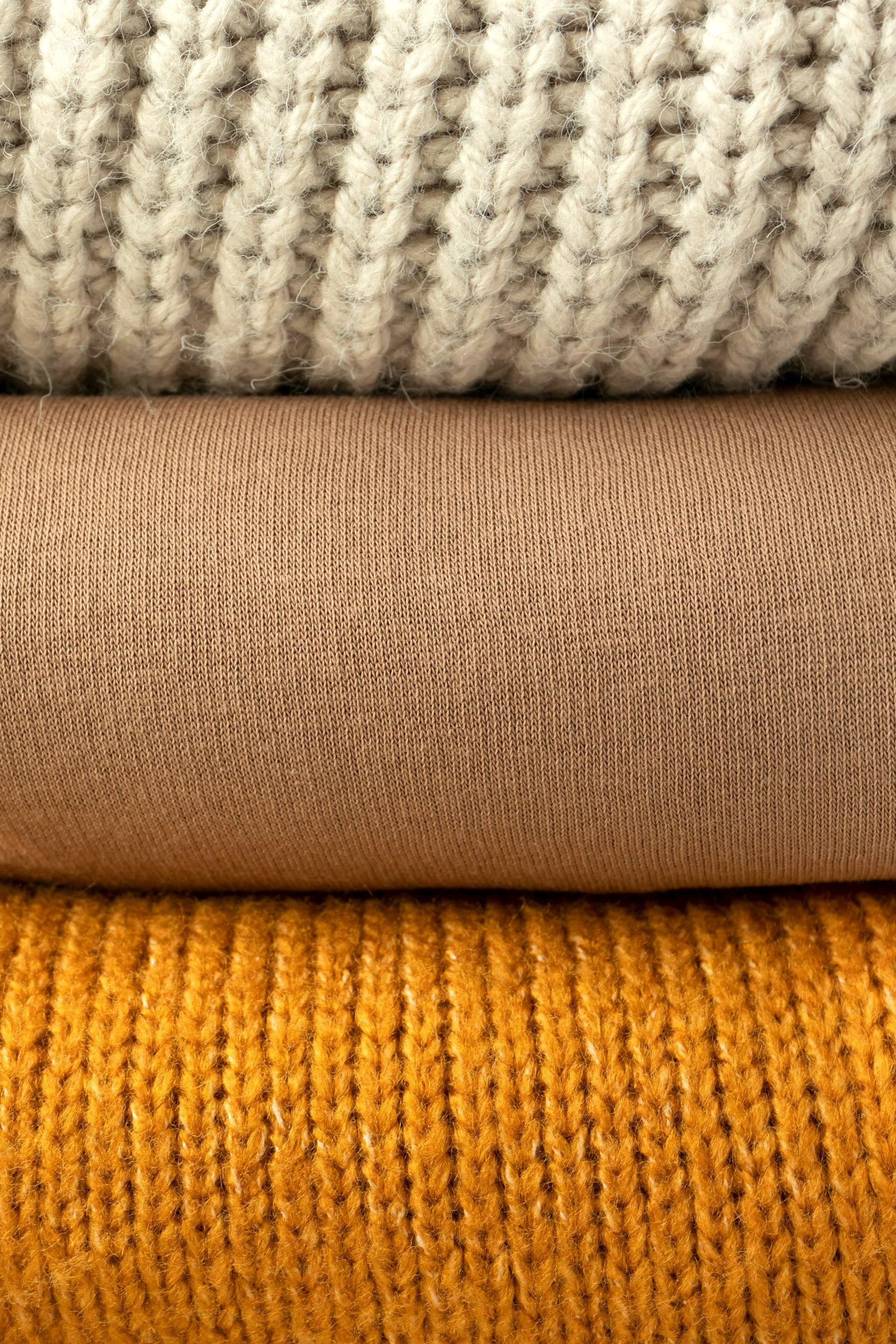
The rugby's family in one frame: a heavy cotton shirt, worn as itself, in real light. The garment this brief rules on adds a twill collar and hoops to exactly this cloth honesty.
Checked and updated October 2026
The ruling, up front: a rugby shirt is a polo that went to the gym and a jersey that went to college, and it is worn well when it is worn as exactly that: sportswear that contributes a collar. The collar is what the garment adds to everything it is worn with, and everything else about it, the heavy jersey, the hoops, the rubber buttons, is sport cloth that never pretended otherwise. Our shirt index's scale files it at formality 2, the polo's rung, worn at the ceiling of that rung: above the polo inside the rung on the strength of its collar and its weight, and one full rung below the crew neck's formality 3, because jersey is not knitwear and hoops are not quiet. Most rugby failures are not taste failures. They are category failures: the garment asked to do a blazer's job, a dress shirt's job, or a costume's job. This page prints the cloth ruling, the stripe doctrine, the fit ruling, the office ruling, the outfit matrix, and the ways men ruin it. The garment's cloth cousin is ranked in Verdict Card No. 12, where the Lacoste polo wins at 85.
On this page: the collar is the contribution, the cloth ruling, the stripe doctrine, the fit ruling, the office ruling, the outfit matrix, the mistakes, care and the fade, the buying note, questions.
The collar is the contribution
Start with what the garment is for. A sweatshirt gives warmth and nothing to say. A jersey gives a team. The rugby shirt gives both of those and one thing more: a collar, woven in twill, standing at the neck of a sport garment, and that collar is the entire reason the shirt can leave the touchline and sit at a table. It frames the face the way How to Wear No. 06 rules the polo's collar frames it, and it draws the line the whole outfit is read against. Which is why this brief's first rule is the polo brief's first rule, carried across unchanged: the collar is judged on its construction, not its arrangement. On a rugby the construction is specific, a separate woven twill collar, usually white, sewn onto a jersey body, stiff enough to lie flat under contact and to hold its line after a hundred washes. A rugby whose collar has curled or wilted has lost the one dressed fact it owned, and what remains is a striped sweatshirt with a placket. The fix is not steam or arrangement. It is the buying tests at the bottom of this page, applied before the money moves.
The formality number, printed so it can be argued with. Our shirt index files the polo at formality 2, above the t-shirt and below every woven shirt, and our sweater index files the crew neck at formality 3. The rugby sits between them in behaviour and the scale prints it honestly: formality 2, at the rung's ceiling. Inside the rung it outranks the polo, because the twill collar is a woven collar, closer to a shirt's architecture than the polo's knitted band, and because the heavy cloth holds a tuck and a silhouette the piqué cannot. It does not reach the crew's 3, because the crew is knitwear and knitwear is the quieter, more finished surface, and because the rugby's native pattern is a set of hoops, and hoops announce. Every ruling on this page is that paragraph applied: the office row, the blazer refusal, the shoe arithmetic. A garment worn at its printed number reads as dressed. A garment worn two rungs above it reads as hopeful.
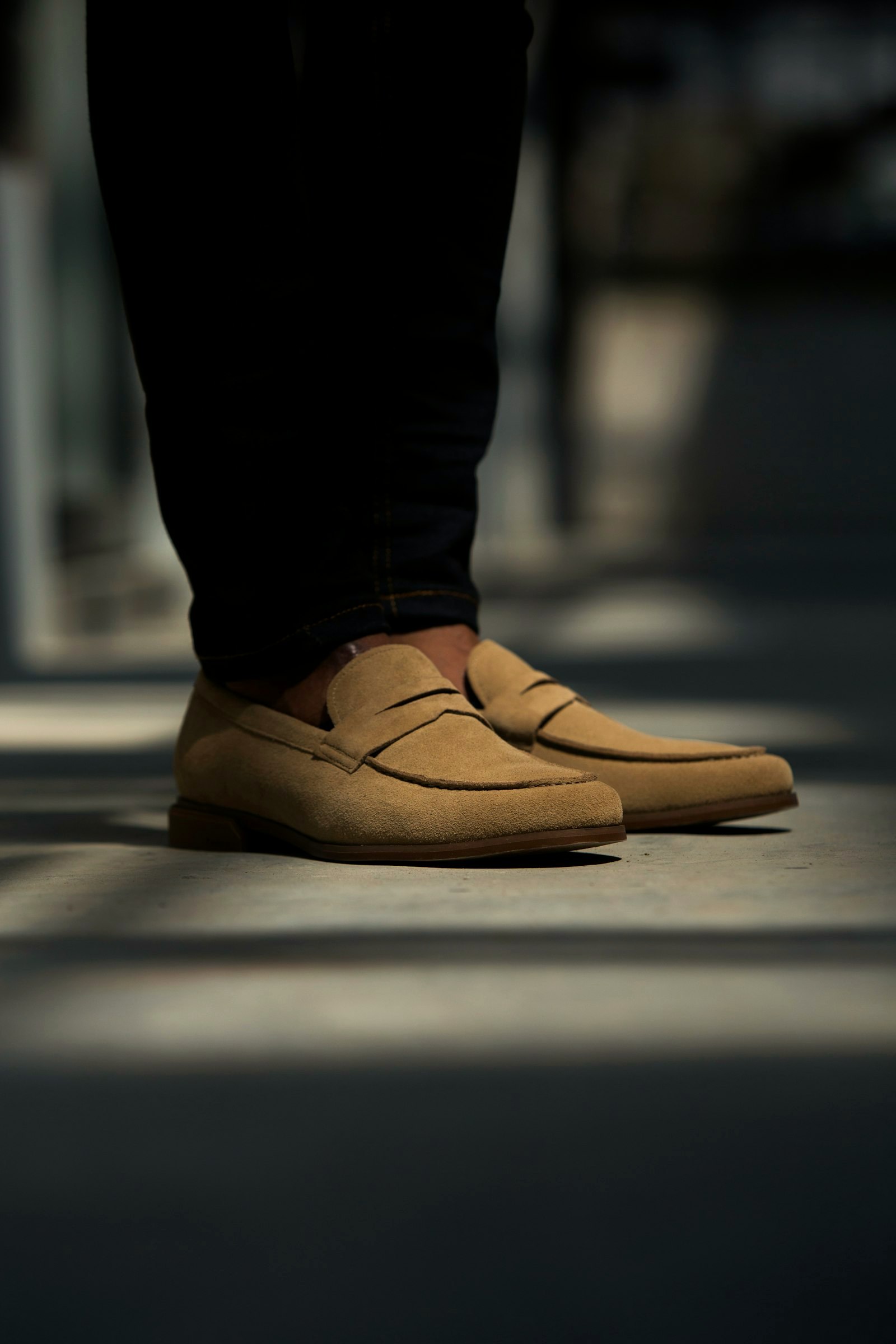
A note on our own photography, printed because this page believes in saying so: our photo bank holds no honest hooped-rugby-on-body frame yet, so this brief runs on the heavy cotton shirt frames the bank does hold, the cloth studies and the shoe frames, rather than a borrowed shot of a striped knit worn in a street the bank cannot show. The gap is on the harvest list, named: a hooped rugby, modern cut, worn in real light. This page will take the frame the week it exists.
The cloth ruling: the weight is the argument
The rugby shirt was built to be grabbed. It began as playing kit for a sport played by tackling the man, and its cloth answers that origin in every thread: a heavy cotton jersey, far heavier than a t-shirt's and heavier than a polo's piqué, knitted densely enough to survive being hauled on for eighty minutes and washed back to shape after. That weight is not a heritage detail. It is the garment's whole argument, and it is what the wearer is actually buying. Heavy jersey drapes instead of clinging, so the shirt holds a silhouette a tee cannot. It smooths the torso rather than reporting it. It takes a tuck without going thin at the waistband. And it lasts: a real rugby cloth is measured in seasons of hard wear, in the same family of honesty as the denim of How to Wear No. 05, a work cloth that improves its record as it ages.
The hardware is part of the cloth ruling. The buttons are rubber, and the reason is the same as the cloth's: a hard button shatters under contact and its shards cut, so the game replaced it with a button that flexes and survives. A century later the rubber button is the fastest tell in the shop. A rugby with thin plastic buttons on a lightweight jersey is a photograph of a rugby shirt, whatever the label says, and it will wear like one: the collar line goes first, then the placket, then the shape. The placket itself is short, two or three buttons over a reinforced split, and it is worn as the polo's is worn: the top button open as the working default, the placket lying flat, and never strained across a chest the size cannot serve, because that is a size problem wearing a styling costume on this garment exactly as on its cousin.
The stripe doctrine: hoops are native, solid is the exception that works
The hoops are not decoration. They are identification, club colours carried in horizontal bands because a side had to be told apart at speed and at distance, and a century of the garment has kept them because nothing else does the job as well. So the doctrine prints plainly: the hooped rugby is the garment's complete version, and it is worn as the outfit's one strong surface. One strong surface is a ration, not a suggestion. Under hoops, everything else in the outfit goes quiet: dark plain denim, plain chinos, unpatterned shoes, no second print anywhere in the assembly. The hoops are doing the talking the way a check or a stripe does in tailoring, and an outfit, like a page, gets one voice at a time.
The solid rugby is a different garment, and the page rules it separately. Strip the hoops and the shirt changes jobs: it becomes a heavy long-sleeved polo in all but name, quiet, weighty, all collar and cloth. That garment earns the rows the hooped one cannot enter. It is the office version, in navy or black or deep green, tucked, at the ceiling of formality 2. It is the evening version, where the hoops would shout across a quiet room. And it is the layering version, the one that goes under a coat or an open chore coat without the pattern fighting the layer above it. The buying order follows from the doctrine: if the rugby's home is the weekend, buy the hooped one first, because it is the garment itself. If it has to work on weekdays, buy the solid one first, because it is the garment's passport. Owning one of each is not duplication. They are two shirts that happen to share a collar.
The fit ruling: the re-cut against the original
The original cut was baggy for reasons that died with the amateur game: room to move, room to be grabbed, room for the body a season of training built, the hem long because it was worn over shorts and nobody tucked a playing shirt. That silhouette has been photographed so well, for so long, that men keep buying it as a style. It is not one. At the original volume, on a body that is not about to play, the rugby reads as a costume of its own past: the cloth pools at the waist, the sleeves stack at the wrist, and the collar, the garment's one dressed fact, drowns in the excess around it.
The modern re-cut is the ruling. The houses that revived the garment for the current wardrobe, the prep re-cut through skate and surf that the Noah page documents, where Noah stands at 77 as a brand score and its sibling Aimé Leon Dore at 68, both printed as brand scores and cited here as context only, draw the shirt the way this brief rules it: shoulder seam on the shoulder's edge, the body following the torso with room to move rather than cloth to spare, the hem ending at the belt line so it can be tucked or left out honestly, the sleeve reaching the wrist without stacking. Buy that cut in your size. The wide, dropped drape associated with the Fear of God era is the third silhouette and this brief treats it as what it is, silhouette context, not a score and not a default: a deliberate volume that works only when everything below it is cut close and clean, one volume in an outfit, bought a size up with intent. Volume drifted into, because the shop's lighting was kind, is just the baggy original with a newer excuse.
The office ruling: formality 2, worn at its ceiling
The office question is the one this garment gets asked second most, after the blazer question answered in the matrix, so the ruling is printed as a ruling. The rugby enters a smart-casual or creative office at the top of its rung and in exactly one specification: solid, never hooped; dark, navy, black, deep green or burgundy; the modern cut; tucked into trousers with a belt; loafers below it, for reasons the shoe rows print; the collar flat and the placket neat. Inside that specification it is not a loophole in the dress code. It is the dress code's cold-weather clause, the polo's warm-weather clause read in heavier cloth, and No. 06 prints the same contract from the other garment's side. Outside that specification, the ruling is the polo brief's honesty limit, unchanged: the rugby is not a dress shirt substitute, it is not an Oxford substitute, and in a room that measures formality, a finance floor, a formal client, a ceremony of any kind, the answer is the Oxford at formality 4. The hooped version's office life is the commute: it travels over the day, it does not attend the meeting.
The outfit matrix
The data team's assemblies, by occasion. The constant in every row is the class named in the rugby column, hooped or solid, because the stripe doctrine is a ruling and the rows are not interchangeable. The shoes are ruled by their own briefs: the loafer of How to Wear No. 11, the dress shoe with its tie untied, is the garment that lifts the rugby's smart rows; the white sneaker of How to Wear No. 12 is a formality solvent, and a rugby can afford the dissolved rung on its weekend rows and cannot afford it in the office row.
| Occasion | The rugby | Bottom half | The layer | Shoes |
|---|---|---|---|---|
| Weekend | Hooped, top button open, untucked | Dark indigo or black denim, straight | None; the hoops are the surface | Clean white sneakers per No. 12, or suede boots |
| Chino row | Hooped or solid, untucked or tucked by the trousers' formality | Plain chinos, stone, olive or navy, no pattern anywhere | None, or an open chore coat over the solid only | Loafers per No. 11, or minimal trainers |
| Layering | Solid, closed, over a plain tee | Denim or chinos | The chore coat of No. 13 open above it in autumn; a real coat above the whole stack in cold | Boots |
| Evening | Solid, dark, tucked | Dark trousers or black denim | None; the cloth is the layer | Suede loafers per No. 11 |
| Office | Solid, dark, modern cut, tucked; the hooped version never | Tailored trousers, belt | None. Not a blazer: the ruling is printed below the table | Leather loafers per No. 11 |
The denim row honours How to Wear No. 05 in the form its law takes here. The wash-break law governs two denims: jacket and jean are never the same wash, one clearly dark and the other clearly faded, or black runs under indigo. A rugby is not denim, so the row's debt is the law's principle, one strong surface and a clear break between the halves: hoops above, a dark plain jean below, and the moment a denim jacket joins the assembly, the law applies at full strength and the washes break or the jacket stays home. The chino row is the stripe doctrine dressed in full: the chino's plainness is not a lack, it is the permission the hoops require.
The blazer row that is not in the table, ruled head-on. Every brief in this series is asked whether its garment goes under a blazer, and the rugby's answer is no, printed with its arithmetic. The blazer stands at formality 4 on the jackets index; the rugby stands at formality 2; and the chore coat brief, No. 13, prints the sentence for exactly this gap: two rungs is not a styling gap, it is a different outfit. The cloth argues alongside the number. Heavy jersey bunches under a jacket cut for shirting, the placket and rubber buttons read as sport at every point the lapel leaves open, and the twill collar and the lapel are two different collar architectures competing at the same neck. The garments No. 03 sends under its blazer are already named: the knitted polo of No. 06, buttoned up, and the fine-gauge crew of No. 09, at the 24 to 30 end of its gauge bands. The rugby's tailoring life is beside the blazer, not under it: tailored trousers, a belt, loafers, no jacket, the office row above. A fine or mid-gauge crew, at No. 09's bands, can go over a solid rugby with the twill collar worn outside the neckband, the one knit stack the garment allows; heavy gauge over a rugby is bulk on bulk and belongs to the mistakes.
The Rugby Ruling
Collar: the garment's whole contribution, woven twill, lying flat on its construction, never popped outside actual sun. Cloth: heavy jersey and rubber buttons, or it is a photograph of the garment. Formality: 2, at the rung's ceiling, above the polo inside the rung and one rung below the crew's 3; the blazer at 4 is refused, two rungs being a different outfit. Stripes: hoops are native and ration the rest of the outfit to quiet; solid is the passport to the office and evening rows. Fit: the modern re-cut in your size; the baggy original is a costume, and drape is bought with intent or not at all.
The mistakes
The rugby as a blazer substitute at dinner. The formality fraud in this garment's wardrobe: a hooped or even a solid rugby worn where the room asked for a jacket, on the theory that a collar is a collar. The collar is where the resemblance ends. The room reads the jersey, the placket and the rubber buttons in the first glance, and it reads them as sport, while the wearer believes he has split the difference. He has not. He has worn formality 2 to a formality 4 occasion and asked the collar to cover the gap, and a collar cannot cover two rungs. The dinner answers are printed elsewhere on this site and none of them is this shirt: the unstructured blazer of No. 03 over a knit polo or a fine crew. The rugby's evening is the matrix's evening row, a room of its own level, where it is the best-dressed garment present rather than the least.
The popped collar as irony. On the polo, No. 06 traces the raised collar to honest equipment, a thicker collar turned up against the sun on court. The rugby's collar has no such excuse in its history: it was built to lie flat, out of the way, under contact. Popped on a rugby it is therefore pure quotation, irony borrowed from old campus photographs, and irony of that kind does not survive the room: it reads as costume, as fancy dress, as a man performing a decade rather than wearing a shirt. It also spends the collar's real asset, the clean white line at the neck that separates this garment from a sweatshirt. The exception is the polo brief's and it is narrow: actual sun, actual hours of it, the collar working. A collar worn as a joke is a collar not doing its job, and on this garment the collar is the job.
Stripes on stripes. Hoops above, and then a striped trouser, a striped scarf, a Breton tee worked into the stack, a pinstriped anything. The stripe doctrine rations the outfit to one strong surface because the eye reads pattern as volume: two sets of stripes do not add interest, they add noise, and the bands begin to argue about width, direction and spacing in public. The failure has a quieter twin worth naming beside it: the crest and club colours of a side the wearer has no connection to, worn as decoration. The hoops were identification before they were pattern, and the garment still reads that way; a plain hoop in honest colours says nothing false, while a stranger's crest says something specific that is not true. Buy the hoops for their cloth and their bands. Leave the heraldry to the men it identifies.
The double collar. A rugby worn over a polo, two collars stacked at one neck, attempted wherever a wardrobe decides that two collared garments must be warmer than one. They are not warmer in any way that matters, and the assembly fails on sight: the polo's band crowds the rugby's twill, the plackets misalign, and the neck becomes a committee. The layer under a rugby is a plain tee or nothing, its neckline invisible inside the frame, which is the frame rule No. 09 prints for its own garment applied here: what shows inside a collar's frame becomes part of the picture, so the picture is kept to one collar.
Care: it washes like a towel and fades like denim
Heavy jersey is the easiest good cloth in the wardrobe to keep. Wash it cold, inside out, which protects the hoops' colour boundary where two dyes meet in one band, and dry it on the line or flat rather than in a hot dryer, which is where collar lines go to curl on this garment exactly as on its cousin. It needs no ironing beyond what a hanger and its own weight give it, and it forgives the wash bag, the suitcase and the floor of a kit bag in a way no woven shirt does. That toughness is the cloth ruling's final dividend: this is a garment that can be worn hard, weekly, for years.
The fade, graded honestly, because the fade is where the garment's record is kept. Heavy cotton jersey fades the way denim fades, at the surfaces that take the sun and the wash, and whether that reads as patina or as damage depends on the colourway, so the grading is printed per class. On navy and cream, on burgundy, on the deep club colours, the fade is patina: the bands soften together, the contrast relaxes evenly, and the shirt gains the record of its own use the way No. 05's denim does. On the high-contrast colourways, white bands against red or black, the fade is damage, because the two dyes do not fade at the same rate: the dark band tires first, the white collar greys from the wash water, and the contrast that was the garment's whole pattern collapses unevenly. The buying consequence is printed where it belongs, in the note below: the deep colourways are the decade purchases; the bright ones are bought knowing their best year is the first.
The buying note: the cloth in the hand
No Verdict Card ranks rugby shirts yet, and this page says so in the open rather than dressing a neighbour's scores as its own: the ranked neighbour is the polo, Verdict Card No. 12, where the Lacoste L.12.12 Original wins at 85 on a basis of cloth and knit, collar and construction, fit range, value and longevity. What follows is the buying system a rugby ranking will be scored on, printed so it can be applied in any shop now. Weigh the cloth in the hand: a real rugby jersey is heavy the way a bath towel is heavy, dense and a little stiff when new; a shirt that feels like a long-sleeved tee at the rail will wear like one. Judge the collar like a shirt's: woven twill, sewn on, holding a flat line of its own, because the collar is the garment's whole contribution and a collar that will not lie flat in the shop will not lie flat anywhere. Press a button: rubber, flexing, sewn through a reinforced placket; plastic is the photograph's tell. Read the hoops at the side seam: on a well-made hooped shirt the bands meet and align around the body; mismatched bands at the seam are the maker announcing where the money stopped. Buy dark and deep first: the fade grading above is a buying rule, navy and burgundy before the bright colourways. And buy the cut of this decade, in your size: the modern re-cut, because the garment's failures are fit failures more often than cloth failures, and no collar survives being drowned.
Questions, answered
Can you wear a rugby shirt under a blazer?
No, and the arithmetic is printed on this site. The blazer stands at formality 4 and the rugby at formality 2, and two rungs is not a styling gap, it is a different outfit. The cloth argues as well as the number: heavy jersey bunches where a jacket expects shirting, and the rubber buttons and the placket read as sport at every point the lapel leaves open. The knit that goes under a blazer is the knitted polo of How to Wear No. 06 or the fine-gauge crew of No. 09. The rugby's tailoring life is beside it, with tailored trousers and no jacket, or above nothing at all.
Should a rugby shirt be striped or solid?
The hoops are the garment's native pattern, club colours carried in bands because a team had to be told apart at speed, and a hooped rugby is the complete version of the garment. Wear it when the shirt is the outfit's one strong surface: over dark denim, plain chinos, quiet shoes. The solid rugby is a different and quieter garment, a heavy long-sleeved polo in all but name, and it is the one that earns the smarter rows: the office edge, the evening row, the layer under a coat. Own the hooped one first if the weekend is the garment's home, the solid one first if it has to work on weekdays.
How should a rugby shirt fit?
In the modern re-cut, the way the current houses draw it: the shoulder seam on the shoulder's edge, the body following the torso with room to move rather than cloth to spare, the hem ending at the belt line, and the sleeve reaching the wrist without stacking. The baggy original was cut to be grabbed in a tackle and to fit over the body a season of training built, and worn at that volume today it reads as a costume of the garment's own past. Oversized drape is a silhouette decision, not a sizing accident: it works only when everything below it is cut close and clean, and it is bought deliberately, a size up with intent, never drifted into.
Can you wear a rugby shirt to the office?
At the garment's ceiling, in a creative or smart-casual office, and in exactly one specification: solid, dark, the modern cut, tucked into trousers with a belt, loafers below, the collar flat and the placket neat. Our shirt index's scale puts the rugby at formality 2, the same rung as the polo, worn at the top of the rung the way the polo brief rules its own office row. The hooped version is weekend cloth in any office that has a code at all, and in a room that measures formality the answer is the Oxford at formality 4, not a better rugby.
Should a rugby collar be popped?
No. On the polo, the raised collar at least began as sun equipment; on the rugby it began as nothing at all, because the twill collar was built to lie flat under contact and stay out of the way. Popped on a rugby it is pure quotation, a fancy-dress signal borrowed from a decade's campus photographs, and it spends the collar's real asset, the clean white line that frames the face and separates the garment from a sweatshirt. The exception belongs to the polo brief and stays there: actual sun, actual hours, collar working. Everywhere else, collar down, flat, doing its job.
Has Young Cotton ranked rugby shirts?
Yes. Verdict Card No. 75 ranks seven rugby shirts on their published records, the Withernot Heritage winning at 83, and this brief's rulings stand re-read against it. The garment's cloth cousin is ranked too: Verdict Card No. 12 scores seven polos on cloth and knit, collar and construction, fit range, value and longevity, and the Lacoste L.12.12 Original wins it at 85. This brief prints the buying tests the rugby ranking was scored on, cloth weight in the hand, collar construction, button build, hoop alignment at the seams, so the tests can be applied in any shop now.
Next
The family this brief belongs to: the collar sibling in How to Wear a Polo Shirt, whose collar law this brief carries across unchanged; the seven polos ranked in Verdict Card No. 12; the houses that re-cut this garment for the current wardrobe, scored in Brands Like Noah and Brands Like Aimé Leon Dore; the denim the weekend row stands on in How to Wear Denim; the shoes in the matrix, ruled in How to Wear Loafers and How to Wear White Sneakers; and the ladder this brief places the garment on, in types of shirts.