
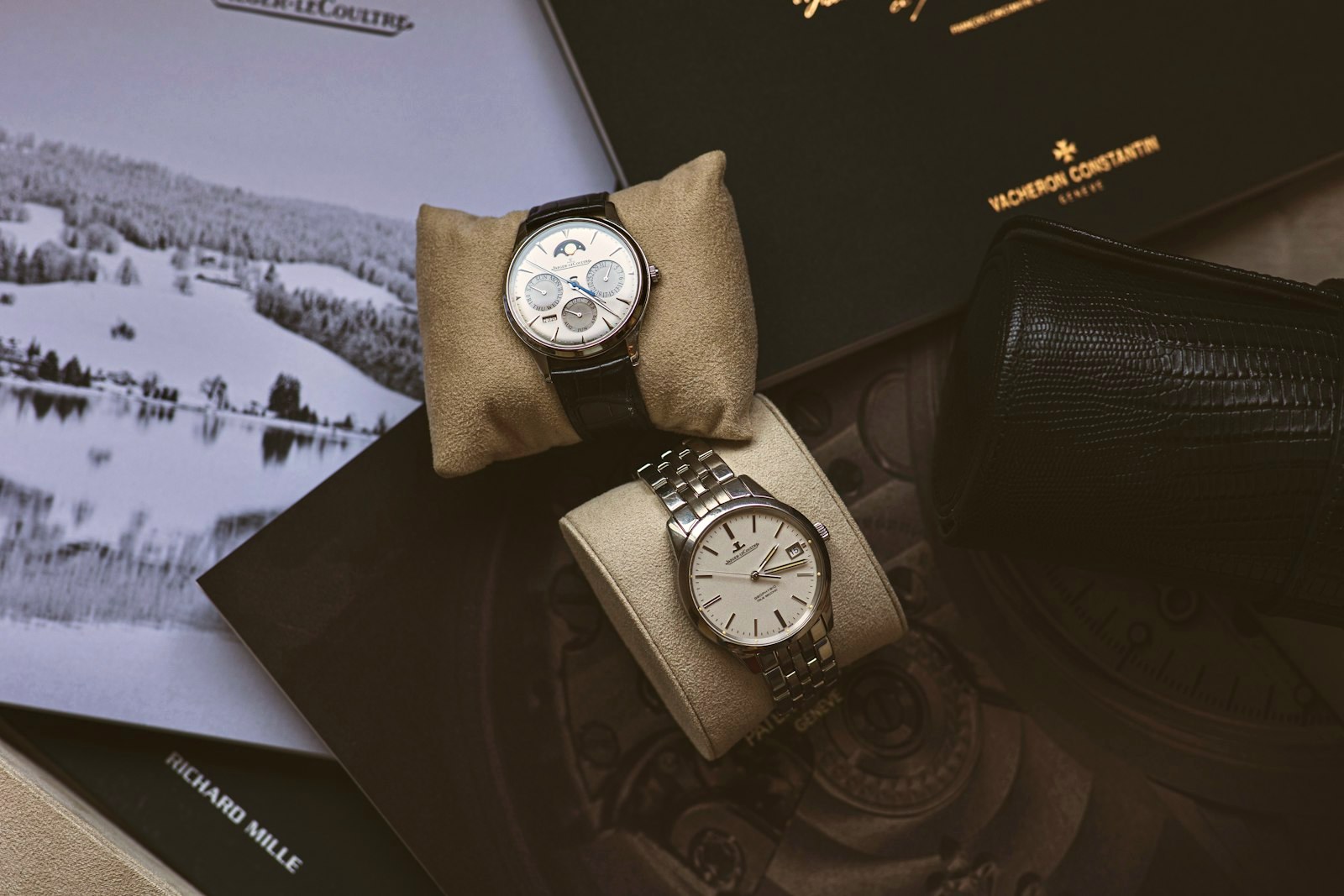
The register this decode grades: plain objects, kept for years, photographed without a story attached. The watches are a bank frame, not a ranked entry; the ranked watch record is the watch Card, cited below.
Checked and updated October 2026
The short version: old money is decode No. 2 on the Aesthetic Decoder hub, and the hub rules it split: the clothes survive, the ancestry claim is a costume. This page is that ruling at full length. The clothes half is the quiet luxury wardrobe, and it is graded all over this site: the Oxford at 93, the heritage houses at 91, 90 and 87, the overcoat at 89. The ancestry half fails on a point of bookkeeping: no record here grades a biography, and a garment's score does not transfer to the person wearing it. And the twist underneath the whole decode, printed in full below: old money is the only aesthetic whose real test is time, and time is the one column every ranking on this site already prints. Graded on the longevity row it claims to own, the honest wardrobe posts perfect 15s, the manufactured version posts 3 of 15, and the claim itself cannot be graded at all, which is the ruling.
In this guide
The word, and the ruling it arrives with
The term names two different things wearing one coat, and the decode begins by separating them. The first is a wardrobe: the permanent clothes, an Oxford shirt, a fine knit, a soft blazer, a wool trouser, a heavy overcoat, a plain watch, in navy, grey, camel and cream, with nothing readable on any of it. The second is a claim about the person inside the wardrobe: that the clothes were not bought but inherited, not chosen but kept, that their age is a biography rather than a purchase. The hub's definition holds both halves in one sentence. The clothes are meant to read as inherited, repaired and unbought, and longevity is the aesthetic's real claim. Everything in this page follows from noticing that the first half can be graded and the second half cannot, and that the term's whole career depends on nobody separating them.
The hub applied the same three questions it applies to every aesthetic. Can it be stated as garments, cloth, palette and fit, without using its own name? The wardrobe can: it is the quiet luxury wardrobe with the emphasis moved from specification to age, statable in full without the term. The claim cannot: remove the word inheritance and nothing is left to state, because the claim is a biography, not a garment. Do the garments survive their own composition lines? At the top of the record, emphatically, as the next two sections show. Does the record name an entry piece? Under this term, no, and the hub refuses to invent one. The ruling, kept exactly: split. The clothes survive; the claim is a costume. Everything below is the working behind that one word, run at the length the term's search volume and argument have earned.
The clothes: the wardrobe, on the record
Start with the houses, because the wardrobe's bench is already scored. On the Italian ranking, Luca Faloni leads at 91: Cariaggi cashmere, brushed-cotton shirts from heritage mills, sizing and cloth weights published plainly, nothing on any garment that announces itself, sold direct inside a $200 to $650 band. Boglioli follows at 90 on one idea executed for fifty years, the garment-dyed unstructured jacket, with the ranking's verdict printed as a longevity sentence: one jacket, bought once, worn for a decade. On the American ranking the same register stands at the top in a different accent: Buck Mason at 90 on honest cloth and prices with no fashion premium, its curved-hem tee working out at about $0.20 a wear, and L.L.Bean at 87, the institution, with a perfect value score of 15 of 15 and the Bean Boot, still sewn in Maine, from $140. Four houses, two continents, one discipline: cloth over logo, and the arithmetic printed beside the romance.
The garments underneath the houses are graded piece by piece, and the aesthetic's signature pieces hold the top of their Cards. The Oxford shirt, the wardrobe's foundation, is won on the Oxford ranking by the Kamakura Button-Down at 93, with Brooks Brothers, which invented the collar in 1900, still scoring a perfect 20 for its roll: the inventor and the current benchmark are both decade shirts on that page's longevity scores. The knitwear is graded across three Cards: the John Smedley Lundy crew at 87, the Luca Faloni two-ply cashmere crew at 84 on both the cashmere and crew-neck rankings, its maker publishing the yarn spinner, the ply, the gauge and the weight, and the John Smedley Bryn cardigan at 84 with the William Lockie lambswool cardigan at 82 as the heritage pick. The tailoring is graded on the two newest Cards: the Spier & MacKay Navy Hopsack Sport Coat at 85 on the blazer Card, a half canvas its maker states in the open at $328, and the same house's Core Suit at 85 on the suit Card. The coat is the Permanent Style and Private White V.C. Donegal at 89 on the overcoat Card, 760 grams of Donegal tweed, the only published cloth weight in its field. The loafer is graded as a house on the Scandinavian ranking: Myrqvist at 82, its suede loafer Goodyear-welted at $300 to $400, which is the resoleing fact the hub's definition points at, a shoe built to be repaired rather than replaced. And the plain watch is the Citizen Promaster Diver at 81 on the watch Card, solar-powered, asking for no battery changes, with a service network the Card notes will still be there in ten years.
Why the clothes survive the composition test is visible in that catalogue: every record above is a published record. Fibre splits printed, gauges printed, cloth weights printed where the field allows, construction stated in the open, and across the whole wardrobe as the capsule builds it, visible logos at zero. The wardrobe does not ask to be believed. It asks to be read, which is the hub's first test, and it passes at a strength only quiet luxury matches, because underneath the two terms there is, in garments, one wardrobe.
The column: longevity, the test it claims to own
Here is the twist, and it is structural rather than rhetorical. Every ranking on this site is scored on a published basis, printed on the Methodology page and repeated at the top of each Card: fabric and materials 30, construction 20, fit 20, value 15, and longevity 15. Fifteen points, on every garment and every house this desk grades, for the question of how long the thing will serve. Seven aesthetics stand on the hub, and six of them are tested on properties they share with everything else: cloth, construction, price, paperwork. Old money alone claims a property that is already a column. Its real test is time. Time is printed. So the decode can be run as an audit of a single row, and the row turns out to discriminate beautifully.
At the top, the row posts perfect scores exactly where the aesthetic says it should. Auralee, first on the Quiet Luxury Index at 94, carries longevity at a perfect 15, and its audit prints the reason in the aesthetic's own vocabulary: nothing on the rail is an experiment, and nothing carries branding to date it. Read that second clause twice. A logo is a date stamp; the wardrobe's silence about brands is not modesty, it is a longevity strategy, because a garment with nothing seasonal on it has nothing to go out of season. Filson, audited on its family page, posts fabric 27 and longevity 15, the ceilings of the Brands Like series, earned on published cloth and on a lifetime guarantee with a repair department that darns, rebinds and resets hardware on garments decades out of production: keeping, operated as a service rather than recited as a sentiment, with its Original Briefcase at $499 working out at $24.95 a year over a twenty-year life. L.L.Bean's family page splits its 87 with longevity at 14, one point off the ceiling, beside the perfect value score on the American ranking. And the Kamakura Oxford, the wardrobe's first garment, carries longevity at 15 on its capsule card. The column agrees with the aesthetic about its own best examples, which is what a real test does before it convicts anyone.
The column also discriminates in the middle, which is what keeps it honest. The winning tailoring Cards post longevity at 12, not 15: the Spier & MacKay blazer and suit are graded as a young house's signature lines whose construction, in the blazer Card's words, moulds and ages the way canvas does, with the house's making culture as the evidence and a shorter track record than the heritage bench as the limit. Twelve is a good score with its reasoning printed, and it is worth more to this decode than a flattering 15 would be, because it proves the row is measuring something rather than applauding the register. A test the wardrobe's friends all ace is a mirror. This one hands the heritage bench 15, the honest attainable tailoring 12, and then it turns to the costume.
At the bottom of the column sits the conviction the hub already prints. The Golden Goose Super-Star, a well-made sneaker sold pre-distressed, its wear manufactured in a factory so the buyer can rent the look of a life lived in it, scores 39 in the quiet luxury capsule with longevity at 3 of 15. The capsule's reasoning deserves quoting because it is the column thinking out loud: a joke about ageing ages fastest of all. The garment fakes the one piece of evidence the longevity row exists to verify, evidence of years, and the row prices the fake at three points. That is the whole ancestry argument in miniature, graded before this page was written: age that is manufactured rather than accumulated is not a lesser version of the aesthetic. On the column the aesthetic claims to own, it is the aesthetic's opposite, and it scores like one.
The ancestry: why the claim is a costume
The claim's failure is not moral and it is not about money. It is about what a grade is. Every score on this site grades a garment or a house: its cloth, its construction, its published record. A score has never graded, and cannot grade, a biography. Wearing a 93-point Oxford makes the wearer the owner of an excellent shirt. It does not make the shirt inherited, and no accumulation of excellent shirts sums to a grandfather. Inheritance is not a fit, a fabric or a finish; it is a fact about where a thing came from, and facts of that kind are not in stock anywhere, at any price, which is the hub's closing sentence and the plainest one in this decode. The costume version knows this, and its entire product line is the workaround: sell the signs of the fact instead of the fact. Crest embroidery. Pre-faded pastels. Wear applied in a factory. The tell is always the same, and the hub prints it: the age is on the surface and nowhere else. Underneath the distressing, the garment's own record, its cloth, its construction, its maker, is ordinary or worse, because the budget went to the surface.
The tree convicts the workaround in both directions, which is the part of the record this page exists to assemble. Pointed backward, at manufactured age, the conviction is the Super-Star at 39 and 3 of 15 above. Pointed forward, at manufactured arrival, the conviction is the Logo Tax, this site's standing anti-award, held by Moncler at 55, last of twenty on the Italian ranking, with both of its graded garments since sent home on their paperwork, a $995 water-repellent windbreaker at 36 on the rain Card and a flagship puffer at 52 whose maker publishes neither fill power nor fill weight at about $1,900. The two convictions are the same transaction read from opposite ends: money spent on a biography the cloth has not earned, once to look kept and once to look arrived. Between them sits the prestige version, quieter than either: the Brunello Cucinelli cashmere crew, sent home at 66 on the cashmere Card at $1,200, fine cloth whose listings publish no staple length, no ply and no gauge while the winning Faloni crew at $375 publishes all three. The price performs the heritage the paperwork declines to document. And the reference-led version is convicted on the Japanese ranking, where A Bathing Ape stands at 57 because, in that page's words, the price buys the camo and the ape head and the cloth underneath is ordinary: impeccable references, ungraded cloth, the costume in its purest form.
One boundary, printed so the section cannot be misread in either direction. This desk grades clothes, not people, and nothing here is an argument about who should wear what, or about the worth of any family, name or fortune, real or imagined. The decode's point is narrower and, in the end, friendlier than the term it examines. The honest half of this aesthetic, the kept wardrobe, the repaired loafer, the decade shirt, is not gated by ancestry at all. It is available on the record above, at the prices printed there, to anyone willing to do the keeping. The biography was never the valuable part. The keeping is the valuable part, and the keeping can be started with the next purchase rather than inherited from the last century. A claim that requires a past is a costume. A practice that requires only patience is a wardrobe.

The wardrobe it builds
The decode ends where the hub's format requires: in the wardrobe, compiled from the records above, priced as the pages that grade each piece print it. Read the table as the split ruling on one screen. Every row is a garment whose record survives its composition line and whose longevity evidence is printed beside it, because on this decode the longevity evidence is the point.
| Piece | The record | The time evidence |
|---|---|---|
| The Oxford shirt | Kamakura Button-Down, 93 on the Oxford Card, about $99 to $130 | Longevity 15 of 15 on its capsule card; a decade shirt on the Card |
| The knit | Luca Faloni two-ply cashmere crew, 84 on two Cards, about $375 | Spinner, ply, gauge and weight all published by the maker |
| The working crew | John Smedley Lundy, 87 on the crew-neck Card | Fully fashioned, made in Derbyshire, the Card's winner |
| The blazer | Spier & MacKay Navy Hopsack, 85 on the blazer Card, $328 | Longevity 12; a stated half canvas that moulds with wear |
| The overcoat | PS x Private White V.C. Donegal, 89 on the overcoat Card, £1,295 | 760 grams of tweed, the field's only published cloth weight |
| The loafer | Myrqvist, 82 on the Scandinavian ranking, $300 to $400 | Goodyear-welted: built to be resoled, not replaced |
| The watch | Citizen Promaster Diver, 81 on the watch Card | Solar, no battery changes, a service network behind it |
The entry piece: none under this term, the hub's ruling kept without amendment, because an entry piece is a purchase and the claim is the one thing here that cannot be purchased. The honest door is the wardrobe the two aesthetics share: the quiet luxury capsule builds thirteen scored pieces with every price printed, a recommended build at $1,960.79 and a starter build at $1,375.38, which is the cap this page adopts, with zero visible logos across the whole wardrobe. Its first piece is the Kamakura Oxford, and its method is this decode's whole advice in one habit: buy the piece the record names, wear it for years, repair it when it asks, and let the age the costume version counterfeits arrive on its own schedule.
The Decoder Rule
An aesthetic that cannot survive its garments' composition lines is a costume. Old money faces a second test no other decode on the hub has to face, because it claims time itself: the longevity row, printed on every ranking this site runs. Its clothes pass that test at the top of the record, perfect 15s where the keeping is real. Its claim fails it in principle, because the row grades garments and keeping, and has never graded inheriting. Buy the wardrobe on the longevity row. Keep it. The biography is not in stock anywhere, at any price.
What this page does not claim
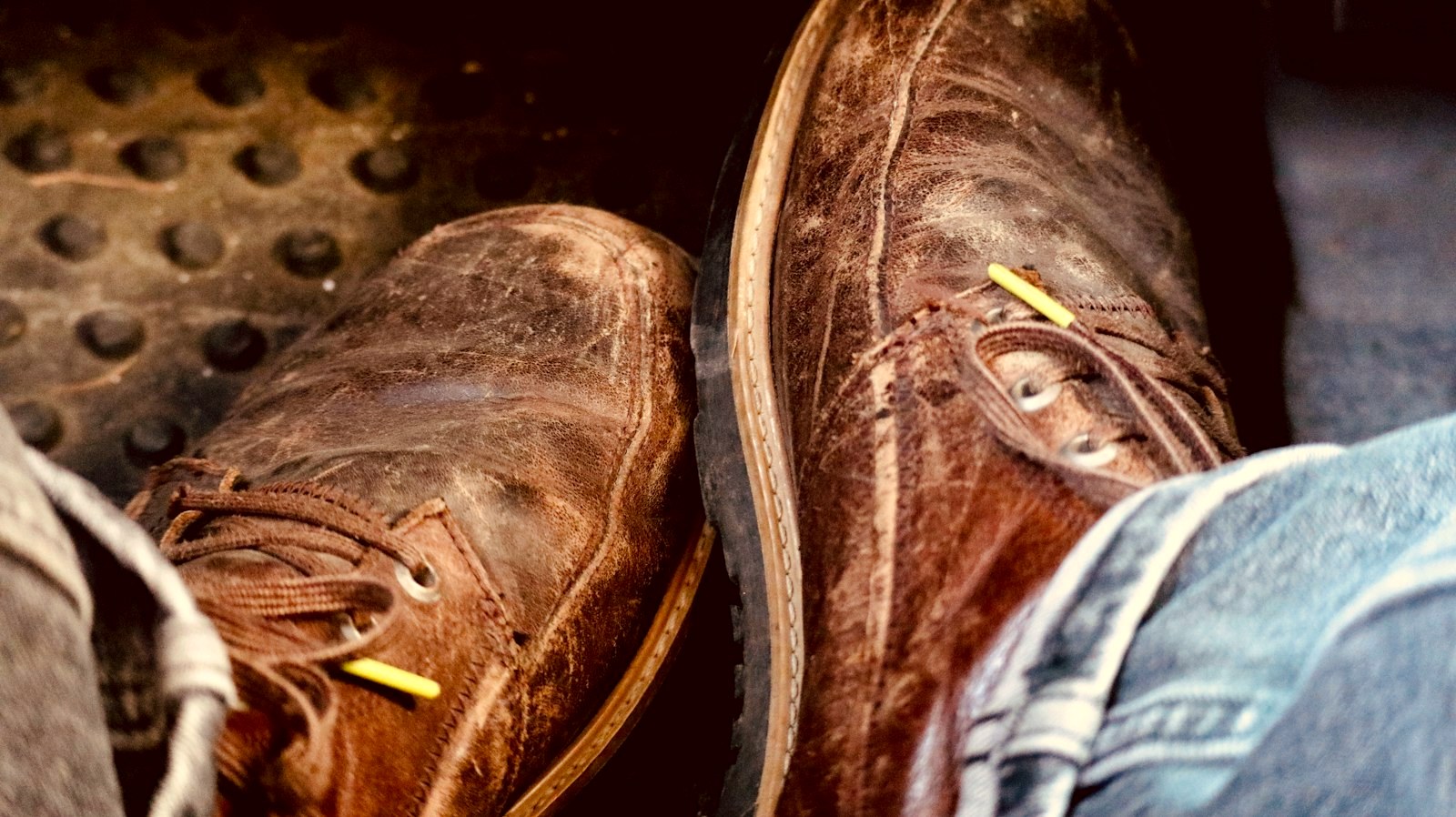
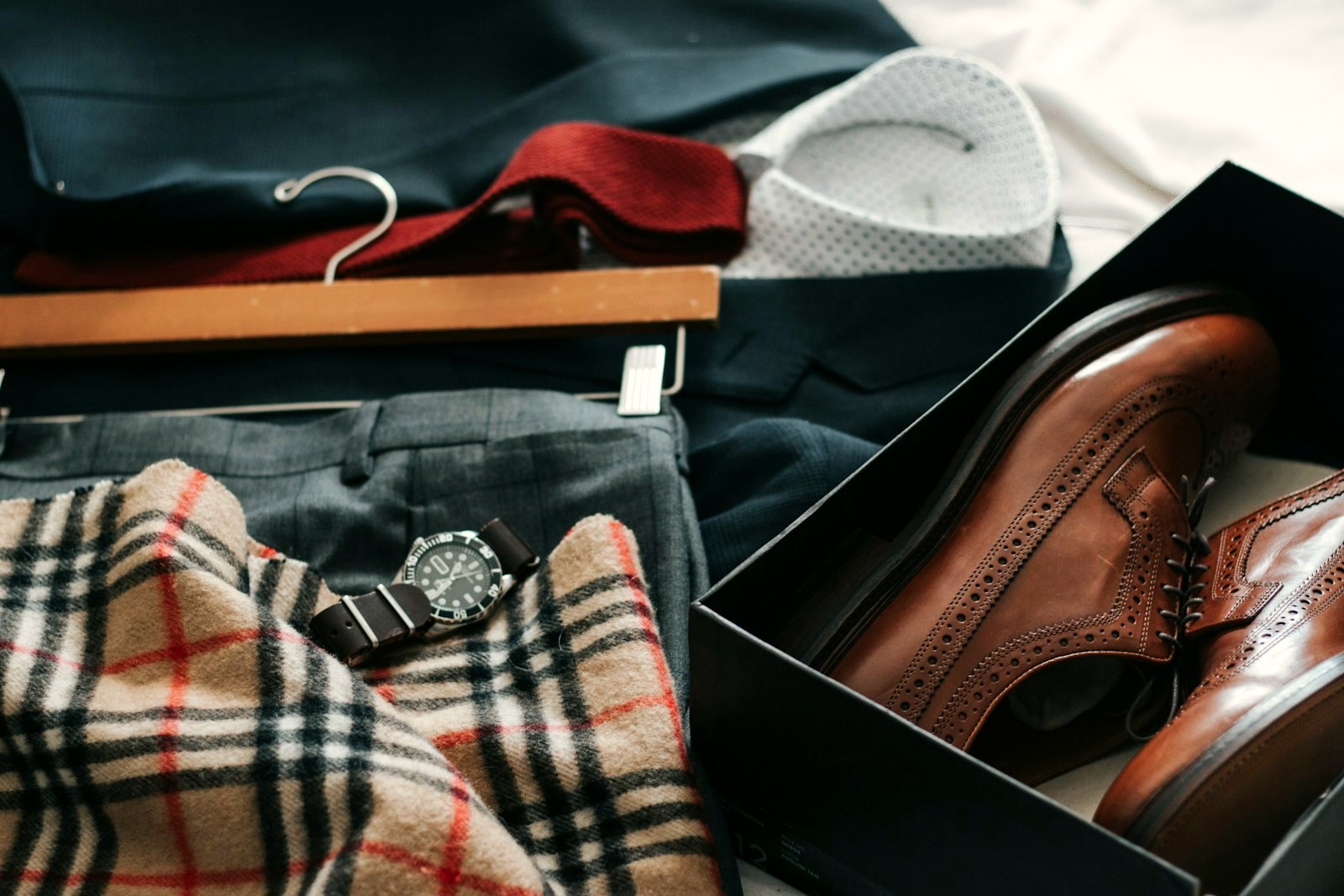
Five limits, printed in the open, in the hub's manner. First: no old money ranking exists on this site, and none is invented here. The term appears on exactly one other page, the hub; this spoke deepens the hub's ruling and does not revise it, and where the two could be read differently, the hub's sentence governs: the clothes survive, the claim is a costume. Second: no score on this page is new. Every number lives on its own ranking, Card or family page, linked, where its basis is printed; the longevity rows cited are the desk's graded rows under the published methodology, argued from makers' construction, guarantee and repair records, not laboratory wear tests. Third: this page makes no claims about real families or named people, and asserts nothing about any actual fortune, old or otherwise. The term is graded as a claim about clothes, which is the only form in which this desk can grade it. Fourth: prices are reproduced as the grading pages print them, including the capsule's builds; a price on this page is a citation, not a fresh check. Fifth: the photographs are pool frames from this site's bank, captioned for exactly what they show; the worn boots are the American ranking's patina frame and the flat lay is the capsule's, and none of them is presented as a ranked garment in wear.
FAQ
What is old money style?
In garments, it is the quiet luxury wardrobe with the emphasis moved from specification to age: an Oxford shirt, a merino or cashmere knit, a soft blazer, a heavy overcoat, a resoleable loafer and a plain watch, in navy, grey, camel and cream, with visible branding at zero and longevity as the whole claim. The clothes are bought once, maintained properly and worn until they look like they were never bought at all. As a claim, it adds one thing the garments cannot supply: that the wardrobe reads as inherited. On the Aesthetic Decoder hub this desk rules the term split, the clothes survive and the ancestry claim is a costume, and this page is that ruling at full length.
Is old money style different from quiet luxury?
In garments, barely. In claims, completely. Quiet luxury names a property of clothes: cloth, construction, no logo. Old money names a property of a biography: the clothes are meant to read as inherited, repaired and unbought. No page on this site grades a biography, and no record here uses the term as a category, so the honest answer is that the wardrobe overlaps almost entirely with quiet luxury while the promise does not survive inspection. The record's clearest verdict on manufactured age is the Golden Goose Super-Star, a pre-distressed sneaker scored 39 in our quiet luxury capsule, with longevity at 3 of 15: a shoe whose wear is faked in a factory is the costume version of this aesthetic, named and scored.
Can old money style be bought?
The wardrobe can, at the prices the records print, and this page compiles it from graded pieces. The biography cannot, at any price, because a score grades a garment and a garment's score does not transfer to the person wearing it. What can be bought is the honest half: cloth that survives its composition line and construction that survives a decade, bought once and kept. What is sold as the other half, pre-distressed wear, crest embroidery, a famous name at a heritage price, is graded on this site wherever it appears, and it grades badly: the pre-distressed sneaker at 39, the Logo Tax anti-award standing at 55, a $1,200 cashmere crew sent home at 66 for publishing no fibre record behind its price.
How does Young Cotton grade an aesthetic it has no ranking for?
By the column the aesthetic claims to own. Every ranking on this site is scored on a published basis whose fifth row is longevity, 15 points for how long the garment or the house's record says the piece will serve. Old money is the one aesthetic whose real test is time, so this page grades it on the longevity row it already faces everywhere: perfect 15s at Auralee, at Filson and on the Kamakura Oxford's capsule card, 12s on the winning tailoring Cards, and 3 of 15 on the one garment that fakes age instead of earning it. The row grades keeping. It has never graded inheriting, and the difference between those two verbs is the whole decode.
What is the Logo Tax?
It is this site's standing anti-award, kept on the Awards page: the price a famous name adds for the badge itself, named here on Moncler at 55, last of twenty on our Italian ranking, with both of its graded garments sent home on their paperwork since. It belongs in this decode because it is the ancestry transaction pointed the other way. Pre-distressed cloth pays to look older than it is; the logo tax pays to look newer, louder and more recently arrived than the cloth underneath earns. Both spend the money on a biography instead of a garment, and the records convict both on the same evidence: the composition line and the longevity row.
What is the entry piece for old money?
There is no entry piece under this term, and inventing one would break the hub's own rule, so the ruling is kept exactly: the honest door is the quiet luxury capsule's starter build, thirteen scored pieces at $1,375.38 with zero visible logos across the wardrobe, shared with quiet luxury because the wardrobe is shared. The first garment inside that build is the Kamakura Oxford Button-Down at 93, longevity a perfect 15 on its capsule card at about $99 to $130, a decade shirt on the Oxford ranking's own longevity scores. Buy the wardrobe piece by piece, keep every piece, and let the age arrive on its own schedule. It is the only part of this aesthetic that cannot be hurried, and the only part worth having.
Next
The hub this spoke hangs from is the Aesthetic Decoder, where the other six decodes stand and the rule is printed once for all of them. The records this page rules from: the Quiet Luxury Index and its capsule wardrobe, the Awards where the Logo Tax stands, the Italian and American rankings, and the garment Cards at Oxford shirts, overcoats and watches under $500. The sibling spokes, built the same way for the decodes beside this one on the hub, are Ametora, Decoded and Scandinavian Minimalism, Decoded. The scoring basis for every number quoted here is the Methodology page. Grade the keeping, not the claim: the order of operations this wardrobe has run for a century, and the only one this desk trusts.