

Duffle weather, captioned as exactly that: a northern harbour city at dusk, the light the coat was issued for. Our bank holds no photograph of a duffle coat on a body, in any colour or at any range, the same gap Verdict Card No. 79 admits on its own page, so this page opens on the conditions themselves rather than dressing another coat as its subject; the gap and the harvest list are named in the honesty section below.
Checked and updated October 2026
The ruling, up front: the duffle is the relaxed coat in a tailored wardrobe, and it is worn open or toggled, never belted, never dressed up past its toggles. Its formality ceiling is set by its fastenings: a toggle is working hardware, rope and horn, legible across a room, and no cloth weight, colour or careful layering underneath it argues the coat one rung higher. Everything else in this brief is that ceiling spent well: the coat’s own length band, mid-thigh to knee, ruled against the overcoat’s floor; the layering room that makes it the one coat the chunky knit goes under; the heavy knit of Verdict Card No. 59 beneath it; the flannel, corduroy and denim rail below it; and the suit question answered as a deliberate register drop with its limits printed. The garment is graded entire in Verdict Card No. 79, the Gloverall Monty at 88, and this brief styles from that record and scores nothing of its own.
This brief: the decisive rule · the garment · the toggle law · length and layers · trousers and shoes · the colour law · the suit question · the looks · the mistakes · care and our photography
The decisive rule: the toggles set the ceiling
Every brief in this family has a rule that decides its garment, and this garment’s rule is written on its front. A duffle coat closes with toggles: shaped pieces of horn or wood, passed through loops of leather or rope, hardware designed to be worked in gloves on a moving deck. That fastening is the most legible surface the coat owns. It reads at twenty paces, before the cloth’s weight, before the colour, before anything the wearer has arranged beneath it, and what it reads as is work: honest, warm, unceremonious work. That is this brief’s decisive rule: the duffle is the relaxed coat in a tailored wardrobe, worn open or toggled, never belted, never dressed up past its toggles, because its formality ceiling is set by its fastenings and the styling spends the coat’s ease deliberately. A fly front hides a closure and lets a coat pretend to ceremony. A toggle front announces its closure as the garment’s whole character, and the announcement is the ceiling.
The ceiling is a ruling, and the brief prints its evidence rather than borrowing a number, because there is no number to borrow. Verdict Card No. 79 prints the admission on its own page: our jackets index files twelve types and the duffle is not one of them, the index folding the toggle coat into its neighbours, so no formality figure for this coat stands anywhere in this magazine’s record. What the ladder does print is the family it must be placed against: the overcoat at formality 5, the only type built to be worn over a suit as a matter of course, per How to Wear No. 20; the pea coat at formality 3, the duffle’s naval sibling, which refuses the suit outright, per How to Wear No. 19. The duffle’s rooms are the pea coat’s rooms and the rooms below the blazer’s rung: the dressed winter week, the cold commute, the country weekend, the office that stops below tailoring. Inside those rooms it is not a compromise coat. It is frequently the best coat in them, the warmest relaxed garment the wardrobe owns. The ceiling is not an insult. It is the garment’s address, and this brief’s whole work is to dress the rooms at that address properly.
Three corrections belong to the rule itself, because this commission arrived with premises the tree corrected, and the corrections are printed here rather than absorbed. The first is length: the overcoat’s knee floor, No. 20’s law, is set by the suit the overcoat exists to cover, and it does not transfer to a coat whose own Card prints its band as mid-thigh to knee; the length section rules the duffle on its own band. The second is a number that does not exist: the commission asked for the ceiling to be argued, and the tree holds no index number for this coat to argue from, so the ceiling above is this brief’s ruling, printed as new, and any future index that files the duffle will be this magazine correcting its own fold, not this page discovering a figure it missed. The third is the blazer: the coat family’s law refuses heavy layers under tailored coats sized over a blazer, and a reader importing that refusal whole would rule the duffle’s best assembly illegal. The Card’s record says otherwise, in the garment section below: this species is defined by its layering room. The corrections matter because a brief that styles a garment on another garment’s law has styled nothing.
The garment: what the duffle is, and what it settles
The duffle is a naval pattern before it is a fashion garment, and the brief prints the pattern as a table because every styling ruling below is one of its facts wearing clothes. The definition is Card No. 79’s, printed as the species boundary on the ranking itself.
| Part | The build, as the Card’s record prints it | What it settles |
|---|---|---|
| The toggles and loops | The closure entire: toggles of horn or wood passed through loops of leather or rope, published by four of the Card’s eight makers for both parts, the toggle alone by two more, and imitation admitted in its own words by the coat sent home | The fastening is the ceiling and the first buying check: what the toggles are made of is the coat’s character stated in materials, ruled at length in the toggle section |
| The hood | A wide hood by pattern, sized once for a cap beneath it; published as present by seven of the Card’s eight coats and as surrendered, in its maker’s own words, by the eighth, which was charged for the surrender | The hood is a term of the species, not an option: worn down in rooms, up as weather equipment, and a duffle without one is graded as itself and charged, on the Card’s own sentence |
| The cloth | A heavy wool, boiled, Melton or double-faced; a weight published for three of eight coats, the winner’s 910 grams per linear metre on its product page, the field’s heaviest at 1,250 grams per square metre in its maker’s journal | Warmth on this species is density, the pea coat’s mechanism at coat length: the cloth is read by weight and split before it is read by colour, on the Card’s cloth law |
| The cut | A cut with room to layer, in the definition itself; the winner oversized by stated design, the oldest name in the field loose and straight at 89 to 98 centimetres | The room is the species’ allowance, and it is larger than a tailored coat’s: what fits beneath this coat is ruled in the layers section, from the Card’s record and not from the tailored family’s |
| The length | Mid-thigh to knee, in the definition; the winner averaging 102.5 centimetres, the Morris at knee length, the field’s value coat cropped and charged for the crop | The band is the garment’s own, set by the naval pattern rather than by any garment beneath it; ruled against the overcoat’s floor in the length section |
| The furniture | A shoulder cape or yoke, large patch pockets, a throat tab at the neck; the inside stated by five of eight, the winner unlined by stated design over its boiled cloth | The patch pockets and the cape are the pattern’s working furniture, worn as issued; the throat tab is the hood’s fastening, the seal at the neck when the weather state is fully closed |
Read the table once and the brief is mostly arithmetic. A coat whose closure is its loudest surface cannot be dressed past that surface. A coat cut with room to layer takes the wardrobe’s heaviest knit as its natural tenant, where the tailored coats refuse it. And a coat whose warmth is a weighed cloth, not a fill, is bought the way the Card buys it: the weight and the split first, the hardware’s materials second, the colour last, because the colour is the only part of the garment that is merely seen.
The toggle law: horn, wood, rope, and the imitation convicted
The Card’s hardware census is the styling law in embryo: toggle and loop materials both published by four of eight makers, the toggle alone by two more, one coat naming its toggles inside a model’s name, and one publishing imitation in its own words. Arranged as registers, the record prints three honest builds and one conviction.
| The build | The record | Its register |
|---|---|---|
| Horn on leather | The dressed hardware: buffalo horn toggles with leather loops on the J.Press Morris at 83, the field’s best hardware record at 19 on the toggle row; natural horn and hand-stitched leather on the London Tradition at 80, its maker printing the house rule, every toggle genuine horn, every loop hand-stitched leather; horn again on the Drake’s and the Invertère | The duffle at its most dressed: the materials of tailoring’s own furniture, horn as a button is horn, on the coat that stands closest to the tailored rooms its ceiling allows. This is the build for the city coat, the flannel rows and the suit question’s licensed end |
| Wood on jute rope | The working original: wooden toggles on jute rope fastenings on the Gloverall Monty, the winner at 88, its toggle row at 18, one point behind the Morris on hardware and eleven places ahead of it on nothing that matters; wood again, at model level, on the Original Montgomery | The naval pattern entire, and the record’s own proof that material is register rather than rank: the reference coat of the species wears the working build, and wears it at the top of the ranking. This is the build for the country rows, the heavy knit and the boot |
| Horn on unstated loops, and the silences | The Burberry’s trims at 100 percent buffalo horn with its loop material never stated, at 64; the two makers who publish the toggle and not the loop | A half-stated fastening is a half-kept definition: the toggle is the part the eye reads, and the loop is the part that works, and a record that names one and not the other is graded on the gap on the Card and read with the same suspicion here |
| The imitation, convicted | Horn-effect toggles and leather-look fastenings, in its maker’s own words, on the Jack Murphy Alex, sent home at 41 with the toggle row’s 5, the lowest hardware mark this magazine has printed, below every silence in the field | Not a register at all: on the species whose definition is its hardware, imitation hardware at a genuine-hardware price is the skip shape entire, and no styling in this brief is built on a coat the Card has sent home |
The states of the front follow from the hardware’s purpose. The toggles exist, in the Card’s own sentence, so the coat can be fastened in gloves: closing a duffle is a gross-motor movement, one hand, no alignment, no ceremony, and the coat’s wearing states are priced by that ease. Worn open is the city default, and it is more legal here than on the coat’s naval sibling, for a printed reason: the pea coat’s front is an overlap engineered against wind, and No. 19 rules that worn open it is half a coat, its insulation hanging as flaps. The duffle’s front is not an overlap. It is a line of fastening points on a single body of cloth, so the open duffle loses its seal and keeps its design, the coat framing the knit beneath it the way No. 39 posts the heavy knit under an open overcoat, as a frame rather than a container. Toggled at the top is the middle state, the throat sealed and the body relaxed, the state for the cold street between rooms. Fully toggled, throat tab closed, is the weather state entire, the coat as the closed system its pattern draws. And the hood takes No. 19’s collar law as its own: down in rooms and mild cold, up as a fastening in weather, the one raised hood in the wardrobe that is equipment rather than gesture, because the pattern issued it as the final seal of the same closure system. A duffle worn with its hood up in a dry room is costume in the trench brief’s sense, a deployed detail; the same hood up in harbour wind is the garment finishing its own sentence.
Never belted is the toggle law’s negative clause, and it is printed as a ruling of this brief: no coat in the Card’s ranked eight carries a belt, and the absence is structural, not an oversight the aftermarket should correct. The species is defined by a cut with room to layer; a belt cinches that room at the waist, breaks the column the heavy cloth hangs in, and turns a working coat into a robe with hardware. The wearer who wants a belted long coat owns correct garments, the trench at formality 4 and the polo coat species of No. 20, and the duffle is not improved by borrowing their furniture. The toggle front is worn as it was issued: open, part-toggled, or closed.
The length and layer law: the coat’s own band, and what the room is for
The coat family sets its hems by the garments beneath them, and the family’s two printed laws seem, at first reading, to leave the duffle no legal length at all. No. 20 rules the overcoat at the knee or below, a floor set by its one job, covering the suit jacket beneath it whole, two hems arguing being the failure it exists to prevent. No. 19 rules the pea coat at hip length, its hem set by the overlap front and the working deck. The duffle’s band is its own, and Card No. 79 prints it in the definition: mid-thigh to knee, a band that sits between the siblings, longer than the pea coat’s working cut and shorter at its floor than the overcoat’s suit-driven one. The distinction is the point: the overcoat’s hem is set by a garment it must cover, and the duffle’s hem is set by the pattern itself, a naval coat carried to the length where a weighed cloth stops swinging against the leg and starts travelling with the weather. The duffle is therefore not held to the overcoat’s floor, and a duffle worn at mid-thigh is not an overcoat failing its job. It is a duffle in its own band, and this brief rules it there.
Within the band, the record grades the ends. The full pattern is the long end: the Morris at knee length, the winner’s stated average of 102.5 centimetres, the Montgomery’s 89 to 98. The cropped end is the fashion trade, and the Card charges it precisely: the London Tradition Martin SLM, third at 80 on the strength of its hardware, its guarantee and its £300, is printed as the cropped, form-fitting cut of the range, trading the naval pattern’s layering room for a contemporary line, its fit row the weakest on the podium. The charge defines the law: length on this species is not a silhouette preference, it is the layering room’s other name. A duffle bought cropped has spent, before it is worn once, the allowance the next section spends on the heavy knit, and the buyer of the cropped coat is buying the species’ sign with its substance reduced. Buy the coat in the band’s long half unless the cropped line is the deliberate purchase, eyes open, on the Card’s own accounting.
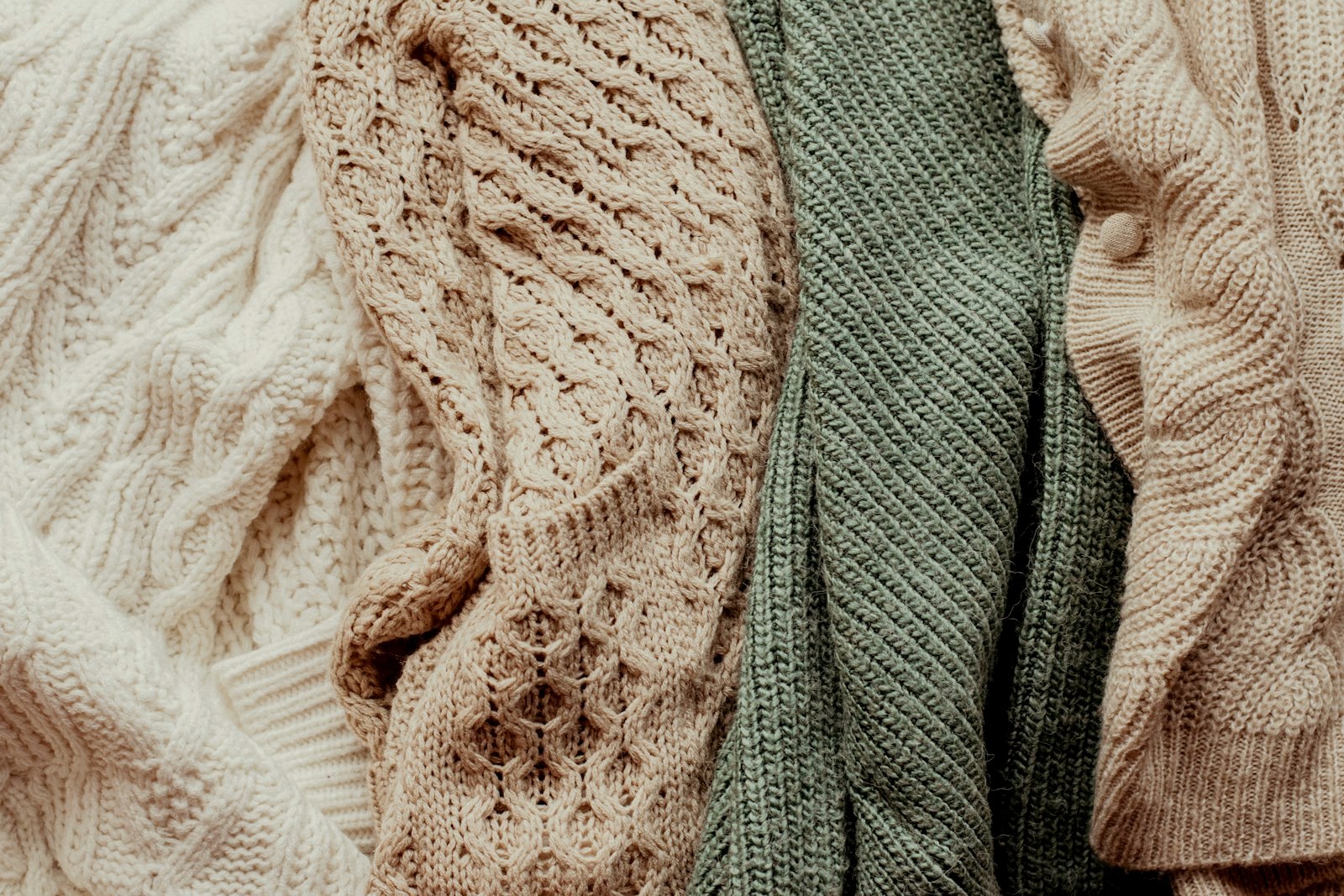
The layers take the coat family’s order, the Fall Edit’s stack, worn under a closure that changes the stack’s top rule. Base first, the merino crew or the undershirt of winter dressing. Warmth second, and here the duffle parts company with every tailored coat in the wardrobe. No. 39 prints the coat problem entire: coats are sized over a blazer, a heavy knit spends that whole allowance and more, and a chunky knit under a closed tailored coat strains at the shoulder and never sits. The duffle’s allowance was never spent on a blazer. The species is defined by a cut with room to layer, its winner is oversized by stated design with garment measurements published per size, and its Drake’s entry is published, in its maker’s own prose, as cut to be worn over a chunky jumper. The duffle is the coat the chunky knit goes under, the sanctioned stack of No. 39 completed at last by a coat whose room is a term of its pattern rather than an accident of its sizing: the Scapa fisherman of Card No. 59, 100 percent British wool at a printed 700 grams, worn under the open duffle, is this brief’s central winter assembly, and the layers section of the looks table builds on it. The stack test of No. 19 applies before purchase, restated for this species: size the coat over the heaviest knit you own, toggles closed, arms raised, and a coat that fails the test in the shop fails it everywhere, whatever its cloth weighs. Weather last: the coat itself is the weather layer, its boiled or double-faced cloth the shell, the hood and the throat tab its seals, and nothing technical goes over or under it without demoting the garment to a liner, a trade no assembly in this brief makes.
The trousers and the shoes: the rows beneath the hem
The duffle’s hem argues with nothing beneath it, which frees the leg rail entire, and the brief rules the three honest rails from the tree’s records. Flannel is the dressed rail: the wool trouser ranked on Verdict Card No. 15, the Spier & MacKay tropical class at 87 and the Brooks Brothers all-wool flannel at 76 in the brushed winter class, grey flannel under a camel or navy duffle being the oldest dressed-casual assembly in cold weather, the coat’s ease against the trouser’s crease, each marking the other’s register exactly. Corduroy is the textured rail, the Drake’s Field Games at 79 on Card No. 38, its wale the one texture beneath the coat that rhymes with the cloth’s own density rather than competing with it, the country assembly’s leg. Denim is the working rail, the Levi’s 501 at 81 on Card No. 11, under No. 05’s law entire: dark indigo and no wash games, the jean’s own navy doing beside the duffle’s navy what No. 19 rules for the pea coat, the family colour carried down the leg. What the rail refuses is the tailored trouser worn as a claim: a sharp crease and a worsted shine under toggles argues for a formality the coat has already declined, and the flannel’s matte brush is precisely the boundary. Below the knee the leg wants substance, on No. 39’s column law: the straight or wide leg over the skinny one, so the heavy cloth above and the boot below read as one column rather than a top and a point.
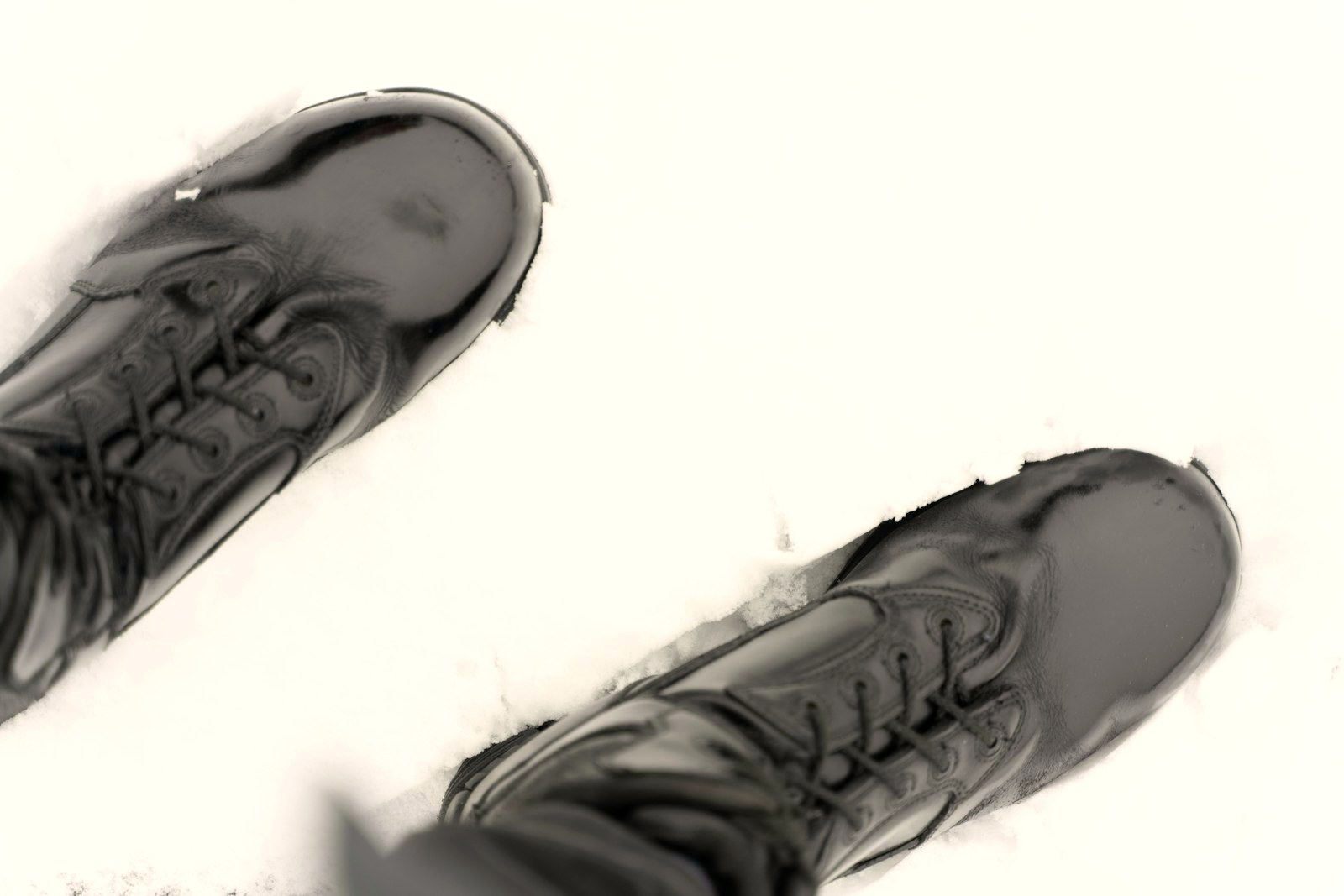
The shoes are ruled by the winter system, because the duffle is a winter garment and its footwear is winter footwear. The boot is the coat’s own shoe: the Chelsea of No. 15, sleek calf at 4.5 for the dressed rows, suede at 4 in dry cold, and the lug-soled boot at 2.5 on the scale and first on the ground, the only sole in the family built for snow and slush, taking under the duffle the same licensed working posting No. 19 grants it under the pea coat, a naval coat over a working boot being an assembly that needs no apology in any register the coat enters. The loafer takes No. 54’s system entire: the rubber-soled loafer as the winter default at no formality cost, the chosen crew sock of Card No. 36, Darn Tough at 88, worn as part of the outfit, and the grounds law unamended, slush, snow and the downpour retiring the shoe to the boot on the day, not after the crossing. The pairing is better than it first reads: the loafer’s ease is the duffle’s ease at shoe scale, the two relaxed garments in one column, and the horsebit at 4.5 on No. 11’s table is the dressed end of the coat’s own range. What never stands under the duffle is the dress shoe worn as an argument: the black Oxford under toggles is the ceiling denied in leather, two garments filing different claims in one outfit, and No. 11’s reservation of the boardroom to that shoe is respected here from below.
The colour law: camel at home, navy in the city, the check ruled
The brief begins this section with the record’s limit printed plainly, because the commission asked for camel’s standing as the Card’s record prints it and the Card prints no colour law at all. Card No. 79’s colour facts are two: the Morris is sold in a Camel colourway, its tartan interior published on that colourway, and the Drake’s is charcoal. Camel’s claim on this species is older than any ranking: it is the traditional register of the naval duffle cloth, the warm undyed tone the pattern has worn since the cloth took its name, and this brief prints that as garment history, the same class of fact as the pea coat’s service provenance in No. 19, not as a score the Card issued. Ruled from the history and the record together: camel is the coat’s home colour, the warm heritage read, the duffle as the species pictures itself, magnificent over grey flannel, dark denim and the cream of the heavy knit, and the brighter working surface of the two first buys, showing a wet month’s weather on its face and asking for the brush in the care section. Navy is the city register, the pea coat’s honest service colour carried up a length: quieter in weather, darker against charcoal tailoring and black boots, the first buy for the wardrobe that runs dark and the colour in which the coat commutes without announcing itself. Charcoal stands third on the Drake’s record, the city colour at its most tailored, and the brief seats it without ceremony: a fine duffle colour that behaves like navy’s neighbour and is bought on the same reasoning.
The check is ruled from the field’s own evidence. The ranked eight contain exactly one checked duffle, the Burberry at 64, and the Card’s charges against it are documentary, logo-engraved toggles, loops never stated, a cloth with no weight, and not one of them is its pattern. A check duffle is therefore legal on this brief’s law, with its cost printed: the check spends the outfit’s one pattern, on the law the sweater briefs print for their own species, so everything beneath a checked coat goes plain, the knit unpatterned, the trouser solid, the scarf retired or solid with it. The check is also a house signature before it is a colour, the designer register of the species, and the wearer buys the signature knowingly or not at all. Loud colours close the section on No. 52’s festive logic: a bright duffle is a leisure garment entire, legal and cheerful in the rooms where ease is the whole programme, the weekend and the match and the coast, and narrowing everywhere else, because a coat is the largest surface a man wears and a loud one spends its statement before the wearer reaches the door. The first duffle is camel or navy. The second is the other one. The loud colour is a third coat’s purchase, made by a wardrobe that already owns the species.
The suit question: the deliberate register drop, its limits printed
The question arrives with the coat, because the duffle is long enough to cover tailoring and roomy enough to close over it, and this brief answers it in two halves that are both printed on the family’s record. The first half is geometry. The pea coat’s refusal of the suit is structural, per No. 19: hip length leaves the suit’s hem showing beneath it, two hems arguing, and its closer body strains over a structured shoulder. The duffle fails neither test. At knee length it covers the jacket’s hem whole, and its cut is the loosest in the coat family, the species defined by its layering room. The Card’s record goes further and prints the licence in a maker’s own prose: the Drake’s duffle, fourth at 73, is published as cut to be worn over a tailored jacket or a chunky jumper, the only coat in the ranked eight whose fit is described in tailoring’s own terms. A duffle over a suit is therefore not a strain or a hem argument. It closes, it covers, and it was, in at least one ranked maker’s stated intention, cut for the job.
The second half is the ceiling, and it is where the licence ends. The toggles read as working hardware at any distance, so a duffle over a suit does not raise the coat to the suit; it lowers the suit to the coat, deliberately, and the brief prices the drop with arithmetic borrowed from another garment and labelled as borrowed: No. 11 rules that the loafer moves an outfit exactly one notch in either direction and never two, and this brief extends that arithmetic to the duffle as its own extension, printed as new. The duffle over a suit is a one-notch drop, spent on purpose: the cold commute, the travel day, the office whose register is the suit’s neighbourhood rather than its courtroom, the man who owns the ease and spends it where warmth and room are worth more than the notch. Its limits are the notch’s other side. The suit worn as a claim, the boardroom, the formal room, the day the tailoring is the message, keeps the coat built for it: the overcoat, formality 5, the only type on our index made to be worn over a suit as a matter of course, per No. 20 and No. 04. And the drop is spent from the full pattern only: a cropped duffle over a suit jacket revives the two-hems argument at the thigh, the fashion cut’s charge arriving a second time, and no assembly in the looks table makes that trade.
The looks: six assemblies the coat carries
| Setting | The assembly | With | The judgment |
|---|---|---|---|
| The cold commute, open | The navy duffle worn open over the Scapa fisherman of Card No. 59, grey flannels of Card No. 15 beneath | Lug-soled Chelsea boots of No. 15; the Darn Tough crew of Card No. 36 inside them | The brief’s central assembly: the heavy knit under the one coat cut to take it, the coat worn open as a frame in No. 39’s sanctioned posture, the flannel marking the dressed end of the coat’s own range |
| The dressed winter week | The camel duffle toggled at the top over a fine crew and flannels, the Morris’s colourway worn as the record prints it | Sleek calf Chelseas at 4.5; a plain solid scarf inside the coat’s line or none | The ceiling’s top rung, dressed as far as toggles dress: horn hardware’s natural posting, the tartan of the Morris’s Camel colourway staying where its maker put it, inside |
| The country weekend | The wood-and-jute build, the winner’s own hardware, over corduroy of Card No. 38 and the heavy knit | Boots with a lug; the coat fully toggled against the weather it was issued for, hood up as the fastening it is | The species at home entire: every part of the pattern working, the working build on the working rail, the assembly the naval cloth was cut for before it was ever a city garment |
| The suit, dropped one notch | The full-length duffle over a soft suit, toggled for the journey, on the suit section’s licence | The suit’s own shoes beneath the trousers; the overcoat substituted without argument on the claim days | The deliberate register drop spent correctly: geometry sound, hem covered, room real, and the ceiling acknowledged in the spending rather than argued with |
| The mild cold day | The duffle open over a plain crew and dark indigo denim of Card No. 11, No. 05’s law entire | The rubber-soled loafer and the chosen crew sock of No. 54, on dry ground only | The two relaxed garments in one column, the loafer’s ease matching the coat’s, the assembly the ceiling was made for; the first slush retires the shoe, not the coat |
| Deep weather | The duffle fully closed, throat tab up, hood up, over the heaviest knit the wardrobe owns | Lug boots; gloves, worked through the toggles the hardware was designed around | The garment as a closed system: the states of the front and the hood spent in order until the pattern’s whole weather argument is deployed, the posting where no other relaxed coat in the wardrobe stands |
The ruling
Wear the duffle as the relaxed coat it is: open in the city, toggled against the weather, belted never, and dressed up past its toggles not at all. Buy it in the long half of its own band, mid-thigh to knee, with the toggles’ and loops’ materials published and the cloth’s weight stated, the winner’s wood on jute and the Morris’s horn on leather standing as the record’s two honest builds and the horn-effect imitation as its conviction. Put the heavy knit beneath it, because this is the coat that knit was waiting for, and rule the suit beneath it a deliberate one-notch drop with the overcoat kept for the claim days. The ceiling is not the garment’s failure. It is the garment’s honesty, worn at the height it was issued at, and a wardrobe with one coat at that height, properly bought and properly worn, is warmer and better dressed than a wardrobe still arguing its toggles are buttons.
Where duffle coats go wrong
Belting it. No coat in the ranked record carries a belt, and the absence is the pattern’s, not an omission: the belt cinches the layering room that defines the species, breaks the column of a heavy cloth, and turns a working coat into a robe with hardware. The states of the front are open, part-toggled and closed. There is no fourth state with a strap in it.
Arguing with the ceiling. The sharp trouser, the dress shoe, the tie arranged as a claim: each piece files for a formality the toggles have already declined, and the outfit reads as a disagreement rather than a register. Dress the rooms the coat enters, flannel and the fine knit and the sleek boot, and let the overcoat take the rooms above them. The ceiling spent deliberately is style; the ceiling denied is costume.
Buying the crop and expecting the coat. The cropped, form-fitting duffle is a real ranked garment, third on the Card, and its charge is printed on its own card: the layering room traded for a line. The buyer who then finds the heavy knit strains and the suit’s hem argues has not been misled; the trade was published. The band’s long half is the default purchase, and the crop is bought as the narrower garment it is.
Paying for imitation hardware. On the species whose definition is its fastening, horn-effect toggles at a genuine-hardware price are the skip shape entire, convicted on the Card at 41 with the lowest hardware mark this magazine has printed. The honest builds stand at both ends of the price ladder, wood on jute at the top of the ranking and horn on leather below it, and neither requires the buyer to pretend.
Wearing the hood as a gesture. The hood is the closure system’s final seal: down in rooms, up in weather, by the pea coat brief’s collar law. Up in a dry room it is a deployed detail and reads as costume; down and forgotten in harbour wind it is the garment’s best argument left unspent. States have jobs, on the hood as on the front.
Judging the coat by its colour first. The Card’s own order is the buyer’s: the cloth’s weight and split, the hardware’s materials, the inside, and the colour last, because the colour is the only part of the garment that is merely seen. A duffle bought as a camel coat with an unstated cloth is a colour wearing a price; a duffle bought as a weighed cloth with published toggles is a coat that happens, correctly, to be camel.
Care, honestly, and our photography
The duffle’s care is its cloth’s care, and the family’s printed rules carry it. The heavy wool wants the brush after wear, the rest between wears that No. 39 rules for every knit and heavy cloth in the wardrobe, and storage on a wide hanger that honours the shoulder the pattern cut, never on the wire that would re-cut it. The toggles and loops are the garment’s moving parts and are inspected as such: a leather loop is conditioned before it cracks, a rope loop is re-sewn at the first fray rather than the first loss, and a wooden toggle lost to a platform edge is replaced in kind, horn for horn and wood for wood, the materials being the coat’s character and not its trim. The unlined winner makes its own case here: a boiled cloth with nothing inside it to tear is the easiest heavy coat in the wardrobe to keep, one more reason its longevity row stands where the Card put it. A duffle is a twenty-year garment bought once, in the cost-per-wear arithmetic the Card prints, and it is kept like one.
The photography, stated plainly, because this page’s subject cannot be shown from our bank and the brief will not pretend otherwise. Our bank holds no photograph of a duffle coat on a body, no frame of the coat open or closed, no toggle or loop at any range, and no duffle cloth in any colour: the gap is total, and it is the same gap Verdict Card No. 79 admits on its own page, where the ranked coats are shown by their parts and their neighbours. The frames on this page are therefore the garment’s world, captioned as exactly that: the northern harbour at dusk whose weather the coat was issued for, the heavy knit that goes beneath it at macro range, and the boots in snow that stand under it, from the wearer’s own angle. None of them is captioned as the coat, and no frame of another coat has been dressed as this one. The harvest list this page is waiting for, in order: first, a duffle worn open over a chunky knit, the brief’s central assembly on a body; second, a toggle-and-loop macro, horn on leather and wood on jute, the hardware this page rules at length; third, the hood down from behind, the garment’s silhouette as the street actually sees it. Until those frames land, the conditions stand in for the coat, and the page says so.
Questions, answered
What is a duffle coat?
The hooded coat in a heavy wool cloth that closes with toggles passed through rope or leather loops: the naval pattern entire, as Verdict Card No. 79 prints the species boundary. A wide hood, a shoulder cape or yoke, large patch pockets, a throat tab, and a cut with room to layer, at mid-thigh to knee length. The toggles are the definition, not the decoration: they exist so the coat can be fastened in gloves, and a coat whose toggles do not work, or whose maker will not say what they are made of, is graded on that failure on the Card. The cloth is the second term: a heavy wool, boiled, Melton or double-faced, whose weight and composition a buyer can read.
Has Young Cotton ranked duffle coats?
Yes. Verdict Card No. 79 ranked eight duffle coats on cloth and weight honesty, the toggle, hood and lining record, fit and layering, value and longevity. The Gloverall Original Monty wins at 88, a weighed and stated cloth, wooden toggles on jute rope, made in England at £515. The J.Press Morris Classic follows at 83, with buffalo horn toggles on leather loops and the field's fullest measurement table, and the London Tradition Martin SLM is third at 80, natural horn toggles and a lifetime guarantee at £300. The coat sent home, at 41, charges €465 for toggles its own maker calls horn-effect over a cloth described only as wool-rich. This brief styles the garment from that record and scores nothing of its own.
How do you wear a duffle coat?
Open or toggled, never belted, and never dressed up past its toggles. The duffle is the relaxed coat in a tailored wardrobe: its formality ceiling is set by its fastenings, because a toggle is working hardware, legible across a room, and no cloth, colour or layering underneath it argues it higher. In the city it is worn open as the default, its ease made visible; against weather it is toggled, fully or at the top toggles, which is the movement the hardware was designed for, one gloved hand and no ceremony. Under it goes the heavy knit of Verdict Card No. 59 or the plain layers of the coat family's stack; below it, flannel, corduroy or dark denim, and boots or the winter loafer on the records this brief prints. The styling spends the coat's ease deliberately, in cold weather and dressed-casual rooms, and leaves the suit's finishing coat to the overcoat.
Should a duffle coat be worn open or fastened?
Both, as states with jobs, and this brief rules them. Open is the city default: the coat's ease is the garment's whole register, and worn open over a heavy knit it frames the layer beneath the way the open overcoat frames the chunky knit in How to Wear No. 39. Toggled is the weather state: the fastenings exist to be worked in gloves on a moving deck, so closing the coat is a one-handed movement with no ceremony, and the top toggles alone are the legal middle state, the seal at the throat with the body of the coat still relaxed. The hood follows the pea coat brief's collar law: down in rooms, up as a fastening in weather, equipment rather than gesture. What the duffle never takes is a belt: nothing in the ranked record carries one, a belt would cinch a cut whose definition is its room, and the cinched duffle is a different garment asking to be judged as one.
Can you wear a duffle coat over a suit?
Yes, as a deliberate register drop, and no, as the suit's finishing coat, and the brief prints both halves. The duffle at knee length covers the suit jacket's hem whole, so it escapes the two-hems argument that refuses the pea coat over tailoring in How to Wear No. 19, and the species is cut with room to layer: the Drake's entry on Verdict Card No. 79 is published as cut to be worn over a tailored jacket. What caps the assembly is the ceiling: the toggles read as working hardware at any distance, so the duffle over a suit lowers the outfit's register on purpose, for ease, travel and the cold commute, in the arithmetic this brief borrows from the loafer brief's one-notch rule and labels as its own extension. The suit worn as a claim, the boardroom and the formal room, keeps its own coat: the overcoat, the only type our jackets index builds to be worn over a suit as a matter of course.
What do you wear under a duffle coat?
The heavy knit first, because the duffle is the coat the chunky knit goes under. Coats in the tailored family are sized over a blazer, and How to Wear No. 39 prints that a heavy knit spends that whole allowance and more, which is why chunky knits go over or alone under a closed tailored coat. The duffle's allowance was never a blazer's: the species is defined by a cut with room to layer, its winner is oversized by stated design, and its Drake's entry is published as cut over a chunky jumper. The knit ranked for the seat is the Paul James Scapa at 88 in Verdict Card No. 59, 100 percent British wool at a printed 700 grams. A blazer fits under the full pattern on the same record, and is capped by the ceiling, not by room: the assembly is licensed as ease, and its formality is ruled in this brief's suit section. What does not go under it is a second loud surface: the one-pattern law retires pattern beneath a coat whose own hardware is already the outfit's statement.
What colour duffle coat should you buy first?
Camel or navy, and the brief argues the order from the record. Camel is the species' traditional colour, the undyed register of the naval cloth, and it stands in the ranked record on the J.Press Morris, sold in a Camel colourway with a tartan interior at 83 in Verdict Card No. 79: the warm, heritage read, magnificent over grey flannel and dark denim, and the brighter surface in a wet month. Navy is the city register, the pea coat's service colour carried up a length: quieter in weather, at home over charcoal tailoring and black boots, the first buy for a wardrobe that runs dark. The check is ruled as the designer register: the ranked field's check coat is the Burberry at 64, graded down on its paperwork and not its pattern, and a check duffle spends the outfit's one-pattern budget on the coat itself, so everything beneath it goes plain. Loud colours are leisure colours, legal in the rooms the all-over Fair Isle is legal in, and they narrow the coat to them.
Next
The ranking this brief styles from is Verdict Card No. 79, Best Duffle Coats for Men: eight coats graded on cloth and weight honesty, the toggle record, fit and longevity, the Gloverall Monty at 88, the J.Press Morris at 83, the London Tradition Martin SLM at 80 and the horn-effect skip sent home at 41, with the cost-per-wear table and the species boundary this page rules from. The coat family stands either side of it: How to Wear No. 19, the pea coat, the naval sibling at hip length, its front worn closed and its collar ruled as a fastening, with Verdict Card No. 52 behind it; and How to Wear No. 20, the overcoat, formality 5, the suit’s own coat at the knee or below, with Verdict Card No. 48 behind it. The layer beneath is ruled by How to Wear No. 39 and ranked by Verdict Card No. 59, and the family’s full ladder stands on the jackets index, whose twelve types this coat will join when the index corrects its own fold. How every score behind those pages is built stands on our methodology page.